ToolMage
Sign in

Best 2 Customer Feedback AI tools

Popular Customer Feedback AI tools include Blitzllama and Seranova, helping you work more efficiently.

Seranova
Paid

Seranova

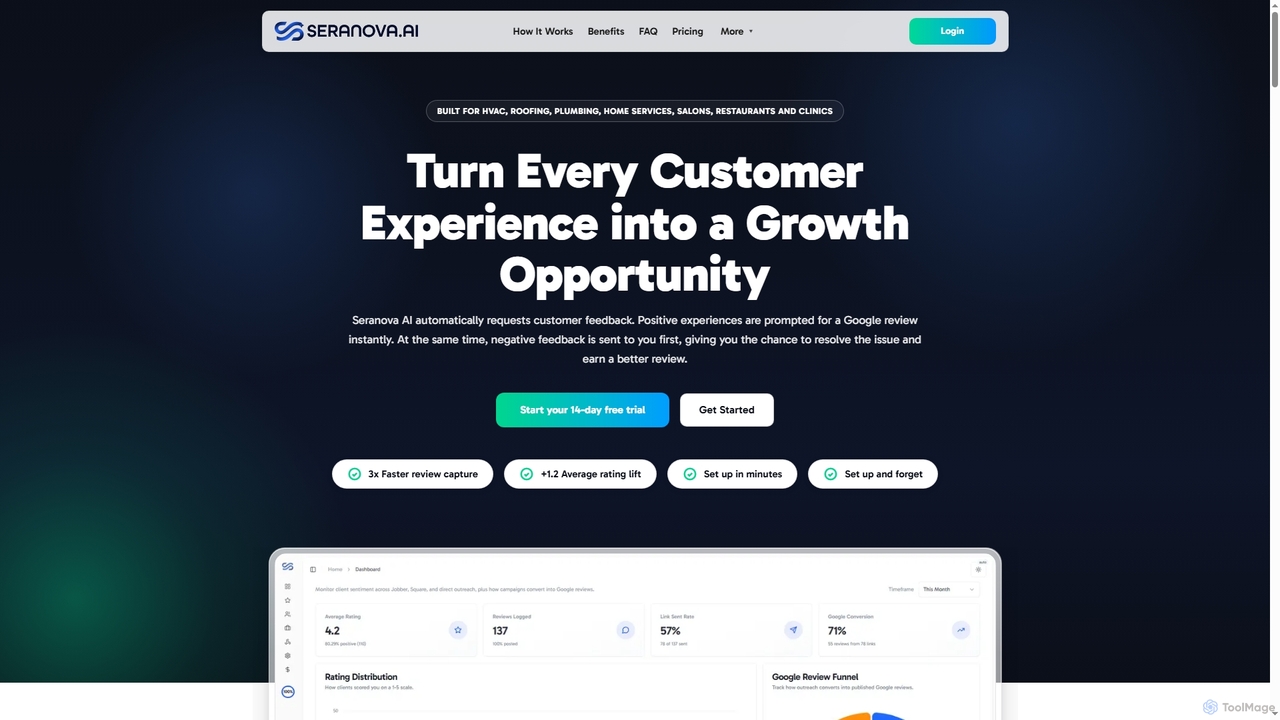
Seranova is an AI-powered reputation management platform designed for local service businesses to automate Google review collection and management. It captures customer feedback, routes positive experiences for public reviews, and handles negative feedback privately, significantly boosting online visibility and trust.

Review Automation
Visits 6.6KFavorites 140Likes 140
Blitzllama
Freemium

Blitzllama

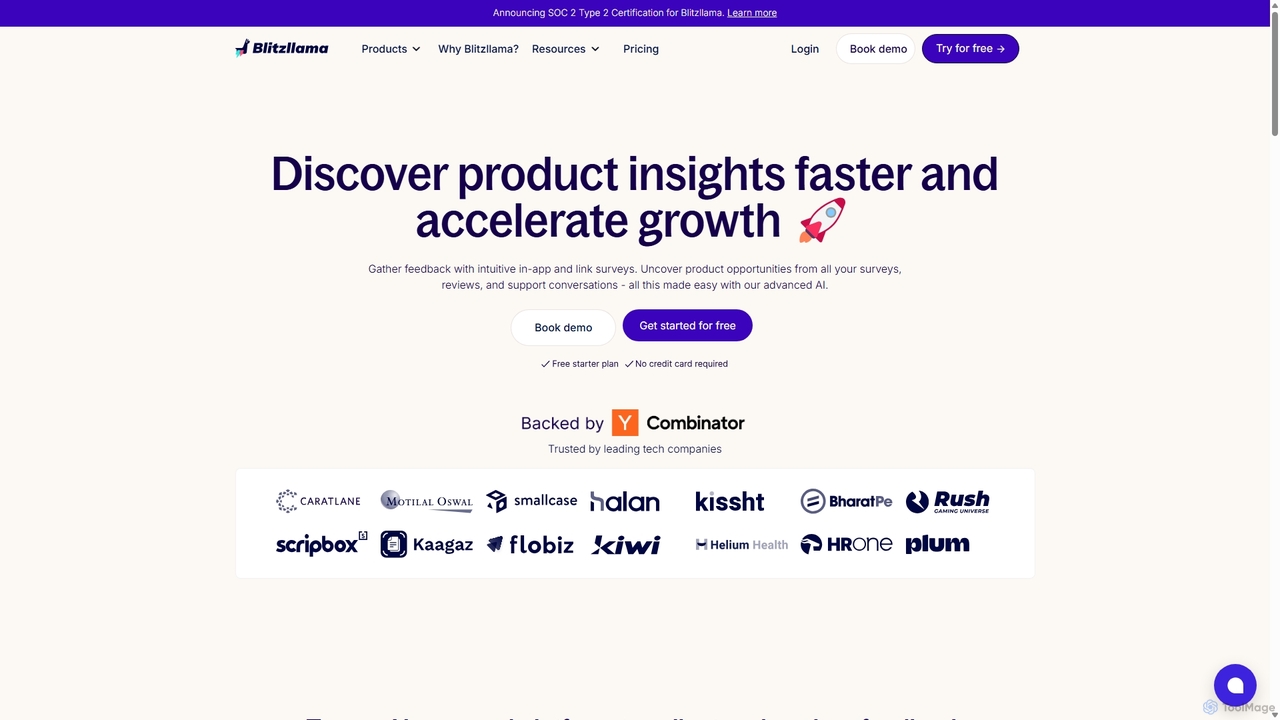
Blitzllama is an AI-powered product insights platform designed to help teams collect and analyze customer feedback. It unifies in-app surveys, app store reviews, and support conversations, using AI to automatically surface actionable insights, identify trends, and prioritize product improvements, accelerating data-driven growth.

Business Intelligence
Visits 27.5KFavorites 183Likes 175

About Customer Feedback

Customer Feedback AI tools are a class of artificial intelligence-powered solutions designed to collect, analyze, and act upon customer opinions and experiences. These tools leverage advanced natural language processing (NLP) and machine learning algorithms to extract meaningful insights from various feedback channels, including surveys, reviews, social media, and support interactions. By automating the identification of sentiment, key topics, and emerging trends, they empower businesses to enhance product development, improve service quality, and foster stronger customer relationships more efficiently.

Core Features

  • Sentiment Analysis: Automatically determines the emotional tone (positive, negative, neutral) of customer comments and reviews.
  • Topic Modeling: Identifies recurring themes and subjects within large volumes of unstructured feedback data.
  • Automated Surveys & NPS: Designs, distributes, and analyzes survey responses, including Net Promoter Score (NPS) and Customer Satisfaction (CSAT) metrics.
  • Chatbot & Voice Feedback: Integrates with conversational AI to collect feedback directly from customer interactions and transcribe voice feedback for analysis.
  • Predictive Analytics: Uses historical feedback to forecast potential customer churn or identify areas for proactive intervention.

Use Cases

These tools are invaluable for product managers seeking to prioritize features based on user demand, marketing teams monitoring brand perception across digital channels, and customer service departments aiming to quickly resolve common issues and personalize support. They enable data-driven decision-making to continuously refine offerings and improve the overall customer journey.

How to Choose

When selecting a Customer Feedback AI tool, consider its integration capabilities with existing CRM and support systems, the depth and accuracy of its NLP and sentiment analysis, scalability to handle growing feedback volumes, and the flexibility of its reporting and visualization features. Evaluate also the ease of setup and the level of customization offered for specific industry needs.

Customer Feedback use cases

1

Analyzing Product Reviews for Feature Prioritization

Product managers can use AI feedback tools to automatically process thousands of app store reviews and online comments. The AI identifies common pain points, feature requests, and positive mentions, allowing teams to prioritize development efforts based on actual user sentiment and demand, leading to more impactful product updates.

2

Monitoring Social Media Sentiment for Brand Reputation

Marketing and PR teams deploy AI tools to continuously scan social media platforms, news sites, and forums for mentions of their brand. The AI performs sentiment analysis on these mentions, alerting teams to sudden shifts in public perception or potential PR crises, enabling rapid response and proactive reputation management.

3

Automating Support Ticket Categorization and Routing

Customer service departments leverage AI to analyze incoming support tickets and chat transcripts. The AI automatically extracts the core issue and sentiment, categorizing tickets and routing them to the most appropriate agent or department. This reduces resolution times, improves agent efficiency, and ensures customers receive specialized help faster.

4

Personalizing Customer Outreach Based on Past Feedback

Sales and marketing teams utilize AI feedback insights to tailor communications. By understanding a customer's past preferences, pain points, or positive experiences expressed in surveys or interactions, businesses can send highly personalized offers, product recommendations, or follow-up messages, significantly increasing engagement and conversion rates.

5

Identifying Emerging Trends from Open-Ended Survey Responses

Researchers and strategists use AI to sift through vast amounts of open-ended text responses from customer surveys or focus group transcripts. The AI's topic modeling capabilities reveal subtle, emerging trends or unexpected themes that might be missed by manual review, providing valuable foresight for market positioning and innovation.

6

Measuring and Improving Customer Satisfaction (CSAT/NPS)

Businesses integrate AI tools to automate the collection and analysis of CSAT and NPS scores. Beyond just numbers, the AI analyzes accompanying comments to pinpoint the exact drivers behind high or low scores. This allows companies to identify specific service touchpoints or product features that need improvement, directly impacting customer loyalty.

Customer Feedback FAQ

What are Customer Feedback AI tools?

Customer Feedback AI tools are software solutions that use artificial intelligence, primarily natural language processing (NLP) and machine learning, to automate the collection, analysis, and interpretation of customer opinions. They help businesses understand what customers are saying across various channels, identify key themes, and gauge sentiment to make data-driven decisions.

How do AI tools analyze customer feedback?

AI tools analyze customer feedback by employing techniques like sentiment analysis to determine emotional tone, topic modeling to identify recurring subjects, and entity recognition to extract specific mentions. They process unstructured text data from surveys, reviews, social media, and support interactions, converting it into actionable insights without manual review.

What are the main benefits of using AI for customer feedback?

The main benefits include increased efficiency in processing large volumes of feedback, deeper and more accurate insights through advanced analytics, faster identification of critical issues or trends, and the ability to make data-driven decisions quickly. This leads to improved customer satisfaction, better product development, and enhanced service delivery.

How should I choose the right Customer Feedback AI tool for my business?

When choosing, consider the tool's integration capabilities with your existing CRM and support systems, the accuracy and depth of its sentiment and topic analysis, its scalability for your feedback volume, and the flexibility of its reporting dashboards. Also, evaluate its ease of use, customization options, and the level of support provided.

Can AI customer feedback tools help improve customer satisfaction?

Yes, absolutely. By providing rapid and precise insights into customer pain points, preferences, and expectations, AI tools enable businesses to address issues proactively, personalize experiences, and refine products or services based on real-time feedback. This direct response to customer needs is crucial for significantly improving overall satisfaction and loyalty.