Vectra
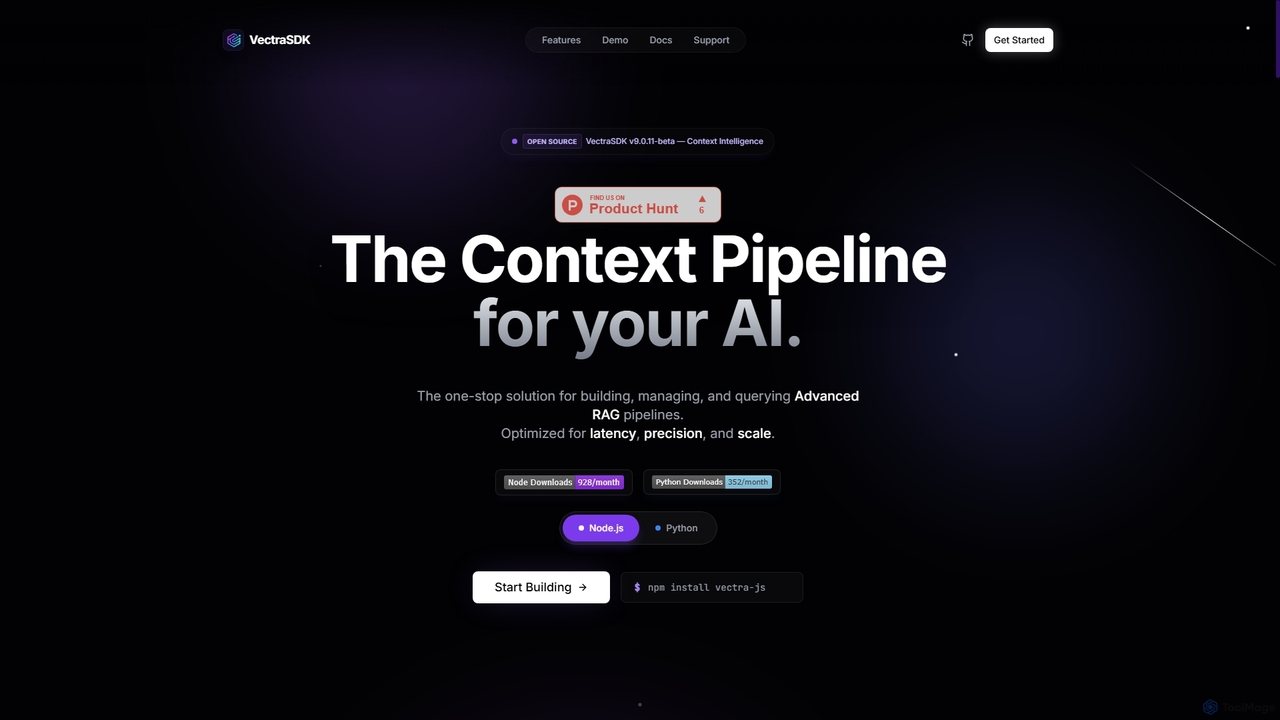
Vectra is an open-source, production-grade SDK for Node.js and Python, designed to build, manage, and query advanced Retrieval-Augmented …
Vectra is an open-source, production-grade SDK for Node.js and Python, designed to build, manage, and query advanced Retrieval-Augmented Generation (RAG) pipelines. It offers a comprehensive toolkit for developing context-aware AI applications, optimized for low latency, high precision, and scalability.

Metatable
Metatable is an AI-first development platform that enables rapid creation and deployment of web and mobile applications. It …
Metatable is an AI-first development platform that enables rapid creation and deployment of web and mobile applications. It streamlines the entire software development lifecycle, from idea to launch, by leveraging AI to generate code, manage infrastructure, and automate complex tasks, allowing users to build MVPs in minutes.
DeConsole
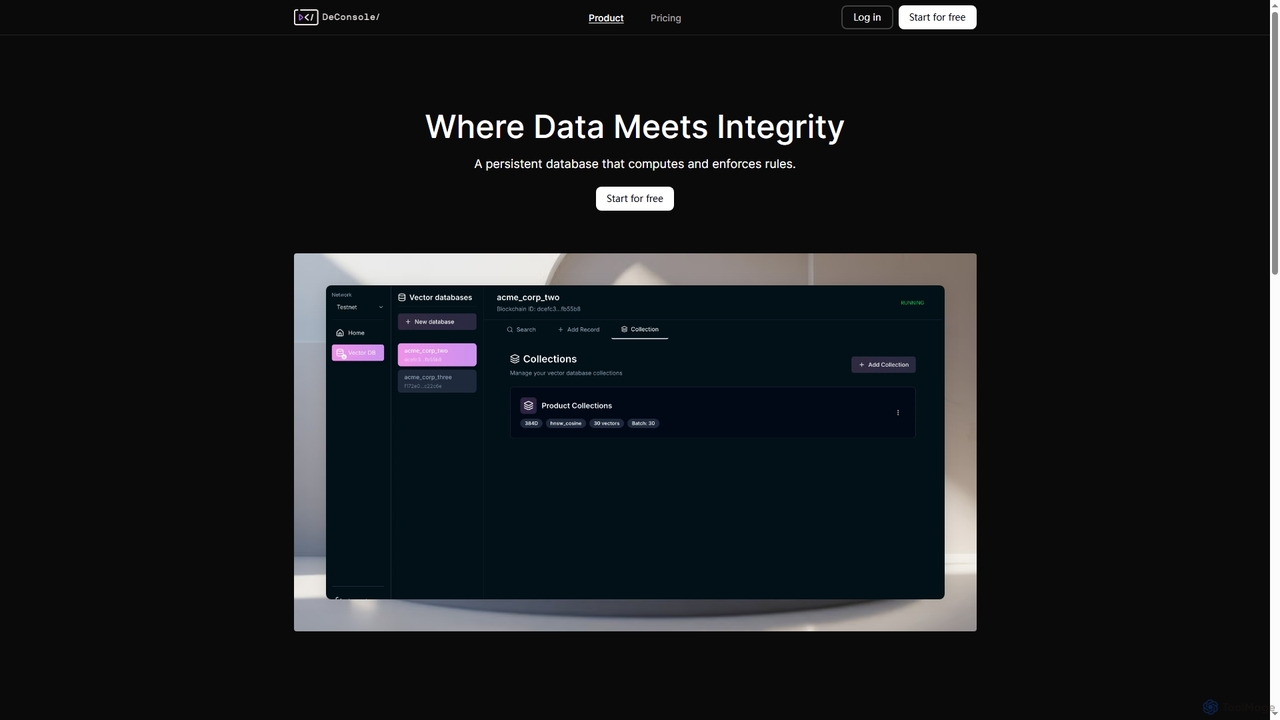
DeConsole is a distributed, persistent, and tamper-resistant database service designed for critical data, offering the simplicity of a …
DeConsole is a distributed, persistent, and tamper-resistant database service designed for critical data, offering the simplicity of a cloud DBaaS without a single point of control. It computes and enforces rules, ensuring data integrity and providing a tamper-evident history for various applications, especially AI.
Starbase
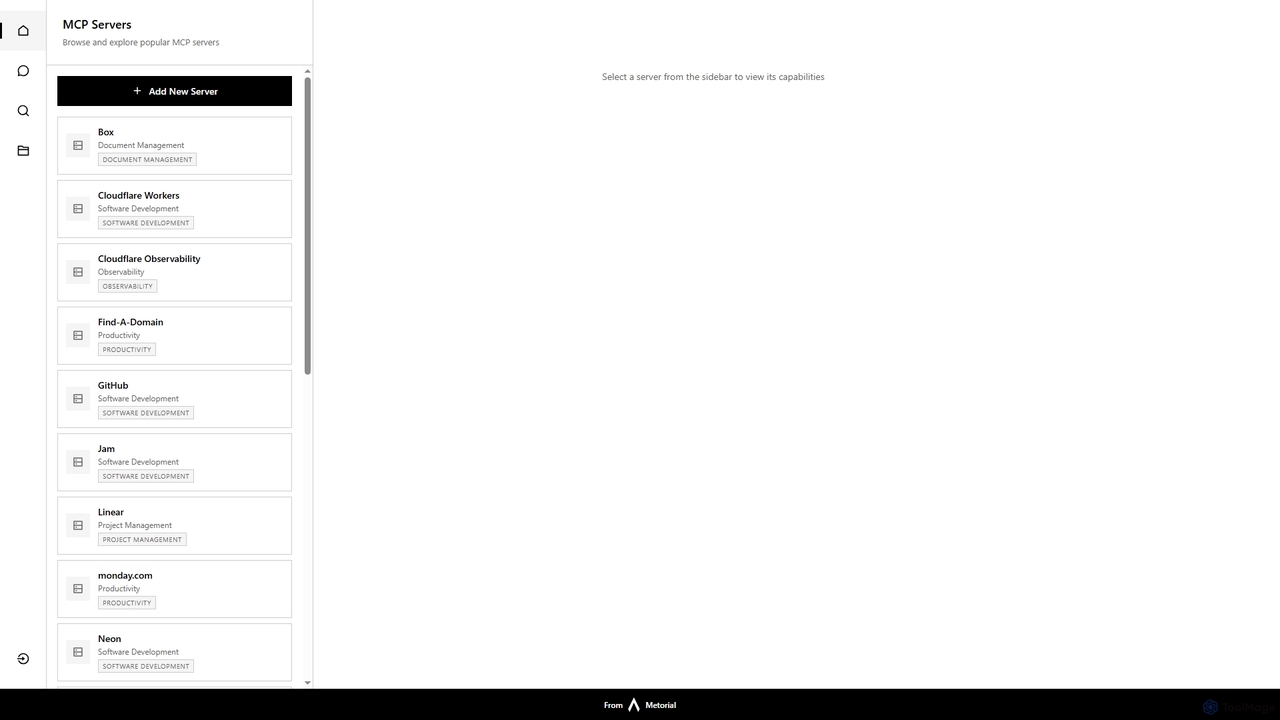
Starbase by Metorial is a comprehensive platform designed to centralize the browsing, exploration, and management of various popular …
Starbase by Metorial is a comprehensive platform designed to centralize the browsing, exploration, and management of various popular software services. It integrates a wide array of tools across software development, project management, productivity, and infrastructure, offering a unified dashboard to view and interact with their capabilities.
Xano
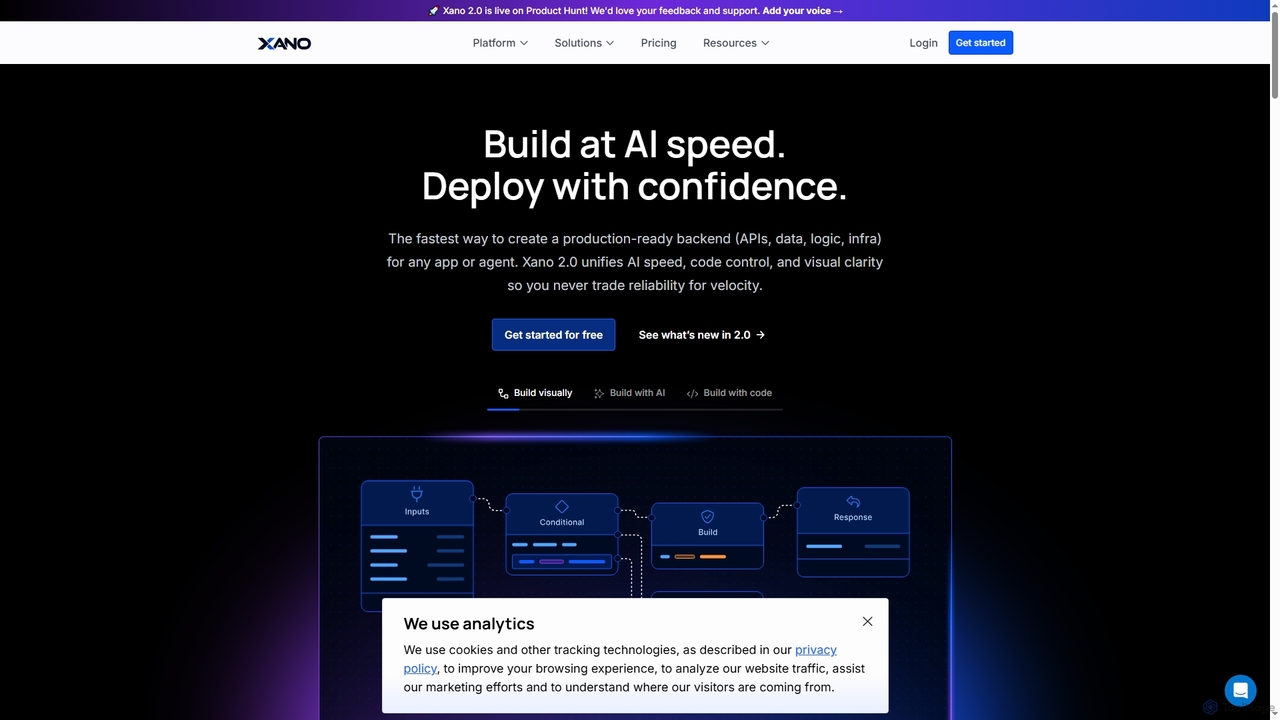
Xano is a scalable no-code backend platform that empowers developers and teams to build production-ready applications and AI …
Xano is a scalable no-code backend platform that empowers developers and teams to build production-ready applications and AI agents at speed. It provides a unified solution for APIs, a managed Postgres database, visual logic, and auto-scaling infrastructure, eliminating the need for complex DevOps.
About Database
AI Database tools are advanced data management systems that integrate artificial intelligence and machine learning to automate operations and unlock deeper insights. These platforms use AI to optimize query performance, manage resources, and enable users to interact with data using natural language instead of complex code. Their primary value lies in simplifying data analysis, accelerating decision-making, and reducing the manual workload for database administrators and data analysts. This allows organizations to build smarter, more responsive applications and derive predictive insights directly from their data stores.
Core Features
- Natural Language Querying (NLQ): Allows users to ask questions in plain English to retrieve and analyze data, eliminating the need for SQL expertise.
- Automated Performance Tuning: The system uses machine learning to self-optimize indexes, query plans, and resource allocation for maximum efficiency.
- In-Database Machine Learning: Enables the training and execution of predictive models directly within the database, reducing data movement and latency.
- Anomaly Detection: Automatically identifies unusual patterns, outliers, or potential threats in real-time data streams.
- Semantic Search: Understands the context and intent behind queries to deliver more relevant and accurate search results from unstructured data.
Use Cases
AI Databases are utilized across various sectors. In business intelligence, analysts can ask complex questions conversationally to generate reports. In finance, these systems power real-time fraud detection by identifying anomalous transactions. E-commerce platforms use them for building sophisticated, real-time recommendation engines that analyze user behavior. Developers also leverage them to build intelligent applications with features like semantic search and predictive analytics.
How to Choose
When selecting an AI Database tool, first evaluate its query capabilities—whether it supports natural language, SQL, or both. Assess its integration with your existing data stack, including BI tools and applications. Consider its scalability to handle your data volume and query load. Finally, examine the scope of its built-in AI features, such as automated tuning and model support, to ensure they align with your technical requirements and business goals.
DatabaseUse Cases
Conversational Business Intelligence Reporting
A marketing manager without SQL skills needs to understand campaign performance. Instead of waiting for a data analyst, they use an AI Database's natural language interface. They type, 'Compare revenue from the Q4 social media campaign with the Q3 email campaign for users in North America.' The system instantly processes the query, joins the necessary tables, performs the calculations, and returns a visual chart comparing the two campaigns. This empowers non-technical users to perform self-service analytics, reducing dependency on technical teams and accelerating data-driven decision-making.
Automated Database Performance Tuning
A fast-growing e-commerce platform experiences fluctuating traffic, causing database performance to degrade during peak hours. A database administrator (DBA) would typically spend hours manually analyzing query logs and adjusting indexes. By migrating to an AI Database, the system continuously monitors workload patterns. It automatically creates, modifies, or drops indexes based on real-time query behavior and predicts future load to proactively allocate resources. This self-tuning capability ensures optimal performance around the clock, freeing up the DBA to focus on strategic architecture instead of routine maintenance.
Real-time Anomaly Detection in Financial Transactions
A financial services company needs to detect fraudulent transactions instantly. They stream millions of transactions per second into an AI Database. The database has a pre-trained model that understands each customer's normal spending patterns (e.g., typical amount, location, time). When a new transaction arrives that significantly deviates from this pattern—such as a large withdrawal from an unusual location—the database's anomaly detection feature flags it in milliseconds. This triggers an immediate alert or block, preventing financial loss and protecting customer accounts far more effectively than traditional batch-processing systems.
Building a Semantic Search for a Knowledge Base
A large enterprise's internal documentation is stored across thousands of documents, making it hard for employees to find information. They implement an AI Database with vector search capabilities. All documents are converted into vector embeddings and stored. When an employee searches for 'how to handle customer complaints about shipping delays,' the system doesn't just look for keywords. It understands the semantic meaning and finds relevant sections in HR policy documents, customer service scripts, and logistics guides, even if they don't use the exact search terms. This drastically improves information retrieval accuracy and employee productivity.
In-Database Customer Churn Prediction
A subscription-based service wants to proactively reduce customer churn. Their customer activity data resides in an AI Database. Instead of exporting data to a separate ML platform, a data scientist uses the database's built-in capabilities to train a churn prediction model directly on the data. The model analyzes factors like login frequency, feature usage, and support ticket history. Once trained, the model runs continuously within the database, scoring each customer's churn risk in real-time. The marketing team can then use this live data to target at-risk customers with retention offers, significantly improving customer lifetime value.
Intelligent Data Governance and Compliance
A healthcare organization must comply with strict data privacy regulations like HIPAA. They use an AI Database that can automatically classify and tag sensitive data, such as Patient Health Information (PHI). The AI models scan incoming data and apply appropriate security policies and access controls without manual intervention. It can also monitor data access patterns and flag unusual activity that might indicate a data breach. This automates a significant portion of the data governance workload, ensuring continuous compliance and reducing the risk of costly penalties.