Brancher.ai
Brancher.ai is a no-code platform that empowers users to build and monetize custom AI applications by connecting various …
Brancher.ai is a no-code platform that empowers users to build and monetize custom AI applications by connecting various AI models. Create complex workflows and innovative tools with a simple drag-and-drop interface, without writing a single line of code. Share your creations with a community and unlock new revenue streams.
NeoApps.AI
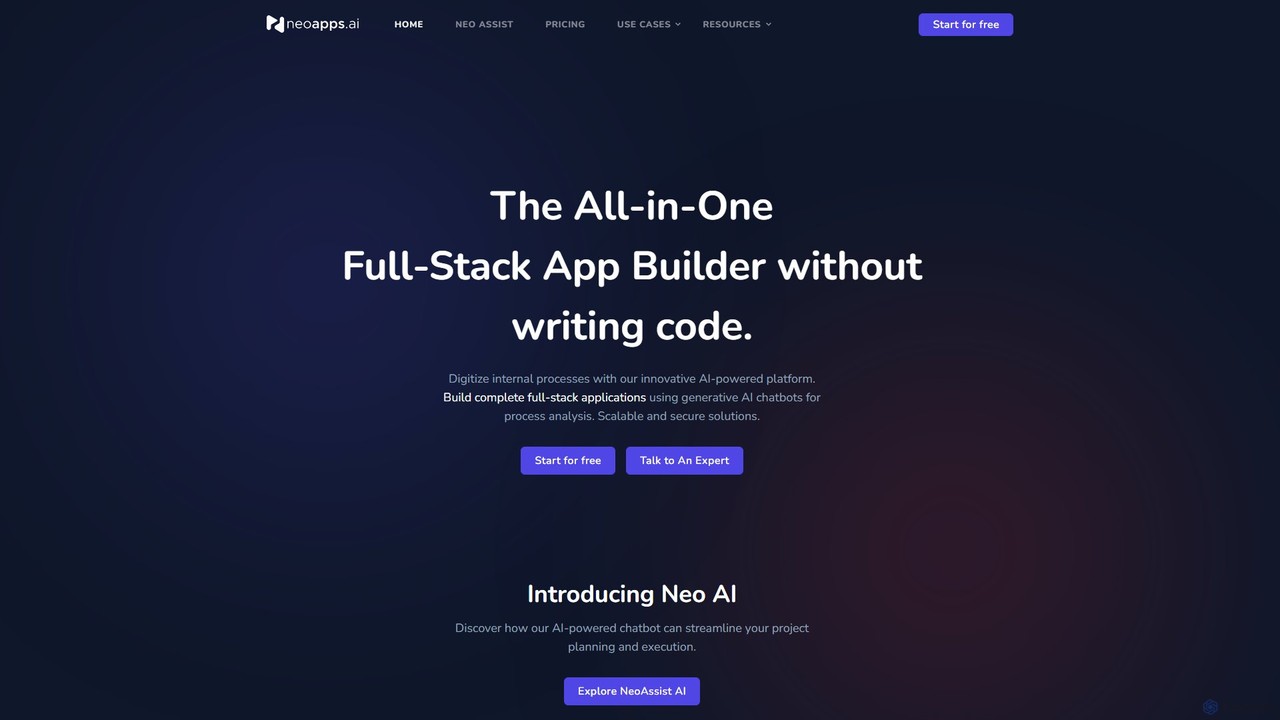
NeoApps.AI is an AI-powered application development platform that automates the entire software creation process. Using a conversational chatbot, …
NeoApps.AI is an AI-powered application development platform that automates the entire software creation process. Using a conversational chatbot, it helps you plan your project, automatically generates a scalable database, sets up business logic, and writes deployment-ready code. It offers a seamless, error-free build and deployment process, allowing users to create, customize, and redeploy applications with minimal to no coding, while also providing full code download capabilities for complete ownership and control.
toolmark.ai
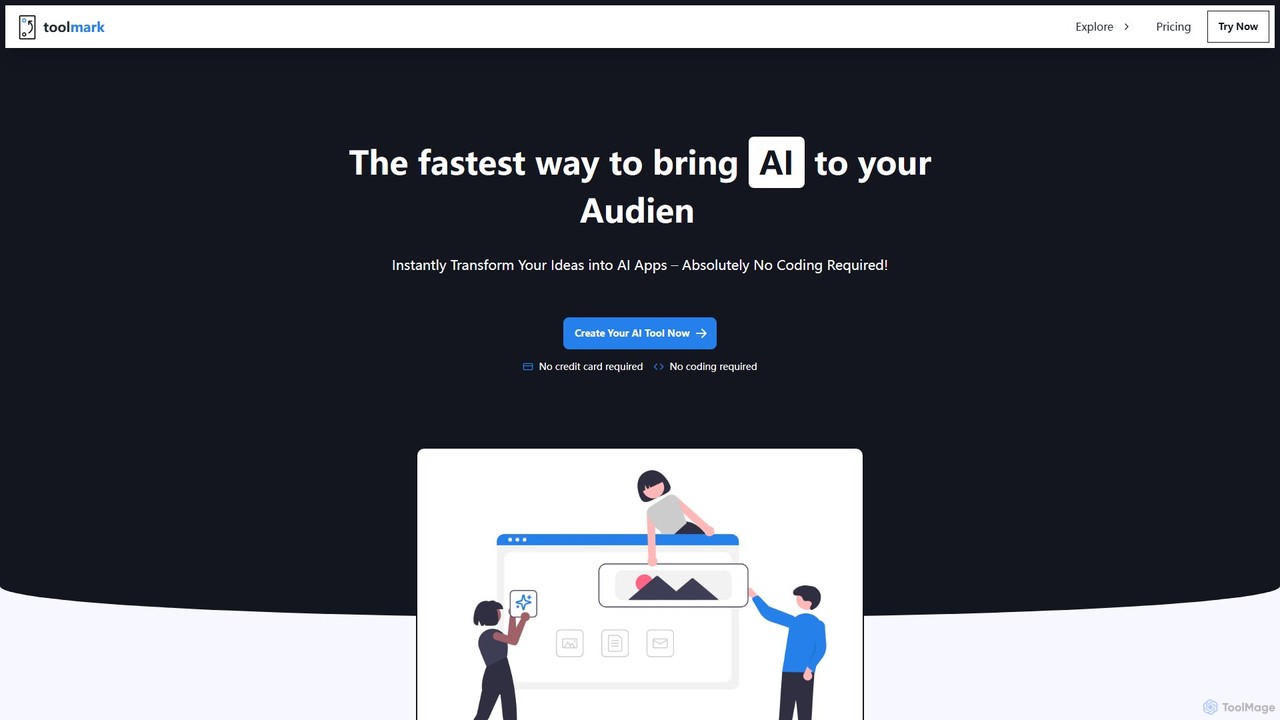
A no-code AI tool builder that empowers users to create, publish, and monetize custom AI applications, website widgets, …
A no-code AI tool builder that empowers users to create, publish, and monetize custom AI applications, website widgets, and Chrome extensions. Using an intuitive drag-and-drop interface, you can integrate powerful AI models like GPT-4o, DALL-E, and Gemini to build tools for marketing, career development, productivity, and more, all without writing a single line of code.
About Application Builder
Application Builders are AI-powered platforms that enable users to design, develop, and deploy custom software applications with minimal to no coding. These tools leverage visual interfaces and pre-built components, significantly accelerating the application development lifecycle. They empower businesses and individuals to create tailored solutions for specific needs, from internal operational tools to customer-facing applications, without extensive programming knowledge. This approach democratizes app creation, making sophisticated software accessible to a broader audience within the broader category of Developer Tools.
Core Features
- Visual Development Interface: Drag-and-drop elements and intuitive visual editors for designing user interfaces and workflows.
- Pre-built Components & Templates: Libraries of ready-to-use modules, forms, and templates for common functionalities like data entry, reporting, and user authentication.
- Workflow Automation: Tools to define and automate business processes, data flows, and task sequences within the application.
- Data Management & Integration: Capabilities to connect with various data sources, manage databases, and integrate with third-party services via APIs.
- Deployment & Hosting: Built-in options for publishing applications to web, mobile, or internal servers, often with managed hosting.
Use Cases
Application Builders are widely adopted across various industries for streamlining operations and enhancing digital capabilities. They are particularly valuable for small to medium-sized businesses, departmental teams within larger enterprises, and individual entrepreneurs. These platforms facilitate the creation of internal tools, customer portals, and specialized data management systems, reducing reliance on traditional IT departments and external developers.
How to Choose
When selecting an Application Builder, consider the specific needs of your project, including the complexity of the desired application and the technical proficiency of your team. Evaluate the platform's scalability, integration capabilities with existing systems, and the range of pre-built components available. Additionally, assess the pricing model, community support, and the vendor's long-term vision for the platform to ensure it aligns with your future growth.
Application BuilderUse Cases
Automating Internal Business Workflows
A small business owner creates a custom CRM to manage leads, track sales, and automate follow-up emails, integrating with their existing email service. This streamlines customer relationship management and reduces manual data entry, saving significant operational time.
Building Customer Self-Service Portals
An e-commerce company develops a portal where customers can track orders, view purchase history, and submit support tickets without needing direct agent interaction. This improves customer satisfaction by providing instant access to information and reduces the workload on customer support teams.
Developing Field Service Management Apps
A construction company builds a mobile app for its field technicians to access project plans, report progress, and submit inspection forms directly from job sites. This enhances real-time data collection, improves communication between field and office, and boosts overall operational efficiency.
Creating Event Registration & Management Systems
An event organizer designs a comprehensive system for online registration, payment processing, attendee management, and communication for various events. This simplifies event logistics, automates repetitive tasks, and improves the overall participant experience, allowing for more efficient event execution.
Rapid Prototyping and MVP Development
A startup uses an Application Builder to quickly develop a Minimum Viable Product (MVP) for a new service, testing core functionalities and gathering early user feedback before investing in full-scale custom development. This accelerates market entry, validates business ideas efficiently, and reduces initial development costs.
Custom Data Collection and Reporting Tools
A research institution builds a specialized application for researchers to collect specific data points in the field, analyze findings, and generate custom reports for various studies. This ensures data accuracy, streamlines the research process, and facilitates tailored insights for academic or scientific purposes.