
Axwise
Axwise is an AI co-pilot for product development that transforms user research. It automates the generation of research …
Axwise is an AI co-pilot for product development that transforms user research. It automates the generation of research questions, analysis of interview transcripts, and creation of detailed Product Requirement Documents (PRDs), reducing the process from weeks to minutes.
Crafter
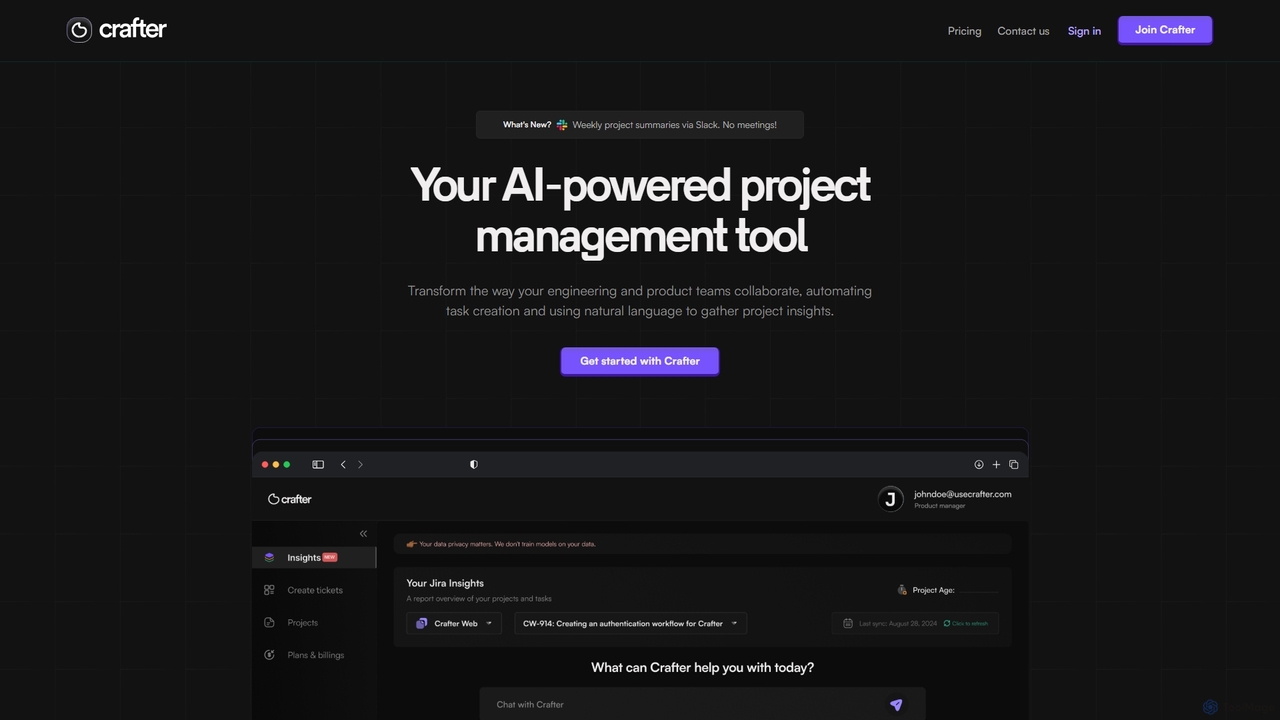
Crafter is an AI-powered project management assistant for engineering and product teams. It automates Jira ticket creation from …
Crafter is an AI-powered project management assistant for engineering and product teams. It automates Jira ticket creation from documents, provides real-time project insights, and features a smart chat assistant to streamline workflows, enhance collaboration, and keep projects on track.
Onetab AI
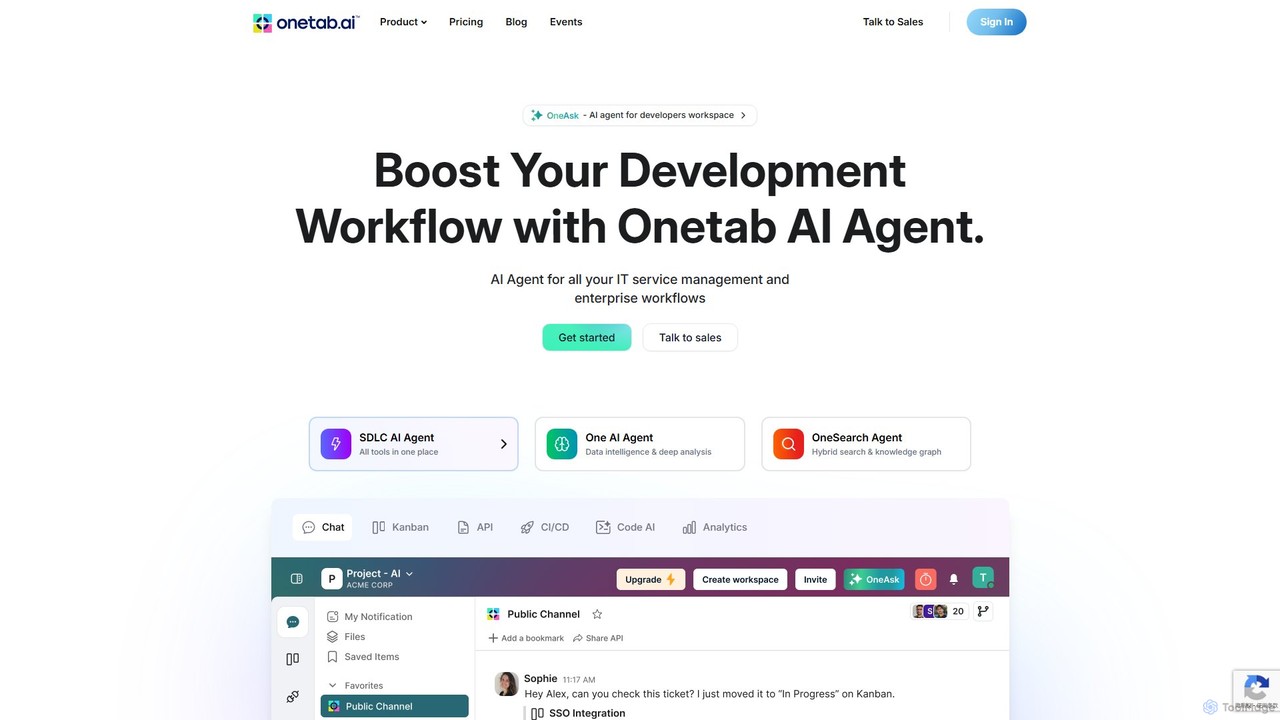
Onetab AI is an all-in-one AI agent platform designed for developers and enterprises. It centralizes tools, automates workflows …
Onetab AI is an all-in-one AI agent platform designed for developers and enterprises. It centralizes tools, automates workflows across the software development lifecycle (SDLC) and IT service management, and acts as a single source of truth to boost team productivity and efficiency.
narus
Narus is an AI-powered copilot for software and project teams, integrating seamlessly with Atlassian tools like Jira and …
Narus is an AI-powered copilot for software and project teams, integrating seamlessly with Atlassian tools like Jira and Confluence. It automates workflows, generates intelligent insights from project data, and enhances knowledge management to boost team productivity and accelerate development cycles.

Salley
Salley is an AI-powered platform designed for product, engineering, and ops teams to enhance effectiveness. It uses behavior-aware …
Salley is an AI-powered platform designed for product, engineering, and ops teams to enhance effectiveness. It uses behavior-aware AI to proactively identify risks, automate coordination tasks, and remove hidden blockers, helping teams maintain momentum and achieve better outcomes.
About Development
AI Development tools are specialized platforms and applications that leverage artificial intelligence to enhance, automate, and accelerate various stages of the software development lifecycle. These tools utilize machine learning, natural language processing, and advanced algorithms to assist developers with tasks ranging from code generation and debugging to testing and deployment. They aim to boost productivity, improve code quality, and enable faster innovation, making complex development processes more efficient and accessible.
Core Features
- AI-Powered Code Generation: Automatically generates code snippets, functions, or even entire modules based on natural language descriptions or existing code patterns.
- Intelligent Code Completion & Suggestion: Provides context-aware code suggestions, auto-completion, and refactoring recommendations within IDEs.
- Automated Testing & Debugging: Identifies potential bugs, suggests fixes, and generates test cases to ensure code reliability and performance.
- Low-Code/No-Code AI Platforms: Enables developers and even non-developers to build and deploy AI-powered applications with minimal manual coding.
- AI Model Deployment & Management: Simplifies the process of deploying, monitoring, and managing machine learning models in production environments.
Use Cases
Software teams use these tools to streamline workflows, reduce manual errors, and accelerate project delivery. They are particularly valuable for startups needing rapid prototyping and large enterprises managing complex codebases, allowing for more efficient resource allocation and faster iteration cycles.
How to Choose
When selecting AI development tools, consider their integration capabilities with existing development environments, the specific programming languages and frameworks they support, the level of automation offered, and their scalability for future projects. Evaluate the accuracy of AI suggestions, the ease of customization, and the community support available.
DevelopmentUse Cases
Accelerate Backend API Development
For backend developers, AI development tools can significantly speed up the creation of RESTful APIs. By inputting data models or desired functionalities, the AI can generate boilerplate code for endpoints, database interactions, and authentication, reducing repetitive coding. This allows developers to focus on complex business logic, cutting development time by up to 30% and improving project delivery speed.
Enhance Frontend UI Component Generation
Frontend developers can leverage AI to generate UI components from design mockups or natural language descriptions. Tools can translate Figma designs into React or Vue code, or suggest CSS styles and HTML structures based on user input. This accelerates the initial build phase, ensuring design consistency and freeing up designers for more creative tasks, leading to faster UI development cycles.
Automate Code Review and Quality Checks
Development teams can integrate AI tools into their CI/CD pipelines to automate code reviews. The AI can identify potential bugs, security vulnerabilities, performance bottlenecks, and style guide violations before human reviewers. This ensures higher code quality, reduces the burden on senior developers, and maintains consistent coding standards across the team, leading to more robust and secure software.
Streamline Machine Learning Model Deployment
Data scientists and MLOps engineers use AI development platforms to simplify the deployment of trained machine learning models. These tools provide features for containerization, API endpoint creation, model versioning, and performance monitoring, allowing models to be moved from development to production quickly and reliably, ensuring continuous operation and efficient model lifecycle management.
Rapid Prototyping for New Features
Product managers and developers can use low-code/no-code AI development tools to rapidly prototype new application features or even entire MVPs. By visually assembling components and defining logic, they can quickly test ideas, gather user feedback, and iterate on designs without extensive manual coding, significantly shortening the time-to-market and fostering agile development.
Intelligent Debugging and Error Resolution
When encountering complex bugs, developers can utilize AI-powered debugging assistants. These tools analyze error logs, stack traces, and code context to suggest potential root causes and even propose code fixes. This drastically reduces the time spent on troubleshooting, especially in large, unfamiliar codebases, improving developer efficiency and accelerating bug resolution.