Rawbot
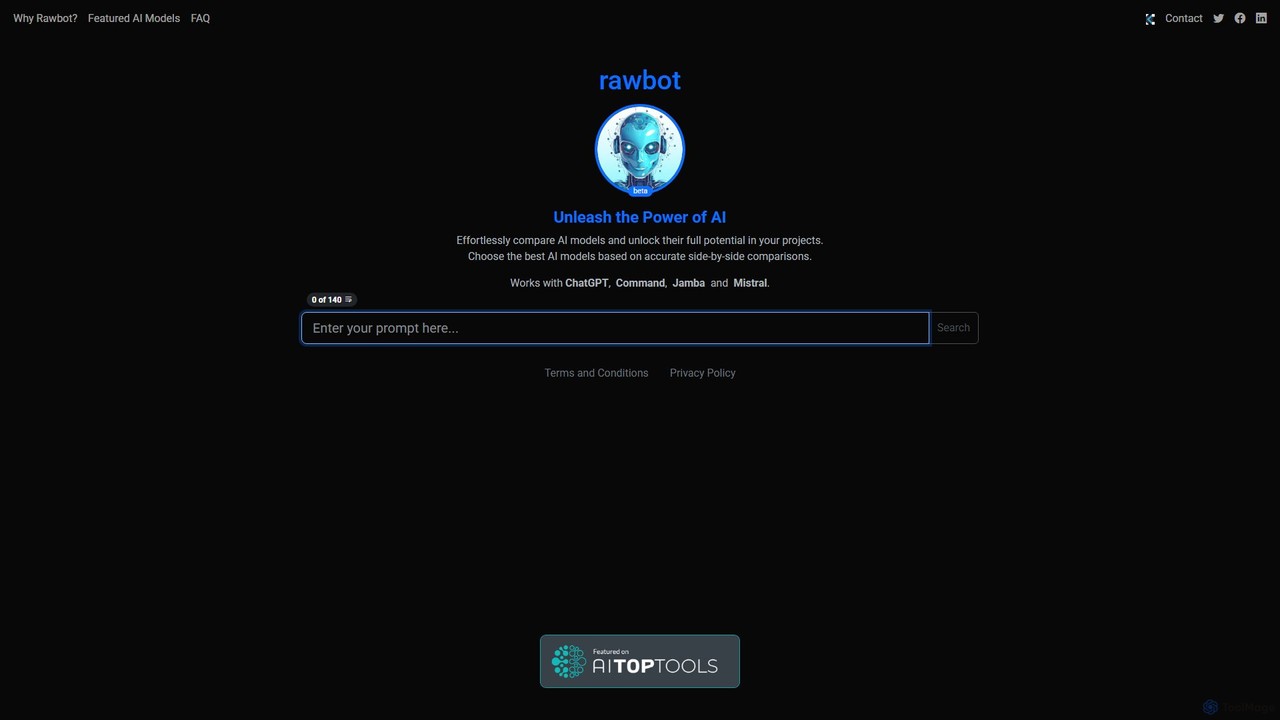
Rawbot is an intuitive AI tool for simple and effective side-by-side comparison of large language models. Input a …
Rawbot is an intuitive AI tool for simple and effective side-by-side comparison of large language models. Input a single prompt and instantly see responses from various models like ChatGPT, Mistral, Jamba, and Command. This helps developers, writers, and researchers make informed decisions by directly evaluating model performance, style, and accuracy for their specific needs, streamlining the model selection process.
nonfinito
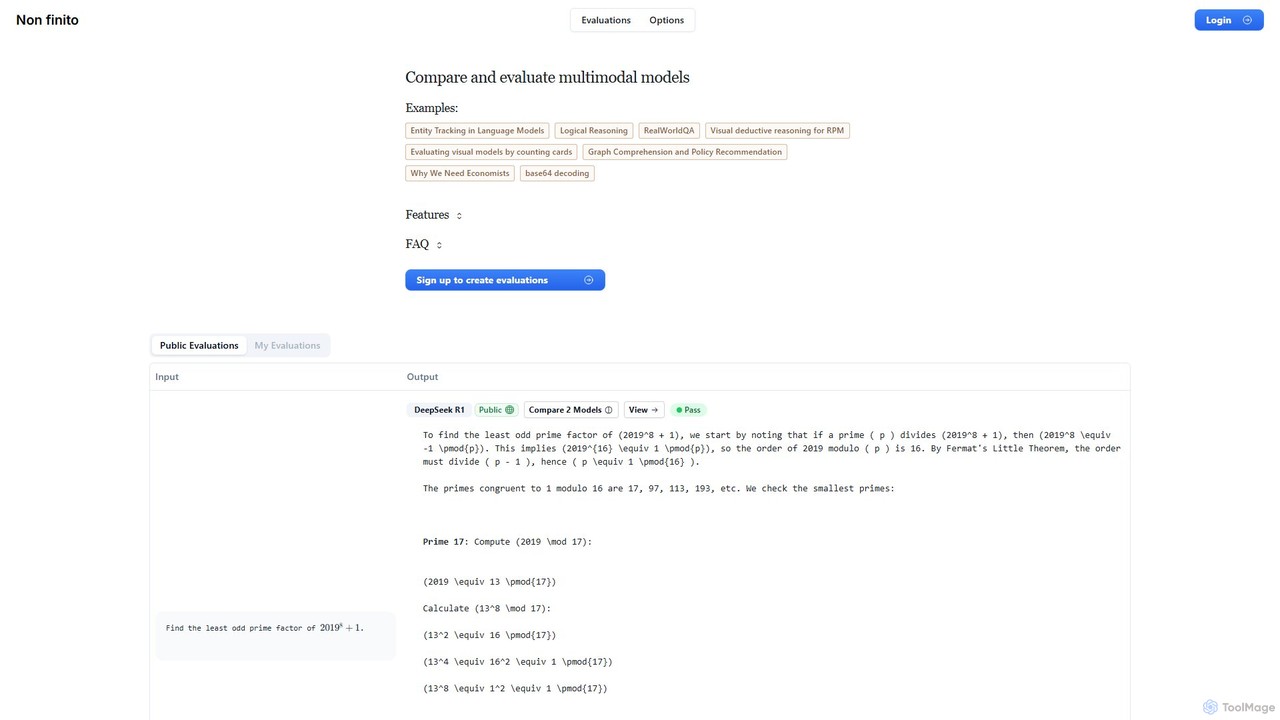
nonfinito is a comprehensive platform for evaluating and comparing multimodal AI models. It enables developers, researchers, and businesses …
nonfinito is a comprehensive platform for evaluating and comparing multimodal AI models. It enables developers, researchers, and businesses to test various LLMs side-by-side on custom prompts, assess their performance with pass/fail ratings, and analyze raw outputs. Create public or private benchmarks to find the best model for any task.
withpi.ai
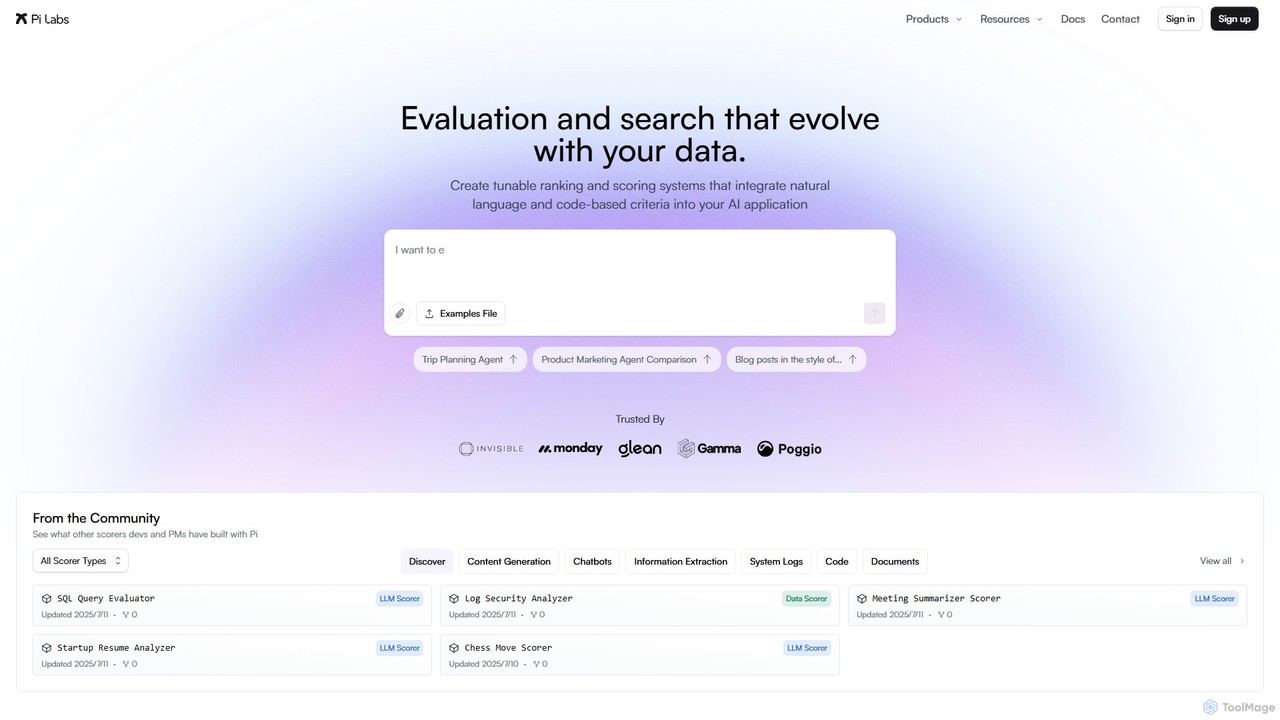
A developer-focused platform for creating tunable, fast, and cost-effective scoring and evaluation systems for AI applications. It transforms …
A developer-focused platform for creating tunable, fast, and cost-effective scoring and evaluation systems for AI applications. It transforms qualitative criteria into precise, quantitative metrics for model monitoring, ranking, and RAG optimization.
AfterQuery
AfterQuery is an AI research lab dedicated to advancing foundational models by creating high-quality, human-generated datasets and contamination-free …
AfterQuery is an AI research lab dedicated to advancing foundational models by creating high-quality, human-generated datasets and contamination-free benchmarks. It focuses on improving model performance through superior training data and rigorous evaluation.
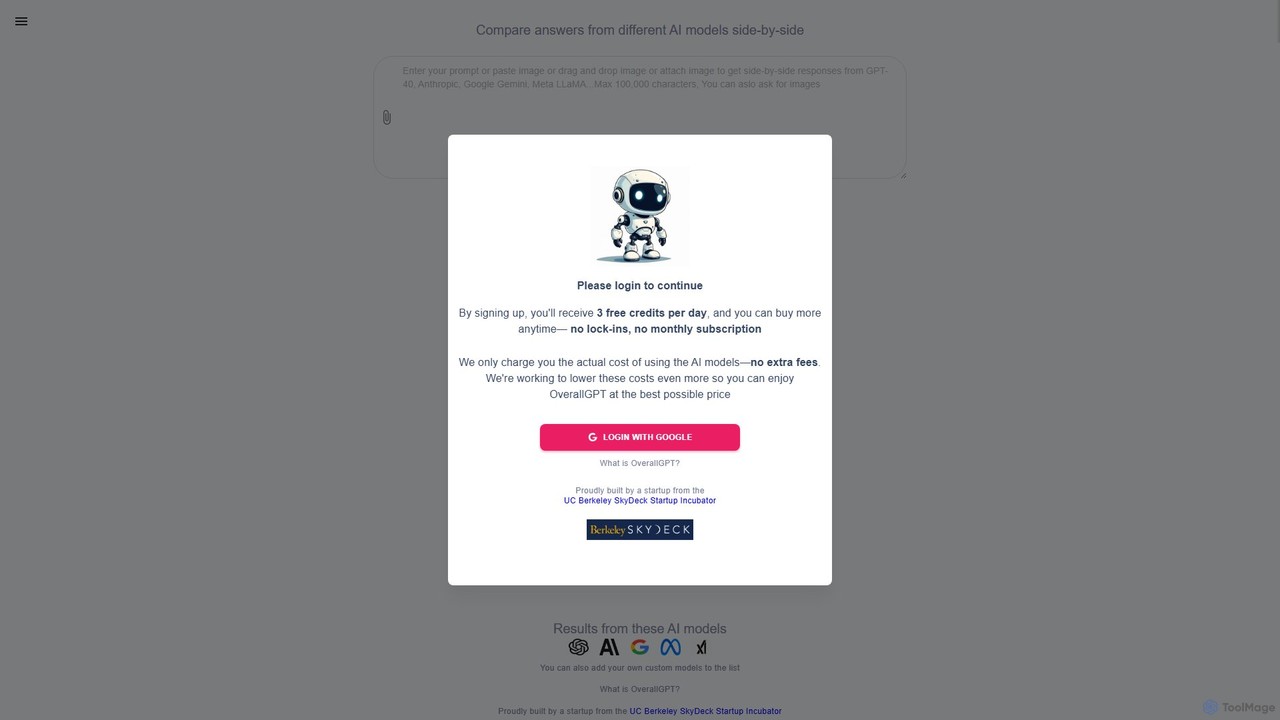
OverallGPT
OverallGPT is an innovative platform that allows you to compare responses from leading AI models like GPT-4, Claude, …
OverallGPT is an innovative platform that allows you to compare responses from leading AI models like GPT-4, Claude, Gemini, and Llama side-by-side. It helps you understand their unique strengths and weaknesses, and even generates a synthesized 'Overall Answer' that combines the best aspects of each response, enabling you to make more informed decisions and enhance your productivity.
About Model Evaluation
Model Evaluation tools are specialized platforms for systematically assessing the performance, accuracy, and reliability of machine learning models. These tools automate the calculation of key metrics like precision, recall, and F1-score, and test for factors such as bias and robustness. They are essential for developers and MLOps teams to validate model behavior, compare different versions, and ensure AI systems are production-ready and function as intended in the real world. This rigorous assessment builds trust and is a critical part of the developer toolchain for responsible AI.
Core Features
- Automated Metrics Calculation: Automatically computes a wide range of performance metrics (e.g., Accuracy, F1-Score, AUC-ROC) for classification and regression tasks.
- Performance Benchmarking: Enables side-by-side comparison of multiple models or versions against standardized datasets to identify the top performer.
- Bias and Fairness Auditing: Detects and quantifies biases in model predictions across different demographic groups or data segments.
- Robustness Testing: Evaluates model stability and performance against adversarial attacks, data drift, and unexpected inputs.
- Explainability and Visualization: Generates reports, dashboards, and visualizations (like SHAP or LIME plots) to help interpret model predictions and behavior.
Use Cases
Model Evaluation tools are primarily used by data scientists, machine learning engineers, and AI researchers in sectors like finance, healthcare, and technology. For instance, a financial institution uses these tools to evaluate credit scoring models for fairness, while a healthcare company validates the accuracy of a diagnostic imaging model before clinical use. They are integral to any MLOps workflow for ensuring model quality.
How to Choose
When selecting a Model Evaluation tool, consider its compatibility with your model frameworks (e.g., TensorFlow, PyTorch, scikit-learn). Evaluate the breadth of its metrics library and its support for custom metrics. Assess its integration capabilities with your existing MLOps stack, such as experiment trackers and CI/CD pipelines. Finally, consider its features for collaboration, reporting, and specific needs like LLM or computer vision evaluation.
Model EvaluationUse Cases
Benchmarking LLM Responses for a Chatbot
A customer service team uses a model evaluation tool to compare two large language models (e.g., a fine-tuned open-source model vs. a commercial API) for their new chatbot. They upload a 'golden dataset' of common user queries and desired responses. The tool automatically runs both models, scores their outputs on metrics like relevance, tone accuracy, and factual consistency, and presents a side-by-side comparison dashboard. This allows the team to objectively select the model that provides a better user experience before deployment.
Auditing a Hiring Model for Fairness
An HR technology company uses a model evaluation platform to audit its AI-powered resume screening tool. The platform analyzes the model's decisions across a test dataset annotated with demographic information (e.g., gender, ethnicity). It generates a fairness report, highlighting any statistical disparities in recommendation rates between different groups. This process helps the company identify and mitigate potential biases, ensuring their tool promotes equitable hiring practices and complies with regulations.
Validating a Medical Imaging Diagnosis Model
A healthcare AI startup is developing a computer vision model to detect anomalies in X-rays. Before seeking regulatory approval, they use a model evaluation tool to rigorously test its performance. The tool calculates critical metrics like sensitivity, specificity, and AUC-ROC score against a dataset validated by expert radiologists. It also generates visualizations, such as heatmaps, showing which parts of an image the model focuses on for its predictions. This provides crucial evidence of the model's accuracy and reliability for clinical use.
Regression Testing for a Fraud Detection System
A fintech company integrates a model evaluation tool into its CI/CD pipeline. Before deploying a new version of their fraud detection model, an automated job is triggered. The tool runs the new model against a curated dataset of historical fraud patterns and normal transactions. It then compares the new model's F1-score and false positive rate against the current production model's benchmarks. If performance degrades, the deployment is automatically halted, preventing a faulty model from reaching production and ensuring system stability.
Comparing Recommendation Engines with A/B Testing
An e-commerce platform wants to test a new recommendation algorithm against their existing one. They use a model evaluation framework to set up an A/B test, directing 50% of user traffic to each model. The framework logs user interactions (clicks, purchases) for both groups. After a week, a data scientist uses the tool's dashboard to compare key business metrics like click-through rate (CTR) and conversion rate. The visual comparison and statistical significance tests clearly show which algorithm drives more engagement and revenue, enabling a data-driven decision.
Monitoring for Data and Concept Drift in Production
An MLOps team uses an evaluation tool to continuously monitor a deployed demand forecasting model. The tool compares the statistical distribution of live production data against the training data distribution, automatically flagging data drift if significant differences arise. It also monitors the model's predictive accuracy on incoming data. If accuracy drops over time even when the input data looks similar, it signals concept drift (i.e., the underlying relationships have changed). These alerts prompt the team to investigate and potentially retrain the model before its performance severely impacts business operations.