IdeasBerg
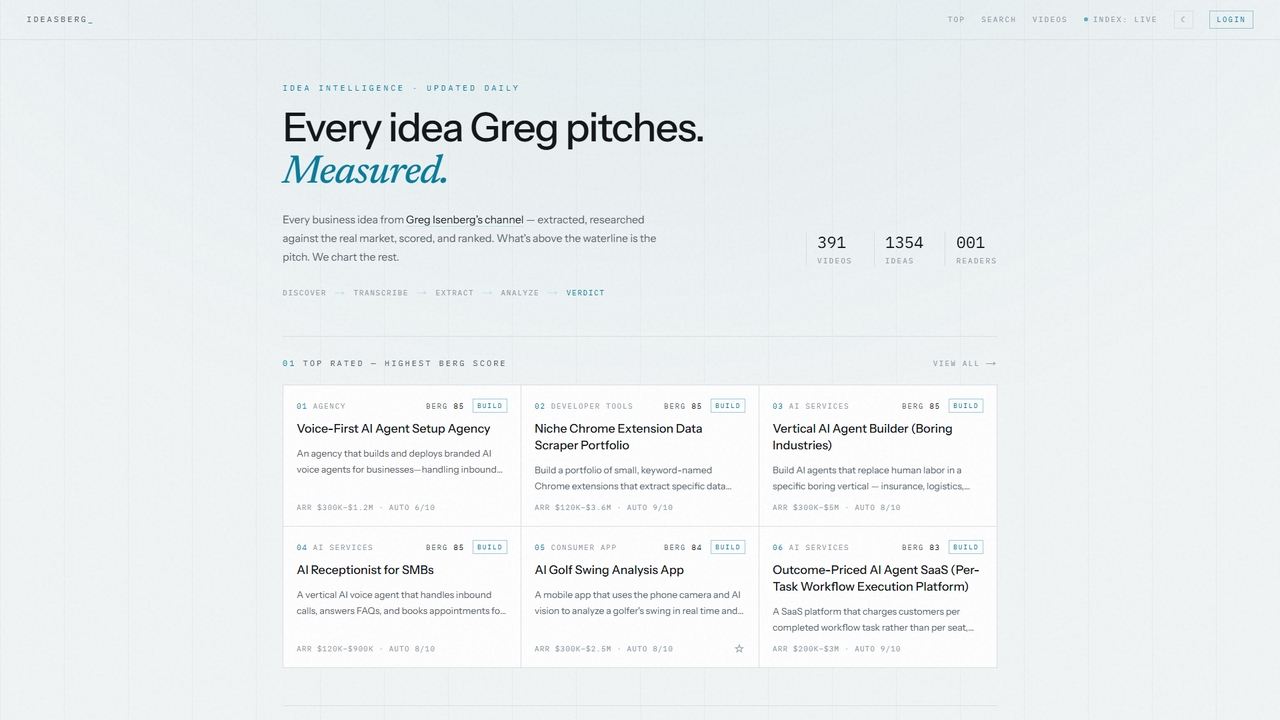
A curated database and research tool that extracts, scores, and ranks business ideas from Greg Isenberg's channel, providing market analysis and actionable insights for entrepreneurs.
Startup IdeasVisits 6.6KFavorites 18Likes 26
Popular Research AI tools in Productivity include NotebookLM, Meta AI, Course Hero, metaso, Wolfram|Alpha, Google AI, Skywork, Anara, Elicit, and droracle, helping you work more efficiently.
A curated database and research tool that extracts, scores, and ranks business ideas from Greg Isenberg's channel, providing market analysis and actionable insights for entrepreneurs.
Startup Ideas
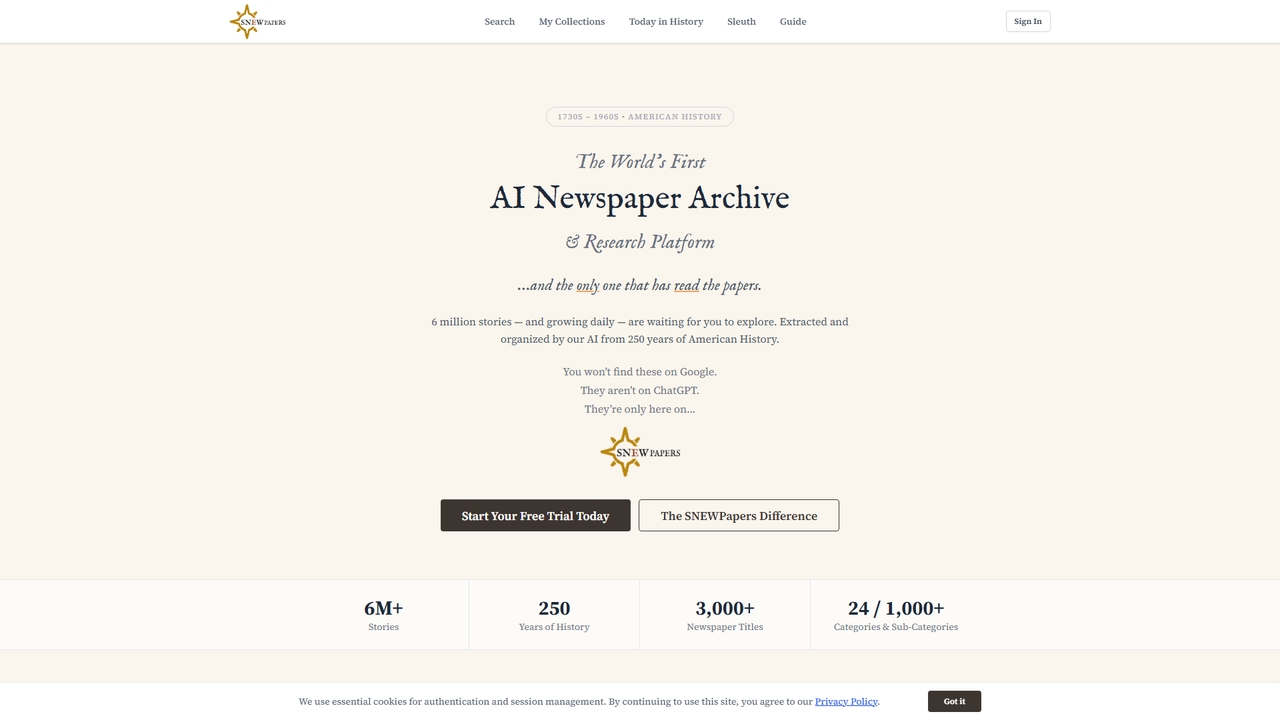
SNEWPapers is the world's first AI-powered newspaper archive and research platform, covering 250 years of American history with over 6 million stories from 3,000+ newspaper titles.
History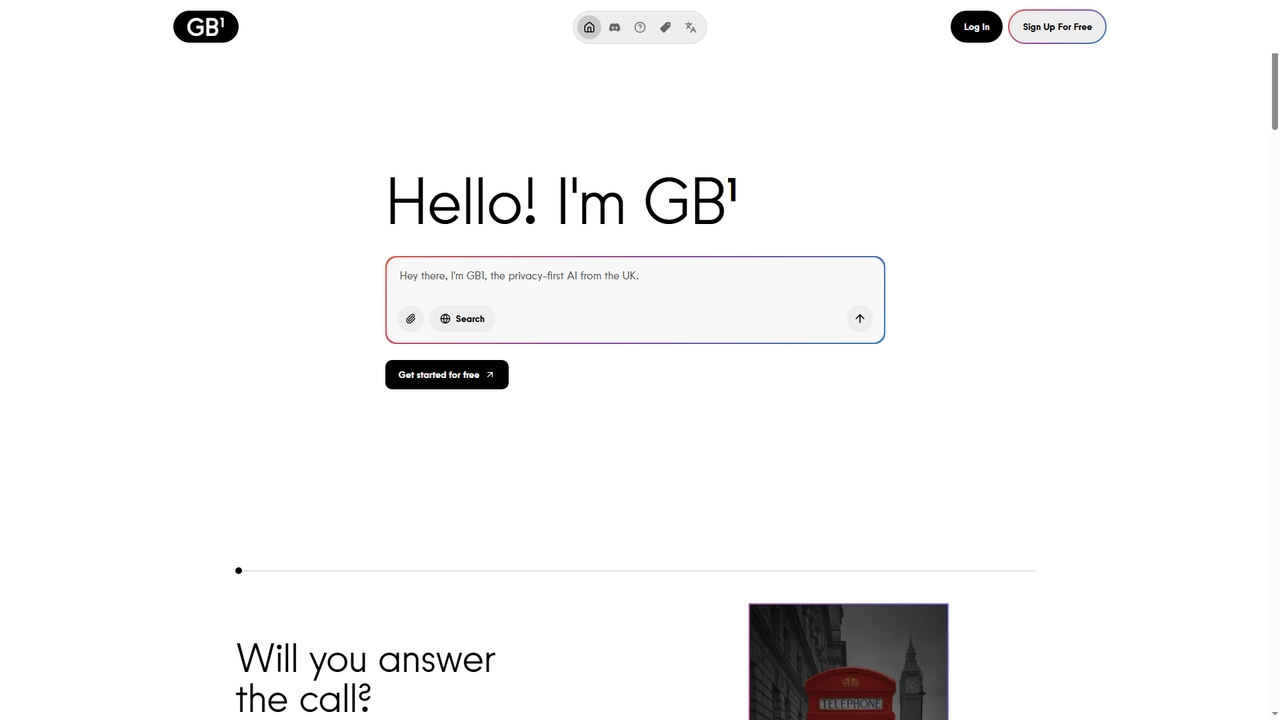
GB1 is a privacy-first AI assistant built in the UK. Powered by the sovereign Locai L1 model, it delivers top-tier performance on benchmarks while ensuring your conversations are never used for training. With UK data residency, end-to-end encryption, and a commitment to sustainability, GB1 offers a powerful, ethical alternative to mainstream AI.
Ai Assistant
Almanac is an AI-powered tool designed to generate detailed biographies and professional profiles on individuals. It provides comprehensive insights, making it ideal for research, networking, and understanding key figures across various industries.
Networking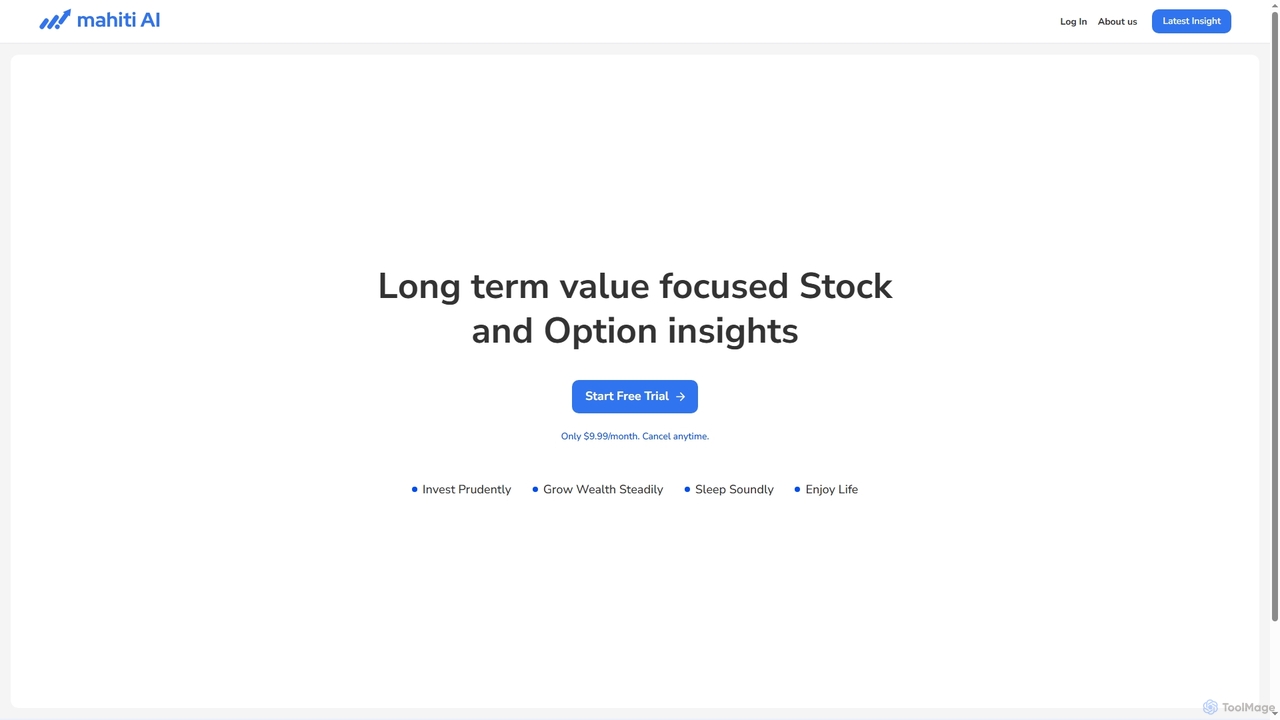
Mahiti is an AI-powered service providing stock and option insights for long-term value investors. It combines traditional fundamental analysis with AI-driven data to deliver thoughtful, conservative investment information. The platform focuses on steady wealth growth and is intended for educational and informational purposes, not as financial advice.
Investment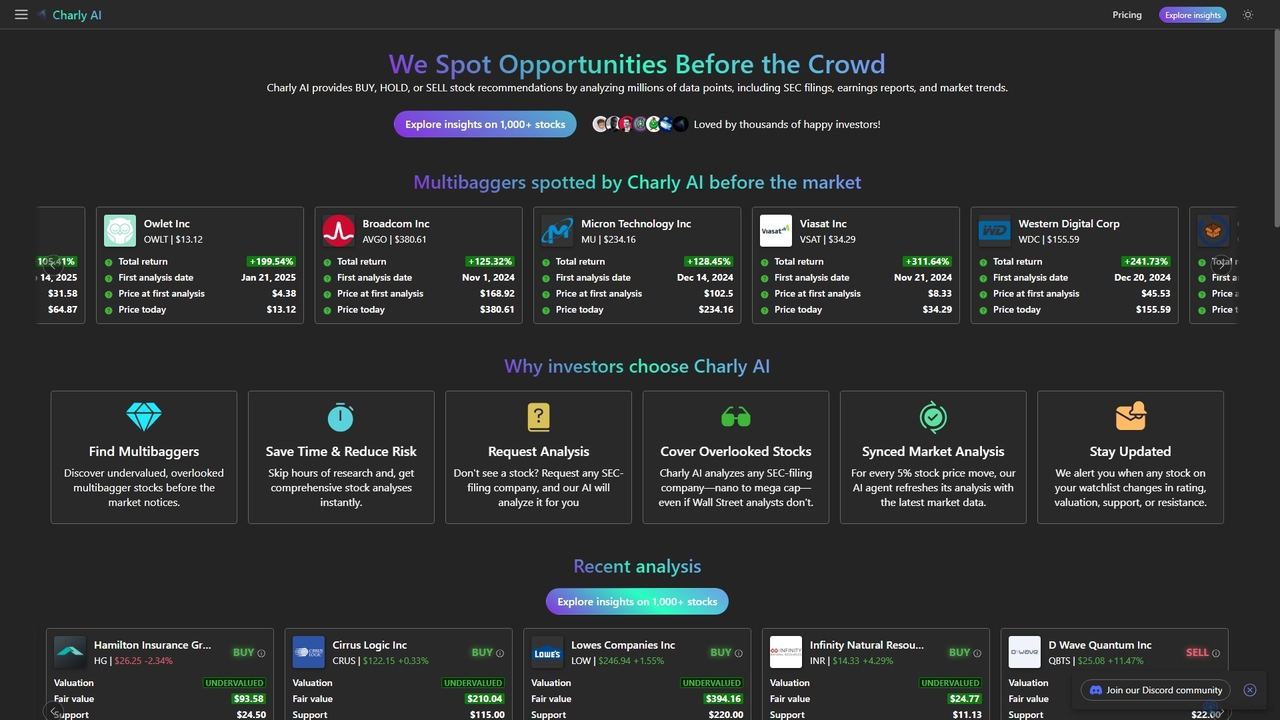
Charly AI is an AI-powered stock picker that provides data-driven investment insights. It analyzes millions of data points, including SEC filings and market trends, to deliver BUY, HOLD, or SELL recommendations, helping investors discover undervalued opportunities and save research time.
Business Intelligence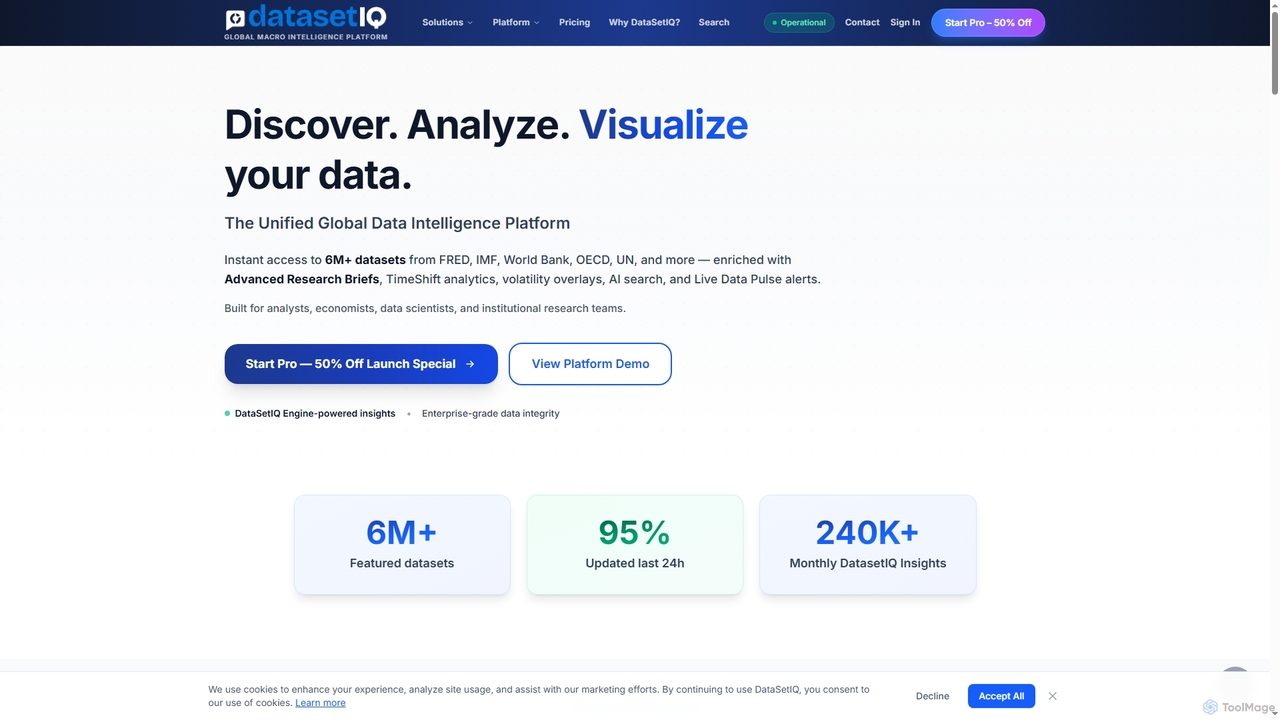
An AI-powered global macro data intelligence platform providing instant access to over 6 million datasets from sources like FRED, IMF, and the World Bank. It offers advanced analytics, AI-generated research briefs, and real-time alerts for analysts, economists, and data scientists, serving as a cost-effective alternative to traditional data terminals.
Market Research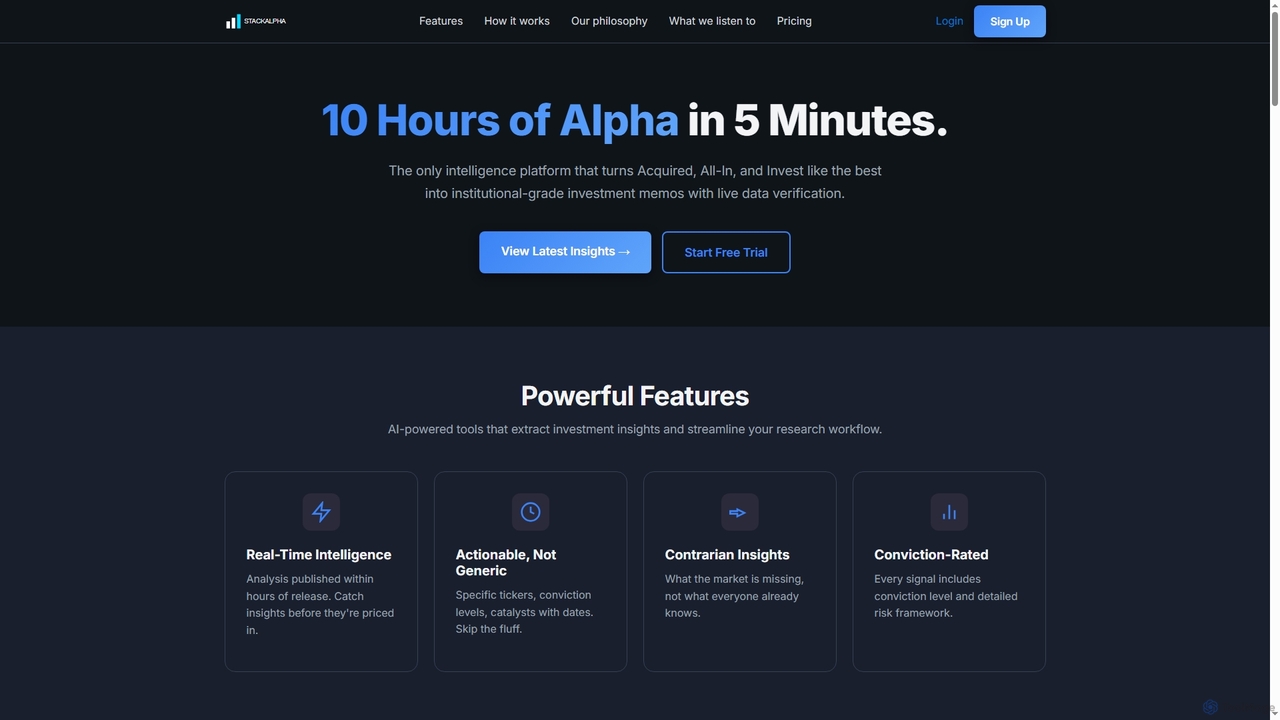
StackAlpha is an AI-powered investment intelligence platform that analyzes expert conversations from top finance and tech podcasts. It extracts actionable, conviction-rated insights with specific tickers and catalysts, delivering concise investment memos within hours to help investors gain a time-sensitive, contrarian edge.
Business Intelligence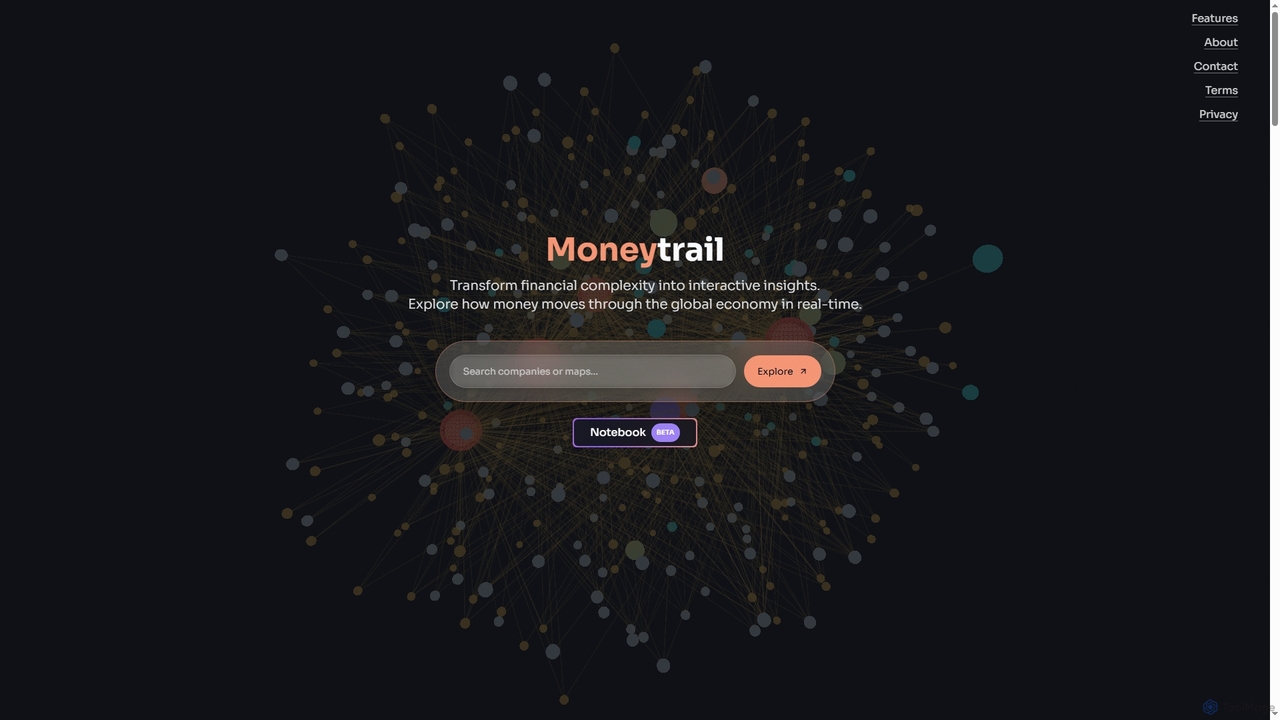
Moneytrail is an interactive visualization platform that transforms complex financial data into clear insights. It allows users to explore the real-time flow of money through the global economy by mapping connections, ownership structures, and contract relationships between companies, governments, and institutions.
Market Research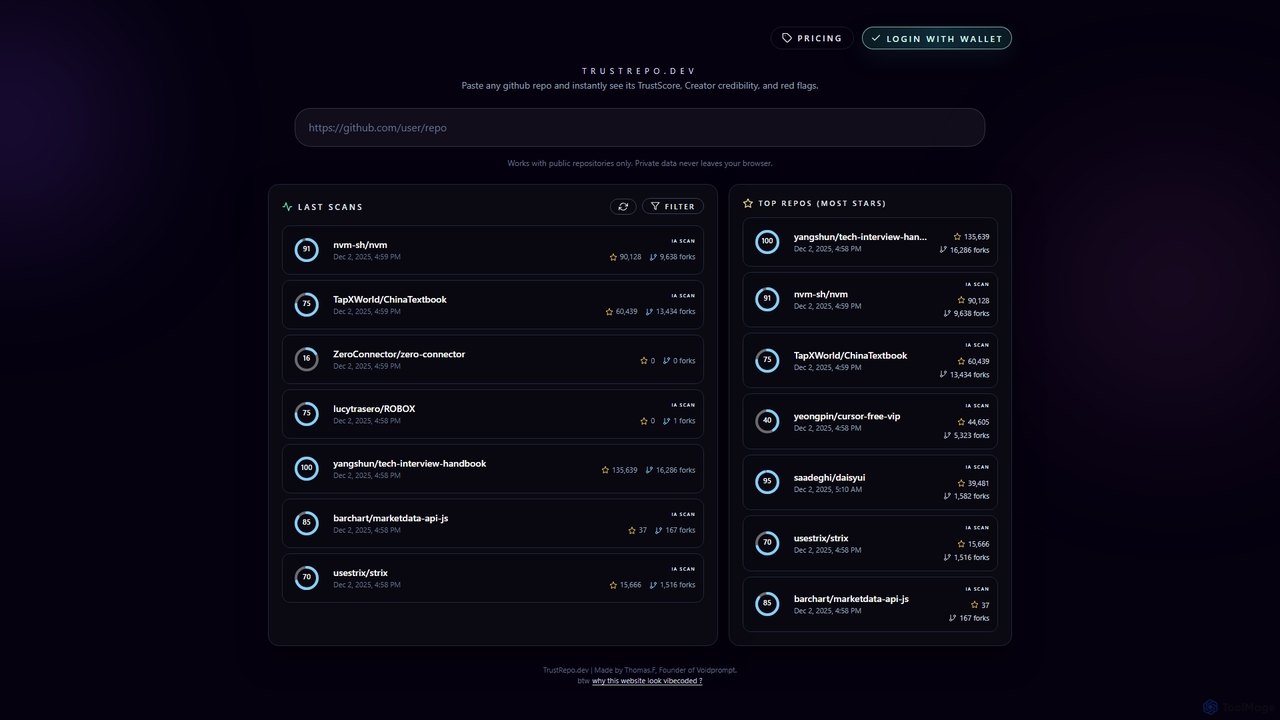
Trustrepo is an AI-powered tool that analyzes public GitHub repositories to generate a TrustScore. It helps developers and investors assess the safety, legitimacy, and potential risks of open-source projects through algorithmic analysis and in-depth AI code scans.
Code Analysis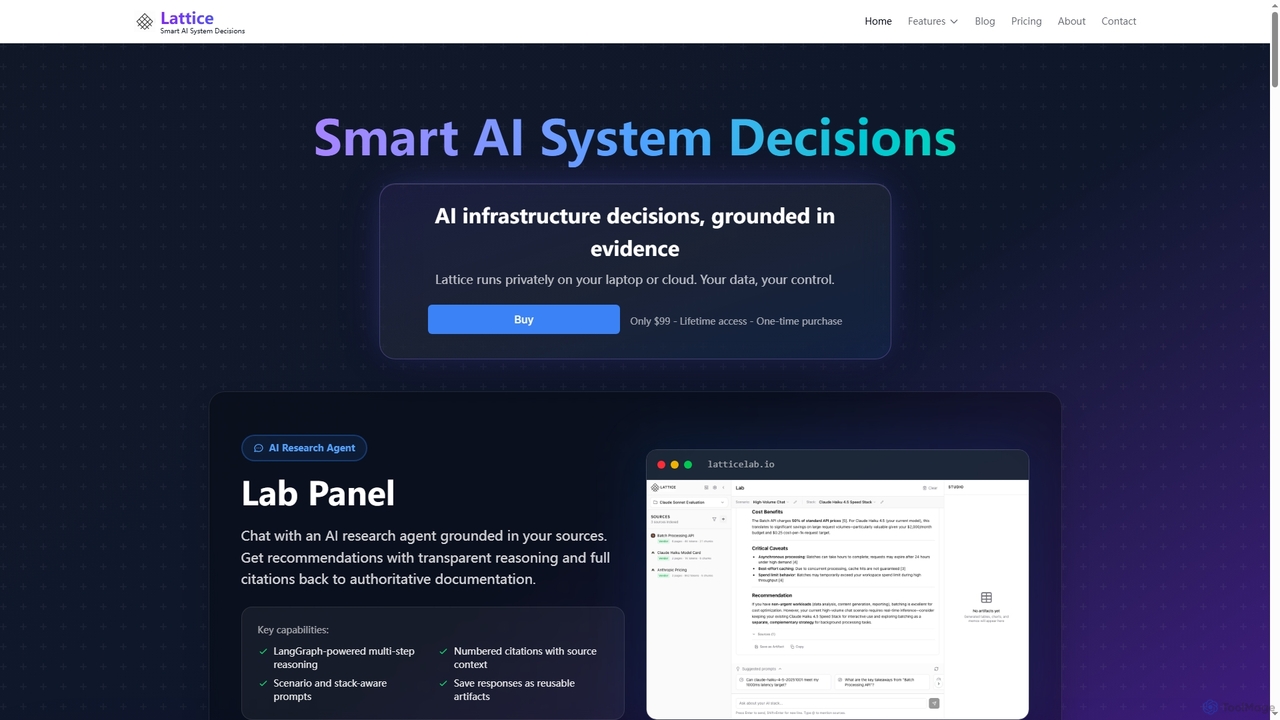
Lattice is a private AI research assistant designed for engineers and technical leaders to make evidence-based AI infrastructure decisions. It runs locally on your device, analyzing your documents, vendor specs, and pricing to provide recommendations with verifiable citations, streamlining complex research.
Decision Making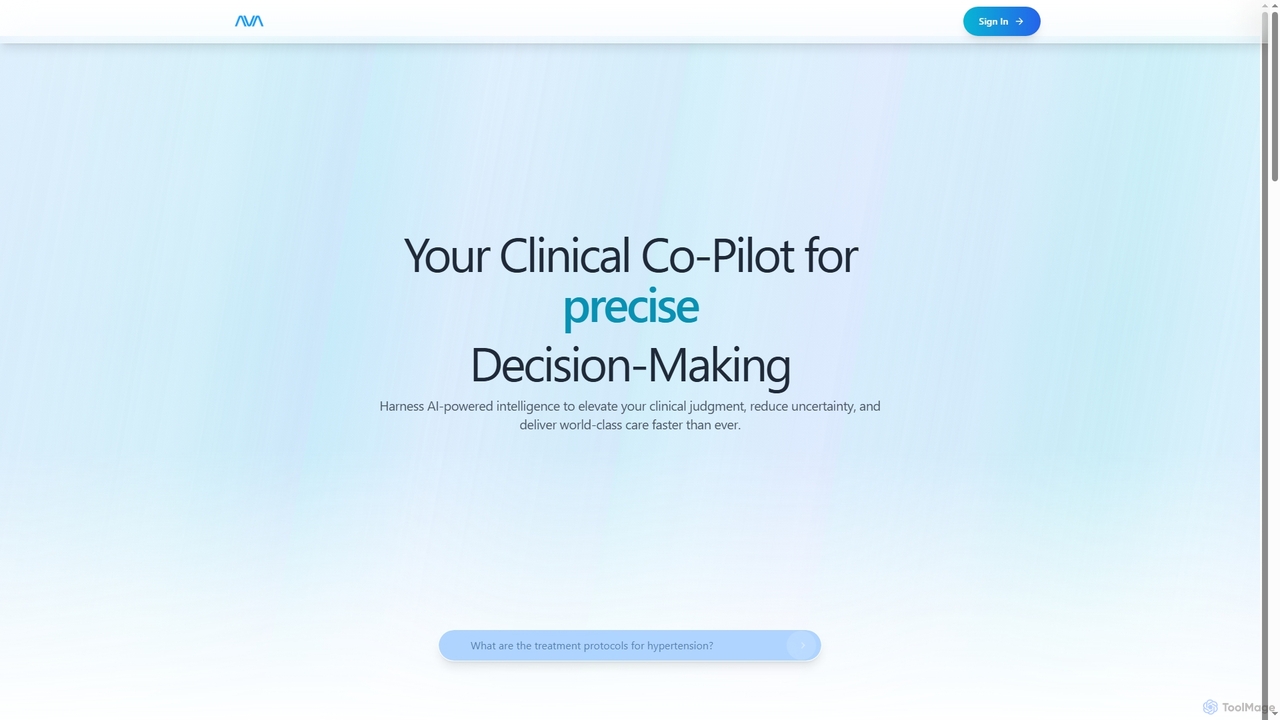
AVA is an AI-powered clinical co-pilot designed for medical professionals to enhance decision-making with intelligent, evidence-based, and precise insights. It synthesizes the latest medical literature from trusted sources, providing instant support for diagnostics, treatment protocols, and personalized patient care.
Medical Assistant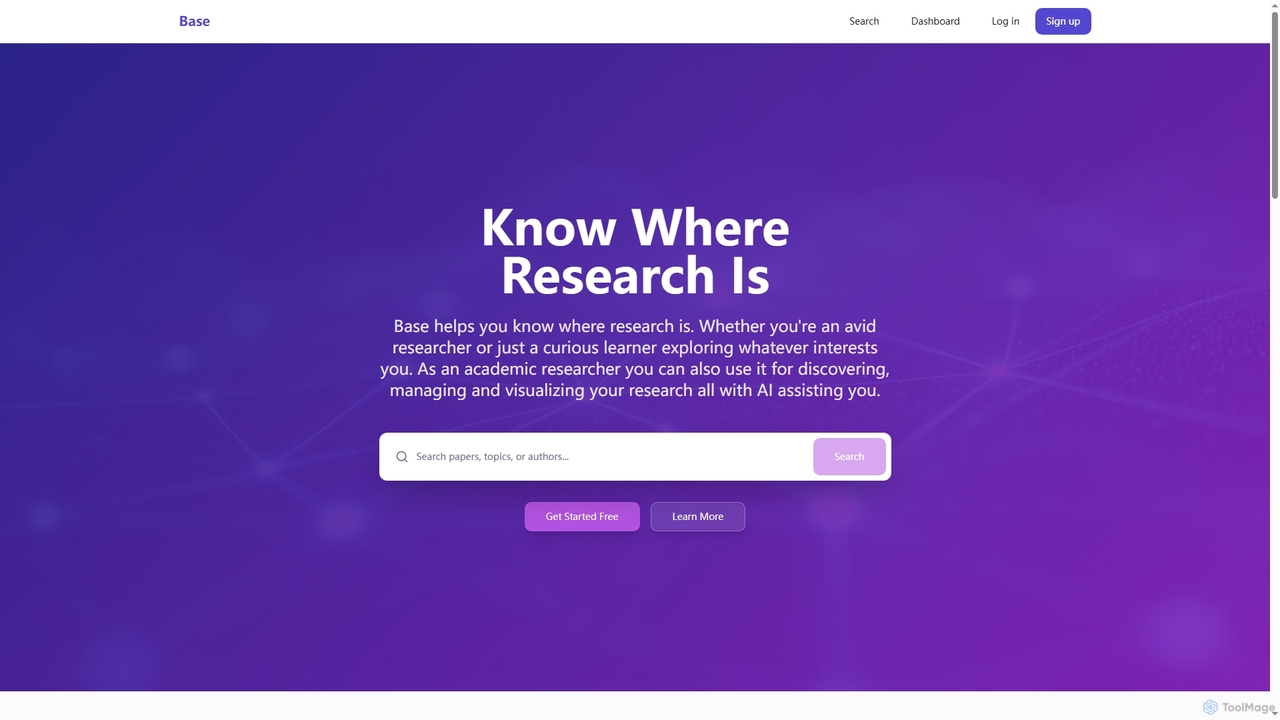
Base is an AI-powered research platform for academics and learners. It enables searching over 240 million papers, visualizing research landscapes with interactive graphs, organizing findings, and using an AI chat to uncover deeper insights from credible sources.
Academic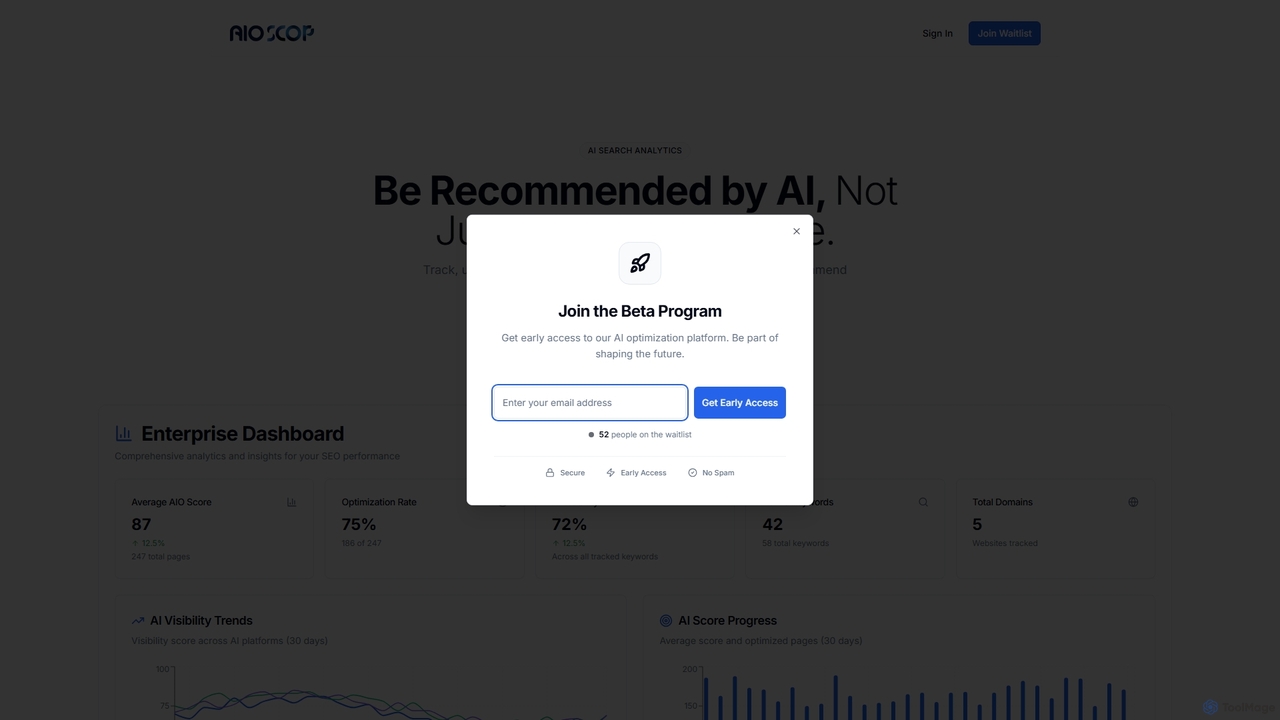
Aioscop is an AI-powered SEO platform designed to track, analyze, and optimize your brand's visibility within AI-generated responses. It monitors mentions and recommendations across major AI platforms like ChatGPT, Claude, and Gemini, helping you adapt your strategy for the new era of AI search.
Content Marketing
A specialized tool designed for medical researchers, academics, and students to efficiently identify gaps in existing medical research, streamlining the process of finding novel areas for study and innovation.
Literature Review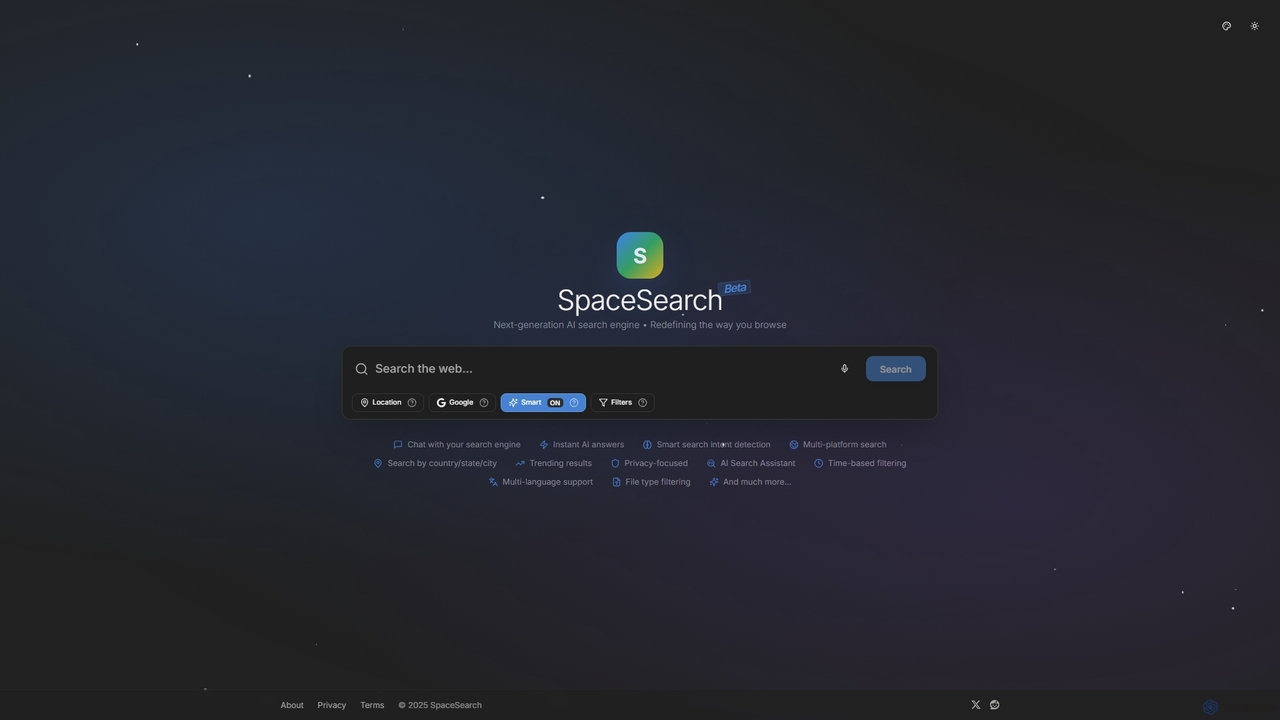
SpaceSearch is a next-generation, AI-powered search engine designed to redefine online browsing. It provides instant AI answers, understands search intent, and allows users to chat with the search engine for a more interactive and private experience.
Research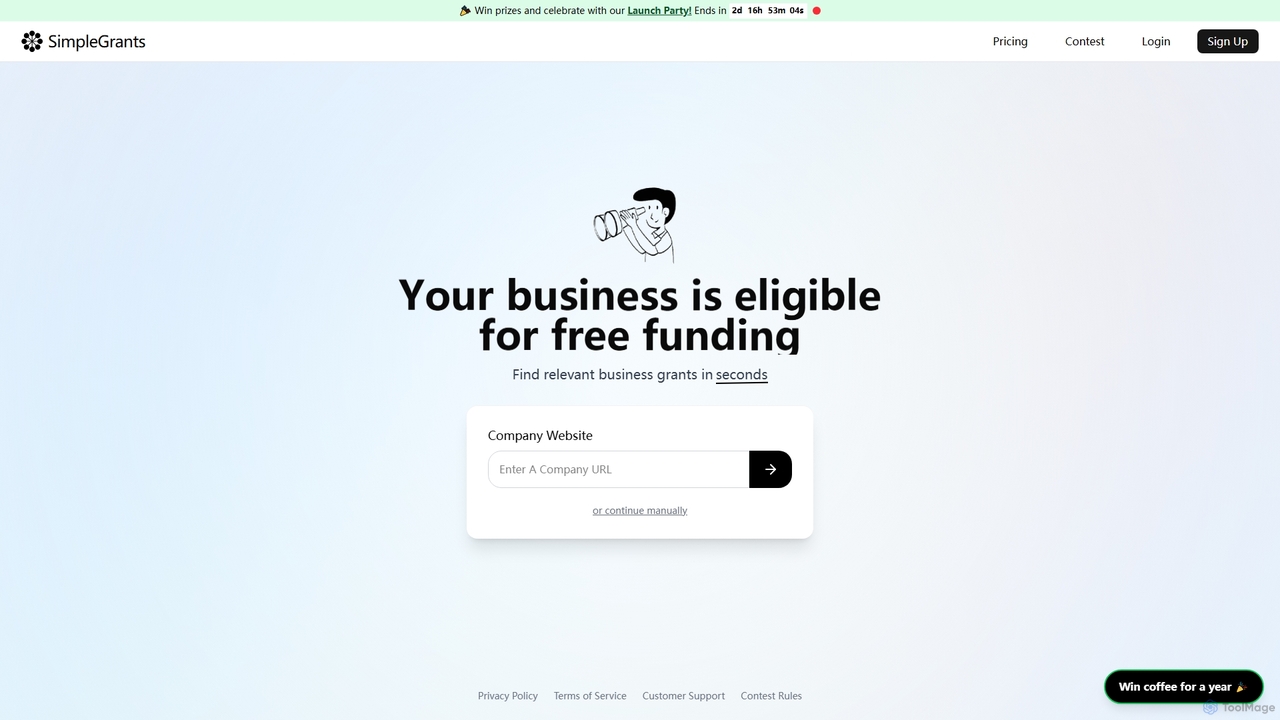
SimpleGrants is an AI-powered platform designed to help businesses quickly find eligible grant funding opportunities. It streamlines the grant discovery process, offering unlimited grant reports and application support, along with exclusive early adopter discounts and a risk-free money-back guarantee.
Finance
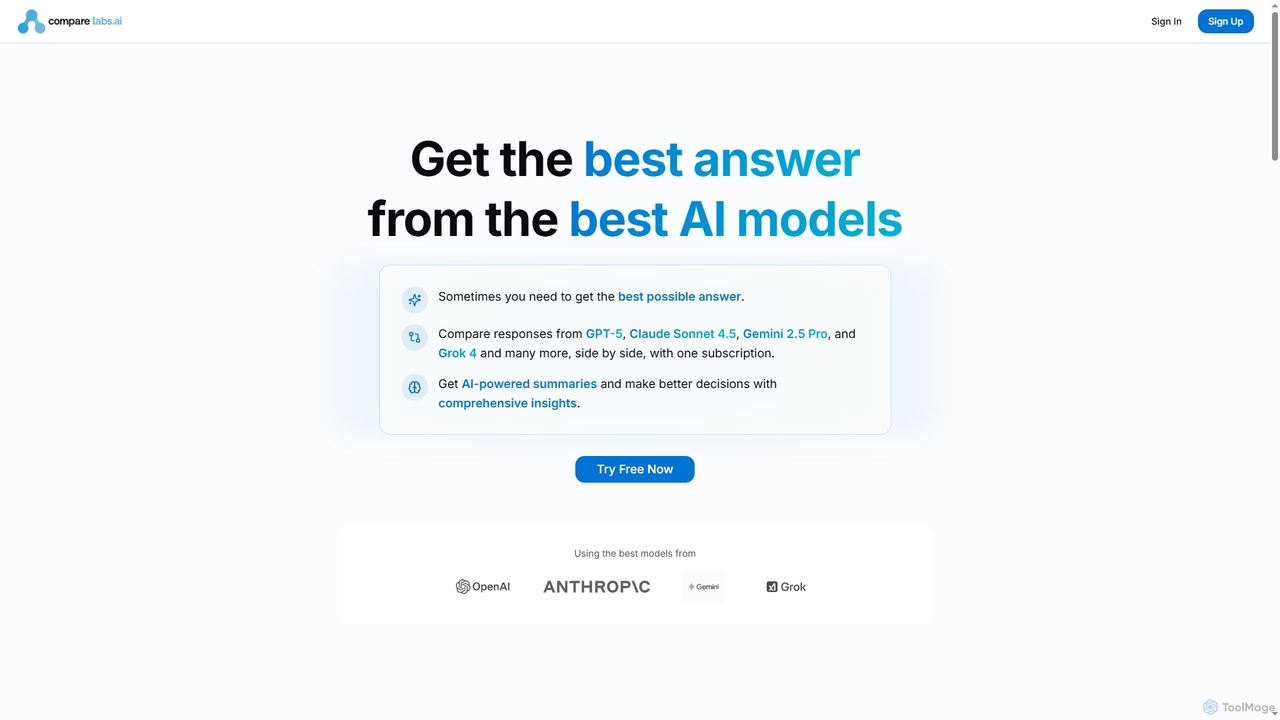
CompareLabs is an advanced AI platform that allows users to simultaneously query and compare responses from over 20 leading AI models, including GPT-5, Claude Sonnet 4.5, Gemini 2.5 Pro, and Grok 4. It synthesizes these diverse perspectives into a comprehensive "meta-answer," enabling users to get the best possible insights for complex research, creative writing, and problem-solving.
Large Language Models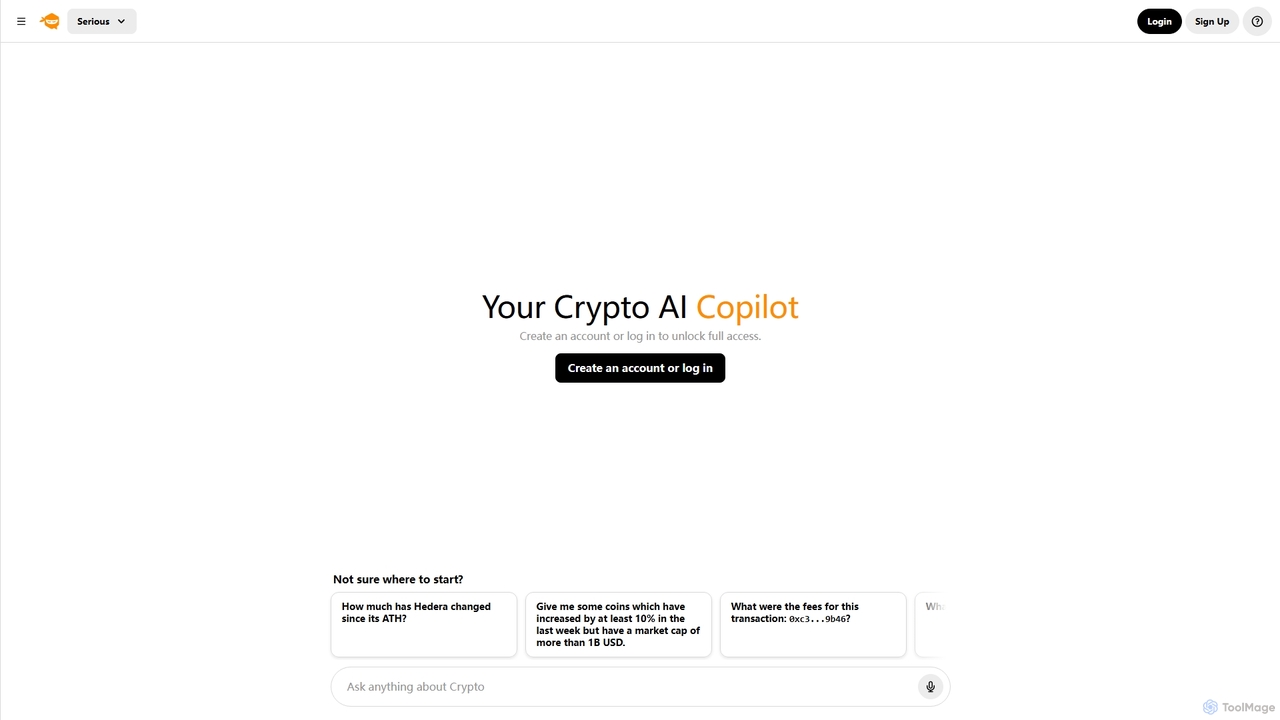
Chatoshi AI Search is your dedicated Crypto AI Copilot, offering real-time insights into cryptocurrency markets, transaction details, and social sentiment. It helps users navigate the complex world of digital assets with intelligent, chat-based assistance.
Cryptocurrency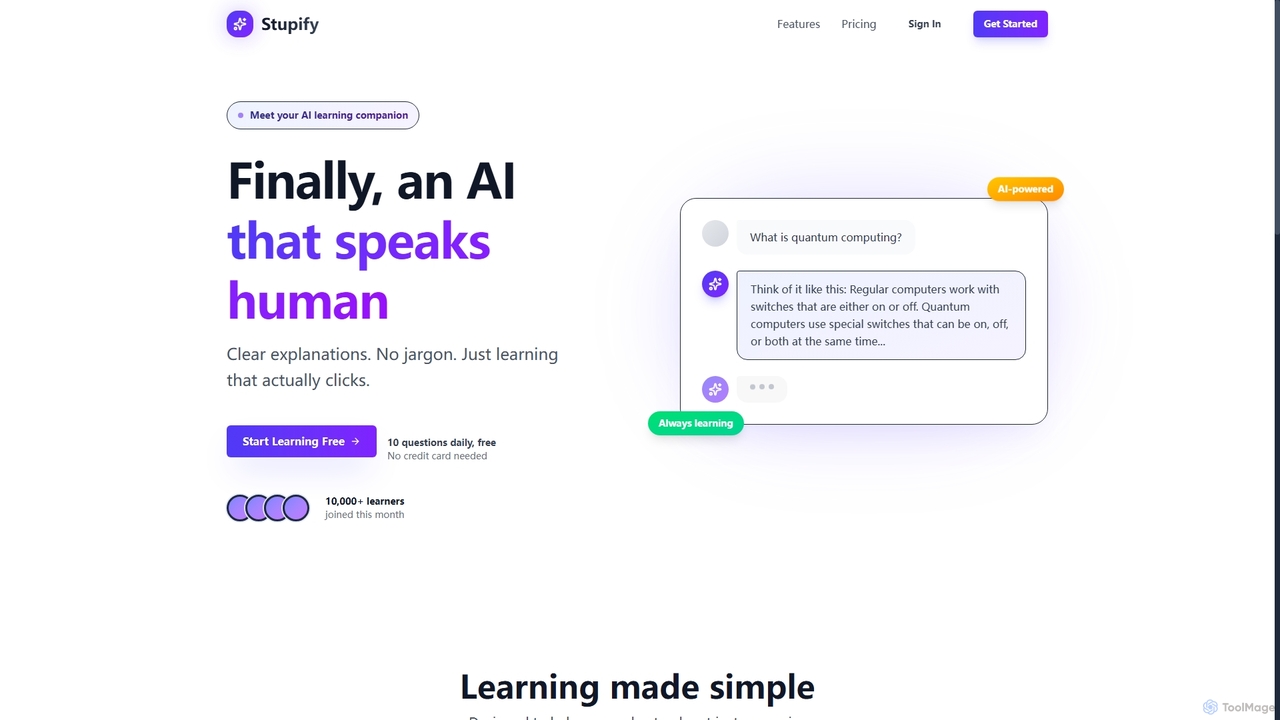
Stupify is an AI learning companion designed to explain complex topics in simple, human-like language. It avoids jargon and uses clear examples and analogies to make learning click. Users can choose their learning level, from beginner to expert, and receive warm, encouraging answers instantly. It's ideal for students, professionals, and anyone curious to understand the world better without confusion.
Learning Tools
TopicMojo is a comprehensive topic and question research tool designed for content creators, SEO specialists, and marketers. It aggregates data from over 50 sources, including Google, social media, and forums, to help you discover engaging content ideas, understand user intent, and track emerging trends. Its core features include Topic Model, Social Model, Question Finder, and a unique Search Listener.
Content Marketing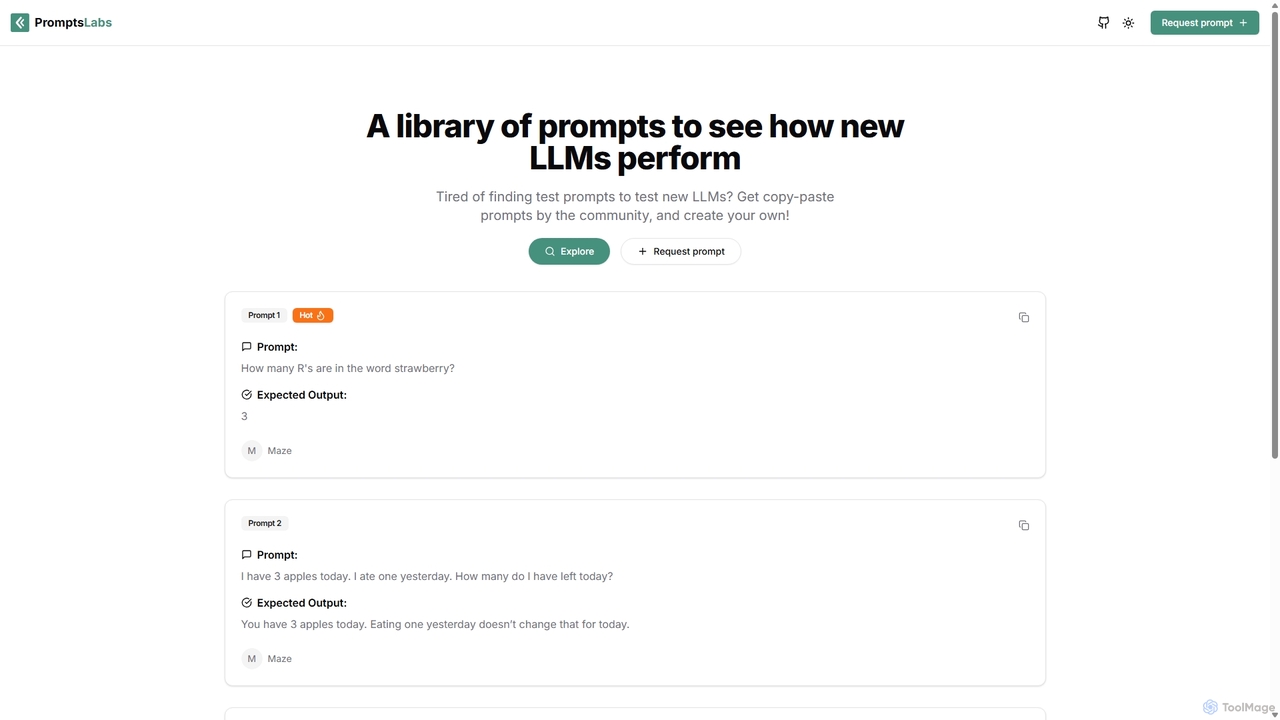
PromptsLabs is a community-driven library of prompts designed for testing and evaluating the performance of new Large Language Models (LLMs). It provides a standardized collection of copy-paste prompts with expected outputs, helping developers and researchers benchmark models on tasks like logic, reasoning, and math.
Prompt EngineeringAI Research tools are specialized applications designed to automate and accelerate the process of gathering, analyzing, and synthesizing information. They leverage natural language processing (NLP) and machine learning to understand complex queries, scan vast databases of documents, and extract key insights. These tools are invaluable for academics, analysts, and professionals, transforming hours of manual work into minutes of automated discovery. By identifying patterns, summarizing lengthy texts, and organizing findings, they significantly enhance the depth and efficiency of any research project.
These tools are widely used in academia for literature reviews, in business for market and competitive analysis, and in legal fields for case law research. Journalists, R&D professionals, and financial analysts also rely on them to quickly process large volumes of information and uncover critical insights for their work.
When selecting an AI Research tool, consider the scope of its database (e.g., academic journals, news, legal documents). Evaluate its analytical capabilities, such as summarization accuracy and data extraction features. Also, check for integration with reference managers and the supported citation styles. Finally, assess the user interface and pricing model to ensure it fits your workflow and budget.
A postgraduate student is tasked with writing a comprehensive literature review for their thesis, a process that traditionally takes weeks. Using an AI Research tool, they input their core research questions and keywords. The tool scans millions of academic papers, instantly identifying and summarizing the most relevant studies. It visualizes connections between authors and concepts, helping the student spot research gaps. The student can then use the tool to extract key methodologies and findings from dozens of papers into a structured table, drastically reducing manual reading time and ensuring no critical work is missed.
A market analyst for a tech company needs to understand emerging trends and competitor strategies. They use an AI Research tool to monitor thousands of sources, including industry reports, news articles, and company filings. The AI automatically extracts data on market size, growth rates, and key players, presenting it in a consolidated dashboard. It can also perform sentiment analysis on product reviews and social media mentions, providing qualitative insights. This allows the analyst to produce a detailed competitive landscape report in a fraction of the time, enabling faster strategic decision-making.
A paralegal at a law firm is preparing for a complex case and needs to find supporting precedents. Instead of manually searching through vast legal databases with keyword queries, they use an AI Research tool. They can ask natural language questions like "find cases where a software patent was invalidated due to prior art." The AI understands the legal concepts and returns a highly relevant list of cases, ranked by relevance and jurisdiction. It also summarizes the key arguments and rulings of each case, allowing the legal team to quickly build a strong foundation for their arguments.
A journalist working on an investigative story needs to verify facts and gather background information quickly and accurately. They use an AI Research tool to cross-reference claims against a wide range of trusted sources, including academic studies, government reports, and archived news. The tool helps trace the origin of a statistic or quote and can summarize long reports to provide context. This enhances the accuracy and depth of their reporting while meeting tight deadlines, ensuring the final article is well-supported by evidence.
An R&D engineer in a manufacturing company is exploring new materials for product development. They use an AI Research tool to search through scientific journals and patent databases. The tool helps them identify emerging material science trends, analyze the properties described in technical papers, and find patents that might be relevant or pose a conflict. By synthesizing information from hundreds of technical documents, the engineer can quickly pinpoint promising avenues for innovation and avoid duplicating existing research, accelerating the R&D cycle.
A financial analyst needs to evaluate the performance of several companies before an earnings call. Manually reading through lengthy quarterly reports (10-Q) and annual reports (10-K) for each company is time-consuming. The analyst uses an AI Research tool to automatically summarize these documents. The tool extracts key financial metrics, management discussions, and risk factors. This allows the analyst to quickly compare companies, identify red flags, and prepare insightful questions for the earnings call, improving the quality and speed of their financial analysis.
AI Research tools are software applications that use artificial intelligence to automate and enhance the process of finding, analyzing, and synthesizing information. Unlike simple search engines, they employ Natural Language Processing (NLP) to understand the context of queries, summarize complex documents, extract specific data points, and identify patterns across multiple sources. They are designed to accelerate knowledge-intensive work for academics, analysts, and professionals.
To choose the right tool, consider these four factors:
The primary difference lies in analysis and synthesis. A standard search engine like Google excels at finding and ranking web pages based on keywords and authority. An AI Research tool goes further by reading and understanding the content within documents. It can summarize articles, compare findings from multiple papers, extract specific data, and identify thematic connections, effectively acting as a research assistant rather than just a directory.
Look for features that streamline your entire research workflow. Key functions include a powerful semantic search that understands natural language questions, high-quality automated summarization to quickly grasp main ideas, and precise data extraction for pulling out figures or quotes. Also valuable are features for organizing findings, generating citations in various formats, and discovering related papers or concepts you might have missed.
A wide range of professionals and students can benefit. This includes academic researchers and students for literature reviews, market analysts for competitive intelligence, lawyers and paralegals for legal precedent discovery, and journalists for fact-checking. R&D teams use them for innovation scouting, and financial analysts use them to digest company reports. Essentially, anyone whose work involves synthesizing large amounts of textual information can significantly improve their productivity.