Freemium
SNEWPapers
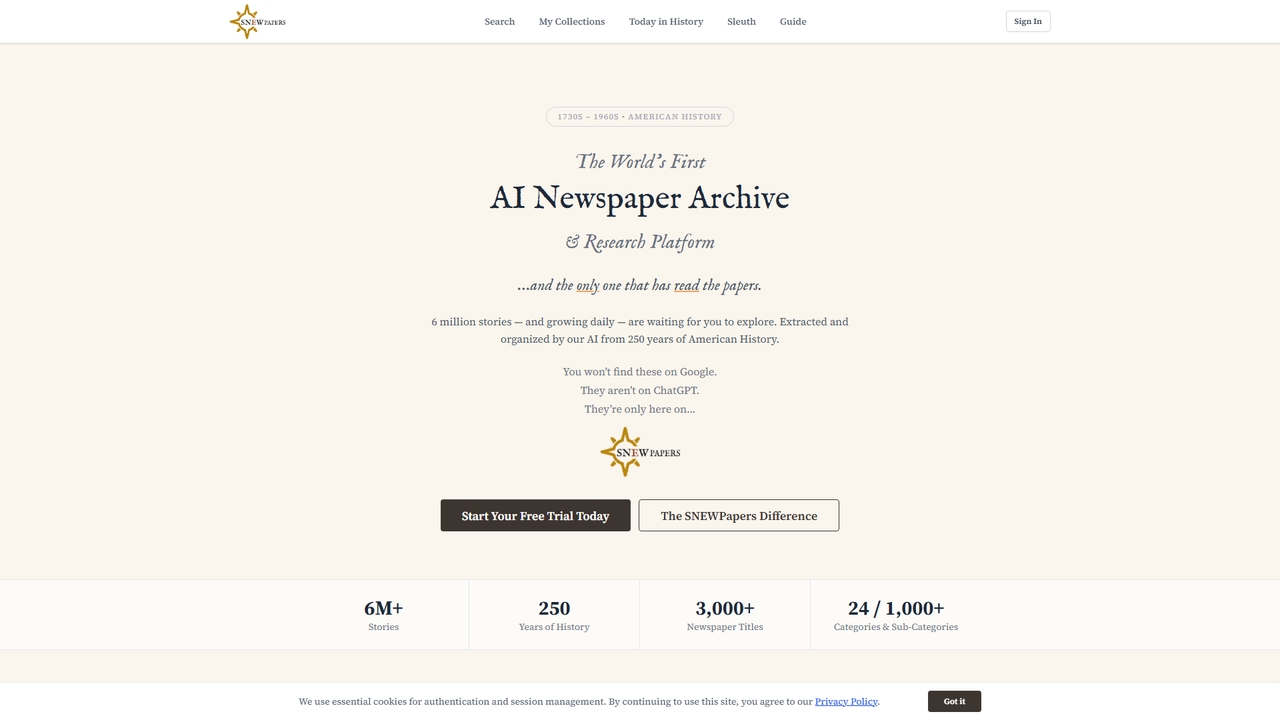
SNEWPapers is the world's first AI-powered newspaper archive and research platform, covering 250 years of American history with over 6 million stories from 3,000+ newspaper titles.
HistoryVisits 9KFavorites 48Likes 52
Popular History AI tools in Education include MyHeritage, WeGoTrip, Hello History, History Timelines, PeopleAI, playamnesia, Narrated Guide, origins.chat, SNEWPapers, and Automated Combat, helping you work more efficiently.
SNEWPapers is the world's first AI-powered newspaper archive and research platform, covering 250 years of American history with over 6 million stories from 3,000+ newspaper titles.
History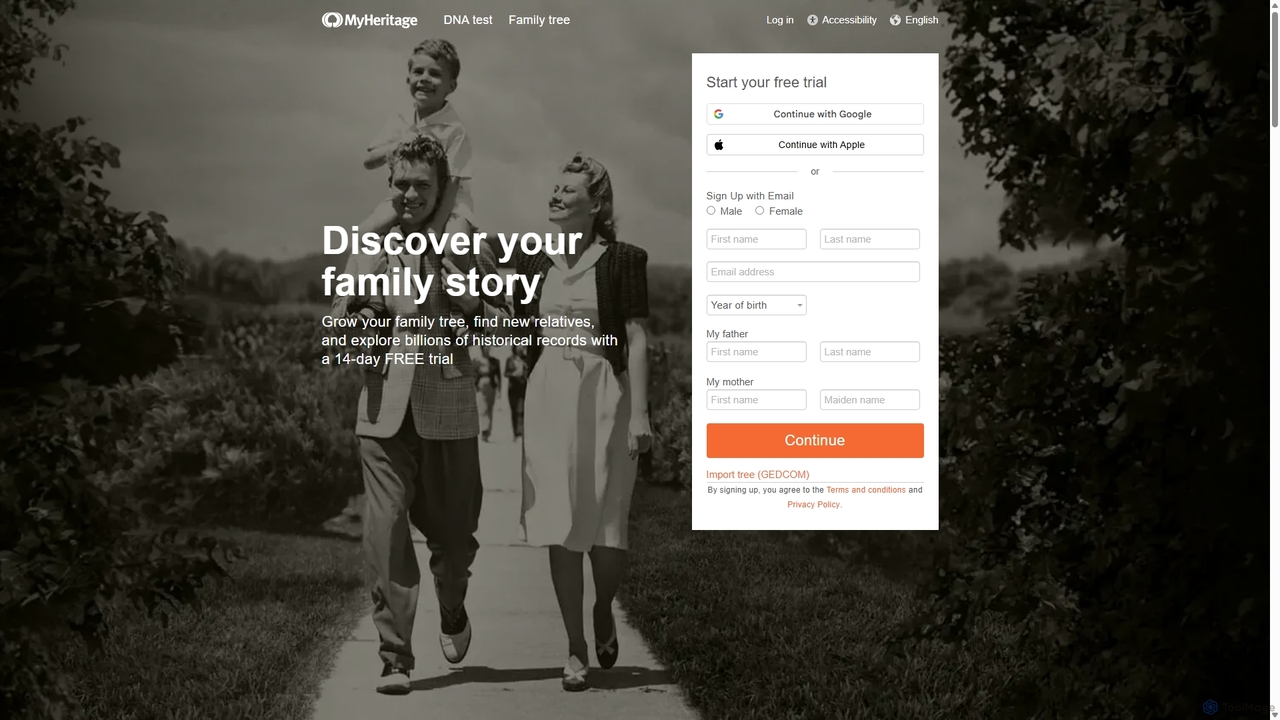
MyHeritage is a leading global platform for discovering your family history. It offers powerful tools to build your family tree, search billions of historical records, and uncover your ethnic origins through a simple DNA test. AI features like Deep Nostalgia™ animate old photos, bringing your ancestors to life.
History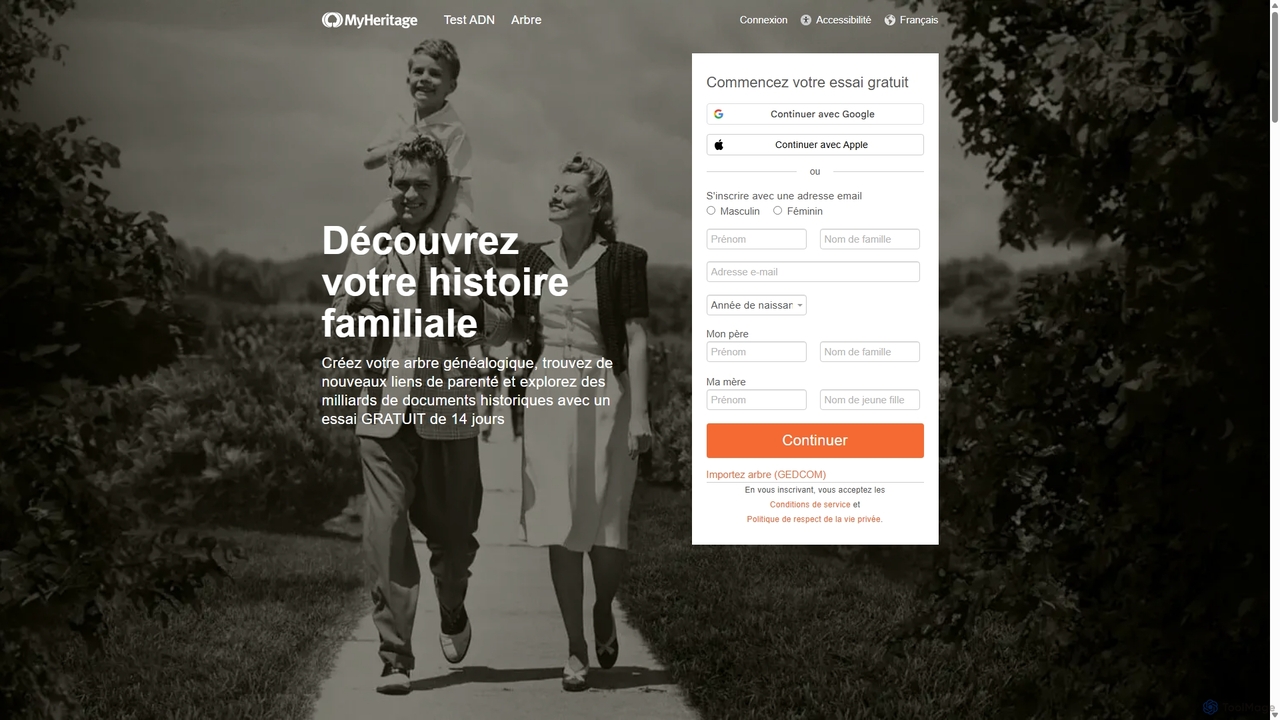
MyHeritage is a leading global platform for family history and DNA testing. It allows users to build their family tree, explore billions of historical records, and discover their ethnic origins. It features powerful AI tools like Deep Nostalgia™ to animate, colorize, and enhance old family photos, making ancestry discovery a uniquely engaging experience.
History
WeGoTrip is a travel app that transforms your smartphone into a personal tour guide. It offers a vast collection of self-guided audio tours, including AI-generated options, and tickets to attractions in hundreds of cities worldwide. Explore at your own pace with offline maps and expert storytelling.
History
An AI-powered conversational platform for exploring history, genealogy, and cultural origins. Engage in natural language dialogues to uncover your family's past, understand historical events, and connect with the stories that shaped our world.
History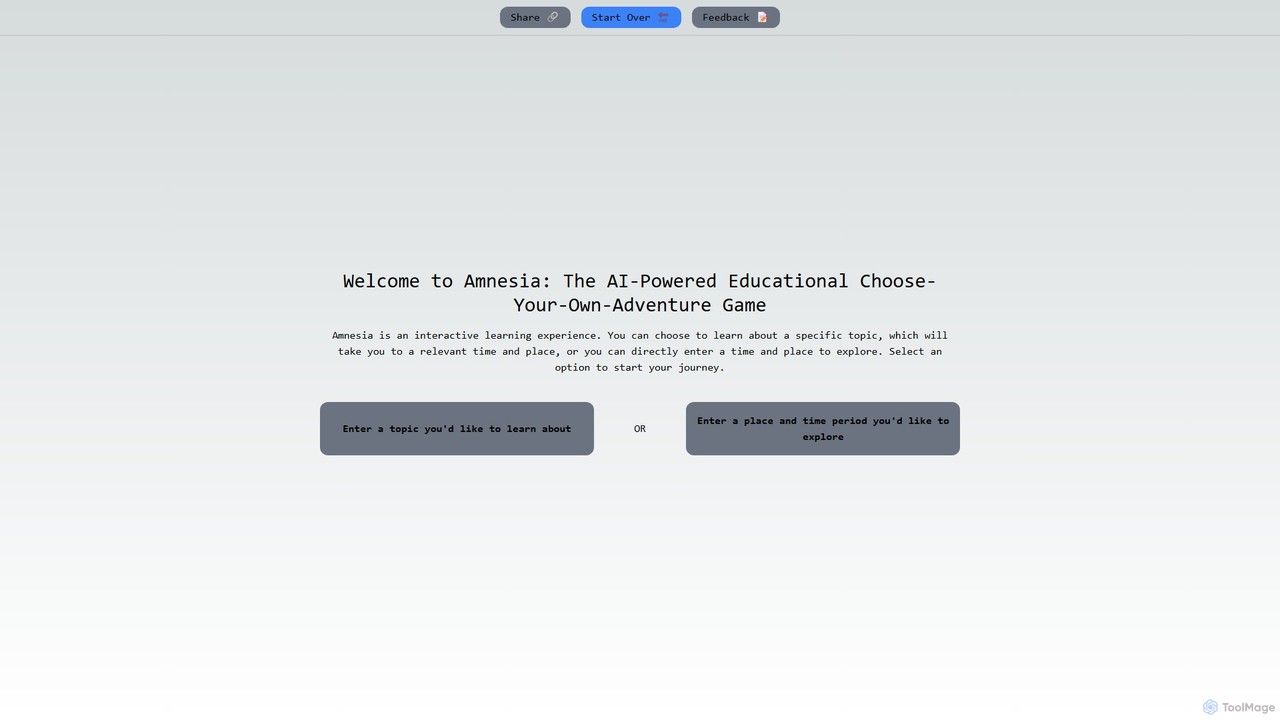
playamnesia is an AI-powered educational game that transforms history learning into an immersive, interactive 'choose-your-own-adventure' experience. Explore any historical topic or time period through dynamic, AI-generated stories where your choices shape the narrative.
History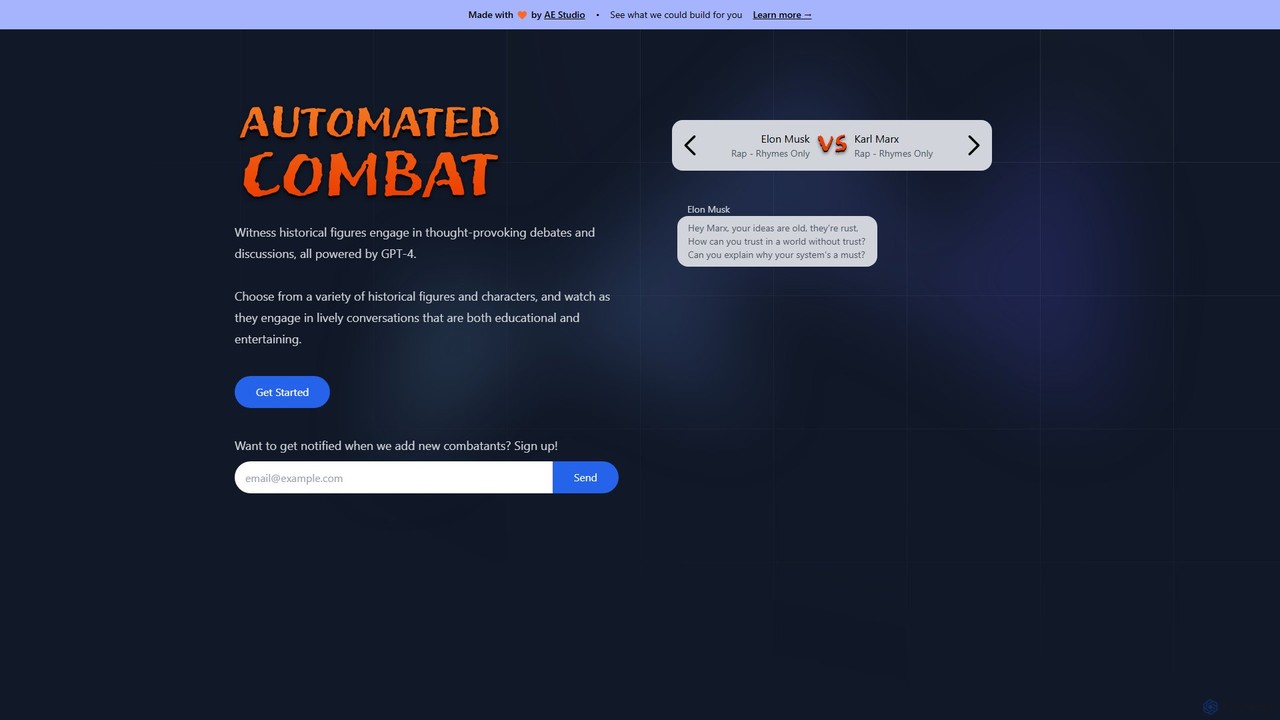
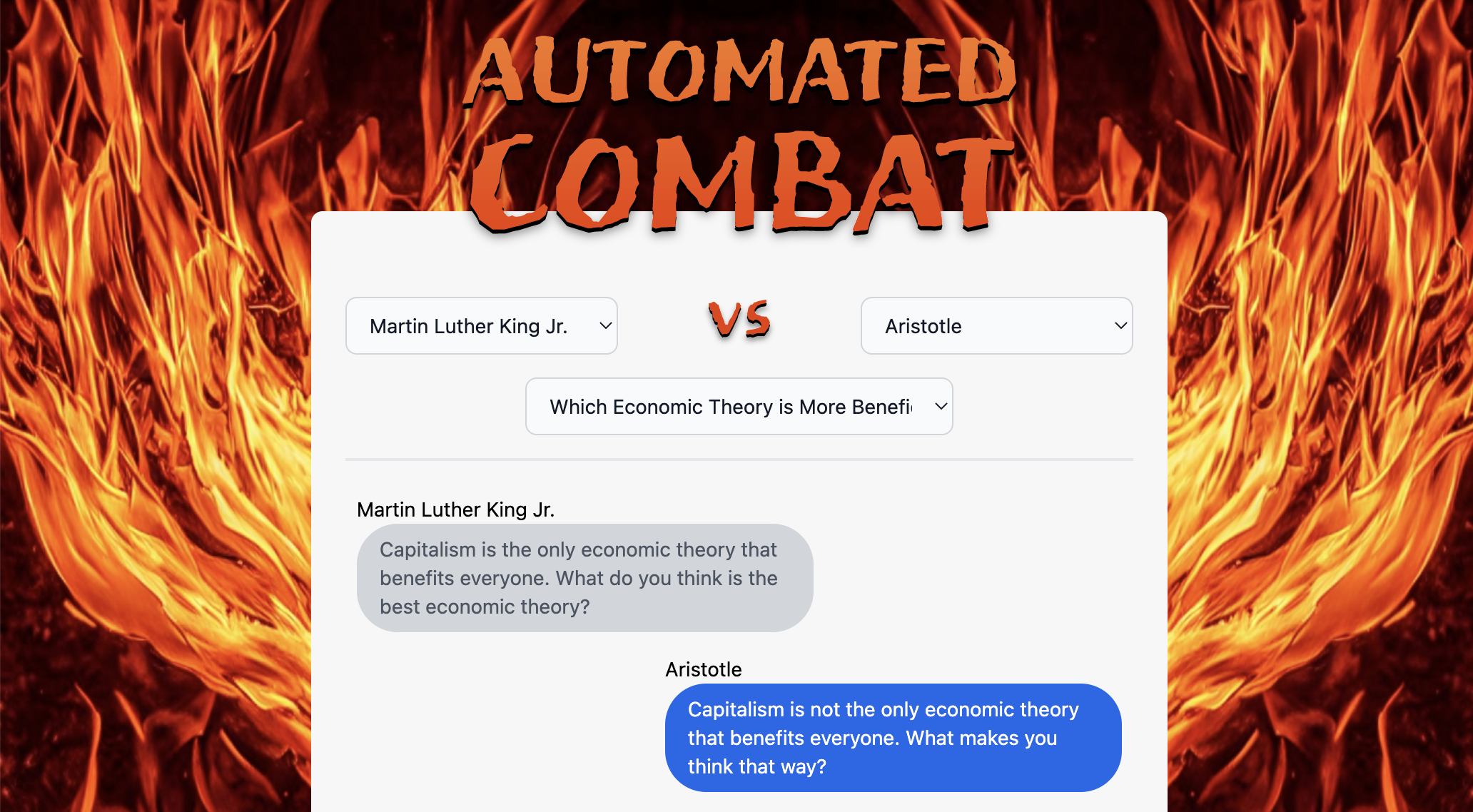
An AI-powered platform by AE Studio that simulates thought-provoking and entertaining debates between historical figures using GPT-4. Choose your combatants, from Karl Marx to Elon Musk, and watch them engage in lively, educational conversations and even rap battles.
History
insiver is a pioneering studio specializing in creating immersive virtual reality (VR) experiences that transport users back in time. By combining meticulous historical research with cutting-edge VR technology, insiver produces educational and entertaining "time travel festivals" and custom exhibitions for museums and cultural sites, allowing audiences to witness history from a new perspective.
History
MyHeritage is a global genealogy platform that allows users to discover their family history. It combines family tree building, a vast database of historical records, DNA testing for ethnicity and relative matching, and advanced AI-powered photo enhancement tools like Deep Nostalgia™ to bring your family story to life.
History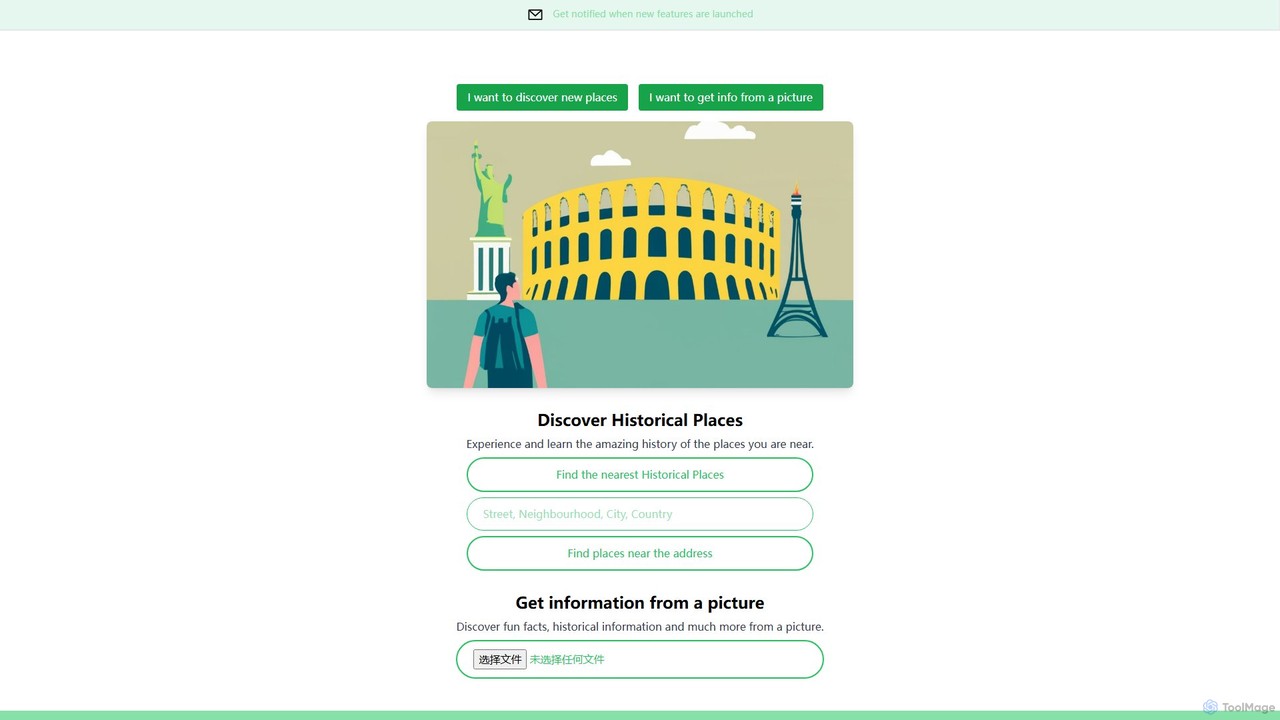
goodtripperguide is an AI-powered historical tourist guide that helps you discover and learn about historical places. Using your location or a picture, it provides instant access to fascinating history, fun facts, and detailed information about landmarks and sites near you, making travel more enriching and educational.
History
Narrated Guide offers immersive, self-guided audio tours for travelers. Explore cities like London, Rome, and Kyoto at your own pace with a personal storyteller in your ear. Choose from themed itineraries or create your own, accessing fascinating stories about attractions and culture without rigid schedules or tour groups. It's a flexible and enriching way to experience new destinations.
History
Herodot is an AI-powered travel companion that transforms your smartphone into a personal audio guide. Explore cities, museums, and historical sites at your own pace. Simply take a photo of a landmark or tap on a map to receive immersive, narrated stories in multiple languages and from various AI personas, such as a historian or a local expert.
History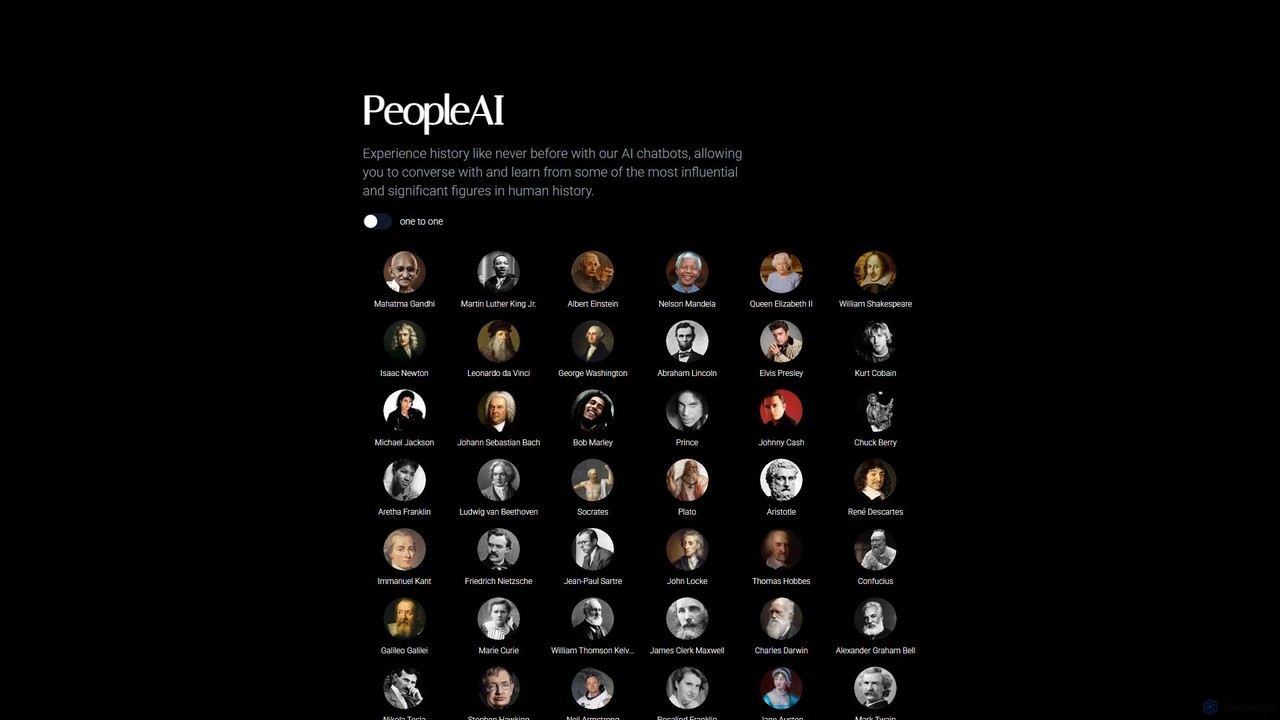
PeopleAI offers a unique educational experience, allowing you to chat with AI-powered versions of the world's most influential historical figures. From Albert Einstein to Cleopatra, engage in insightful conversations to learn about their lives, ideas, and times in an interactive and memorable way.
Character Chat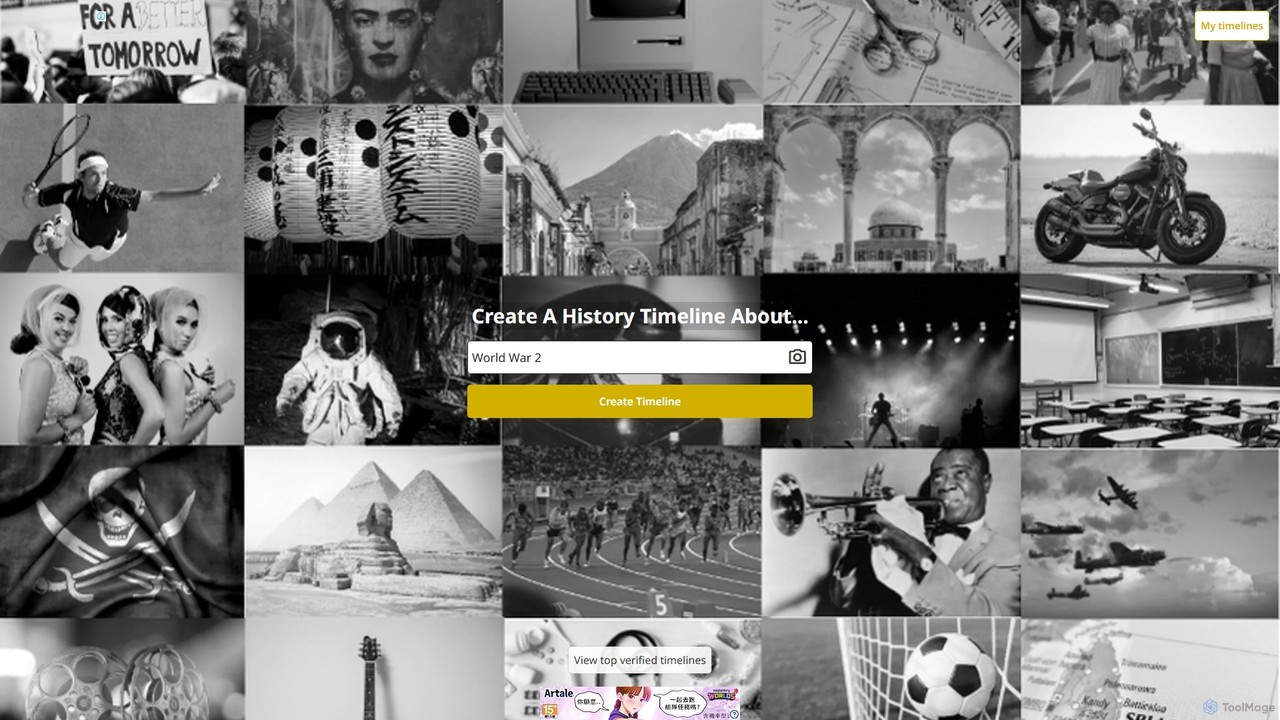
History Timelines is an AI-powered tool that automatically generates detailed, visual timelines on a vast range of historical topics. Simply enter a subject, and the AI will research and compile key events, creating an interactive and easy-to-understand timeline for students, educators, and history enthusiasts.
History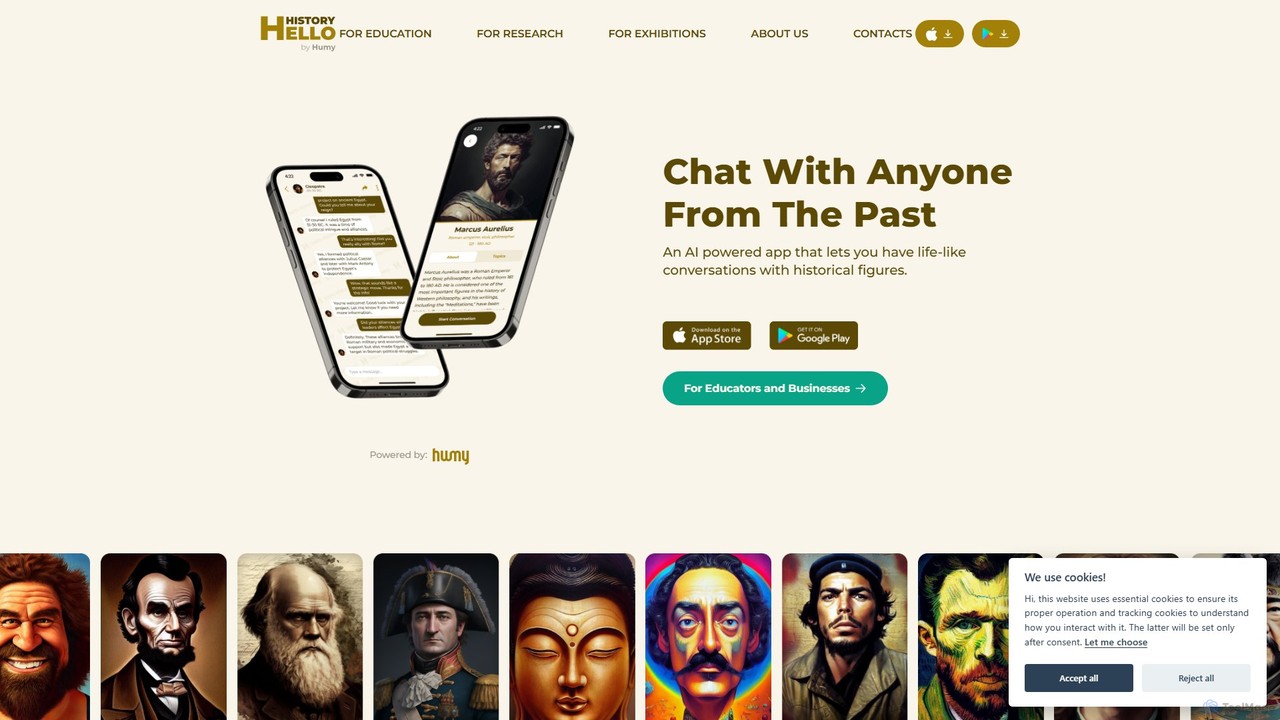
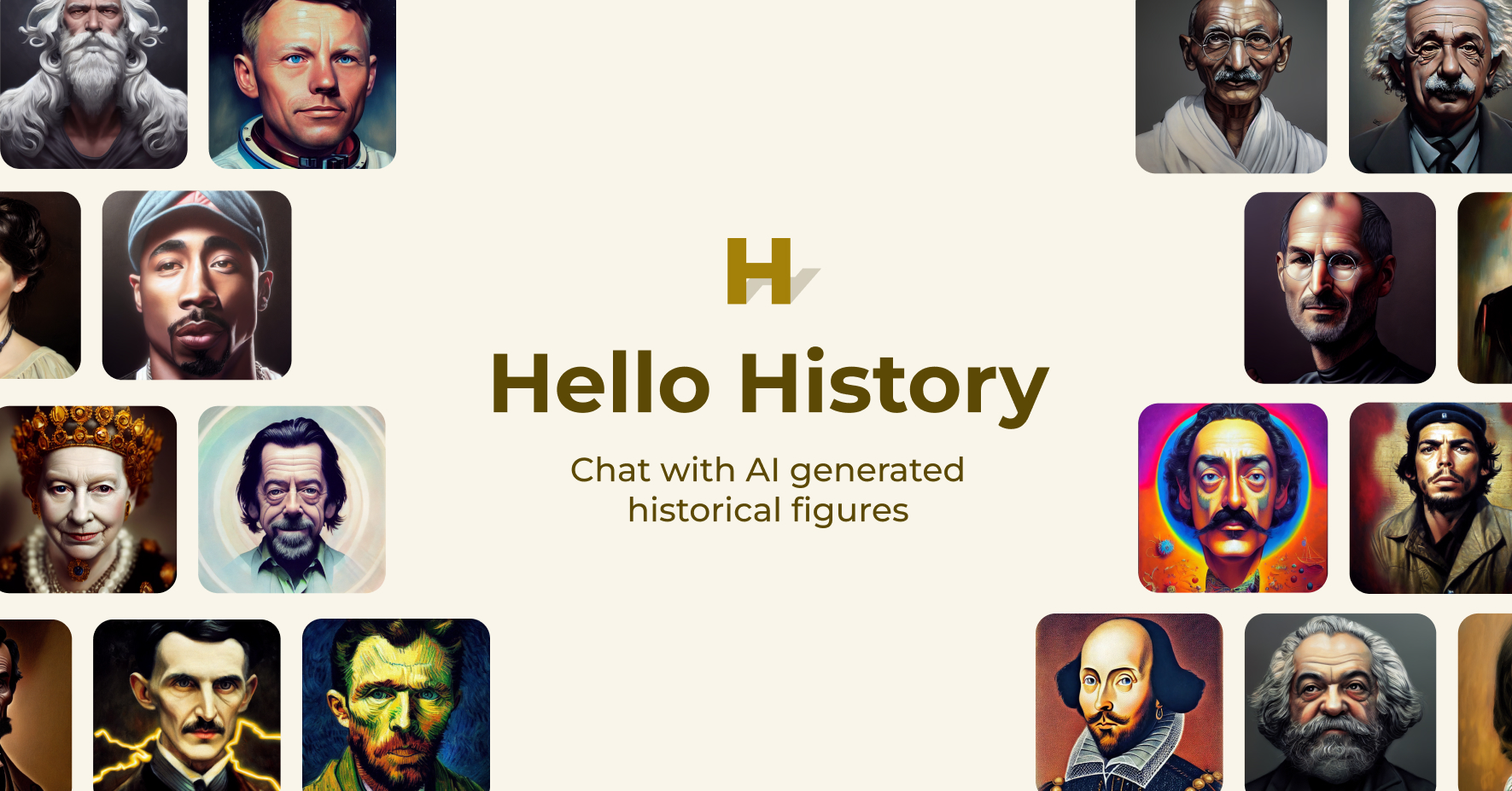
Engage in conversations with over 400 AI-powered historical figures. Hello History brings the past to life, offering an interactive and immersive learning experience for students, educators, and history enthusiasts. Ask questions, gain unique insights, and explore history like never before.
HistoryHistory AI tools are specialized applications that leverage artificial intelligence to enhance the study, research, and presentation of historical data. Within the broader field of education, these tools utilize advanced algorithms like natural language processing and computer vision to analyze vast archives, interpret ancient texts, and reconstruct past events. They empower historians, educators, and enthusiasts to uncover new insights, visualize complex timelines, and create immersive learning experiences, transforming how we interact with the past.
These tools are invaluable for academic historians conducting deep archival research, museum curators developing interactive exhibits, and educators creating engaging historical content. They also assist genealogists in tracing family histories and cultural heritage organizations in preserving and digitizing historical records.
When selecting History AI tools, consider the specific type of historical data you'll be working with, such as text, images, or artifacts, and ensure the tool's AI models are trained for accuracy in that domain. Evaluate its data input and output formats, visualization capabilities, and the level of technical expertise required. Integration with existing research platforms or archival systems is also a crucial factor for seamless workflow.
Academic historians can utilize History AI tools to process and analyze vast collections of digitized historical documents, such as government records, personal letters, or newspaper archives. The AI can identify key themes, extract named entities, and detect subtle patterns or biases across thousands of texts, significantly accelerating the research process and uncovering connections that might be missed by manual review. This allows researchers to formulate new hypotheses and build more comprehensive historical narratives.
Museum curators and exhibit designers can employ AI tools to bring history to life for visitors. By feeding historical data, images, and architectural plans into generative AI, they can create interactive 3D models of ancient cities, virtual reality reconstructions of historical events, or augmented reality overlays for artifacts. This transforms static displays into dynamic, engaging experiences, allowing visitors to explore historical contexts and objects in unprecedented detail and interactivity.
Educators can leverage History AI tools to create tailored learning experiences for students. AI can analyze a student's learning style and progress, then generate customized historical narratives, quizzes, or interactive simulations that adapt to their needs. For example, an AI might present a complex historical period through a personalized story, provide immediate feedback on essays, or simulate decision-making during a historical crisis, making learning more engaging and effective.
Genealogists and family historians can use AI-powered tools to navigate extensive public and private records, including census data, birth certificates, and immigration documents. The AI can identify potential matches, resolve discrepancies in names or dates, and construct intricate family trees across generations and geographical locations. This significantly reduces the manual effort involved in cross-referencing disparate sources, helping individuals uncover their ancestral roots more efficiently and accurately.
Cultural heritage organizations and archivists can deploy History AI tools to digitize fragile or damaged historical manuscripts and photographs. AI with advanced image processing and optical character recognition (OCR) capabilities can automatically enhance faded text, fill in missing sections, and transcribe handwritten documents into searchable digital formats. This preserves invaluable historical information that might otherwise be lost, making it accessible for future generations of researchers and the public.
Urban planners, historians, and researchers can use AI to visualize the evolution of cities over centuries. By inputting historical maps, architectural drawings, and demographic data, AI tools can generate dynamic 2D or 3D models showing how urban landscapes, infrastructure, and population densities changed over time. This helps in understanding historical planning decisions, predicting future trends, and informing contemporary urban development strategies based on past patterns.
AI tools for History are applications that use artificial intelligence, such as natural language processing and computer vision, to analyze, interpret, and present historical data. They aim to assist historians, educators, and researchers in tasks like deciphering ancient texts, visualizing timelines, reconstructing artifacts, and simulating past events. These tools enhance traditional historical methods by automating data processing and revealing new insights from vast archives.
AI tools significantly enhance historical research by automating the processing of massive datasets, which is often impractical with traditional manual methods. They can quickly identify patterns, extract information from diverse sources, and cross-reference data at a scale impossible for humans. While traditional methods rely on deep human interpretation, AI complements this by providing data-driven insights, accelerating discovery, and enabling new forms of visualization and simulation, allowing historians to focus on nuanced analysis rather than tedious data collection.
The main functionalities of History AI tools include text analysis for deciphering documents and extracting information, data visualization for creating interactive timelines and maps, 3D reconstruction of artifacts and sites, event simulation to model historical scenarios, and genealogical data matching for tracing family histories. They also offer capabilities for digital preservation by enhancing and transcribing damaged historical records.
Primarily, academic historians benefit from AI tools for in-depth research and archival analysis. Educators and students use them for creating engaging learning materials and immersive experiences. Museum curators and exhibit designers leverage AI for interactive displays and virtual reconstructions. Additionally, genealogists find these tools invaluable for tracing family lineages, and cultural heritage organizations use them for digitizing and preserving historical assets.
When choosing an AI tool for historical projects, consider its data compatibility with your specific sources (e.g., text, images, audio). Evaluate the accuracy and reliability of its AI models, especially for interpreting complex or ambiguous historical data. Look for strong visualization and output capabilities that align with your presentation needs. Also, assess its ease of use and whether it integrates well with your existing research workflows or archival systems. Finally, consider the community support and ongoing development for long-term usability.