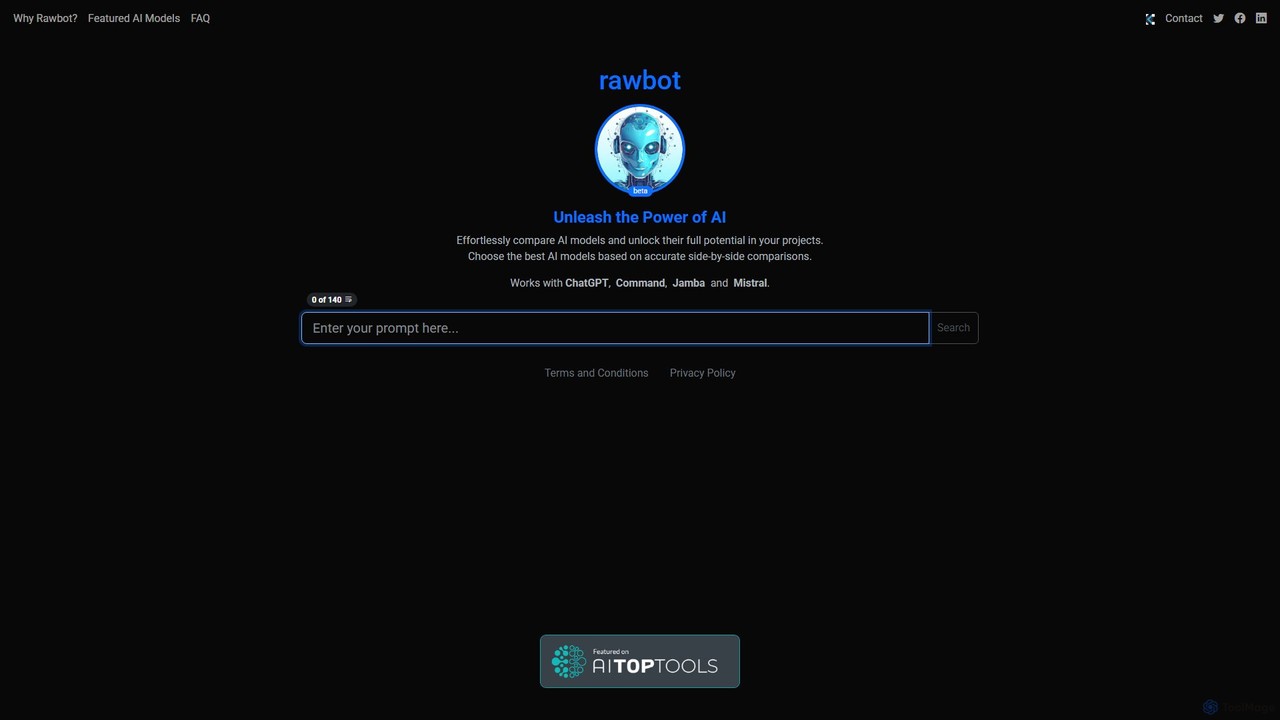
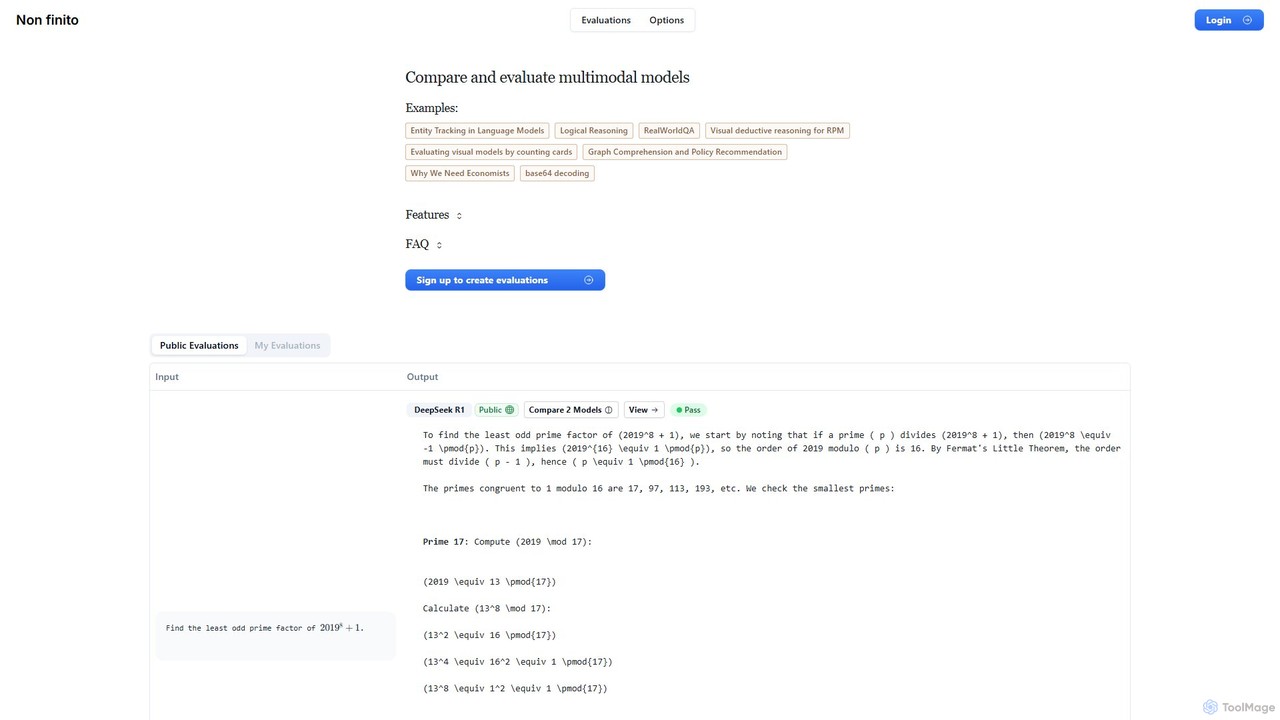
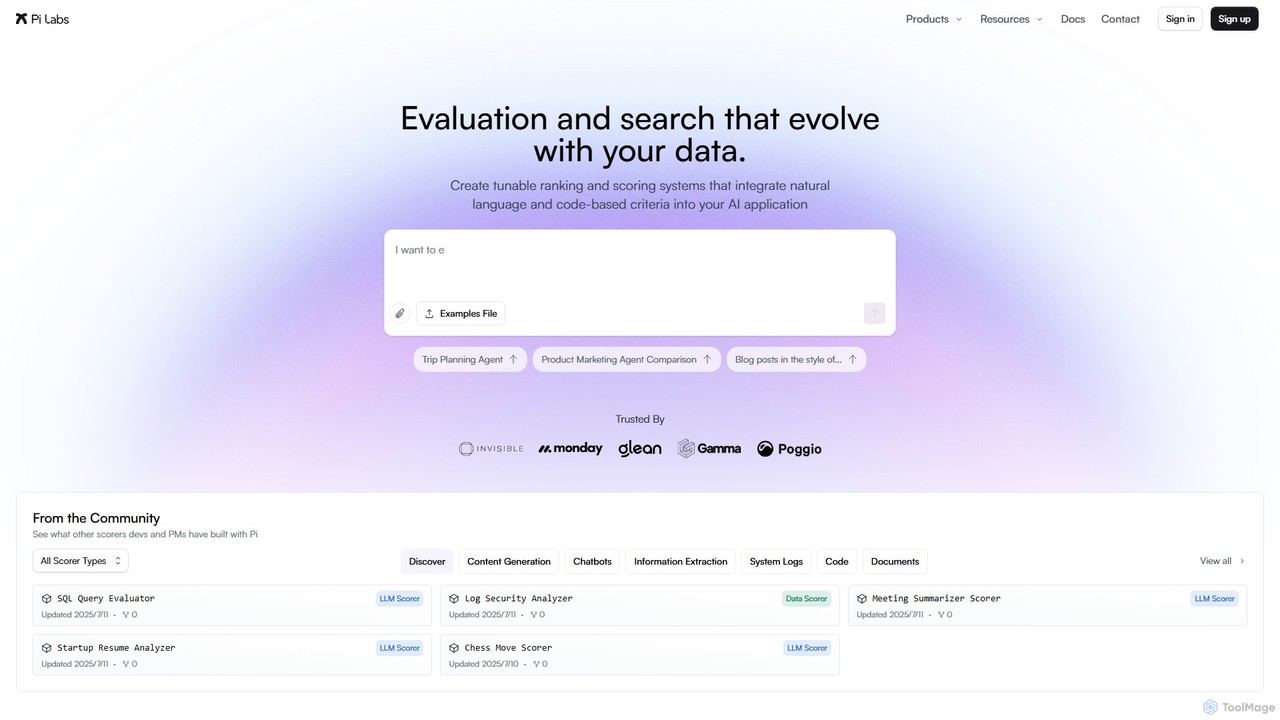
Model Evaluation tools are specialized platforms for systematically assessing the performance, accuracy, and reliability of machine learning models. These tools automate the calculation of key metrics like precision, recall, and F1-score, and test for factors such as bias and robustness. They are essential for developers and MLOps teams to validate model behavior, compare different versions, and ensure AI systems are production-ready and function as intended in the real world. This rigorous assessment builds trust and is a critical part of the developer toolchain for responsible AI.
Core Features
- Automated Metrics Calculation: Automatically computes a wide range of performance metrics (e.g., Accuracy, F1-Score, AUC-ROC) for classification and regression tasks.
- Performance Benchmarking: Enables side-by-side comparison of multiple models or versions against standardized datasets to identify the top performer.
- Bias and Fairness Auditing: Detects and quantifies biases in model predictions across different demographic groups or data segments.
- Robustness Testing: Evaluates model stability and performance against adversarial attacks, data drift, and unexpected inputs.
- Explainability and Visualization: Generates reports, dashboards, and visualizations (like SHAP or LIME plots) to help interpret model predictions and behavior.
Use Cases
Model Evaluation tools are primarily used by data scientists, machine learning engineers, and AI researchers in sectors like finance, healthcare, and technology. For instance, a financial institution uses these tools to evaluate credit scoring models for fairness, while a healthcare company validates the accuracy of a diagnostic imaging model before clinical use. They are integral to any MLOps workflow for ensuring model quality.
How to Choose
When selecting a Model Evaluation tool, consider its compatibility with your model frameworks (e.g., TensorFlow, PyTorch, scikit-learn). Evaluate the breadth of its metrics library and its support for custom metrics. Assess its integration capabilities with your existing MLOps stack, such as experiment trackers and CI/CD pipelines. Finally, consider its features for collaboration, reporting, and specific needs like LLM or computer vision evaluation.