AutoRail
AutoRail is an infrastructure platform designed to transform "vibe-coded" prototypes into production-ready applications. It automatically provisions essential backend …
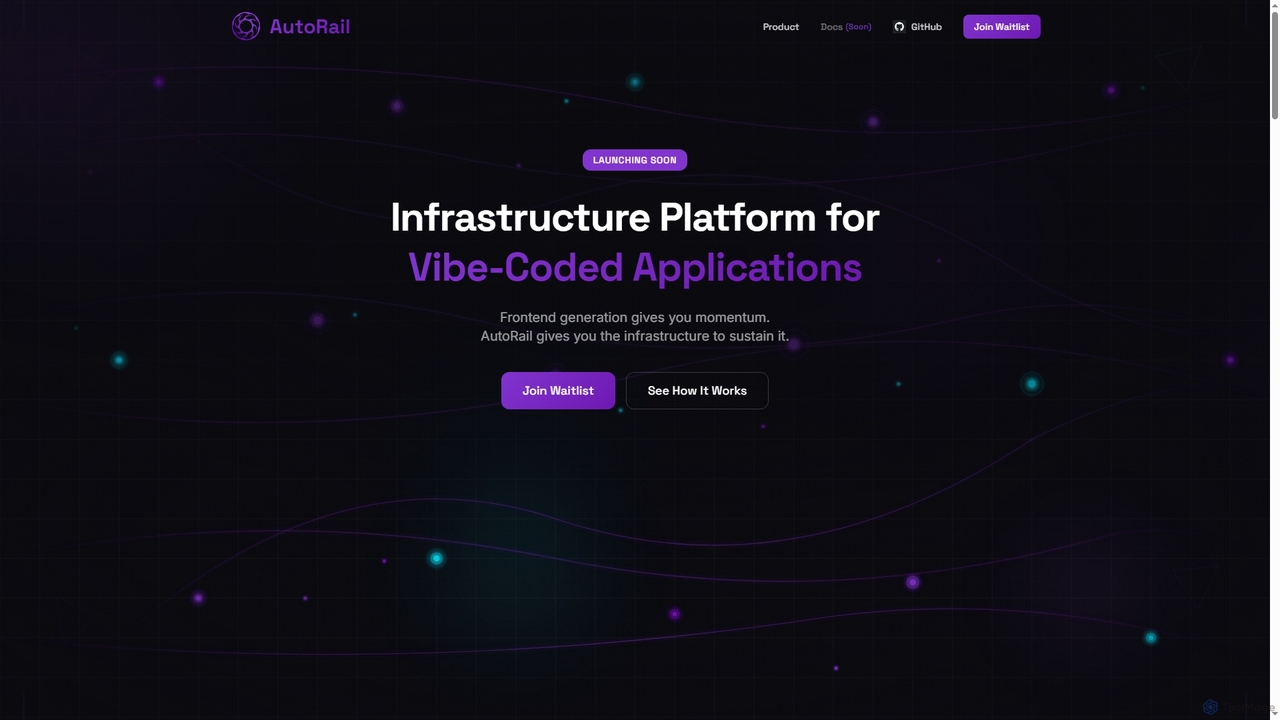
AutoRail is an infrastructure platform designed to transform "vibe-coded" prototypes into production-ready applications. It automatically provisions essential backend primitives like stateful memory, workflow orchestration, and auto-scaling, bridging the critical gap between rapid frontend development and robust, scalable production systems without manual configuration.
BrainHost
BrainHost offers high-performance KVM VPS hosting with NVMe storage, designed for speed and reliability. Featuring 30-second provisioning, global …
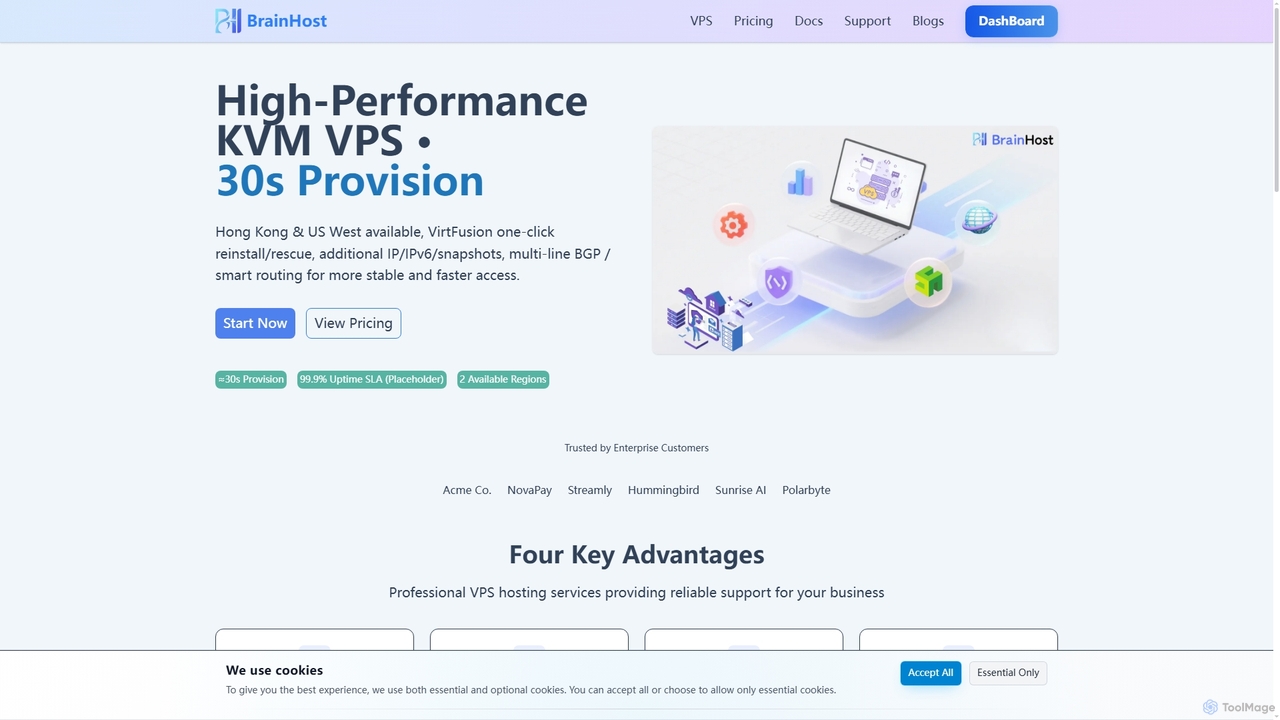
BrainHost offers high-performance KVM VPS hosting with NVMe storage, designed for speed and reliability. Featuring 30-second provisioning, global data centers in Hong Kong and US West, and the intuitive VirtFusion control panel, it provides a robust infrastructure for websites, e-commerce, AI inference, and gaming applications. Flexible scaling and advanced network routing ensure stable and fast access worldwide.
Ardor
Ardor is a full-stack, multi-agent platform that revolutionizes software development by enabling users to build, deploy, and monitor …
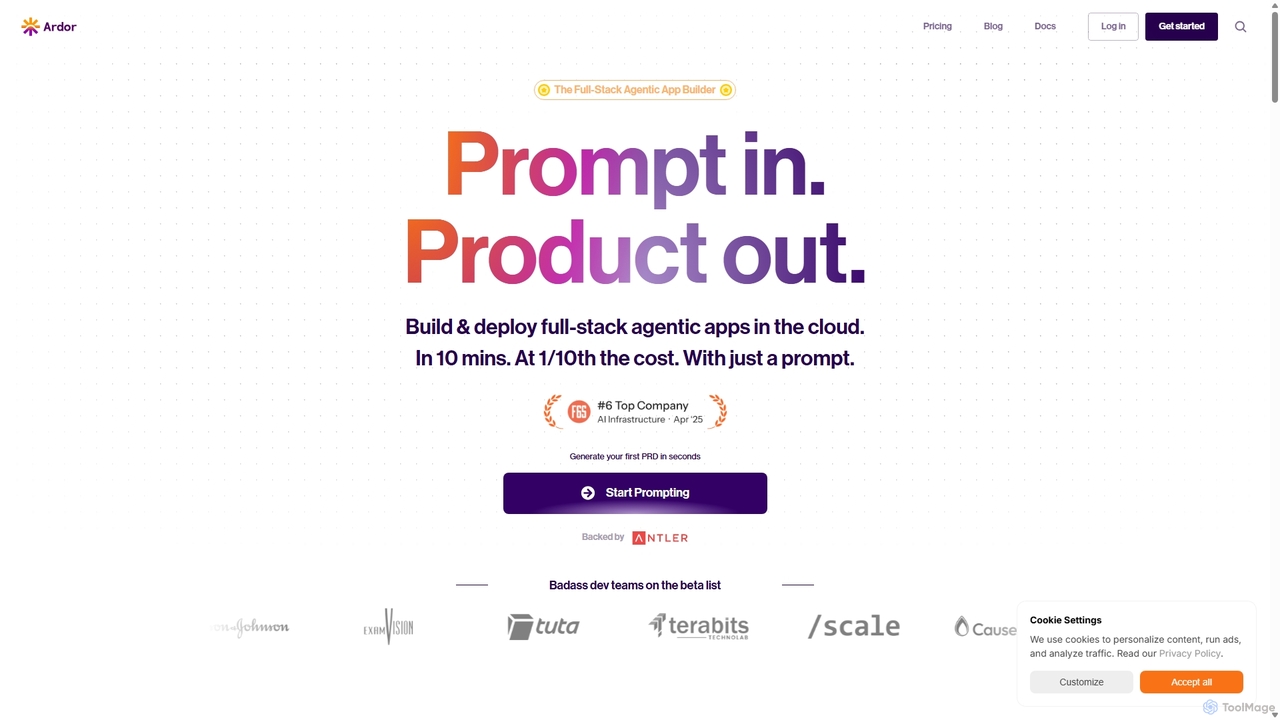
Ardor is a full-stack, multi-agent platform that revolutionizes software development by enabling users to build, deploy, and monitor complete agentic AI applications from a single prompt. It automates the entire software development lifecycle (SDLC), drastically reducing development time from months to minutes and cutting costs by up to 90%. Ideal for developers, startups, and enterprises looking to accelerate innovation.
deploysaas
deploysaas is an all-in-one platform that simplifies and accelerates the deployment of SaaS applications. It provides developers with …
deploysaas is an all-in-one platform that simplifies and accelerates the deployment of SaaS applications. It provides developers with pre-built boilerplate, automated CI/CD pipelines, and scalable cloud infrastructure, enabling them to launch their products in minutes instead of weeks.
Vercel
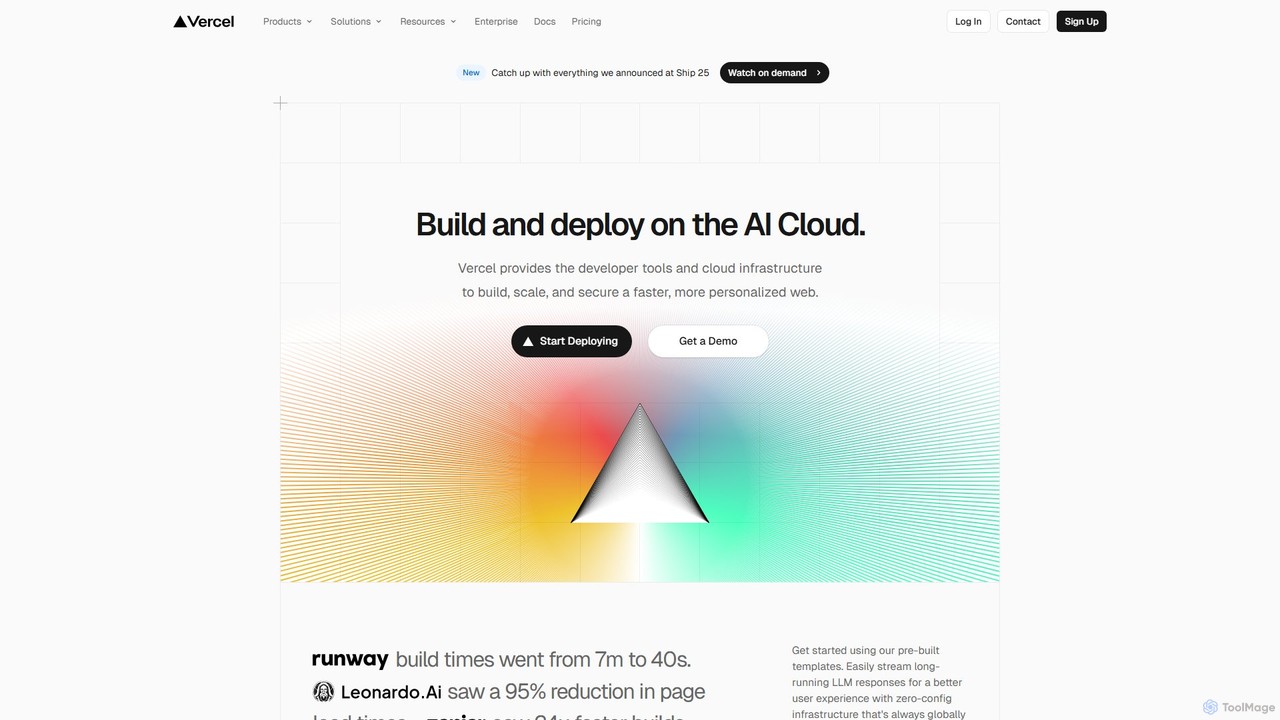
Vercel is a frontend cloud platform providing developers with the tools and infrastructure to build, scale, and secure …
Vercel is a frontend cloud platform providing developers with the tools and infrastructure to build, scale, and secure faster, more personalized web experiences. It offers zero-config deployments, a global edge network, and serverless functions. With its new AI Cloud, Vercel simplifies the development and deployment of high-performance AI-powered applications, enabling features like streaming LLM responses with ease.
About Deployment
AI Deployment tools are a specialized category of development software designed to take trained machine learning models and make them operational in a live production environment. These platforms automate the complex process of packaging models, provisioning infrastructure, and creating accessible endpoints like APIs. They effectively bridge the gap between model development and real-world application, ensuring reliability, scalability, and maintainability. This focus on MLOps (Machine Learning Operations) allows teams to launch and manage AI-powered features efficiently.
Core Features
- Model Serving: Provides robust, low-latency endpoints (APIs) for applications to get real-time predictions from your model.
- Infrastructure Automation: Automatically provisions and scales computing resources (like servers or containers) based on traffic demands.
- Performance Monitoring: Tracks key metrics such as prediction latency, throughput, error rates, and model drift to ensure health.
- CI/CD for ML: Automates the pipeline for testing and deploying new model versions with minimal to zero downtime.
- Containerization Support: Packages models and their dependencies into standard formats like Docker for consistent execution across environments.
Use Cases
These tools are essential for MLOps engineers, data scientists, and developers responsible for putting AI into production. They are used across industries like tech, finance, and e-commerce to deploy fraud detection systems, recommendation engines, customer service chatbots, and computer vision models. Any scenario requiring a live, scalable, and monitored AI model benefits from dedicated deployment tools.
How to Choose
When selecting an AI Deployment tool, consider its compatibility with your machine learning frameworks (e.g., TensorFlow, PyTorch). Evaluate its support for your target infrastructure, whether cloud (AWS, GCP, Azure), on-premise, or edge devices. Assess its scalability features, monitoring capabilities, and the level of automation it provides. Finally, consider the team's expertise—whether a low-code platform or a more flexible, code-based framework is a better fit.
DeploymentUse Cases
Launch a Real-Time Fraud Detection API
A fintech company needs to integrate its machine learning model for fraud detection into its live payment processing pipeline. An MLOps engineer uses a deployment platform to package the model, create a secure and low-latency REST API endpoint, and deploy it on a scalable cloud infrastructure. The platform continuously monitors the API's response time and prediction accuracy, ensuring that potentially fraudulent transactions are flagged in milliseconds without impacting the user experience.
Automate Model Retraining and Deployment Pipeline
A data science team at an e-commerce company needs to update their product recommendation model weekly with new sales data. They use a deployment tool that integrates with CI/CD systems. This setup automates the entire workflow: a scheduled job pulls new data, retrains the model, runs validation tests, and if successful, automatically deploys the new model version as a canary release. This MLOps practice ensures the recommendation engine stays relevant and improves over time with minimal manual intervention.
Serve a Computer Vision Model at the Edge
A manufacturing company uses AI for visual quality inspection on its assembly line. To minimize latency and operate without constant internet, they need to run the model on-device. A developer uses an edge deployment tool to optimize and package the computer vision model for a specific edge hardware (e.g., NVIDIA Jetson). The tool deploys the model directly onto cameras on the factory floor, enabling real-time defect detection and immediate alerts, improving production quality and efficiency.
A/B Test Different Language Model Versions
A SaaS company wants to improve its AI-powered text summarization feature. The data science team has developed a new, potentially better model. Using a deployment platform that supports traffic splitting, they deploy the new model alongside the existing one. They configure it to route 10% of user requests to the new model (a technique called canary releasing). By comparing user engagement metrics and summarization quality between the two versions in a live environment, they can make a data-driven decision to fully roll out the new model or revert.
Provide a Commercial API for a Custom AI Model
An AI startup has developed a proprietary algorithm for audio enhancement. To monetize it, they need to offer it as a SaaS product. They use a deployment and management platform to wrap their model in a secure, public-facing API. The platform handles essential commercial features like generating API keys for customers, implementing rate limiting to prevent abuse, and tracking usage for billing purposes. This transforms their core technology into a scalable, market-ready product without building the entire infrastructure from scratch.
Deploy a Scalable Customer Service Chatbot
A large e-commerce platform wants to deploy an NLP-based chatbot to handle customer queries 24/7. A machine learning engineer uses a deployment tool to containerize the chatbot model and its dependencies. They deploy it to a managed Kubernetes service that automatically scales the number of chatbot instances up or down based on real-time user traffic. The tool's integrated monitoring dashboard allows the support team to track conversation volume, response times, and identify common issues, ensuring a smooth and efficient customer support experience even during peak shopping seasons.