Mergelab
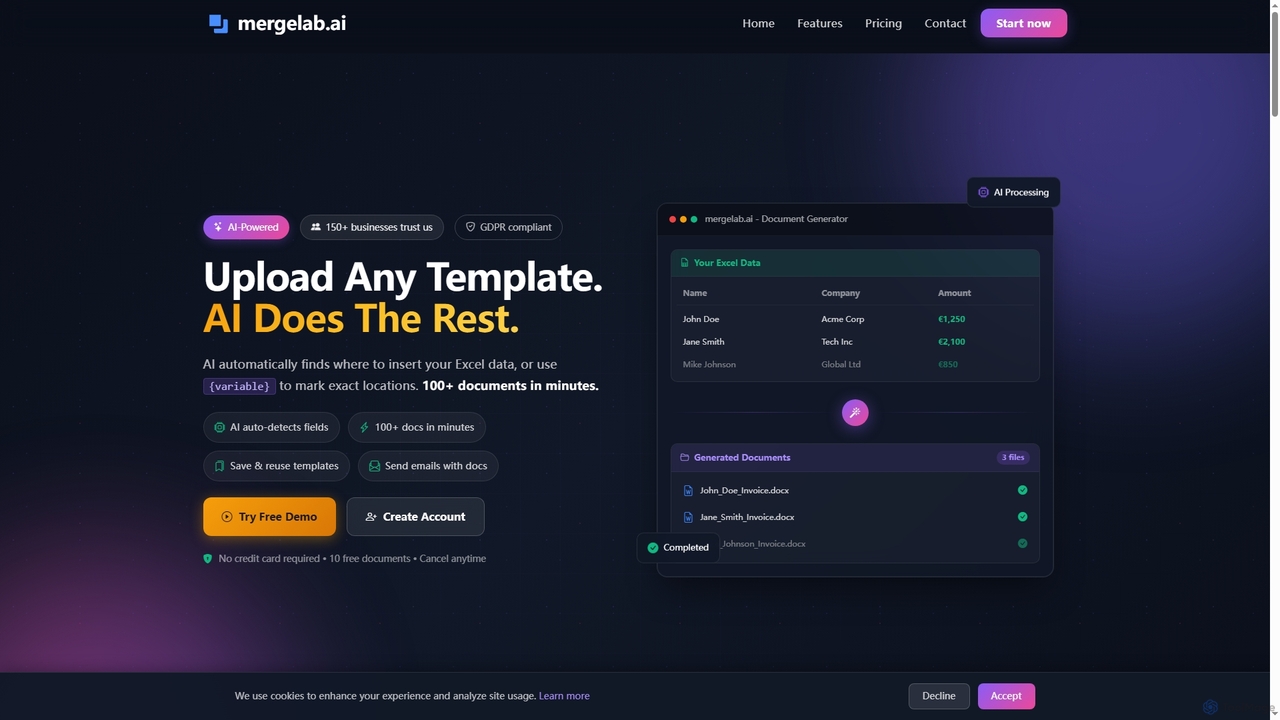
Mergelab is an AI-powered document generation tool that automates the creation of personalized documents from Excel data and …
Mergelab is an AI-powered document generation tool that automates the creation of personalized documents from Excel data and Word templates. It streamlines mail merge processes, instantly generating professional DOCX or PDF files, and offers advanced features like AI variable detection and email delivery for PRO users.
BuildSync
BuildSync is an AI-powered construction submittal review software designed to automate the verification of project compliance and generation …
BuildSync is an AI-powered construction submittal review software designed to automate the verification of project compliance and generation of submittal packages. It helps general contractors and subcontractors drastically reduce submittal rejection rates, save hours on manual reviews, and accelerate project timelines.
AI Doc Suite
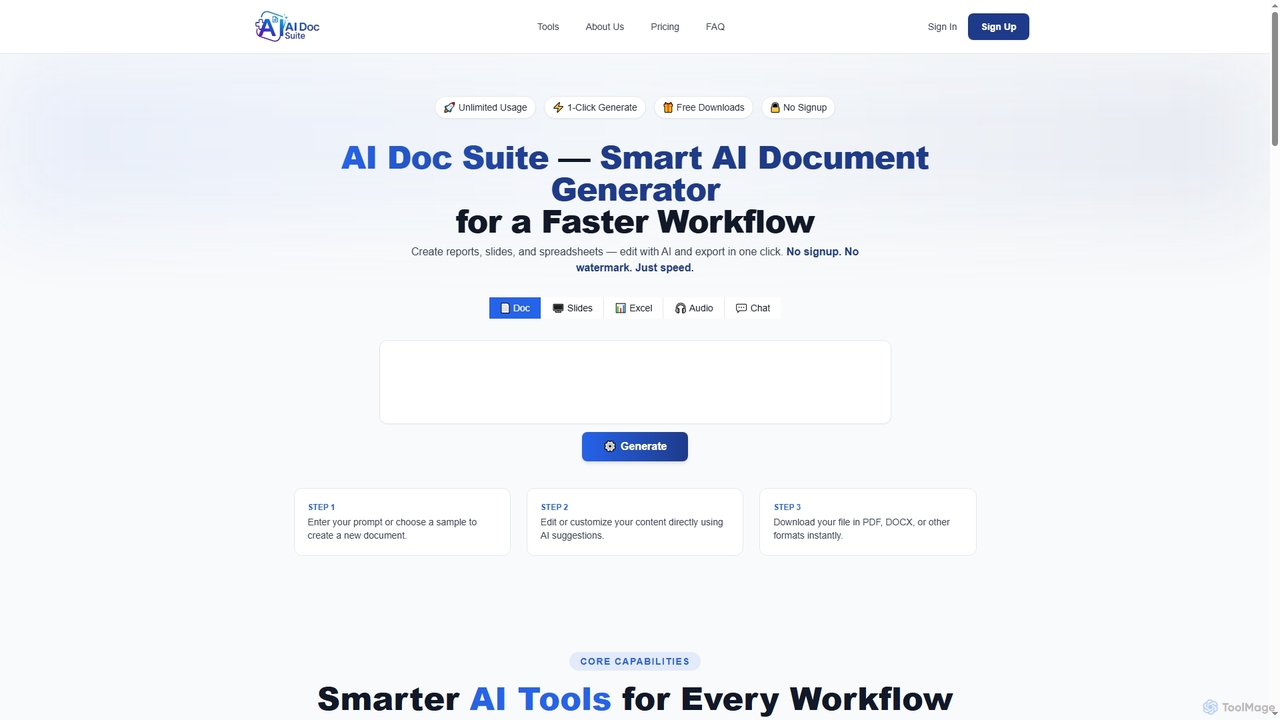
AI Doc Suite is an advanced, browser-based AI workspace for creating, editing, and converting professional documents, slides, spreadsheets, …
AI Doc Suite is an advanced, browser-based AI workspace for creating, editing, and converting professional documents, slides, spreadsheets, audio, images, and videos. It streamlines content generation with intelligent automation and customizable templates, offering a comprehensive solution for various creative and business needs.
About Document Automation
Document Automation tools are AI-powered solutions that streamline and optimize document-centric workflows. These tools leverage technologies like natural language processing (NLP), computer vision, and machine learning to automatically process, extract, and manage information from various document types. They significantly reduce manual effort, improve data accuracy, and accelerate business operations across industries. By transforming unstructured data into actionable insights, they empower organizations to make faster, more informed decisions.
Core Features
- Intelligent Document Processing (IDP): Automatically extracts structured data from unstructured or semi-structured documents like invoices, contracts, and forms.
- Document Generation: Creates new documents, such as reports or personalized letters, from templates and data inputs with minimal human intervention.
- Content Classification & Tagging: Organizes documents by automatically categorizing them and applying relevant metadata for easier search and retrieval.
- Workflow Automation: Orchestrates document-related tasks, routing documents for review, approval, or further processing based on predefined rules.
- Data Validation & Verification: Cross-references extracted data with existing databases to ensure accuracy and flag discrepancies.
Applicable Scenarios
Document Automation tools are invaluable across various sectors. In finance, they automate invoice processing and loan application reviews. Legal departments use them for contract analysis and e-discovery. Healthcare providers streamline patient intake forms and medical record management. These tools are also crucial for HR in managing employee onboarding documents and for supply chain in processing purchase orders and shipping manifests.
How to Choose
When selecting a Document Automation tool, consider its integration capabilities with existing enterprise systems (CRM, ERP). Evaluate the accuracy and flexibility of its data extraction for your specific document types. Assess the scalability to handle growing document volumes and the security features to protect sensitive information. Finally, compare pricing models and the level of vendor support available.
Document AutomationUse Cases
Automating Invoice Processing for Finance Departments
Finance teams often spend countless hours manually entering data from invoices. Document Automation tools can automatically extract key information like vendor name, amount, and line items from incoming invoices, validate it against purchase orders, and integrate it directly into accounting systems. This reduces processing time by up to 80%, minimizes human error, and accelerates payment cycles.
Streamlining Contract Review and Analysis in Legal Firms
Legal professionals face the challenge of reviewing vast numbers of contracts for specific clauses, risks, or compliance issues. AI-powered Document Automation can rapidly identify, extract, and summarize critical terms, conditions, and obligations from legal documents. This allows lawyers to focus on strategic advice rather than tedious manual review, significantly speeding up due diligence and contract management.
Enhancing Customer Onboarding with Automated Form Processing
Businesses in banking, insurance, or healthcare require customers to fill out numerous forms during onboarding. Document Automation tools can automatically capture data from handwritten or digital application forms, verify identities, and populate backend systems. This drastically reduces manual data entry errors, accelerates the onboarding process, and improves the overall customer experience.
Managing HR Employee Records and Onboarding Documents
HR departments handle a high volume of employee-related documents, from resumes and offer letters to tax forms and performance reviews. Document Automation can automatically classify, index, and store these documents, extracting relevant employee data for HRIS systems. This ensures compliance, simplifies record retrieval, and frees HR staff to focus on strategic talent management.
Accelerating Loan Application Processing in Financial Institutions
Processing loan applications involves reviewing multiple documents like bank statements, credit reports, and income proofs. Document Automation tools can rapidly extract and verify financial data from these diverse documents, flagging inconsistencies or missing information. This significantly speeds up the underwriting process, reduces approval times, and enhances risk assessment accuracy.
Automating Supply Chain Document Management for Logistics
Logistics and supply chain operations rely heavily on documents such as bills of lading, customs declarations, and packing lists. Document Automation can automatically capture data from these documents, track shipments, and update inventory systems. This improves visibility across the supply chain, reduces delays caused by manual data entry, and ensures regulatory compliance.