BuildSync
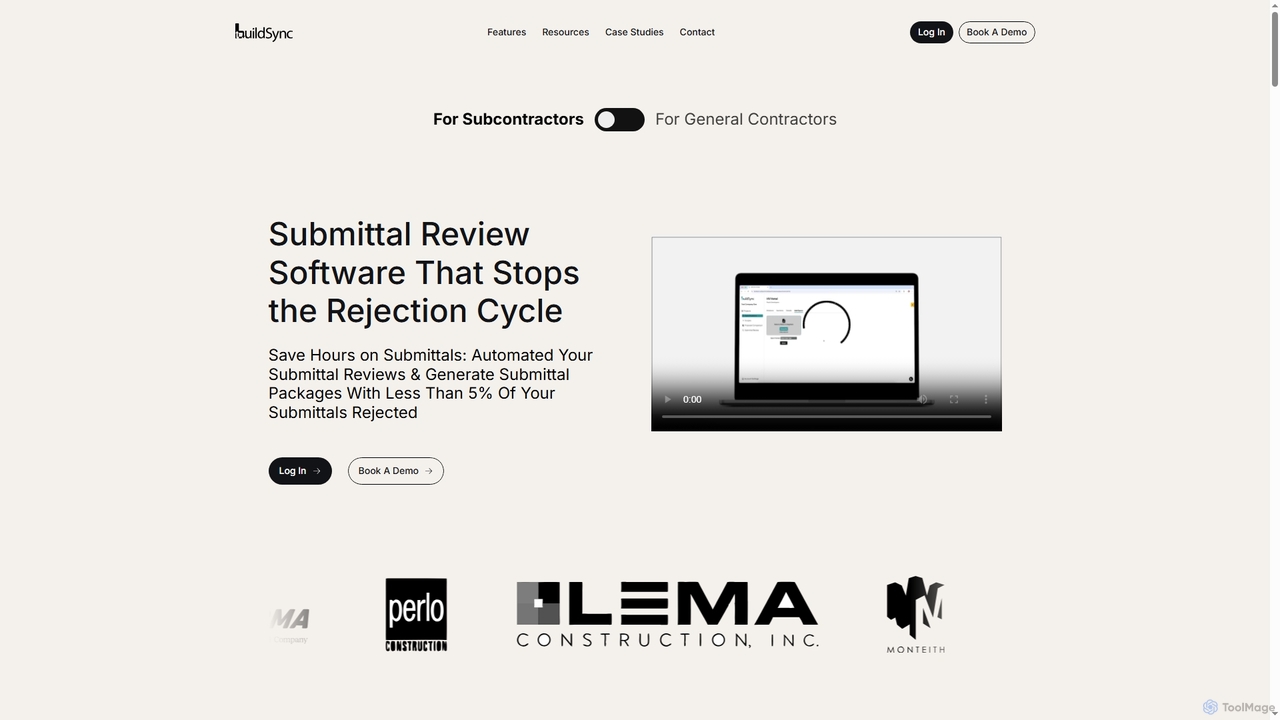
BuildSync is an AI-powered construction submittal review software designed to automate the verification of project compliance and generation …
BuildSync is an AI-powered construction submittal review software designed to automate the verification of project compliance and generation of submittal packages. It helps general contractors and subcontractors drastically reduce submittal rejection rates, save hours on manual reviews, and accelerate project timelines.
About Document Analysis
Document Analysis tools are AI-powered solutions designed to automatically process, understand, and extract valuable information from various types of documents. Leveraging advanced Natural Language Processing (NLP), machine learning, and computer vision, these tools transform unstructured data into structured, actionable insights. They significantly enhance efficiency and accuracy in data management, compliance, and decision-making across industries.
Core Features
- Information Extraction: Automatically identifies and extracts key data points like names, dates, amounts, and specific clauses from text.
- Content Summarization: Generates concise summaries of lengthy documents, highlighting main ideas and critical information.
- Sentiment Analysis: Evaluates the emotional tone and subjective opinions expressed within textual content.
- Classification & Categorization: Organizes documents into predefined categories based on their content, facilitating easy retrieval and management.
- Anomaly Detection: Identifies unusual patterns or discrepancies in documents that might indicate errors, fraud, or non-compliance.
Applicable Scenarios
These tools are indispensable for legal professionals reviewing contracts, financial analysts processing reports, and healthcare providers managing patient records. They automate the tedious task of manual data entry and review, ensuring compliance, reducing human error, and accelerating critical business processes. For instance, a legal firm can rapidly analyze thousands of discovery documents to find relevant clauses, or a bank can quickly process loan applications by extracting applicant details.
How to Choose
When selecting a Document Analysis tool, consider its accuracy in information extraction for your specific document types, its integration capabilities with existing systems (e.g., CRM, ERP), and its scalability to handle your data volume. Evaluate the level of customization offered for specific industry needs, the user-friendliness of its interface, and the vendor's commitment to data security and compliance standards. Pricing models and support services are also crucial factors.

Document AnalysisUse Cases
Automating Contract Review and Compliance
Legal departments and compliance officers can utilize document analysis tools to automatically review thousands of contracts, identifying specific clauses, obligations, and potential risks. This drastically reduces manual review time, ensures adherence to regulatory standards, and flags non-compliant terms, accelerating legal due diligence and contract lifecycle management.
Extracting Key Data from Financial Reports
Financial analysts and auditors employ these tools to rapidly extract critical financial data such as revenue figures, expenses, and balance sheet items from quarterly reports, invoices, and bank statements. This automation streamlines financial reporting, reconciliation processes, and risk assessment, enabling quicker and more accurate financial insights.
Streamlining Customer Feedback Analysis
Customer service and marketing teams leverage document analysis to process vast amounts of customer feedback from emails, support tickets, and social media. By performing sentiment analysis and topic extraction, they can quickly identify common issues, product preferences, and areas for improvement, leading to enhanced customer satisfaction and targeted product development.
Digitizing and Indexing Healthcare Records
Healthcare providers use document analysis to convert unstructured patient notes, medical reports, and lab results into structured, searchable data. This improves data accessibility for medical staff, supports clinical decision-making, ensures compliance with privacy regulations (like HIPAA), and facilitates medical research by making patient data more manageable.
Accelerating Research and Due Diligence
Researchers, consultants, and M&A teams apply document analysis to sift through extensive academic papers, market reports, and public filings. The tools help in identifying relevant information, summarizing key findings, and detecting patterns or anomalies, significantly speeding up the research process and informing strategic decisions.
Automating Invoice Processing and Accounts Payable
Finance departments can automate the entire invoice processing workflow. Document analysis tools extract vendor details, line items, amounts, and dates from invoices, automatically matching them against purchase orders and initiating payment workflows. This reduces manual data entry errors, accelerates payment cycles, and improves overall accounts payable efficiency.