AI Renamer
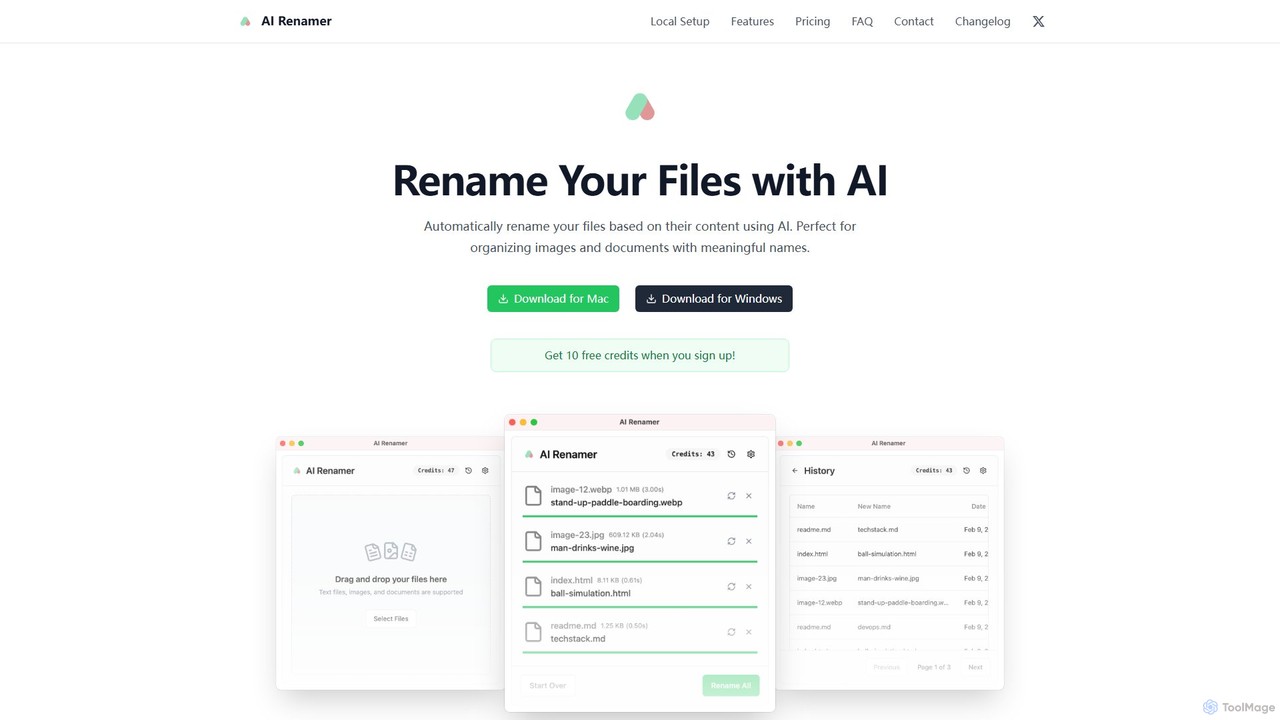
AI Renamer is a smart desktop application for Mac and Windows that automatically renames files based on their …
AI Renamer is a smart desktop application for Mac and Windows that automatically renames files based on their content. It analyzes images and documents to generate descriptive, meaningful names, helping you organize your digital life effortlessly. It supports batch processing, custom naming rules, and offers both a private, offline Local Mode and a convenient Cloud Mode.
About Document Management
AI Document Management tools are intelligent systems designed to organize, analyze, and automate workflows for large volumes of digital files. They utilize technologies like Natural Language Processing (NLP) and Optical Character Recognition (OCR) to understand the content and context of documents, going beyond simple storage. This enables automated classification, intelligent data extraction, and powerful semantic search capabilities. By transforming unstructured documents into structured, searchable assets, these tools significantly enhance information accessibility and operational efficiency for businesses.
Core Features
- Intelligent Classification: Automatically categorizes documents based on their content, such as invoices, contracts, or reports.
- Semantic Search: Allows users to search for concepts and meanings, not just exact keywords, for more accurate results.
- Automated Data Extraction: Identifies and extracts specific information like names, dates, and amounts from documents.
- Workflow Automation: Triggers actions, such as approval processes or notifications, based on document type or content.
- Version Control & Audit Trails: Tracks changes to documents and maintains a secure record of all activities for compliance.
Use Cases
These tools are invaluable in data-intensive sectors. For example, legal firms use them to manage case files and analyze contracts. Financial institutions automate invoice processing and loan application reviews. HR departments streamline the management of employee records, from resumes to performance reviews, ensuring compliance and quick access to information.
How to Choose
When selecting an AI Document Management tool, evaluate its integration capabilities with your existing software (e.g., CRM, ERP). Assess its accuracy in data extraction for your specific document types. Consider the platform's security protocols and compliance certifications (like GDPR or HIPAA). Finally, analyze the scalability and pricing model to ensure it aligns with your organization's growth and budget.
Document ManagementUse Cases
Automate Invoice Processing for Accounting
An accounts payable specialist in a mid-sized company handles hundreds of invoices weekly. Using an AI Document Management tool, they create a workflow where all incoming PDF invoices are automatically ingested. The AI uses OCR and NLP to extract key data like vendor name, invoice number, due date, and total amount. This data is then validated against purchase orders and automatically entered into the company's ERP system, reducing manual data entry time by over 80% and minimizing human error.
Streamline Legal Contract Review
A corporate legal team needs to perform due diligence on dozens of contracts for a merger. An AI Document Management platform allows them to upload all contracts into a secure, centralized repository. Using semantic search, lawyers can instantly find specific clauses related to liability or termination across all documents. The AI also automatically extracts key terms like contract value, effective dates, and renewal conditions, presenting them in a dashboard for quick comparison and risk assessment, accelerating the review process by weeks.
Organize HR Employee Records Efficiently
An HR manager is responsible for maintaining compliant and accessible records for over 500 employees. They use an AI Document Management system to create a digital file for each employee. The system automatically classifies and tags uploaded documents like resumes, contracts, and performance reviews. When a manager needs to find all employees with a specific certification, they can use a natural language query. The system also flags documents with missing signatures or expiring contracts, ensuring compliance and reducing administrative overhead.
Manage Clinical Trial Documentation
A clinical research organization manages thousands of documents for multiple trials, including protocols, patient consent forms, and lab reports. An AI Document Management system ensures all documents are stored in a compliant, audit-ready environment. The AI helps by automatically redacting sensitive patient information to maintain privacy. Researchers can use semantic search to find connections between different studies or identify adverse event reports across the entire database, significantly accelerating data analysis and reporting for regulatory submissions.
Build an Intelligent Knowledge Base
A customer support team for a software company struggles to find answers quickly in their vast library of technical manuals, FAQs, and past support tickets. They implement an AI Document Management tool to ingest all this information. The tool creates a unified, searchable knowledge base. When a customer asks a complex question, the support agent can type it in plain language, and the semantic search engine retrieves the most relevant paragraphs from multiple documents, not just links to entire files. This reduces average handling time and improves first-contact resolution rates.
Ensure Regulatory Compliance in Finance
A compliance officer at a bank needs to monitor thousands of transaction records and communications for potential regulatory breaches. They use an AI Document Management platform that automatically flags documents containing specific keywords or phrases related to anti-money laundering (AML) regulations. The system can also analyze communication patterns to identify unusual activity. This proactive approach allows the compliance team to investigate potential issues faster, generate audit reports automatically, and demonstrate robust compliance controls to regulators.