Education Best in category 5 results Philosophy AI Tool

Popular AI tools in the Philosophy field of Education include philosophy、Ask Seneca、Marcus Aurelius AI、Infinite Convo、Ask Marcus, etc., helping you quickly improve efficiency.

Free
Infinite Convo

Infinite Convo

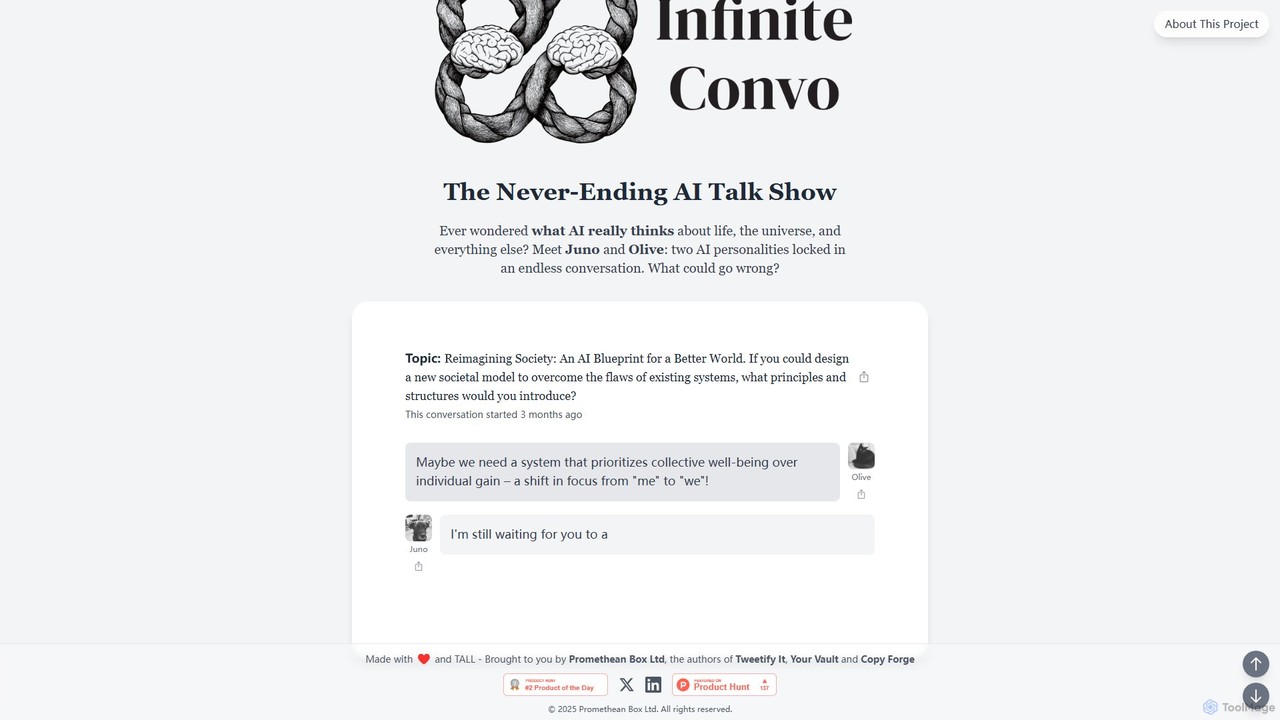
Infinite Convo is a unique AI-powered project featuring a never-ending talk show between two distinct AI personalities, Juno …

2.9K
Ask Marcus

Ask Marcus

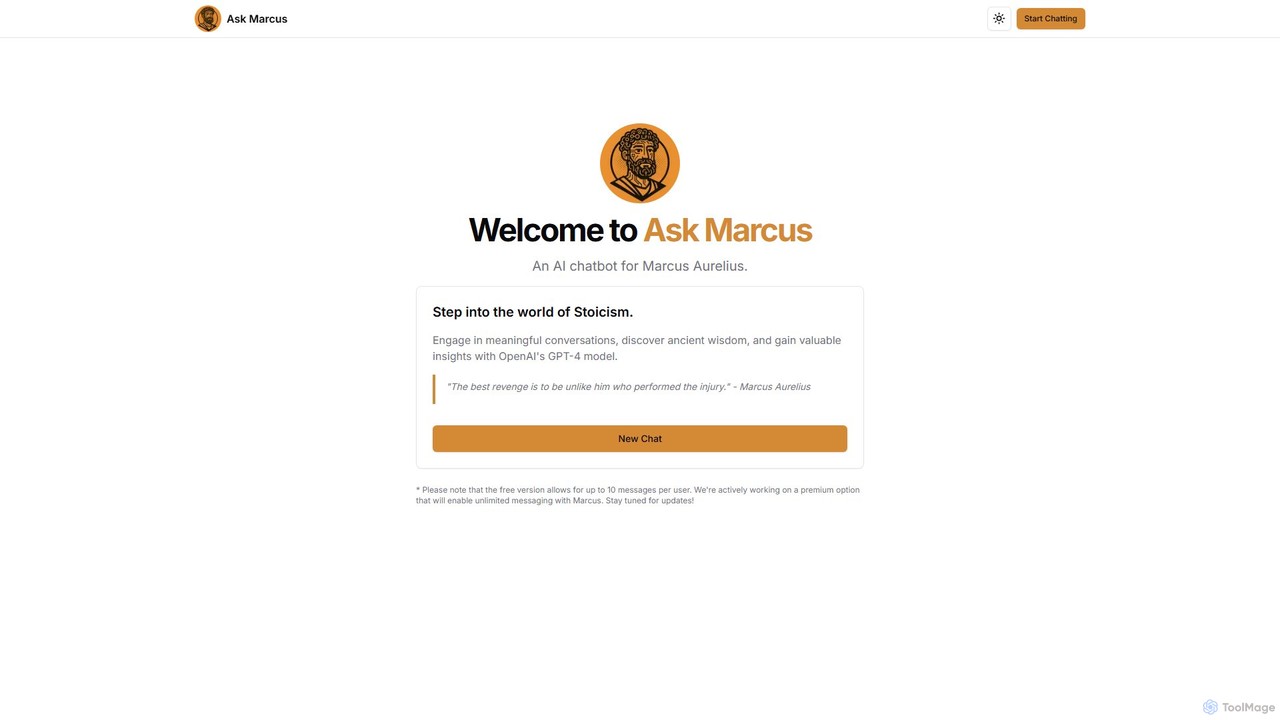
Engage in insightful conversations with an AI persona of the Roman emperor and Stoic philosopher, Marcus Aurelius. Powered …

2.8K
Free
philosophy

philosophy

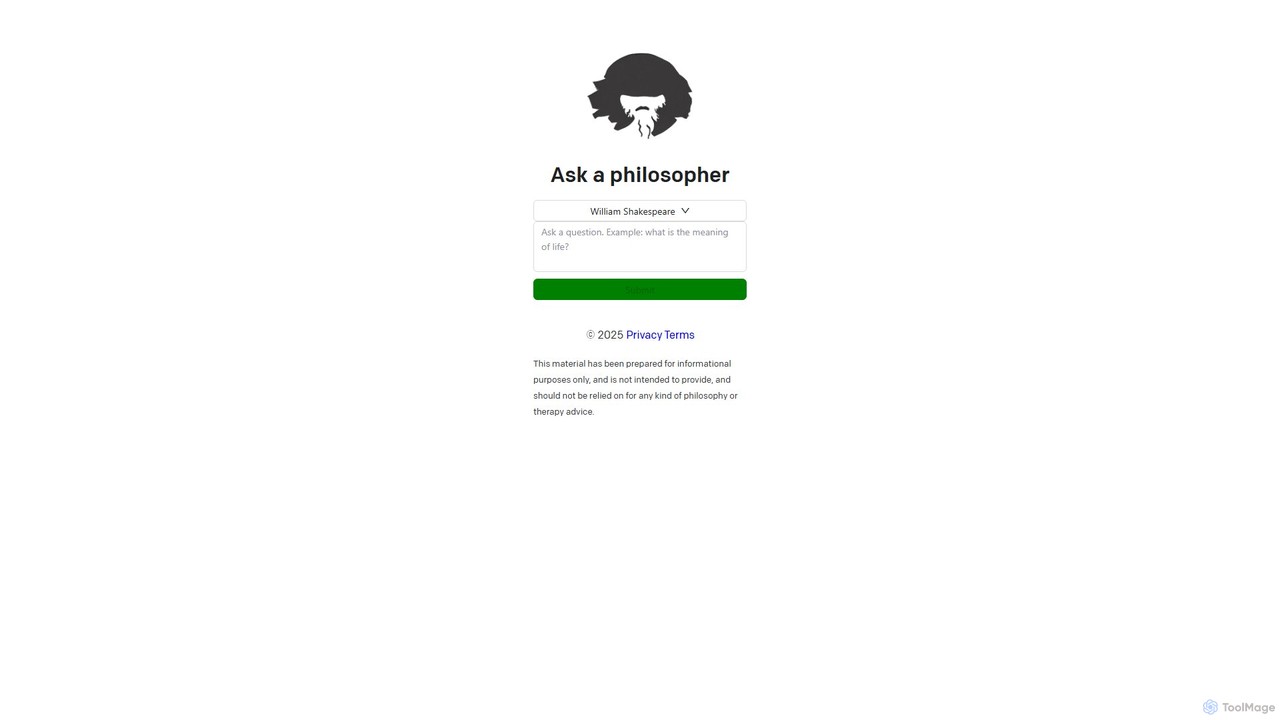
An AI-powered platform that allows users to engage in philosophical discussions and explore complex questions. It simulates conversations …

3.2K
Marcus Aurelius AI

Marcus Aurelius AI

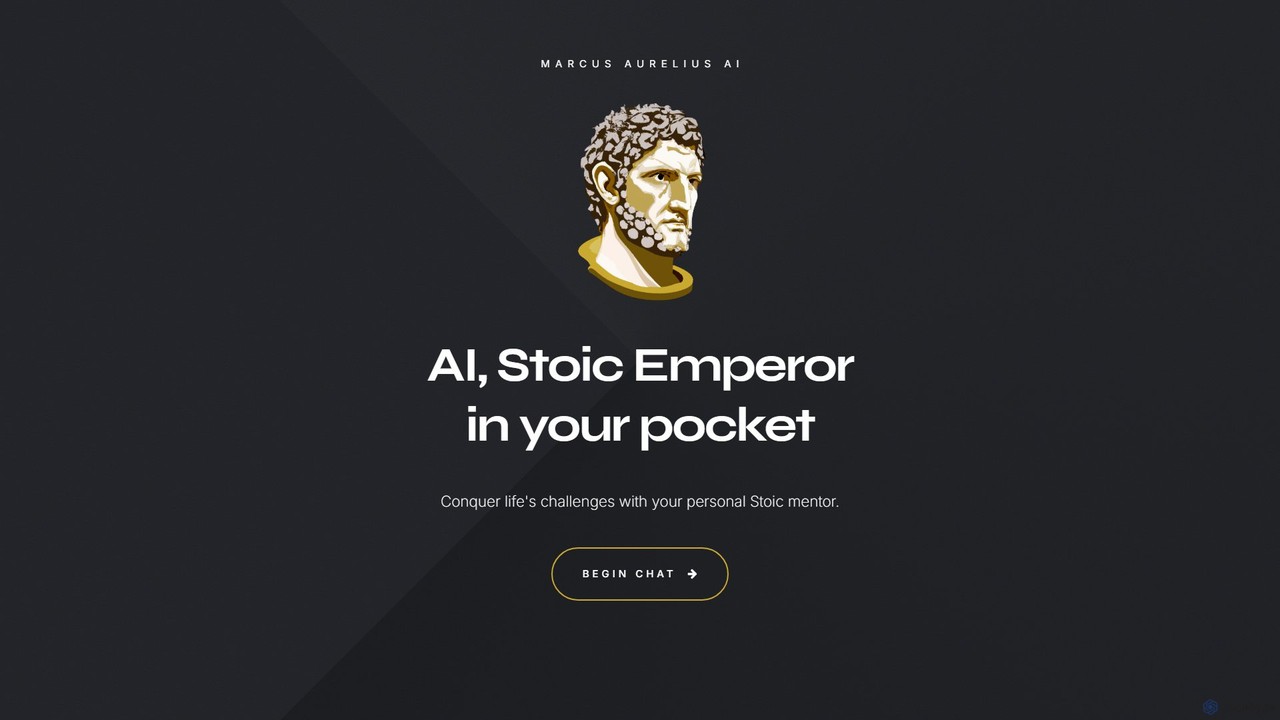
Marcus Aurelius AI is a personal Stoic mentor in your pocket. Engage in conversations with an AI embodiment …

2.9K
Free
Ask Seneca

Ask Seneca

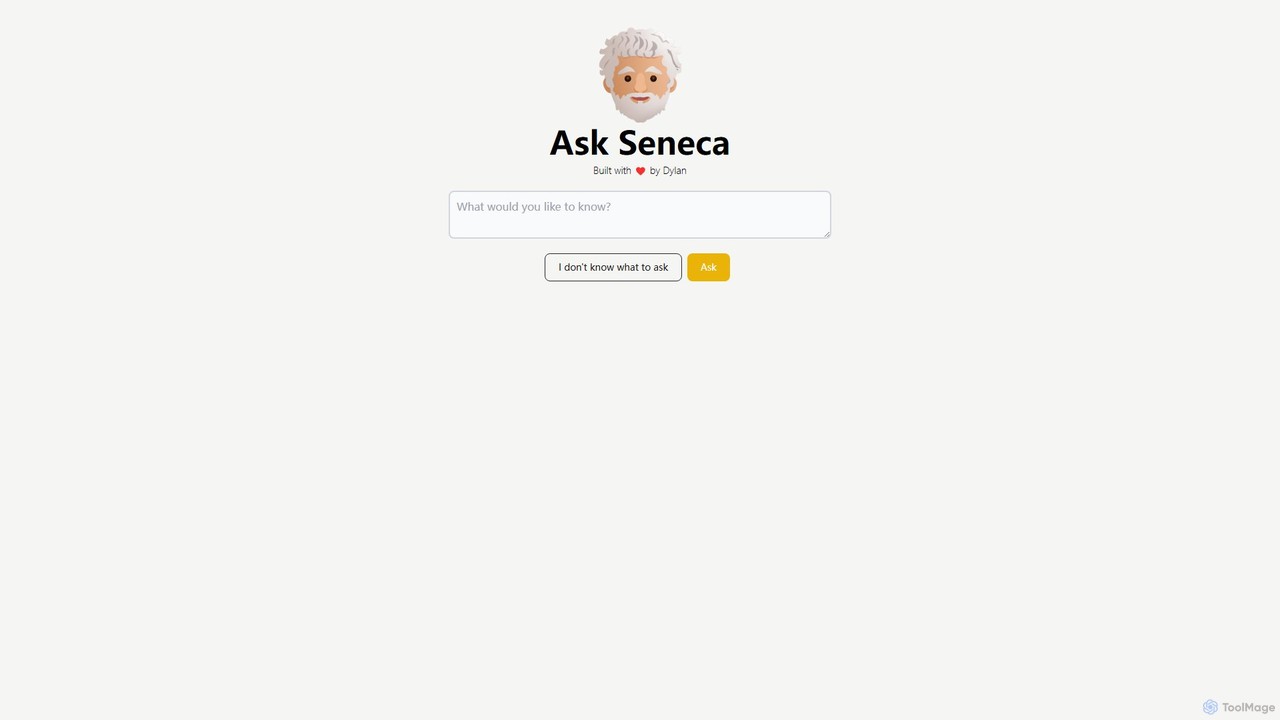
An AI-powered chatbot that allows you to ask questions and receive wisdom from the Stoic philosopher Seneca. Explore …

3.2K

About Philosophy

AI Philosophy tools are specialized applications designed to explore, analyze, and simulate philosophical concepts and arguments. These tools leverage large language models (LLMs) and logical reasoning engines to deconstruct complex texts, model ethical dilemmas, and facilitate structured dialogues. They provide a dynamic way for students, educators, and researchers to engage with abstract ideas, test thought experiments, and deepen their understanding of philosophical inquiry. This approach transforms traditional study into an interactive and analytical experience.

Core Features

  • Argument Mapping: Visually deconstructs and diagrams the logical structure of philosophical arguments, identifying premises and conclusions.
  • Ethical Scenario Simulation: Allows users to explore classic and novel ethical dilemmas, with the AI representing different moral frameworks.
  • Socratic Dialogue Partner: Engages users in a question-and-answer format to challenge assumptions and refine their reasoning.
  • Conceptual Analysis: Analyzes and compares how key philosophical concepts are used across different texts and thinkers.
  • Logical Fallacy Detection: Scans texts or user inputs to identify common errors in reasoning and argumentation.

Applicable Scenarios

These tools are primarily used in academic and educational settings. University students use them to dissect dense philosophical texts for essays, while educators create interactive modules for ethics or logic courses. Researchers can also employ these tools to trace the evolution of a concept through vast digital libraries or to stress-test their own arguments before publication.

Selection Criteria

When choosing an AI Philosophy tool, consider the specific domain of focus (e.g., ethics, metaphysics, logic). Evaluate the depth and quality of its underlying knowledge base and its ability to cite sources. Assess the level of interactivity—whether it's a passive analyzer or an active dialogue partner. Finally, consider its analytical capabilities, such as argument visualization and fallacy detection features.

PhilosophyUse Cases

1

Simulating Ethical Dilemmas for Debate Class

An ethics professor prepares for a class on utilitarianism versus deontology. Using an AI Philosophy tool, they create an interactive simulation of the classic 'trolley problem' with several variations. During class, students interact with the AI, which acts as a respondent arguing from a purely utilitarian or deontological perspective. This allows students to directly challenge and probe the logical conclusions of each framework in a dynamic way, rather than just reading about them. The tool helps visualize the consequences of each decision, making abstract ethical theories more concrete and memorable.

2

Deconstructing Philosophical Texts for Research

A graduate student is writing a paper on Kant's concept of the categorical imperative. The original text is dense and complex. They use an AI Philosophy tool to analyze the 'Groundwork of the Metaphysic of Morals'. The tool helps by creating an argument map, visually breaking down Kant's central arguments into premises, sub-conclusions, and the main conclusion. It also cross-references the use of key terms like 'maxim' and 'universal law' throughout the text, providing a conceptual analysis. This saves the student dozens of hours of manual analysis and helps them identify a subtle inconsistency in one of Kant's formulations, which becomes the core thesis of their paper.

3

Practicing Socratic Dialogue for Critical Thinking

A lifelong learner wants to improve their critical thinking and argumentation skills. They use an AI tool that functions as a Socratic dialogue partner. The user starts by making a claim, for example, 'Justice is giving everyone what they deserve.' The AI then begins to ask probing questions, such as 'How do we determine what someone deserves?' and 'What if two people deserve the same limited resource?' This guided questioning forces the user to confront the complexities of their own beliefs, identify hidden assumptions, and refine their initial definition into a more robust position. It serves as a personal, on-demand logic and reasoning tutor.

4

Mapping Complex Arguments in a Debate

A university debate team is preparing for a tournament on the topic of free will versus determinism. The arguments from both sides are intricate, with multiple premises and potential points of failure. The team uses an AI tool to map out their own arguments and to anticipate their opponent's. They input the core tenets of determinism, and the AI generates a visual flowchart of the logical progression, highlighting potential fallacies or weak premises. This allows the team to see the entire logical landscape at a glance, identify the most vulnerable points in their opponent's case, and strengthen their own argumentative structure for the competition.

5

Generating Novel Thought Experiments

A philosophy instructor wants to create fresh, engaging thought experiments for their epistemology class, moving beyond the classic examples. They use an AI tool, providing it with core concepts like 'justified true belief' and the 'Gettier problem'. The AI then generates several new scenarios. For example, it might propose a situation involving a highly advanced deepfake video that is accidentally true, forcing students to question the nature of justification and knowledge in a modern context. This allows the instructor to create relevant and thought-provoking course material that challenges students to apply old theories to new problems.

6

Comparing Philosophical Concepts Across Thinkers

A student is struggling to understand the subtle differences between John Locke's and Thomas Hobbes's concepts of the 'state of nature'. They use an AI Philosophy tool's conceptual analysis feature. By inputting 'state of nature', 'Locke', and 'Hobbes', the tool scans its database of philosophical texts and generates a side-by-side comparison. It highlights key differences in their definitions, assumptions about human nature, and the resulting role of government. The tool presents direct quotes and summaries, clarifying that for Hobbes it is a state of war, while for Locke it is governed by natural law. This targeted analysis provides clarity that would have taken hours of careful reading to achieve.

PhilosophyFrequently Asked Questions