Best of the Year 2 results Engineering Management AI Tools

Popular AI tools in the Engineering Management field include Actual、DevBlogs, etc., helping you quickly improve efficiency.

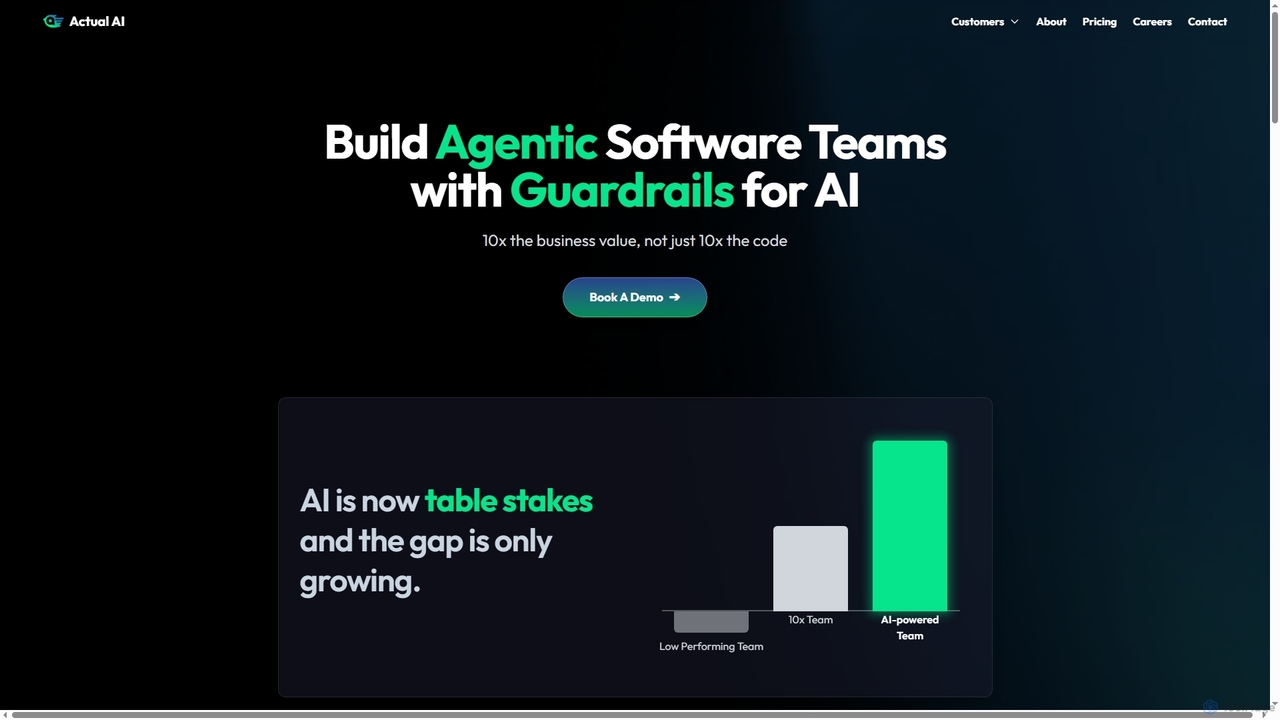
Actual

Actual

Actual is an AI-powered platform designed to empower engineering managers and software teams by providing guardrails for AI …

2.3K
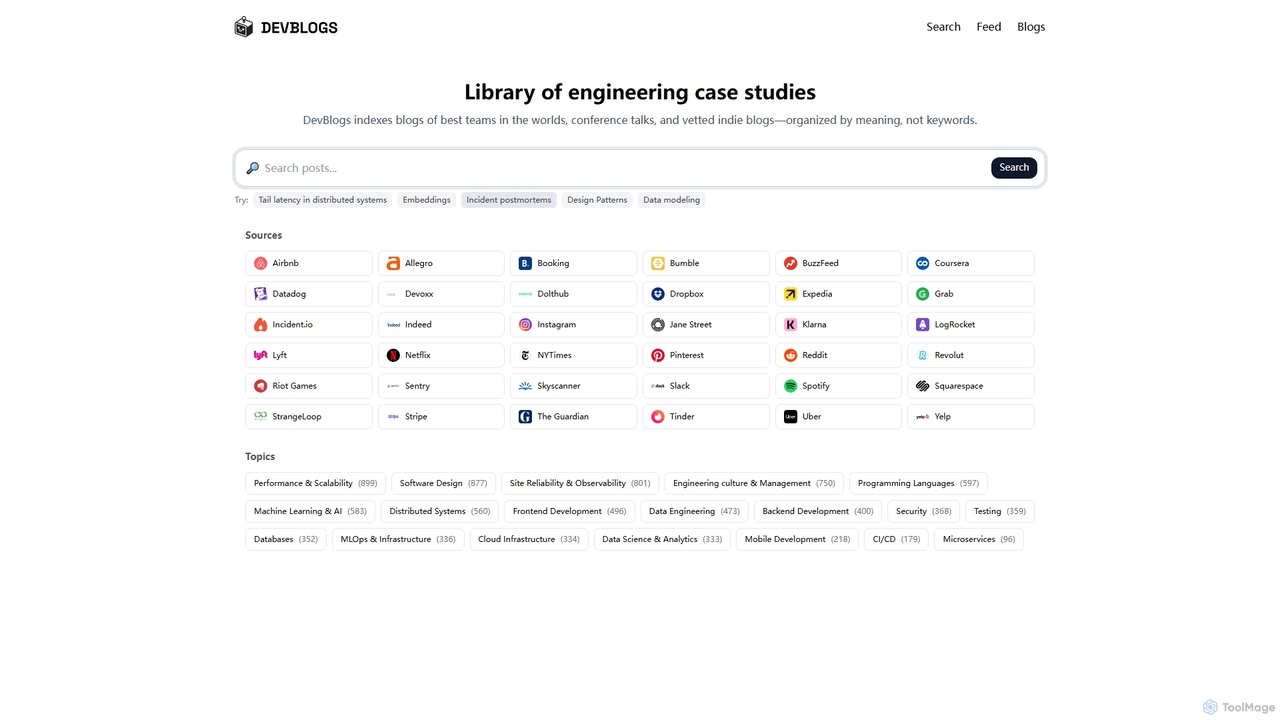
DevBlogs

DevBlogs

DevBlogs is a curated library indexing engineering case studies, tech blogs, and conference talks from leading global teams. …

2.2K

About Engineering Management

AI Engineering Management tools are a class of platforms that leverage artificial intelligence to streamline and optimize the software development lifecycle. They analyze data from code repositories, project management systems, and communication channels to provide actionable insights for engineering leaders. These tools help improve team productivity, forecast project timelines more accurately, and identify potential risks before they impact delivery, ultimately enabling data-driven decision-making for technical teams.

Core Features

  • Predictive Project Analytics: Forecasts release dates and identifies potential bottlenecks by analyzing historical project data.
  • Developer Productivity Insights: Measures key metrics like cycle time, code churn, and pull request activity to understand team dynamics.
  • Automated Risk Detection: Proactively flags high-risk commits, potential bugs, or security vulnerabilities in the codebase.
  • Intelligent Resource Allocation: Suggests task assignments based on developer skills, current workload, and historical performance.
  • Data-Driven Reporting: Automates the generation of reports on team performance, project health, and key engineering metrics (e.g., DORA).

Applicable Scenarios

These tools are primarily used by Engineering Managers, VPs of Engineering, and Tech Leads within software development companies. They are particularly valuable for scaling teams that need to maintain high velocity and code quality, as well as for organizations aiming to transition from intuition-based to data-informed management practices. Common use cases include sprint planning, quarterly resource allocation, and performance reviews.

Selection Criteria

When choosing an AI Engineering Management tool, consider its integration capabilities with your existing stack (e.g., GitHub, Jira, Slack). Evaluate the depth and customizability of the analytics provided—whether it focuses on project delivery, developer experience, or code quality. Data privacy and security protocols are critical, as these tools access sensitive source code and project data. Finally, assess the user interface and the ease of generating meaningful, actionable insights for your team.

Engineering ManagementUse Cases

1

Forecast Project Delivery Dates Accurately

An Engineering Manager is responsible for communicating release timelines to stakeholders. Instead of relying on rough estimates, they use an AI Engineering Management tool connected to Jira and GitHub. The tool analyzes historical data, including story point completion rates, cycle times, and developer availability. It generates a probabilistic forecast, such as an 85% chance of completing the project by a specific date. This allows the manager to set realistic expectations and proactively manage scope or resources if delays are predicted, reducing uncertainty by over 50%.

2

Identify and Resolve Team Bottlenecks

A Tech Lead observes that the team's velocity has slowed down. They use an AI tool to analyze the development workflow. The tool visualizes the entire process from commit to deployment and highlights that the 'Code Review' stage has an unusually long cycle time. It further identifies that one senior developer is assigned to over 70% of all reviews. Armed with this data, the Tech Lead facilitates a team discussion to distribute review responsibilities more evenly and establishes a new service-level agreement (SLA) for review turnaround, resolving the bottleneck within one sprint.

3

Facilitate Data-Driven Performance Reviews

A VP of Engineering needs to conduct quarterly performance reviews that are fair and objective. They use an AI platform to aggregate individual developer metrics over the past quarter, focusing on contributions rather than just lines of code. The tool highlights trends in PR size, review collaboration, and the impact of their work (e.g., bug fixes vs. new features). This provides a holistic view, enabling a constructive conversation focused on growth areas and recognizing specific achievements, moving away from subjective feedback and ensuring a more equitable evaluation process for the entire department.

4

Improve Sprint Planning and Estimation

During sprint planning, a team often struggles with accurately estimating story points. Their Engineering Manager introduces an AI tool that analyzes the complexity of tasks based on historical data and code changes required. When a new user story is created in Jira, the tool provides a suggested story point value and flags potential dependencies or risks that the team might overlook. This leads to more predictable sprints, a 20% reduction in story spillovers, and helps the team have more informed discussions about task complexity, improving their overall estimation skills over time.

5

Proactively Monitor and Improve Code Quality

An organization wants to reduce the number of bugs that reach production. They implement an AI Engineering Management tool that scans every pull request. The AI model, trained on millions of open-source commits, identifies complex code, potential logic errors, and deviations from best practices that static linters might miss. It automatically adds comments to the PR with suggestions for refactoring. This system acts as an automated senior developer, providing immediate feedback and helping to catch an estimated 15% more critical issues before they are merged, improving overall code maintainability.

6

Optimize Resource Allocation Across Multiple Teams

A Director of Engineering oversees five different teams and needs to decide where to allocate a new senior engineer. They use an AI management platform to get a consolidated view of all team backlogs, current workloads, and project complexities. The AI analyzes the data and highlights that 'Team Alpha' has the highest ratio of complex tasks to senior engineers and is a critical path for a Q4 company goal. Based on this data-driven recommendation, the director confidently assigns the new hire to Team Alpha, ensuring resources are placed where they can have the most impact, rather than relying on subjective requests from individual managers.

Engineering ManagementFrequently Asked Questions