ToolMage
Sign in

Best 1 Comedy AI tools for Entertainment

Popular Comedy AI tools in Entertainment include aiisajoke, helping you work more efficiently.

aiisajoke
Freemium

aiisajoke

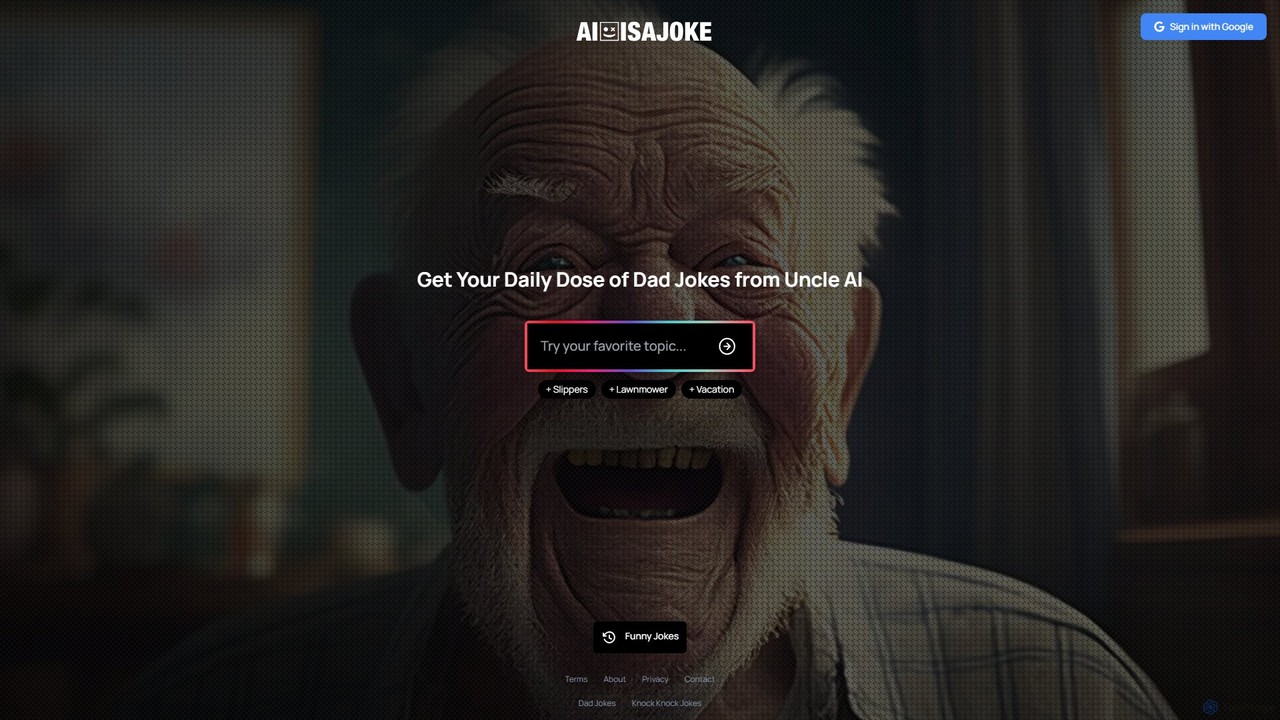
aiisajoke is an AI-powered joke generator that specializes in creating an endless supply of hilarious dad jokes. With its "Uncle AI" persona, users can instantly generate, customize, and share family-friendly puns and one-liners, perfect for a daily dose of laughter, social media content, or breaking the ice.

Humor
Visits 5.7KFavorites 122Likes 127

About Comedy

AI Comedy tools are specialized artificial intelligence applications designed to generate, analyze, and enhance humorous content. These tools leverage advanced natural language processing (NLP) and machine learning algorithms to understand comedic structures, patterns, and audience reception. They empower comedians, content creators, and marketers to overcome creative blocks, produce diverse comedic material, and refine their humor for various platforms. By automating aspects of joke creation and script development, these AI solutions offer innovative ways to engage audiences through laughter.

Core Features

  • Joke Generation: Creates original one-liners, puns, and observational humor based on user prompts or topics.
  • Scriptwriting Assistance: Helps develop comedic dialogues, character interactions, and unexpected plot twists for sketches or screenplays.
  • Humor Analysis: Evaluates text for comedic potential, identifies common joke structures, and suggests improvements.
  • Meme & Visual Humor Creation: Generates humorous captions for images or suggests visual concepts for comedic effect.
  • Tone & Style Adaptation: Adjusts the comedic style and tone to suit different target audiences or specific platforms.

Use Cases

AI Comedy tools are invaluable for professionals seeking to inject humor into their work. Stand-up comedians can use them to brainstorm fresh material and refine punchlines. Social media managers leverage these tools to craft witty captions and engaging short video scripts that capture audience attention. Writers and screenwriters find them useful for developing comedic plotlines and dialogues, ensuring their narratives resonate with humor.

How to Choose

When selecting an AI Comedy tool, consider its versatility in generating different humor styles, such as satire, observational, or slapstick. Evaluate the range of content formats it supports, from text-based jokes to script outlines and visual humor ideas. Assess the level of customization and control offered, ensuring you can fine-tune the output to match your specific comedic voice. Finally, check for integration capabilities with other creative or publishing platforms to streamline your workflow.

Comedy use cases

1

Brainstorming Stand-up Comedy Material

A stand-up comedian facing writer's block can input a topic or a premise into an AI comedy tool. The AI generates multiple joke variations, punchlines, and observational humor pieces, providing a diverse pool of ideas. This helps the comedian quickly develop new material, refine existing bits, and explore different comedic angles, significantly reducing the time spent on initial ideation and boosting creative output for their next show.

2

Crafting Engaging Social Media Humor

Social media managers or content creators need a constant stream of fresh, funny content. By using AI comedy tools, they can generate witty captions, short video scripts, or meme ideas tailored to current trends or specific brand messaging. This allows them to maintain an active and humorous online presence, increase audience engagement through shareable content, and save hours typically spent on brainstorming and writing comedic posts.

3

Developing Comedic Screenplays and Sketches

Screenwriters and sketch comedy writers can utilize AI to assist in developing humorous dialogues, character interactions, and unexpected plot twists. The AI can suggest comedic scenarios based on character traits or plot points, helping to inject fresh humor into narratives. This accelerates the scriptwriting process, provides new perspectives on comedic timing, and ensures a consistent comedic tone throughout the production.

4

Creating Humorous Marketing Campaigns

Marketing professionals aiming to make their campaigns more memorable and shareable can employ AI comedy tools. They can generate humorous slogans, ad copy, or even short video concepts that resonate with their target audience. This approach helps brands stand out in a crowded market, increase brand recall through laughter, and drive higher engagement rates on their promotional materials, leading to more effective advertising.

5

Enhancing Chatbot and Virtual Assistant Personalities

Developers and UX designers can integrate AI comedy capabilities into chatbots or virtual assistants to give them a more engaging and human-like personality. The AI can generate context-aware jokes, witty responses, or playful banter, making interactions more enjoyable for users. This improves user satisfaction, reduces perceived robotic interactions, and fosters a more positive and memorable user experience with automated systems.

6

Generating Lighthearted Educational Content

Educators and instructional designers can use AI comedy tools to add humor to their learning materials, making complex topics more approachable and engaging. The AI can create relevant jokes, funny analogies, or humorous anecdotes that break up dense information. This helps to maintain student attention, improve information retention by making learning enjoyable, and create a more relaxed and positive classroom or e-learning environment.

Comedy FAQ

What are AI Comedy tools?

AI Comedy tools are specialized artificial intelligence applications designed to assist in the creation, analysis, and enhancement of humorous content. They leverage advanced natural language processing and machine learning to understand comedic structures, generate jokes, develop witty dialogues, and even suggest comedic visual concepts. These tools serve as creative assistants for anyone looking to inject humor into their work, from professional comedians to content marketers.

How do I choose the right AI tool for generating comedy?

When selecting an AI comedy tool, consider several factors. First, evaluate its ability to generate diverse humor styles, such as satire, observational, or pun-based jokes. Second, assess the range of content formats it supports, like text, script outlines, or meme ideas. Third, look for customization options that allow you to control tone, topic, and length. Finally, consider the user interface's ease of use and any integration capabilities with your existing creative workflow. A good tool should align with your specific comedic needs and creative process.

What types of humor can AI Comedy tools generate?

AI Comedy tools are becoming increasingly sophisticated in generating various types of humor. They can produce one-liners, puns, observational jokes, and even short comedic narratives or dialogues. Some advanced tools can mimic specific comedic styles or adapt humor to different target audiences by analyzing vast datasets of humorous content. While they excel at pattern recognition and generation, the nuance and originality of human humor often require user refinement and creative input.

How do AI Comedy tools differ from general content generation AI?

While general content generation AI can produce text on various topics, AI Comedy tools are specifically trained and optimized for humor. They incorporate algorithms designed to understand comedic timing, irony, wordplay, and unexpected twists, which are crucial for generating laughter. General AI might produce factually correct or coherent text, but it often lacks the specific "spark" or structure required for effective comedy. Comedy AI focuses on the unique linguistic and contextual elements that make something funny, making it a specialized subset of content generation.

Who can benefit most from using AI Comedy tools?

A wide range of individuals and professionals can benefit from AI Comedy tools. This includes stand-up comedians and sketch writers looking for new material or overcoming writer's block. Content creators and social media managers can use them to generate engaging, humorous posts quickly. Marketers can craft witty ad copy or campaign concepts. Educators might use them to make learning more enjoyable, and even developers can integrate them into chatbots for more personable interactions. Essentially, anyone needing to create or enhance humorous content can find value in these tools.