
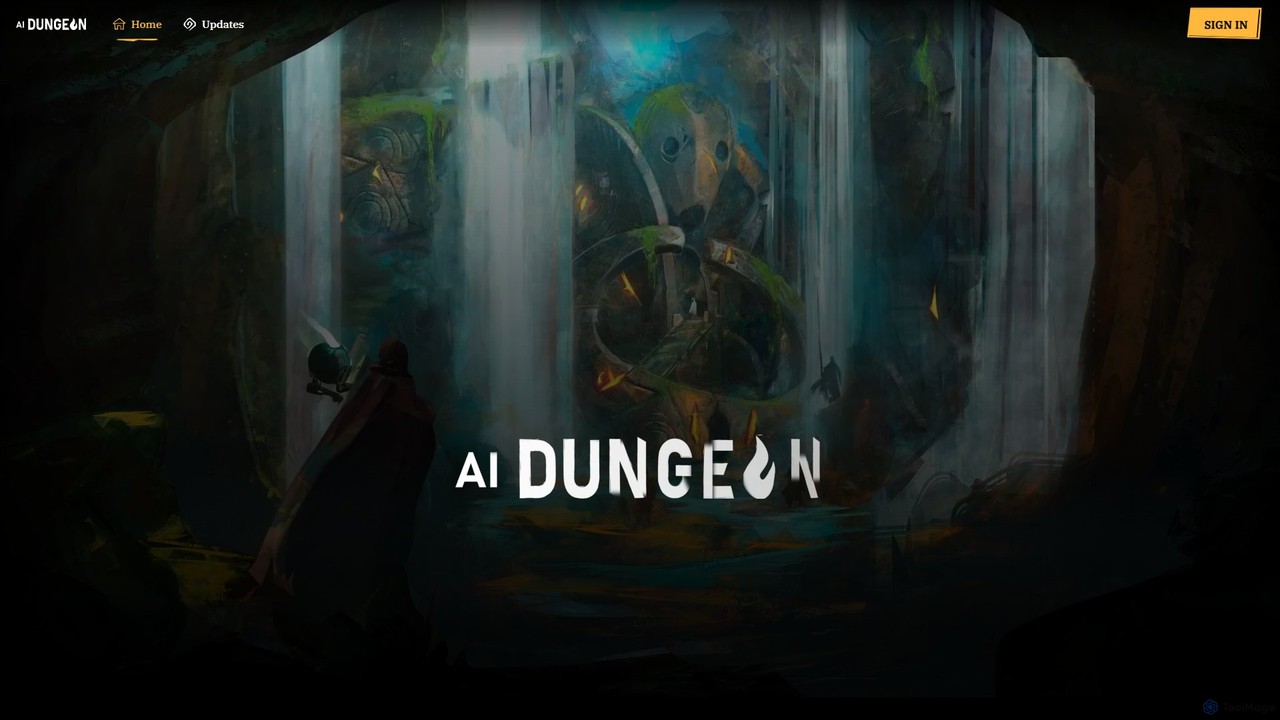
AI Dungeon
AI Dungeon is a groundbreaking text-based adventure game powered by artificial intelligence. It offers infinite possibilities, allowing you …
AI Dungeon is a groundbreaking text-based adventure game powered by artificial intelligence. It offers infinite possibilities, allowing you to direct your own unique story in any genre imaginable. The AI acts as your personal dungeon master, generating dynamic worlds, characters, and plot twists in response to your actions. Whether you're a gamer, writer, or creative explorer, AI Dungeon provides a limitless sandbox for your imagination.
About Interactive Fiction
Interactive Fiction is a category of AI-powered tools that enable users to create and experience dynamic, branching narratives. These platforms leverage advanced natural language processing and generation to adapt storylines based on player choices, offering personalized storytelling. They transform traditional reading into an immersive, choice-driven adventure, making each playthrough unique. As a sub-category of Entertainment AI, Interactive Fiction tools push the boundaries of digital narrative engagement.
Core Features
- Dynamic Story Generation: AI algorithms create or adapt narrative elements, dialogue, and plot twists in real-time based on user input.
- Choice-Driven Branching Paths: Users' decisions directly influence the story's progression, leading to multiple possible outcomes and endings.
- Character AI & Dialogue: AI models generate contextually relevant and personality-consistent dialogue for non-player characters.
- World State Management: Tools track and update the narrative world's conditions, inventory, and character relationships based on player actions.
- Genre & Style Adaptation: AI can generate stories in various genres (fantasy, sci-fi, mystery) and adapt to specific writing styles.
Applicable Scenarios
Interactive Fiction tools are invaluable for creators seeking to build engaging narrative experiences and for users desiring personalized stories. Independent game developers use them to prototype and build complex text-based adventure games. Educators employ these tools to craft immersive learning modules where student choices impact the educational outcome. Writers explore new forms of storytelling, allowing readers to co-create their narrative journey.
How to Choose
When selecting an Interactive Fiction tool, consider the AI's narrative generation sophistication and its ability to handle complex plot structures. Evaluate the level of customization offered for characters, settings, and story events. Look for intuitive interfaces that support both creators and players. Assess the range of genres and writing styles the AI can effectively emulate, and consider options for publishing or sharing your interactive stories.
Interactive FictionUse Cases
Crafting Personalized Learning Adventures
Educators and instructional designers utilize Interactive Fiction tools to create engaging educational scenarios. By allowing students to make choices that influence the narrative's progression and outcome, these tools transform passive learning into an active, personalized adventure. For instance, a history teacher could design a scenario where students navigate a historical event, making decisions that lead to different consequences, thereby deepening their understanding and critical thinking skills.
Developing Branching Narrative Games
Independent game developers and narrative designers leverage Interactive Fiction tools to rapidly prototype and build complex text-based adventure games. These tools allow for intricate plotlines, dynamic character interactions, and multiple endings without requiring extensive programming knowledge. A solo developer can use AI to generate dialogue options, manage character relationships, and even suggest plot twists, significantly accelerating the game development process and enabling richer storytelling.
Simulating Decision-Making Scenarios
Businesses and training institutions employ Interactive Fiction tools to simulate ethical dilemmas, strategic business decisions, or crisis management scenarios. These simulations provide a safe, controlled environment for employees to practice critical thinking, observe the consequences of their choices, and refine their decision-making skills. For example, a corporate trainer could create an IF module where managers navigate a complex HR issue, experiencing the ripple effects of their actions.
Enhancing Creative Writing and Storytelling
Writers, authors, and hobbyists use Interactive Fiction tools as a dynamic canvas for creative expression. These platforms allow them to experiment with non-linear narratives, explore character arcs influenced by reader input, and generate fresh plot ideas. An aspiring novelist might use an IF tool to outline multiple story paths for their characters, receiving AI-generated feedback or alternative narrative suggestions, thereby enriching their creative process and overcoming writer's block.
Personalized Role-Playing Experiences
Individual users and role-playing game (RPG) enthusiasts utilize Interactive Fiction tools to generate highly personalized and adaptive role-playing experiences. Instead of relying on pre-written modules, players can engage with an AI storyteller that dynamically responds to their actions, character background, and desired narrative direction. This allows for unique, emergent storylines that cater specifically to the player's imagination, offering unparalleled freedom in their virtual adventures.
Interactive Marketing and Brand Storytelling
Marketing professionals and brand strategists can employ Interactive Fiction tools to create engaging, choice-driven brand narratives. Instead of passive advertisements, customers can interact with a story where their decisions influence the brand's message or product presentation. This fosters deeper engagement and memorability. For example, a car manufacturer could create an IF experience where users configure their dream car and then navigate a virtual test drive, with AI adapting the narrative based on their choices.