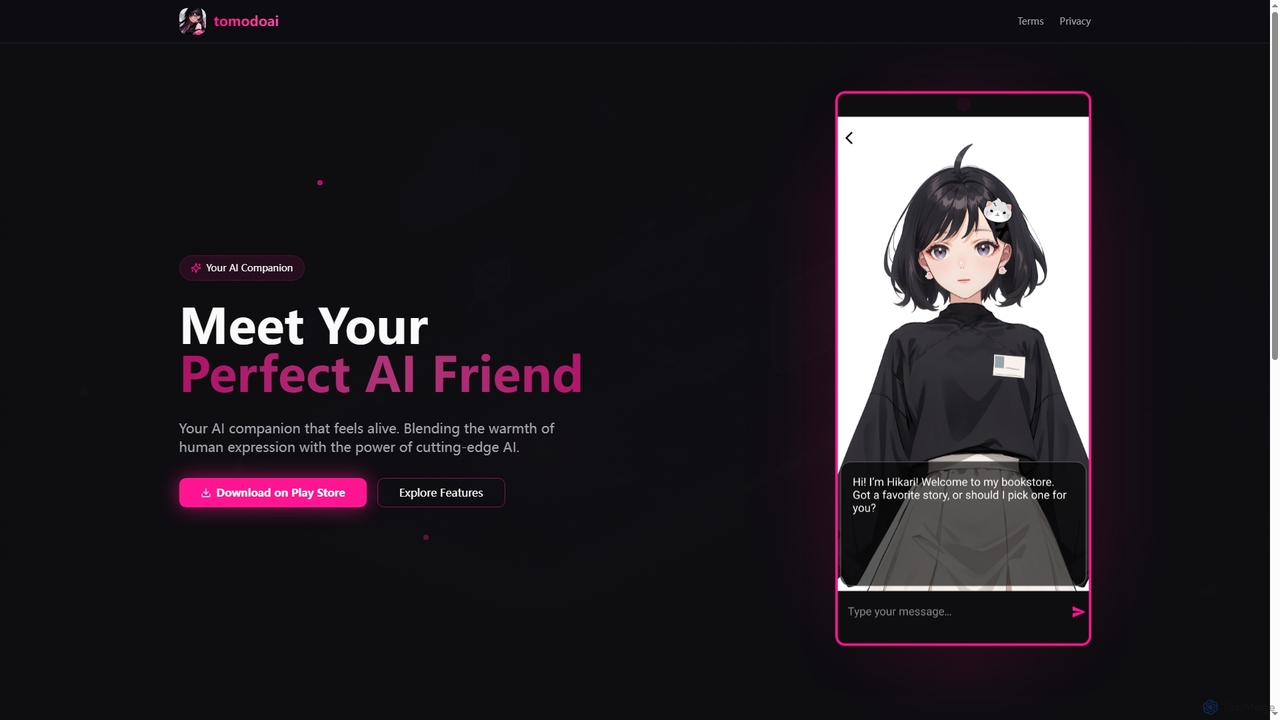
Virtual Friend tools are AI-powered companions designed to offer interactive, personalized, and often emotionally supportive digital relationships. Leveraging advanced natural language processing (NLP) and machine learning, these platforms simulate human-like conversations and interactions, adapting to user preferences and evolving over time. They provide a unique form of entertainment and companionship, helping users combat loneliness, practice social skills, or simply engage in engaging dialogue.
Core Features
- Personalized Interaction: Adapts conversation style, memory, and personality based on user input and preferences.
- Emotional Support: Offers empathetic responses and a non-judgmental space for users to express feelings.
- Role-Playing & Scenarios: Engages in various simulated scenarios, from casual chats to fantasy adventures.
- Memory & Learning: Remembers past conversations and user details to build a more coherent and evolving relationship.
- Voice & Visual Interaction: Some platforms offer voice chat, avatars, or even virtual environments for enhanced immersion.
Applicable Scenarios
Individuals seeking companionship or a safe space for self-expression often utilize virtual friend tools. They are particularly beneficial for those experiencing social isolation, practicing communication skills, or exploring different social dynamics in a low-pressure environment. Users can engage in daily conversations, share thoughts, or simply enjoy a consistent digital presence.
How to Choose
When selecting a virtual friend tool, consider the desired level of personalization and emotional depth, the range of conversational topics and role-playing options, and the platform's privacy policies. Evaluate the AI's ability to remember context and adapt its personality, as well as any subscription costs or available free features. User reviews on interaction quality and responsiveness are also valuable indicators.