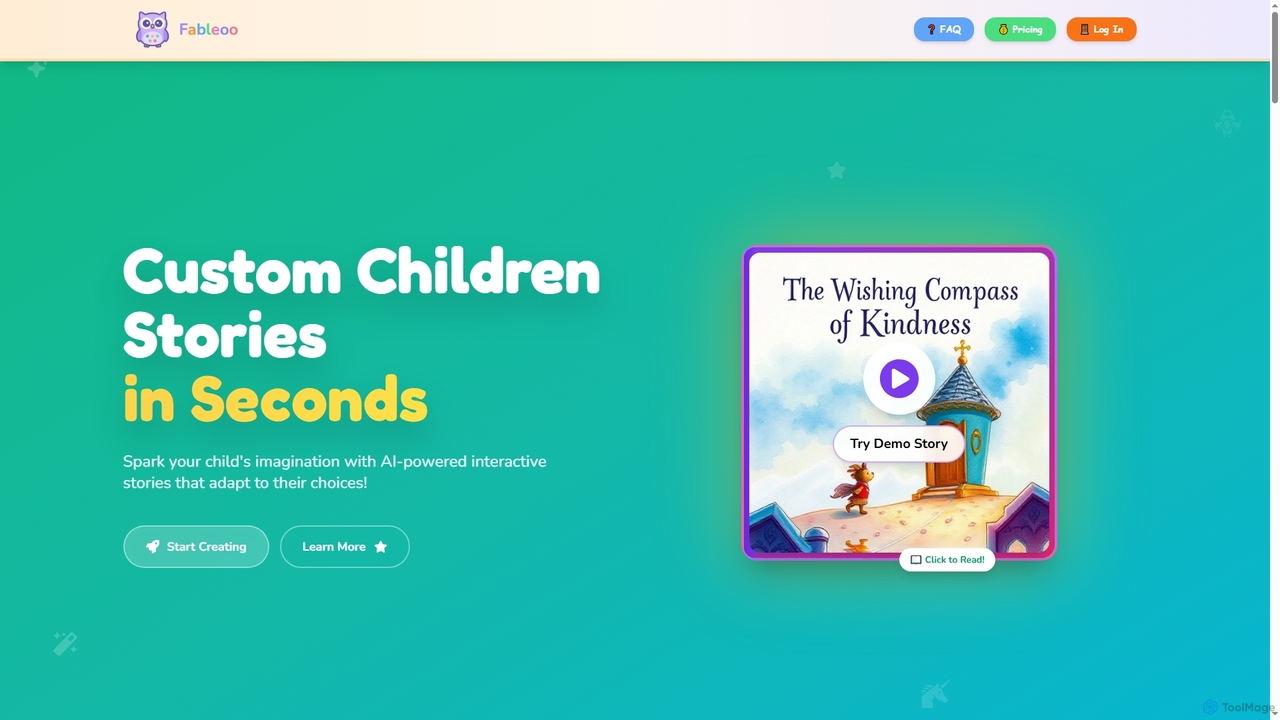
Childrens Content AI tools are a specialized category within the broader family of AI tools, designed to create engaging, educational, and safe digital experiences for young audiences. These tools leverage advanced AI algorithms, including natural language processing, generative AI, and computer vision, to produce a wide array of age-appropriate materials. They empower parents, educators, and content creators to generate personalized stories, interactive games, educational modules, and animated characters, fostering creativity and learning in a secure environment.
Core Features
- Age-Appropriate Content Generation: Automatically creates stories, games, and visuals tailored to specific age groups, ensuring suitability and developmental relevance.
- Interactive Storytelling: Enables dynamic narratives where children can influence plot points, character actions, or outcomes, enhancing engagement.
- Educational Game Creation: Generates quizzes, puzzles, and learning activities that align with curriculum goals or specific learning objectives.
- Character & Asset Design: Produces unique animated characters, backgrounds, and objects, simplifying the visual development process for children's media.
- Content Moderation & Safety Filters: Integrates robust AI-driven filters to ensure all generated content is free from inappropriate themes, language, or visuals.
Use Cases
These tools are invaluable for various stakeholders in children's education and entertainment. Educators can quickly develop customized learning materials and interactive exercises for their students. Parents can generate personalized bedtime stories featuring their child, or create engaging activities for home learning. Content studios can accelerate the production of animated series, digital books, and educational apps by automating character design and storyboarding.
How to Choose
When selecting Childrens Content AI tools, prioritize safety and privacy features, ensuring compliance with child protection regulations (e.g., COPPA, GDPR). Evaluate the tool's ability to generate age-appropriate and educationally sound content, checking for customization options and curriculum alignment. Consider the level of interactivity offered, the ease of use for non-technical users, and the diversity of content formats it supports, such as text, audio, and visuals.