ToolMage
Sign in

Best 1 Parenting Resources AI tools for Family

Popular Parenting Resources AI tools in Family include TalesMio, helping you work more efficiently.

TalesMio
Paid

TalesMio

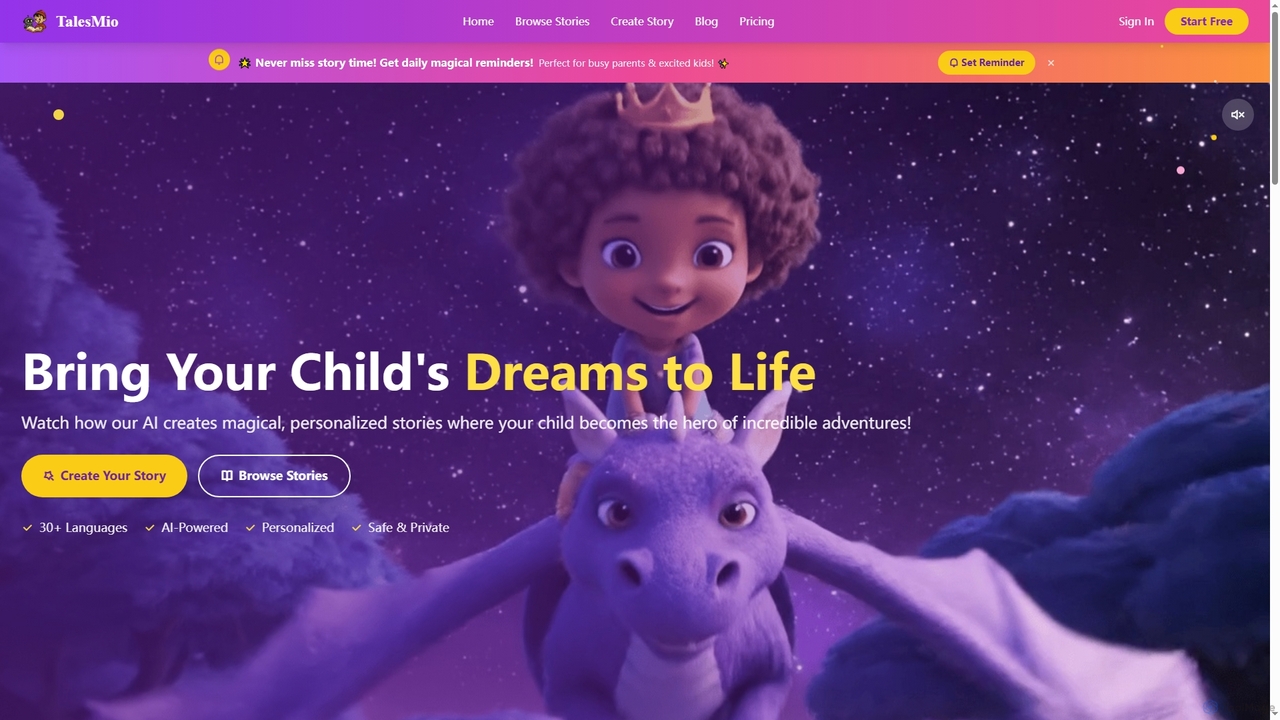
TalesMio is an AI-powered platform that transforms children's dreams into personalized, interactive stories. Parents can create unique adventures where their child becomes the hero, complete with professional narration, vivid illustrations, and magical sound effects, fostering imagination and a love for reading in a safe, ad-free environment.

Story Generation
Visits 5.9KFavorites 140Likes 125

About Parenting Resources

Parenting Resources are AI-powered tools designed to support parents in managing family life, child development, and educational needs. These tools leverage artificial intelligence to offer personalized advice, automate tasks, and provide tailored content, significantly easing the complexities of modern parenting. They aim to enhance family well-being and foster children's growth through intelligent assistance, fitting within the broader category of Family AI tools.

Core Features

  • Personalized Guidance: AI algorithms analyze family data to offer customized parenting advice, educational strategies, and health tips.
  • Automated Scheduling & Reminders: Tools help manage children's activities, appointments, and daily routines with smart scheduling and timely alerts.
  • Content Generation: AI can create personalized stories, learning materials, or activity ideas tailored to a child's age and interests.
  • Child Monitoring & Safety: Advanced AI in devices like smart baby monitors provides real-time insights into a child's well-being and environment.
  • Educational Support: AI-driven platforms offer adaptive learning paths and tutoring for children, identifying strengths and areas for improvement.

Applicable Scenarios

Parents seeking personalized advice for child behavior challenges, busy families needing help with organizing complex schedules, or educators looking for custom learning content for diverse student needs will find these tools invaluable. They also assist new parents with monitoring and understanding infant development.

How to Choose

When selecting AI Parenting Resources, consider the specific needs you aim to address, such as educational support, health monitoring, or organizational help. Evaluate the tool's data privacy policies, ease of use, depth of personalization, and integration capabilities with other smart home devices or educational platforms. User reviews and the accuracy of AI-driven insights are also crucial factors.

Parenting Resources use cases

1

Personalized Learning Path Creation

Parents or educators utilize AI parenting resources to generate customized educational plans and activities for children. By inputting a child's age, interests, and current learning level, the AI can suggest tailored lessons, interactive games, and skill-building exercises. This ensures that the learning content is engaging and effective, adapting to individual learning styles and progress, potentially saving hours of manual curriculum planning.

2

Automated Family Schedule Management

Busy parents leverage AI assistants to organize complex family schedules, including school events, extracurricular activities, appointments, and household chores. The AI can integrate with calendars, send smart reminders, and even suggest optimal timings to avoid conflicts. This significantly reduces the mental load of managing multiple family members' commitments, ensuring everyone stays on track and minimizing missed events.

3

AI-Powered Bedtime Story Generation

Parents can use AI parenting tools to create unique, age-appropriate bedtime stories instantly. By inputting themes, characters, or specific moral lessons they wish to convey, the AI generates engaging narratives tailored to their child's preferences. This fosters creativity, makes bedtime routines more exciting, and provides an endless supply of fresh stories without repetitive reading, enhancing the parent-child bonding experience.

4

Child Development Milestone Tracking

New parents utilize AI tools to monitor and track their child's developmental milestones, from infancy through early childhood. By logging observations or connecting with smart devices, the AI can provide insights into typical development, flag potential delays, and suggest age-appropriate activities to support growth in areas like motor skills, language, and cognitive abilities. This proactive approach helps parents ensure their child is meeting key developmental benchmarks.

5

Parental Mental Wellness Support

Parents can access AI-driven platforms that provide resources, guided meditations, and personalized coping strategies to manage stress, anxiety, and burnout associated with parenting. These tools offer confidential support, mindfulness exercises, and connections to professional help if needed. By addressing parental mental well-being, these resources contribute to a healthier family environment and more resilient parenting.

6

Smart Baby Monitoring & Anomaly Detection

New parents utilize AI-enhanced baby monitors that go beyond basic video, tracking sleep patterns, breathing, and sound, and alerting them to potential issues or unusual behavior. The AI can learn a baby's normal routines and notify parents of deviations, such as prolonged crying or changes in breathing, providing peace of mind and crucial early warnings. This allows for more informed and responsive care, especially during nighttime hours.

Parenting Resources FAQ

What are AI Parenting Resources?

AI Parenting Resources are intelligent tools that leverage artificial intelligence to assist parents with various aspects of child-rearing and family management. They typically feature personalized advice, automated scheduling, content generation, and monitoring capabilities. Common use cases include creating custom learning plans, managing family calendars, and generating unique bedtime stories, all aimed at simplifying and enriching the parenting experience.

How do AI Parenting Resources personalize advice?

AI Parenting Resources personalize advice by analyzing data provided by parents, such as a child's age, developmental stage, interests, and specific challenges. Using machine learning algorithms, the AI processes this information to identify patterns and generate tailored recommendations for parenting strategies, educational activities, or behavioral guidance. This ensures that the advice is highly relevant and effective for the individual family's unique circumstances.

Are AI Parenting Resources safe for children's data?

The safety of children's data in AI Parenting Resources is a critical concern. Reputable tools prioritize data privacy and security, often employing encryption, anonymization, and strict adherence to regulations like GDPR or COPPA. Parents should always review the privacy policy of any tool before use, looking for clear statements on data collection, storage, usage, and sharing practices. Opt for tools that offer robust parental controls and transparency regarding data handling.

What's the difference between general family apps and AI Parenting Resources?

General family apps primarily offer organizational features like shared calendars, to-do lists, and basic communication. AI Parenting Resources, however, go beyond simple organization by integrating artificial intelligence for personalized and adaptive functionalities. This includes AI-driven advice, content generation tailored to a child's development, predictive analytics for behavior patterns, and smart monitoring with anomaly detection, offering a more dynamic and intelligent support system for parents.

Can AI Parenting Resources help with child education?

Yes, AI Parenting Resources can significantly aid in child education. Many tools offer adaptive learning platforms that tailor educational content and pace to a child's individual needs and progress. They can generate personalized learning paths, interactive exercises, and even provide virtual tutoring. By identifying strengths and weaknesses, these AI tools help reinforce learning, make education more engaging, and support academic development outside traditional classroom settings.