ToolMage
Sign in

Best 3 Story Generation AI tools for Creative Tools

Popular Story Generation AI tools in Creative Tools include LoveTales, World Simulator, and TalesMio, helping you work more efficiently.

TalesMio
Paid

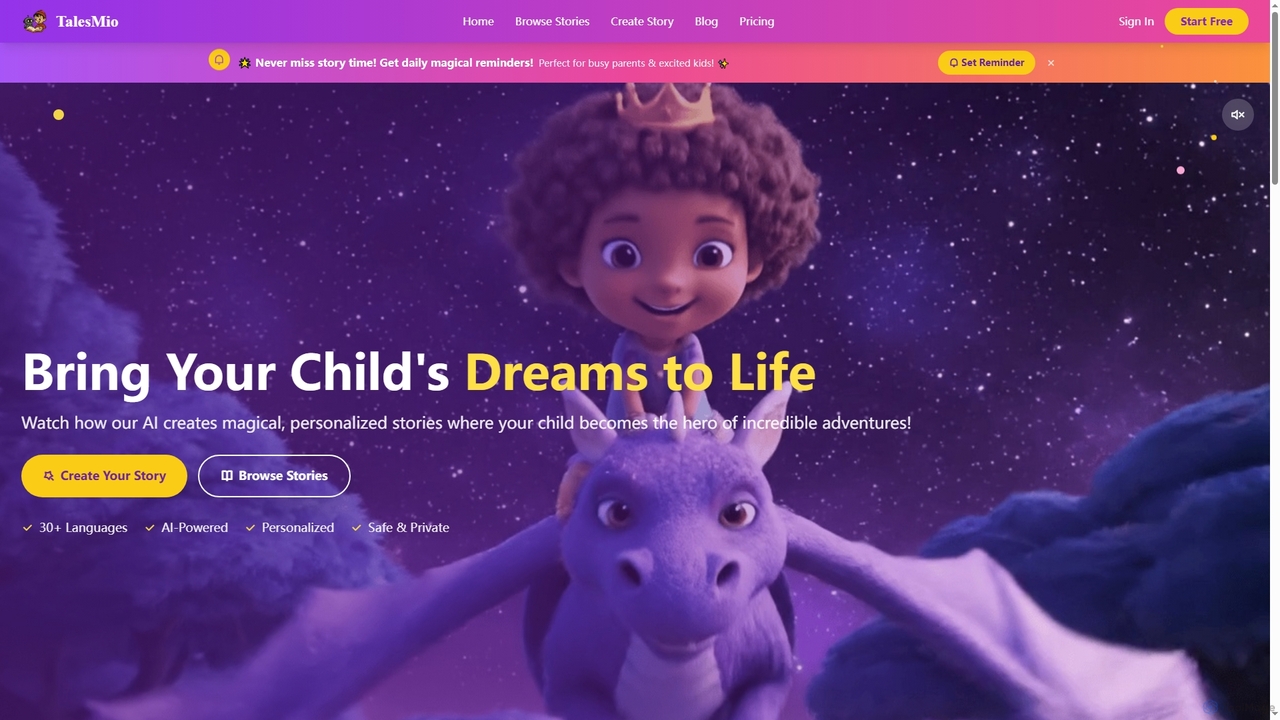
TalesMio

TalesMio is an AI-powered platform that transforms children's dreams into personalized, interactive stories. Parents can create unique adventures where their child becomes the hero, complete with professional narration, vivid illustrations, and magical sound effects, fostering imagination and a love for reading in a safe, ad-free environment.

Story Generation
Visits 5.6KFavorites 138Likes 122
World Simulator

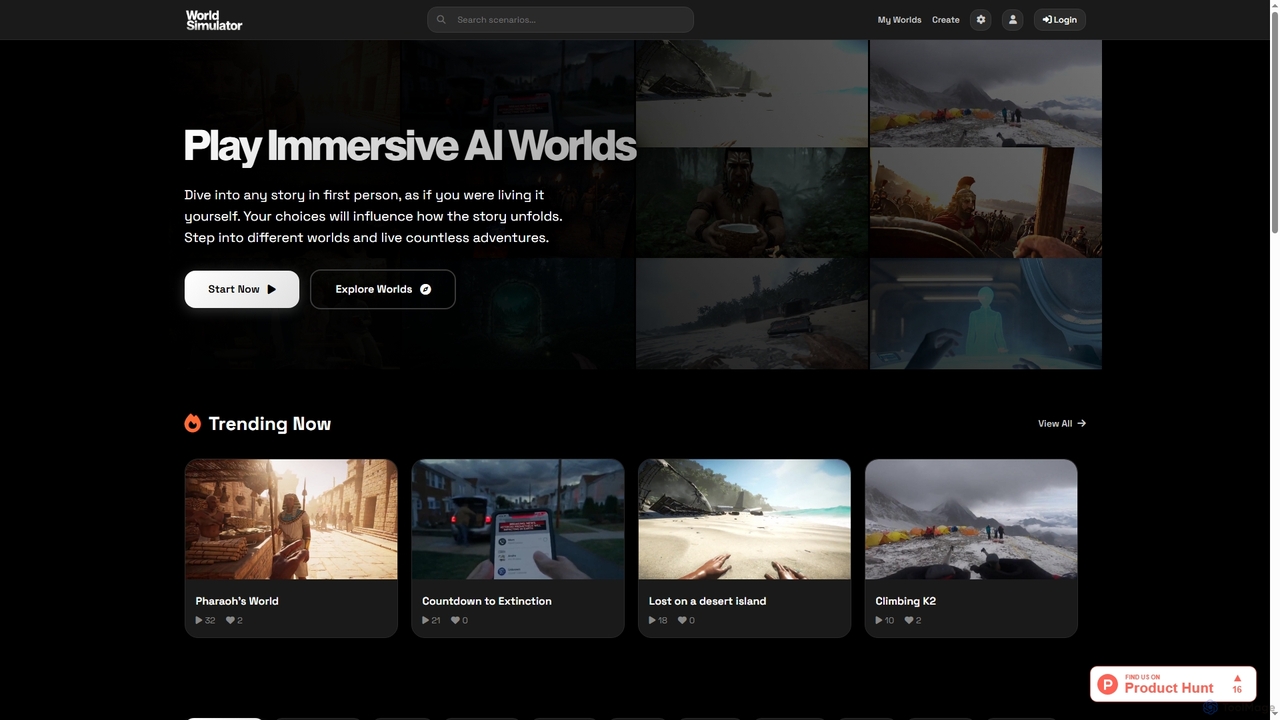
World Simulator

World Simulator is an innovative AI tool that allows users to create and play immersive, interactive AI-generated worlds. Dive into diverse narratives, from epic fantasy adventures and historical conquests to humorous everyday dramas, all shaped by your choices. Experience dynamic storytelling powered by artificial intelligence.

Story Generation
Visits 14.9KFavorites 149Likes 141
LoveTales
Paid

LoveTales

LoveTales is an AI-powered tool that transforms your unique love story into a beautifully illustrated, personalized book. By answering a few questions and uploading photos, couples can create a cherished keepsake with custom AI-generated artwork and a 10-chapter narrative, delivered digitally in minutes or as a premium hardcover.

Illustration
Visits 48.2KFavorites 106Likes 111

About Story Generation

Story Generation tools are AI-powered applications that automatically create narratives, plots, and character outlines based on user prompts. These tools leverage advanced natural language processing (NLP) and machine learning models to understand context and generate coherent, engaging storylines. They serve as powerful creative writing assistants, helping users overcome writer's block, explore new ideas, and accelerate the storytelling process across various genres. By automating parts of the narrative creation, they enable writers, marketers, and educators to produce content more efficiently and creatively.

Core Features

  • Plot Generation: Automatically develops intricate plotlines, including conflicts, resolutions, and key turning points.
  • Character Development: Creates detailed character profiles, backstories, motivations, and dialogue styles.
  • Genre Adaptation: Generates stories tailored to specific genres such as fantasy, sci-fi, romance, or mystery.
  • World-Building Assistance: Helps construct consistent and immersive fictional worlds with unique settings and rules.
  • Style & Tone Customization: Adjusts the writing style, tone, and voice to match desired narrative aesthetics.

Applicable Scenarios

Content creators can use these tools to quickly draft blog posts, social media narratives, or marketing copy. Game developers might generate diverse quest lines or character backstories for NPCs. Educators can create engaging learning scenarios or prompts for creative writing exercises. Novelists and screenwriters utilize them for brainstorming plot twists, developing character arcs, or overcoming writer's block, significantly speeding up the initial drafting phase.

How to Choose

When selecting a Story Generation tool, consider its genre support and flexibility in adapting to different narrative styles. Evaluate the level of customization offered for plots, characters, and settings, ensuring it aligns with your creative control needs. Check the output quality and coherence, as well as integration capabilities with other writing or project management software. Finally, assess the pricing model and the tool's learning curve to match your budget and technical comfort.

Story Generation use cases

1

Generating Fantasy Novel Plots

A fantasy author inputs core concepts like a magical system and a protagonist's goal, and the AI generates multiple unique plot outlines, including conflicts, character introductions, and potential climaxes, accelerating the novel's initial planning phase.

2

Developing Game Character Backstories

A game designer provides basic character traits and a game world setting. The AI then crafts rich, detailed backstories for non-player characters (NPCs), including their origins, motivations, and relationships, adding depth to the game's narrative without extensive manual effort.

3

Creating Engaging Marketing Narratives

A marketing specialist needs compelling stories for a new product launch. The AI generates short, impactful narratives that highlight the product's benefits through relatable user experiences, tailored for social media campaigns and ad copy, enhancing audience engagement.

4

Brainstorming Screenplay Scene Ideas

A screenwriter is stuck on a particular scene. By inputting the current plot point and character motivations, the AI suggests several creative and unexpected scene developments, dialogue options, and emotional beats, helping to break through creative blocks.

5

Producing Educational Story Scenarios

An educator requires interactive stories for a history lesson. The AI generates historical fiction scenarios based on specific events and figures, allowing students to explore different perspectives and outcomes, making learning more immersive and memorable.

6

Crafting Personalized Role-Playing Game (RPG) Quests

A Dungeon Master (DM) for a tabletop RPG needs fresh quest ideas. The AI takes parameters like location, enemy type, and desired reward, then generates detailed quest descriptions, NPC interactions, and potential challenges, enriching the campaign experience.

Story Generation FAQ

What are AI Story Generation tools?

AI Story Generation tools are software applications that use artificial intelligence, specifically natural language processing (NLP) and machine learning, to create original narratives. They can generate plots, characters, settings, and dialogue based on user prompts, acting as a creative assistant for writers, marketers, and educators. Their core function is to automate and inspire the storytelling process.

How do AI Story Generation tools work?

These tools typically work by taking a user's input, such as keywords, genre preferences, or initial plot points, and then processing this information through large language models (LLMs). The LLMs have been trained on vast datasets of text, allowing them to understand narrative structures, character archetypes, and stylistic nuances. They then predict and generate sequences of words that form coherent and contextually relevant stories.

Who can benefit most from using AI Story Generation?

AI Story Generation tools are highly beneficial for a wide range of users. Novelists and screenwriters can use them for brainstorming and overcoming writer's block. Marketers can generate engaging content for campaigns. Game developers can create rich lore and character backstories. Educators can design interactive learning scenarios, and hobbyists can simply explore creative writing without extensive prior experience.

What types of stories can AI Story Generation tools create?

AI Story Generation tools are versatile and can create a broad spectrum of narratives. This includes short stories, novel outlines, character backstories, marketing copy, social media narratives, game quests, and educational scenarios. Many tools also support various genres, such as fantasy, sci-fi, romance, mystery, and historical fiction, allowing users to specify their desired style and tone.

How do Story Generation tools differ from general AI writing assistants?

While general AI writing assistants focus on improving grammar, rephrasing sentences, or generating short-form content, Story Generation tools are specifically designed for narrative creation. They excel at developing complex plots, character arcs, and world-building elements, aiming to produce cohesive and imaginative stories rather than just refining existing text or generating simple paragraphs. They are a specialized subset of creative AI tools.