
ToolMage
Sign in

Best 1 Co Parenting AI tools for Family

Popular Co Parenting AI tools in Family include BestInterest, helping you work more efficiently.

BestInterest
Freemium

BestInterest

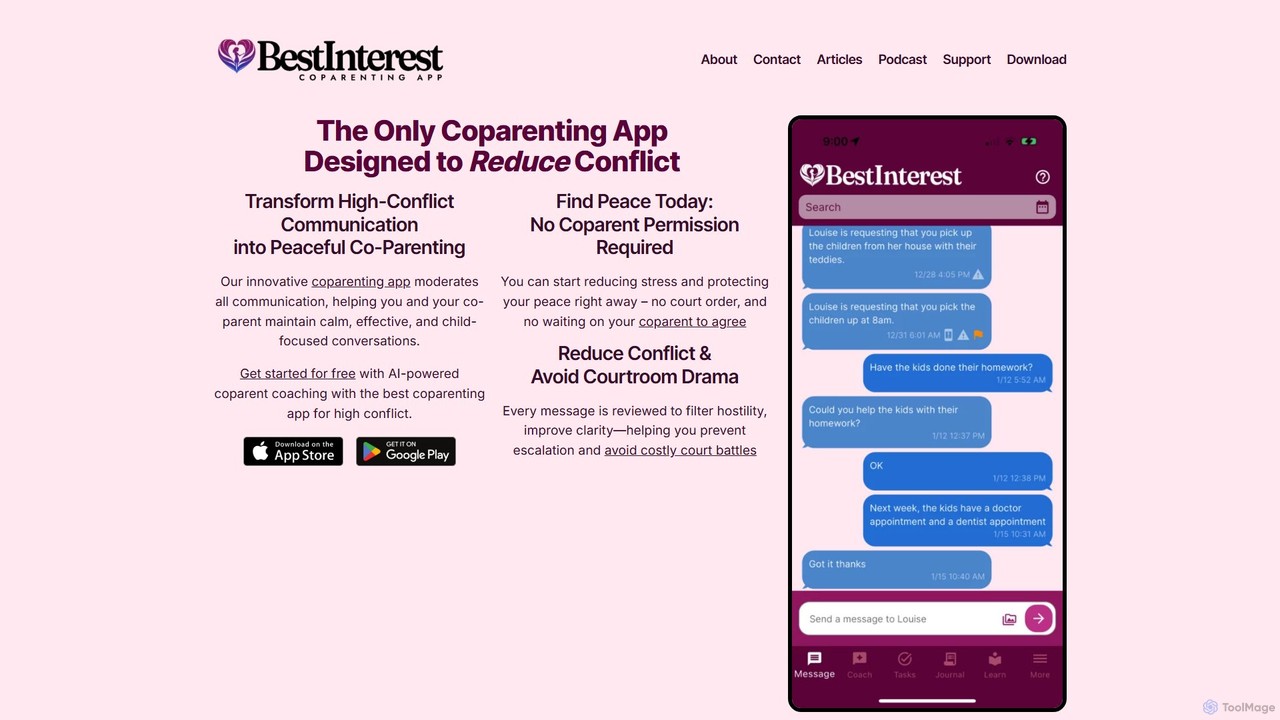
BestInterest is an AI-powered co-parenting app designed for high-conflict situations. It moderates communication by filtering hostile language, provides real-time coaching for child-focused responses, and maintains unalterable records for legal purposes. Its unique 'Solo Mode' allows one parent to use it without the other's consent, transforming stressful communication into peaceful collaboration.

Co Parenting
Visits 22.1KFavorites 110Likes 111

About Co Parenting

Co Parenting tools are specialized AI-powered platforms designed to help separated or divorced parents manage the shared responsibilities of raising children. These applications use artificial intelligence to streamline communication, coordinate complex schedules, and track shared expenses, creating a structured and low-conflict environment. Their primary value lies in providing a neutral, data-driven space that minimizes misunderstandings and centralizes all child-related information. Many tools focus on creating legally admissible records to support formal agreements.

Core Features

  • AI Tone Analysis: Scans messages for negative or accusatory language and suggests neutral alternatives to prevent conflict.
  • Intelligent Scheduling: Helps create, manage, and sync custody calendars, automatically flagging potential conflicts.
  • Automated Expense Tracking: Digitizes receipts, categorizes shared costs, and facilitates transparent reimbursement requests.
  • Immutable Record Keeping: Creates a secure, unalterable log of all communications and agreements for legal accountability.
  • Centralized Information Hub: Provides a shared space for vital child information like medical records, school contacts, and allergies.

Use Cases

These tools are primarily used by co-parents navigating separation or divorce who wish to foster a more collaborative and less contentious parenting dynamic. They are also valuable for family lawyers, mediators, and therapists who need a clear, objective record of parental interactions and agreements to facilitate constructive resolutions.

How to Choose

When selecting a Co Parenting tool, first verify its court admissibility in your jurisdiction. Evaluate the scope of its features—whether it comprehensively covers communication, finances, and scheduling. Assess the effectiveness of its AI conflict-resolution capabilities and prioritize platforms with robust data security and clear privacy policies to protect sensitive family information.

Co Parenting use cases

1

Creating a Fair Custody Schedule

Separated parents use an AI scheduling tool to establish a balanced and conflict-free custody calendar. Each parent inputs their work schedule, availability, and specific requests for holidays or vacations. The AI algorithm then processes this information, cross-references it with the school calendar, and generates several fair schedule proposals. This eliminates emotional back-and-forth negotiations, ensuring the final arrangement is based on practical logistics and prioritizes the child's routine and stability.

2

Managing Shared Expenses Without Conflict

A parent uploads a receipt for a child's medical co-payment. The AI tool's OCR technology automatically scans and digitizes the receipt, categorizes it as a 'Medical' expense, and calculates the other parent's share based on the pre-agreed 50/50 split. A formal reimbursement request is then sent to the other parent within the app, including a digital copy of the receipt. This creates a transparent, auditable trail and avoids disputes over amounts or the validity of expenses.

3

De-escalating Tense Text Conversations

A parent drafts a message about a last-minute change in pickup plans. Before sending, the AI tone analysis feature flags the message for potentially accusatory language like 'You're always late.' It suggests a more neutral, fact-based alternative: 'I need to adjust today's pickup time. Can you be there at 5:15 PM instead?' This proactive intervention helps reframe the conversation from blame to problem-solving, preventing a minor logistical issue from escalating into a major argument.

4

Centralizing Important Child Information

A family lawyer or mediator uses the tool's secure information vault to access all critical documents in one place. Instead of sifting through emails and texts, they can instantly view the child's latest report card, medical allergy information, and passport details uploaded by both parents. This ensures that both parents and any involved professionals are working with the same, up-to-date information, which is crucial for making informed decisions about the child's education, health, and travel.

5

Preparing Verifiable Documentation for Court

During a custody modification hearing, a parent's lawyer presents a report generated by the co-parenting app. This report includes a complete, unalterable log of all communications, a detailed record of every shared expense with attached receipts, and a history of all confirmed and canceled parenting time. The timestamped, third-party data provides the court with an objective and verifiable record, replacing subjective 'he-said, she-said' arguments with factual evidence of each parent's conduct and compliance.

6

Coordinating Extracurricular Activities

One parent adds the child's new soccer practice schedule to the shared calendar. The tool automatically notifies the other parent of the new events and cross-checks them against the existing custody schedule and appointments. If a practice conflicts with a scheduled custody exchange, the app flags it and prompts the parents to discuss a solution, such as adjusting the exchange time or location. This ensures both parents are aware of the child's commitments and can proactively manage logistical challenges.

Co Parenting FAQ

What are AI Co Parenting tools?

AI Co Parenting tools are digital platforms designed to help separated or divorced parents manage child-rearing responsibilities collaboratively. They use artificial intelligence to facilitate clear communication, organize schedules, track shared expenses, and store important information securely. The primary goal is to reduce conflict and create a stable, predictable environment for the child by providing a neutral, structured framework for parental interaction.

How do I choose the right Co Parenting app?

To choose the right app, consider these factors:

  • Court Admissibility: Check if the app's records are accepted as evidence in your local family court. This is often a critical feature.
  • Core Features: Ensure it has the tools you need most, such as a shared calendar, expense tracker, secure messaging, and an information vault.
  • AI Conflict Resolution: If high conflict is an issue, evaluate the quality of its AI tone analysis or communication coaching features.
  • Security and Privacy: Verify that the platform uses strong encryption and has a clear privacy policy to protect your family's sensitive data.
  • User-Friendliness: The app should be intuitive and easy for both parents to use consistently.
What's the difference between a Co Parenting tool and a standard calendar app?

A standard calendar app is designed for general scheduling. A Co Parenting tool is a specialized platform built for the unique challenges of separated families. Key differences include:

  • Legal Focus: Co Parenting tools often create unalterable, timestamped records designed for court admissibility, which standard calendars lack.
  • Integrated Features: They combine scheduling with secure messaging, expense tracking, and information storage, creating an all-in-one solution.
  • Conflict Reduction: Many include AI-powered features like tone analysis to proactively de-escalate potential arguments, a function absent in calendar apps.
  • Data Centralization: They provide a single, shared source of truth for all child-related matters, reducing 'he-said, she-said' disputes.
Are communications in these apps legally admissible in court?

Many Co Parenting apps are specifically designed with court admissibility in mind. They create an unchangeable, timestamped record of all interactions, which can serve as a reliable third-party source of evidence. However, admissibility is not guaranteed and depends on the specific app, your jurisdiction's rules of evidence, and the discretion of the judge. It is always recommended to consult with a family law attorney to understand how evidence from a specific app may be viewed in your local court system.

Who are Co Parenting tools best suited for?

Co Parenting tools are best suited for separated or divorced parents who need a structured way to manage their shared responsibilities. They are particularly valuable in situations where:

  • Communication is strained or has become a source of conflict.
  • Parents need to coordinate complex schedules involving school, activities, and custody exchanges.
  • There is a need for transparent and accurate tracking of shared expenses.
  • A clear, objective record of interactions is required for legal purposes or mediation.

They are also useful for family law professionals, such as lawyers and mediators, who can use the platform to monitor communication and access verified records.