Finance Best in category 3 results Betting AI Tool

Popular AI tools in the Betting field of Finance include Bettor In Green、mysports.ai、Betty Sports, etc., helping you quickly improve efficiency.

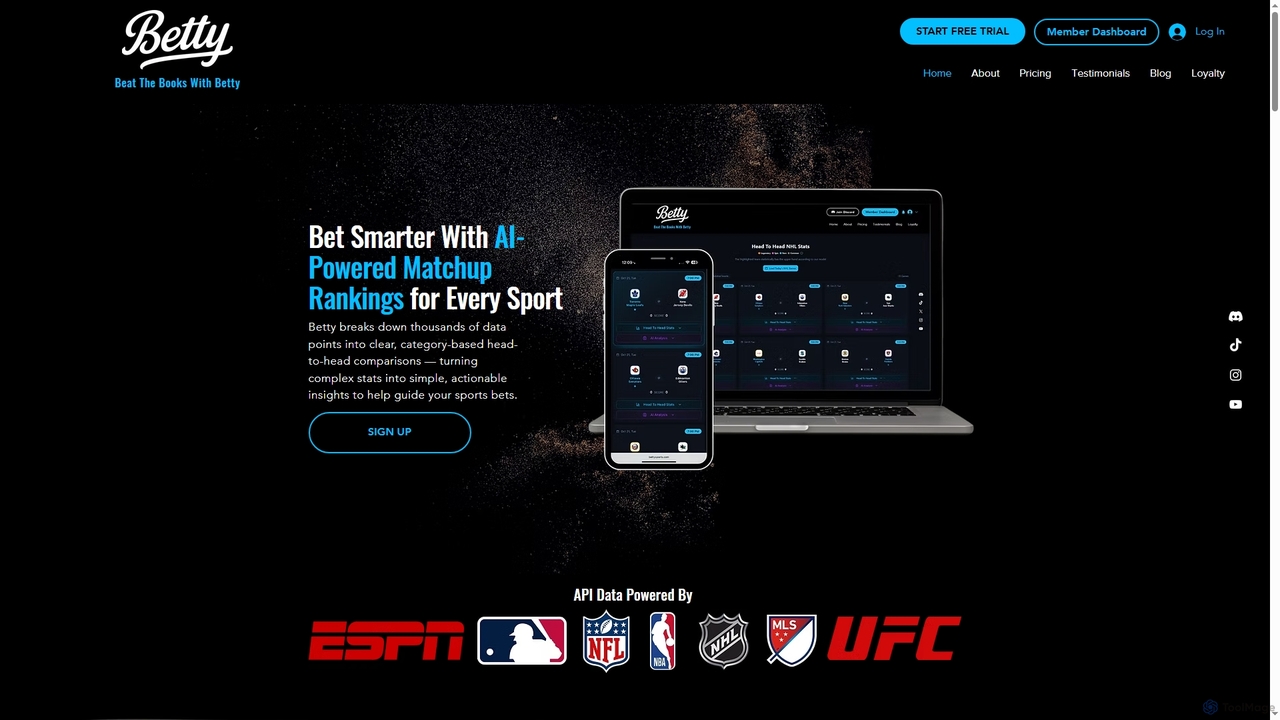
Betty Sports

Betty Sports

An AI-powered sports betting assistant providing data-driven sports picks and analytics. It analyzes over 1000 variables per game, …

3.3K
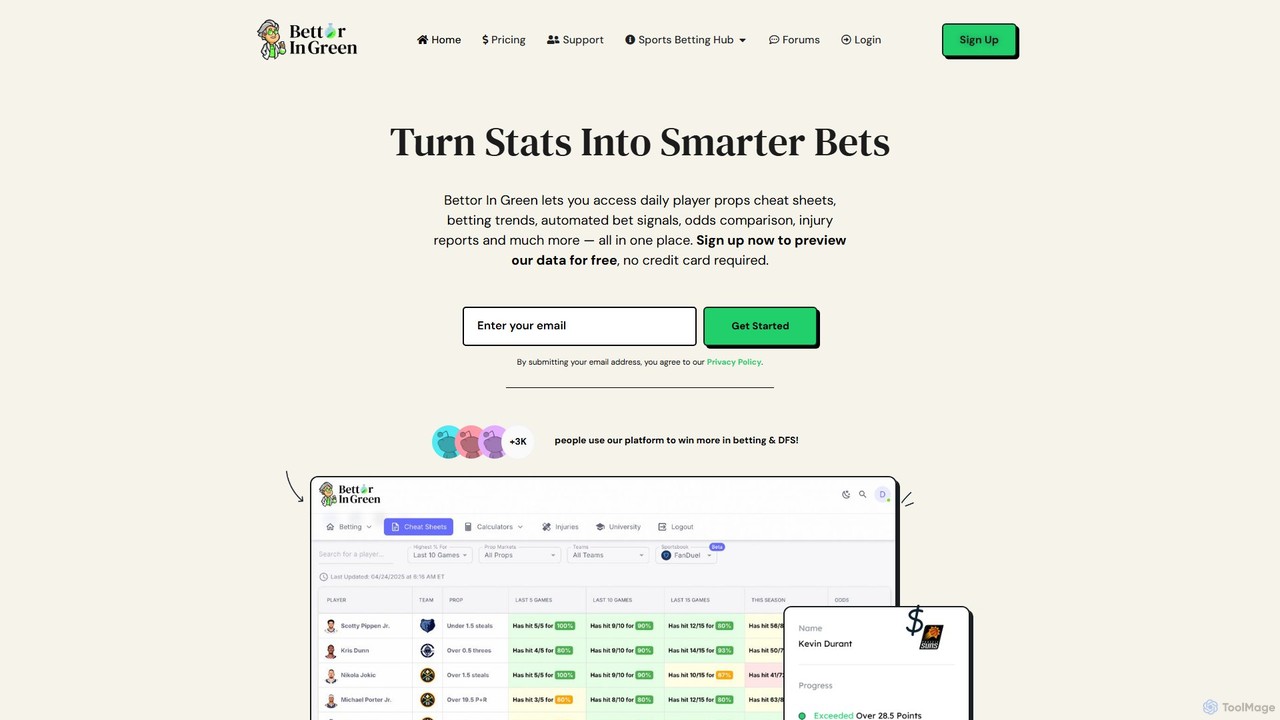
Bettor In Green

Bettor In Green

Bettor In Green is an AI-powered platform for sports betting and Daily Fantasy Sports (DFS). It provides users …

112.0K
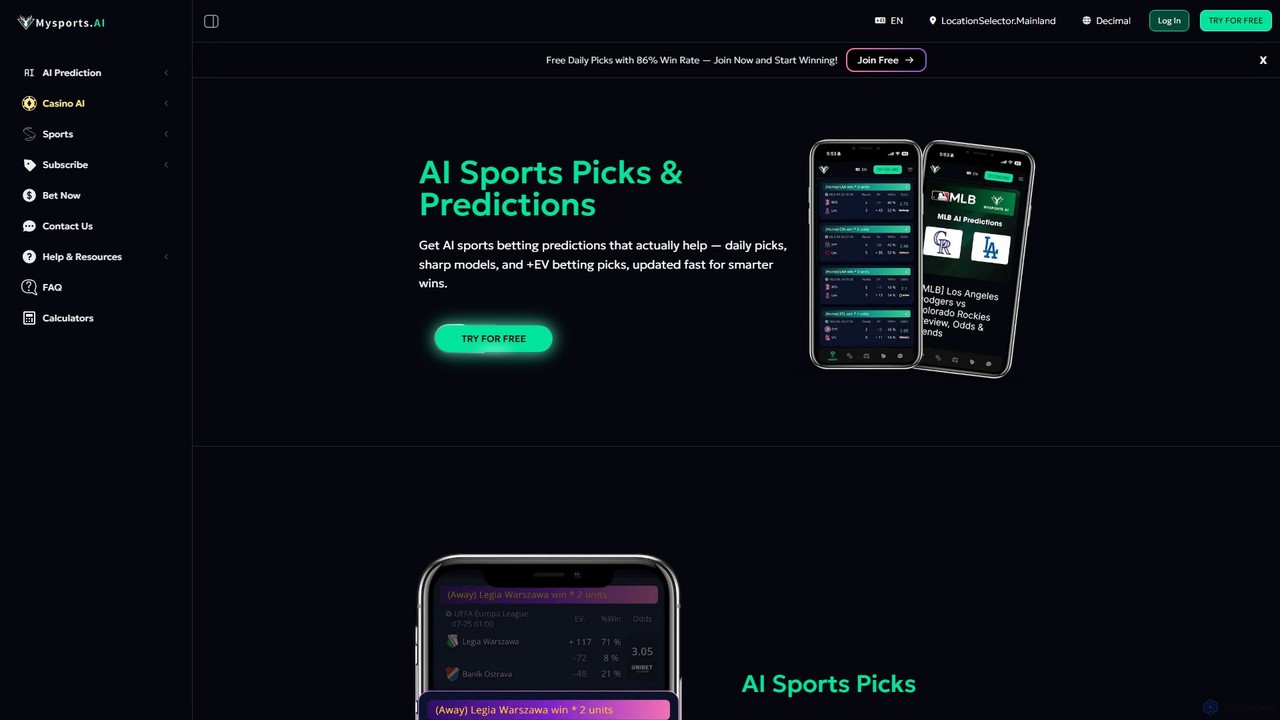
mysports.ai

mysports.ai

mysports.ai is an AI-powered platform providing daily sports betting picks and predictions. It uses advanced machine learning models …

29.7K

About Betting

AI Betting tools are a specialized category of analytical software that leverages machine learning to predict outcomes and identify valuable opportunities in betting markets. These tools process vast datasets, including historical performance, player statistics, and real-time odds, to build sophisticated predictive models. They are used to gain a statistical edge, automate market analysis, and implement complex betting strategies with greater precision. Unlike simple tipster services, AI betting tools provide data-driven insights based on quantitative analysis.

Core Features

  • Predictive Modeling: Generates probabilities for various outcomes (e.g., match winner, score) based on historical data.
  • Value Bet Identification: Automatically detects discrepancies between the AI's predicted odds and the bookmaker's odds.
  • Real-time Data Analysis: Processes live game data and market fluctuations to inform in-play betting decisions.
  • Bankroll Management Simulation: Helps users test betting strategies and manage risk by simulating potential outcomes.
  • Arbitrage Opportunity Scanning: Scans odds across multiple bookmakers to find and flag risk-free arbitrage opportunities.

Use Cases

These tools are primarily used by professional and semi-professional sports bettors, data analysts specializing in sports, and betting syndicates. They are applied in pre-match analysis to formulate strategies, during live games for in-play betting, and for long-term bankroll management. They are also valuable for fantasy sports players seeking to optimize their team selections based on player performance projections.

How to Choose

When selecting an AI Betting tool, consider the scope of sports and markets covered. Evaluate the model's transparency and the availability of backtesting features to verify its historical performance. Also, assess the tool's data update frequency, user interface complexity, and integration capabilities with betting exchanges or APIs. Finally, compare pricing models, from subscription-based services to more advanced API access plans.

BettingUse Cases

1

Predictive Match Analysis for Soccer Betting

A data analyst for a betting syndicate needs to evaluate an upcoming Premier League match. Using an AI Betting tool, they input historical match data, team form, player availability, and even weather conditions. The tool's machine learning model processes this information to generate probabilities for outcomes like match winner, correct score, and total goals. The analyst compares these AI-generated probabilities with bookmaker odds to identify 'value bets' where the tool indicates a higher probability of an outcome than the odds suggest, forming the basis of their syndicate's betting strategy.

2

Automated Arbitrage Opportunity Scanning

A professional bettor aims to secure risk-free profits through arbitrage betting. They configure an AI tool to continuously scan odds for a specific basketball game across dozens of online bookmakers. The tool is programmed to identify situations where the combined odds for all outcomes guarantee a profit, regardless of the result. When an arbitrage opportunity is detected (e.g., a 1.5% guaranteed return), the tool sends an instant alert to the bettor, including the exact stakes to place at each bookmaker to lock in the profit before the odds change.

3

In-Play Betting Signal Generation

During a live tennis match, a bettor uses an AI tool that analyzes real-time data streams, such as point-by-point outcomes, player serve speeds, and unforced errors. The AI model, trained on thousands of historical matches, identifies critical shifts in momentum that are not yet reflected in the bookmakers' live odds. For instance, it might flag that a player's first-serve percentage has dropped significantly, creating a high-probability opportunity to bet on them losing the next game. The tool provides a real-time signal, allowing the bettor to place a timely in-play bet.

4

Player Performance Forecasting for Fantasy Sports

A fantasy basketball manager uses an AI tool to optimize their weekly lineup. The tool aggregates a wide range of data for each player, including recent performance, historical stats against the upcoming opponent, injury reports, and even social media sentiment. It then runs simulations to project a range of performance outcomes (points, rebounds, assists) for each player. The manager uses these data-driven projections to make difficult lineup decisions, such as choosing between two similarly skilled players, and to identify undervalued players on the waiver wire who have a high projected output.

5

Bankroll Management and Strategy Backtesting

A serious bettor wants to test the long-term viability of a new betting strategy without risking real money. They use an AI tool's backtesting module, inputting their strategy's rules (e.g., 'bet on home underdogs with odds above 3.0'). The tool runs this strategy against years of historical sports data and odds. It generates a detailed report showing the strategy's projected profit/loss, return on investment (ROI), and maximum drawdown. Based on these simulation results, the bettor can refine the strategy's parameters or discard it if it proves unprofitable, all before placing a single real wager.

6

Horse Racing Outcome Prediction

A horse racing analyst uses a specialized AI tool to predict the outcome of a race. The platform ingests a complex array of variables for each horse, including lineage, past performance on different track surfaces (dirt, turf), jockey and trainer statistics, and recent workout times. The AI model weighs these factors to generate a 'win probability' for each horse in the race. The analyst uses this output to identify potentially undervalued horses that the general public and bookmakers might be overlooking, allowing for more informed and potentially profitable exotic bets like trifectas or superfectas.

BettingFrequently Asked Questions