ToolMage
Sign in

Best 2 Financial Planning & Analysis AI tools for Finance

Popular Financial Planning & Analysis AI tools in Finance include Runway and Precanto, helping you work more efficiently.

Precanto

Precanto

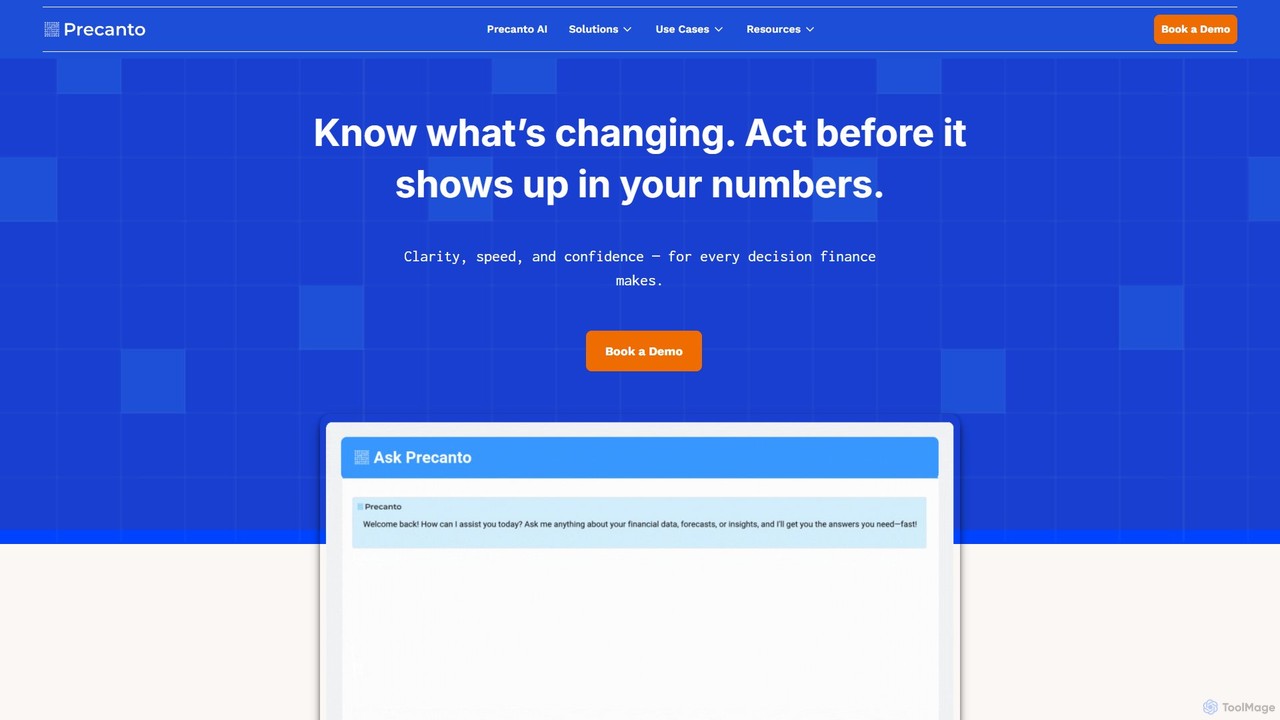
Precanto is an AI-powered financial expert and FP&A copilot designed for modern finance teams. It automates financial forecasting, particularly for headcount and expenses, using predictive analytics and machine learning to provide actionable insights, uncover trends, and streamline strategic planning.

Data Analytics
Visits 6.7KFavorites 110Likes 108
Runway
Paid

Runway

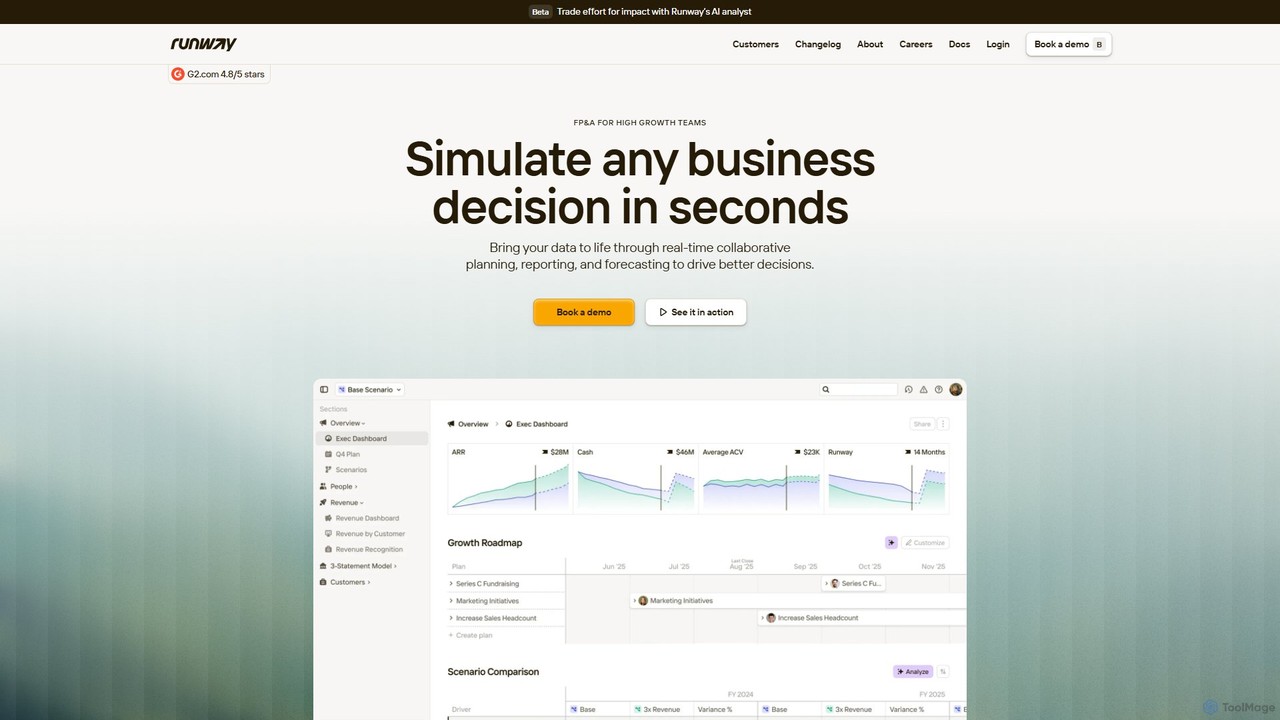
Runway is an AI-powered financial planning and analysis (FP&A) platform designed for high-growth companies. It replaces complex spreadsheets with a real-time, collaborative environment for planning, reporting, and forecasting. By integrating with over 750 data sources, Runway provides a unified, live model of your business, enabling teams to simulate decisions, analyze variances, and drive data-informed strategies with speed and clarity.

Business Intelligence
Visits 151.4KFavorites 117Likes 115

About Financial Planning & Analysis

AI Financial Planning & Analysis (FP&A) tools are specialized platforms designed to automate and enhance corporate budgeting, forecasting, and strategic financial modeling. These tools leverage machine learning and predictive analytics to analyze historical data, identify trends, and generate highly accurate financial projections. They empower finance teams to move beyond manual spreadsheet work, enabling faster, data-driven decision-making and more agile strategic planning. The core value lies in transforming the FP&A function from a reactive reporting role to a proactive strategic partner within the organization.

Core Features

  • Automated Budgeting & Forecasting: Streamlines the creation of budgets and rolling forecasts by consolidating data from various sources automatically.
  • Scenario Modeling & What-If Analysis: Allows users to build dynamic financial models to simulate the impact of different business decisions or market conditions.
  • Variance Analysis: Automatically identifies and explains discrepancies between actual financial performance and budgeted or forecasted figures.
  • Predictive Analytics: Utilizes historical data and AI algorithms to predict future revenue, expenses, and cash flow with greater accuracy.
  • Integrated Financial Reporting: Generates customizable dashboards and reports for management, investors, and other stakeholders.

Applicable Scenarios

These tools are primarily used by corporate finance departments, from mid-sized businesses to large enterprises. Financial analysts, finance managers, and Chief Financial Officers (CFOs) use them for annual budgeting cycles, quarterly forecasting, and long-range strategic planning. They are particularly valuable in dynamic industries like tech, retail, and manufacturing where market conditions change rapidly, requiring constant adjustments to financial plans.

Selection Criteria

When choosing an AI FP&A tool, consider its integration capabilities with your existing ERP and accounting systems (e.g., SAP, Oracle, QuickBooks). Evaluate the sophistication of its modeling engine and whether it supports driver-based planning. Also, assess the user-friendliness of its interface, the quality of its data visualization features, and the scalability of the platform to grow with your company's needs.

Financial Planning & Analysis use cases

1

Automating the Annual Budgeting Process

A finance manager at a mid-sized manufacturing company uses an AI FP&A tool to streamline the annual budget creation. The tool automatically pulls historical sales data from the ERP and operational metrics from other systems. It then generates a baseline budget proposal using predictive forecasting. Department heads can then access a collaborative portal to input their specific requests, which the system automatically consolidates. This reduces the manual data entry and consolidation time by over 70%, allowing the finance team to focus on strategic analysis rather than data collection.

2

Dynamic Scenario Modeling for Market Changes

A strategic planning team at a SaaS company needs to assess the impact of a potential competitor's new pricing model. Using an AI FP&A tool, they create multiple scenarios: 'best-case,' 'worst-case,' and 'most-likely.' The tool models the potential impact on customer churn, new subscriptions, and overall revenue under each scenario. The AI can even suggest variables to consider, like regional market sensitivity. This allows the leadership team to visualize potential financial outcomes clearly and develop proactive strategies within hours, a process that would have taken weeks with spreadsheets.

3

Generating Insightful Board and Investor Reports

A CFO of a rapidly growing startup is tasked with preparing quarterly reports for the board of directors and investors. Instead of manually compiling data and creating charts, they use an AI FP&A platform. The platform connects directly to their accounting software and CRM, automatically generating key financial statements, cohort analysis, and SaaS metrics like MRR and LTV. The AI's natural language generation feature adds narrative summaries to the charts, highlighting key trends and variances. This ensures reports are consistent, accurate, and delivered on time, enhancing credibility with stakeholders.

4

Analyzing Departmental Spending Variances

A financial analyst is investigating why the marketing department exceeded its budget last quarter. Using an AI FP&A tool, they drill down into the expense data. The AI automatically flags the largest variances and categorizes them, identifying a significant overspend in digital advertising. It further analyzes the sub-campaigns and highlights that a specific social media campaign had a much lower ROI than projected. This allows the analyst to provide the marketing team with specific, actionable insights for budget optimization, rather than just a high-level overspending report.

5

Creating Agile Rolling Forecasts

A retail company operates in a fast-changing market and finds its annual budget quickly becomes outdated. The finance team implements an AI FP&A tool to switch to a 12-month rolling forecast. Each month, the tool automatically imports the latest actuals and uses AI to re-forecast the next 12 months based on new sales data, inventory levels, and market trends. This provides management with a constantly updated and more accurate view of the business's financial future, enabling them to make timely decisions on staffing, inventory, and marketing spend.

6

Long-Range Strategic Financial Planning

A CFO is developing a five-year strategic plan that involves significant capital expenditure on new facilities. They use an AI FP&A tool to model the long-term financial implications. The model incorporates macroeconomic forecasts (e.g., inflation rates, interest rates) and links the capital investment to projected increases in production capacity and revenue. The CFO can run multiple scenarios to stress-test the plan against potential economic downturns or construction delays. The resulting detailed financial projections, including P&L, balance sheet, and cash flow statements, provide the board with the confidence to approve the large-scale investment.

Financial Planning & Analysis FAQ

What are AI Financial Planning & Analysis (FP&A) tools?

AI Financial Planning & Analysis (FP&A) tools are software platforms that use artificial intelligence to automate and improve corporate financial processes. Unlike traditional spreadsheets, they integrate data from multiple sources, use machine learning for more accurate forecasting, and enable dynamic scenario modeling. Their primary purpose is to help finance teams provide strategic insights for business decision-making, rather than just reporting historical data.

How do AI FP&A tools differ from traditional spreadsheets like Excel?

The primary difference lies in automation, collaboration, and intelligence. Spreadsheets are manual, error-prone, and operate in silos. AI FP&A tools offer:

  • Single Source of Truth: They integrate directly with ERPs and other systems, eliminating manual data entry.
  • Collaboration: Multiple users can work on the same model simultaneously with version control.
  • Advanced Analytics: They incorporate predictive forecasting and scenario modeling capabilities that are difficult to replicate in Excel.
  • Scalability: They are built to handle large, complex datasets and organizational structures that would crash a spreadsheet.
How should I choose the right AI FP&A tool for my business?

Choosing the right tool depends on your company's specific needs. Consider these factors:

  • Integration: Does it connect seamlessly with your existing accounting, ERP, and CRM systems?
  • Complexity: Does your business require simple budgeting or complex, multi-dimensional modeling?
  • User Experience: Is the interface intuitive for your finance team, or does it require extensive training?
  • Scalability: Will the tool support your company's growth in terms of data volume and user count?
  • Reporting & Visualization: Does it offer flexible and easy-to-understand dashboards and reporting features?
Who benefits most from using AI FP&A tools?

While the entire organization benefits from better financial planning, the primary users are corporate finance professionals. This includes:

  • CFOs: For strategic planning, investor relations, and high-level oversight.
  • Finance Managers: For managing budgeting and forecasting cycles and collaborating with department heads.
  • Financial Analysts: For deep-dive analysis, variance reporting, and building complex financial models.

Essentially, any business looking to make its financial operations more strategic, agile, and data-driven can benefit significantly.

What are the key functions of AI FP&A software?

Most AI FP&A platforms offer a core set of functions designed to cover the entire financial planning cycle. Key functions typically include:

  • Budgeting and Planning: Creating annual budgets and long-term strategic plans.
  • Forecasting: Generating rolling forecasts and predictive models based on historical and real-time data.
  • Reporting and Analytics: Building custom dashboards, performing variance analysis, and generating management reports.
  • Scenario Modeling: Conducting 'what-if' analysis to understand the potential impact of business decisions.
  • Data Consolidation: Integrating financial and operational data from various systems into one unified platform.