Finance Best in category 3 results Trading Analytics AI Tool

Popular AI tools in the Trading Analytics field of Finance include EmolyTicks、Moodfol、TraderTrak, etc., helping you quickly improve efficiency.

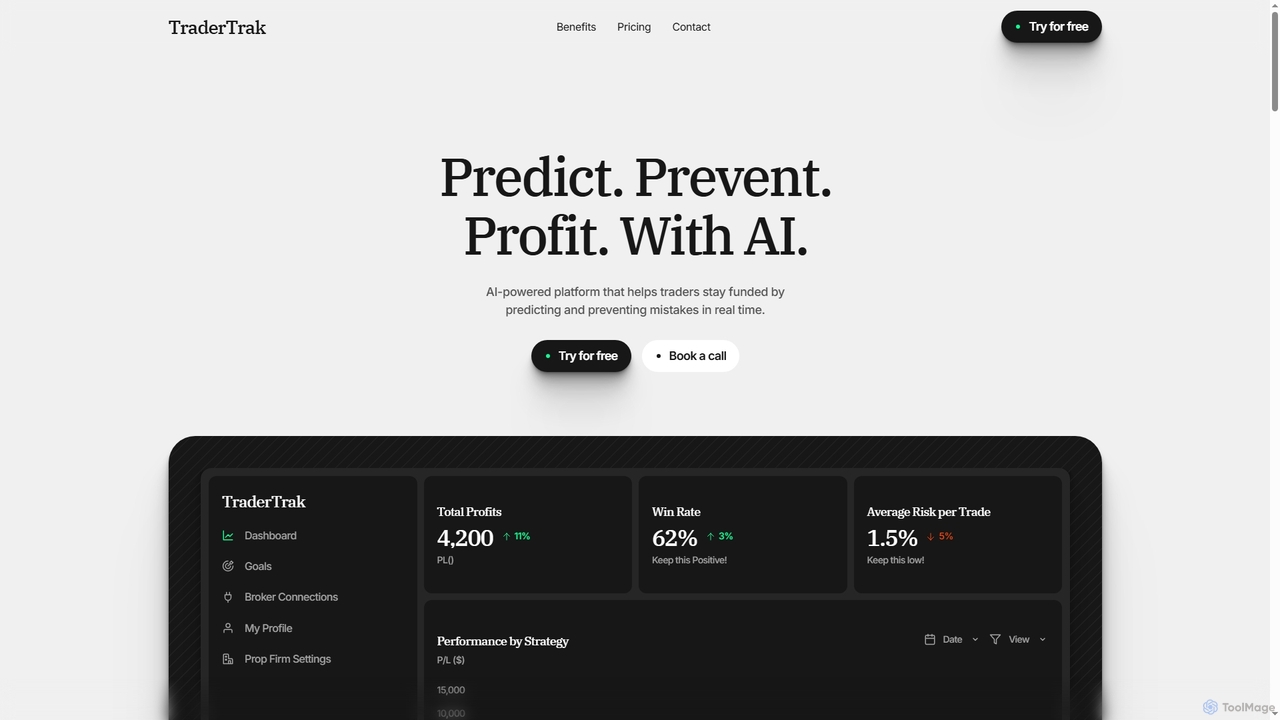
TraderTrak

TraderTrak

TraderTrak is an AI-powered trade management platform designed to help traders predict and prevent costly mistakes in real-time, …

2.6K
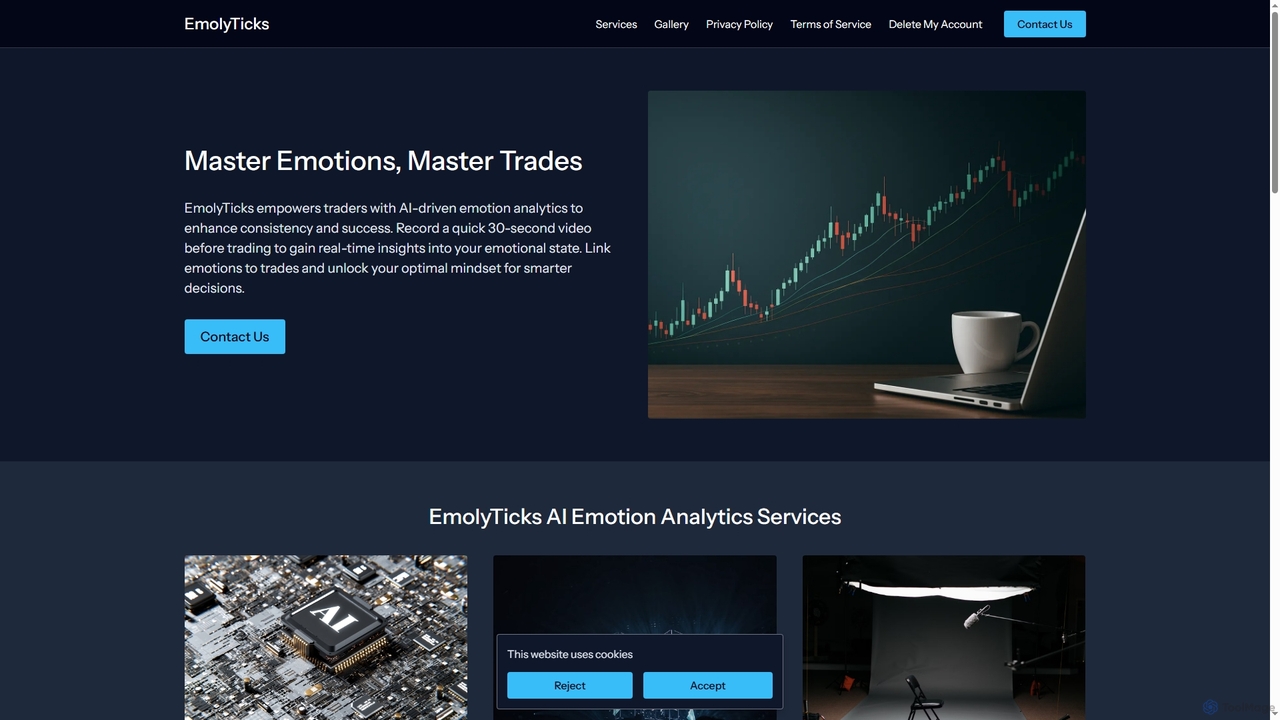
EmolyTicks

EmolyTicks

EmolyTicks is an AI-driven emotion analytics tool empowering traders to master their emotional states for enhanced consistency and …

2.8K
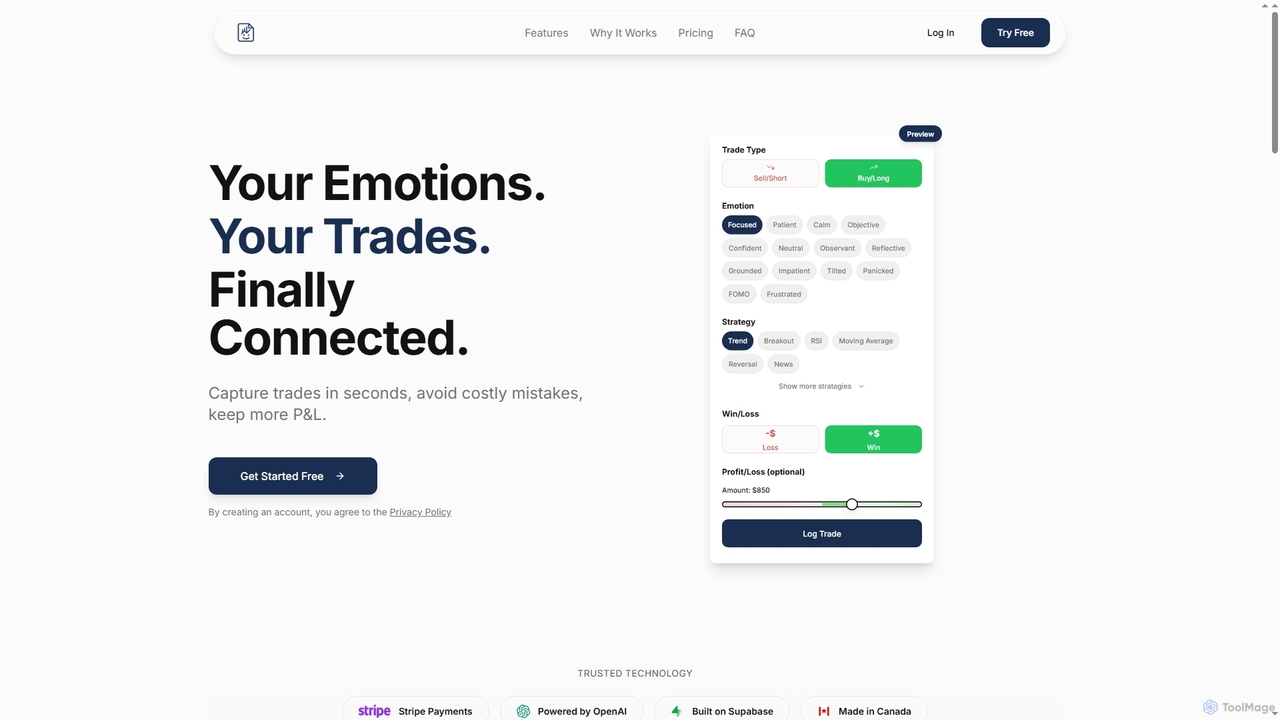
Moodfol

Moodfol

Moodfol is an AI-powered trading and emotional journal designed to help traders connect their emotions with their trades. …

2.8K

About Trading Analytics

Trading Analytics tools are AI-powered platforms designed to analyze vast financial market data for insights and predictions. These tools leverage machine learning, quantitative models, and natural language processing to identify trends, patterns, and sentiment that are often invisible to human analysts. They empower traders and investors to make data-driven decisions, backtest strategies, and manage risk more effectively. By processing real-time and historical data at scale, these platforms provide a significant analytical edge in volatile markets.

Core Features

  • Predictive Modeling: Utilizes machine learning algorithms to forecast asset price movements and market trends.
  • Sentiment Analysis: Scans news, social media, and reports to gauge market sentiment towards specific assets.
  • Strategy Backtesting: Simulates trading strategies against historical data to evaluate performance and viability.
  • Pattern Recognition: Automatically identifies technical chart patterns, correlations, and trading anomalies in real-time.
  • Risk Management: Models and quantifies potential portfolio risks, such as value at risk (VaR) and drawdown.

Use Cases

These tools are essential for quantitative analysts (quants), algorithmic traders, hedge funds, and sophisticated retail investors. They are applied across various asset classes including stocks, forex, cryptocurrencies, and commodities to develop, test, and deploy complex trading strategies. For instance, a crypto fund might use sentiment analysis to trade based on social media hype, while a forex trader could use predictive models to anticipate the impact of economic news.

How to Choose

When selecting a Trading Analytics tool, consider the following: the range of supported data sources and asset classes (e.g., stocks, crypto), the accuracy and transparency of its predictive models, the robustness of the backtesting engine, integration capabilities with brokerage APIs for automated execution, and the level of customization available for building proprietary algorithms. The user interface's complexity should also match your technical expertise.

Trading AnalyticsUse Cases

1

Backtesting a Crypto Trading Strategy

A retail crypto investor wants to deploy a new trading strategy based on moving average crossovers for altcoins. Before risking capital, they use an AI Trading Analytics tool to perform a rigorous backtest. They configure the strategy parameters, select a two-year historical data period, and include transaction cost simulations. The tool runs thousands of simulated trades in minutes, providing a detailed performance report with metrics like total return, Sharpe ratio, and maximum drawdown. Based on the results, the investor optimizes the moving average periods to improve profitability and reduce risk before connecting the strategy to a live exchange via API.

2

Analyzing Market Sentiment for Stock Trading

A hedge fund analyst is tasked with evaluating the market sentiment for a tech stock before a major product launch. They use an AI analytics platform that aggregates and analyzes millions of data points from news articles, social media posts, and financial blogs in real-time. The tool generates a sentiment score, identifies key trending topics (both positive and negative), and detects unusual spikes in social media chatter. This allows the analyst to gauge public perception quantitatively, supplementing traditional financial analysis. They discover a growing negative sentiment around supply chain issues, leading them to recommend a cautious short-term position despite positive analyst ratings.

3

Identifying Forex Chart Patterns Automatically

A forex day trader specializes in pattern-based trading but finds it time-consuming to monitor dozens of currency pairs simultaneously for patterns like 'head and shoulders' or 'double tops'. They subscribe to an AI analytics service that automatically scans the market. The AI constantly analyzes price charts across all specified pairs and timeframes. When a high-probability pattern is forming, the trader receives an instant alert with details on the pattern type, its statistical success rate based on historical data, and suggested entry and stop-loss levels. This automates the discovery process, allowing the trader to focus on execution and risk management rather than manual chart analysis.

4

Dynamic Portfolio Risk Assessment

A portfolio manager for a small investment firm needs a better way to monitor and manage risk across multiple client accounts. They integrate an AI Trading Analytics tool that provides real-time risk metrics. The system continuously calculates the Value at Risk (VaR), portfolio volatility, and asset correlations. If a specific stock's volatility spikes or its correlation with other assets changes unexpectedly, the manager receives an alert. The tool also runs stress tests, simulating how the portfolio would perform under various crisis scenarios (e.g., a market crash or interest rate hike). This proactive approach allows the manager to rebalance portfolios and hedge positions before significant losses occur.

5

Optimizing Algorithmic Trading Parameters

A quantitative analyst ('quant') has developed a promising algorithmic trading model but needs to find the optimal input parameters (e.g., lookback periods, risk thresholds). Manually testing each combination is impossible. They use an AI platform with a genetic algorithm or grid search optimization feature. The quant defines the parameter ranges, and the AI automatically runs hundreds or thousands of backtests, each with a different parameter combination. It then presents a 3D visualization of the results, showing which parameter sets yielded the highest risk-adjusted returns. This process, which would take weeks manually, is completed overnight, allowing the team to deploy a highly optimized and robust version of the algorithm.

6

Detecting Anomalous Trading Activity

A compliance officer at a brokerage firm is responsible for monitoring trades for signs of market manipulation or insider trading. Manually reviewing millions of daily transactions is impractical. The firm employs an AI-powered anomaly detection system. The AI learns the normal trading patterns of clients and the market. It then flags any activity that deviates significantly from these established norms, such as an unusually large order placed just before a major news announcement or complex wash trading schemes. This allows the compliance team to focus their investigations on a small number of high-risk alerts, significantly improving their efficiency and effectiveness in maintaining market integrity.

Trading AnalyticsFrequently Asked Questions