Yassir
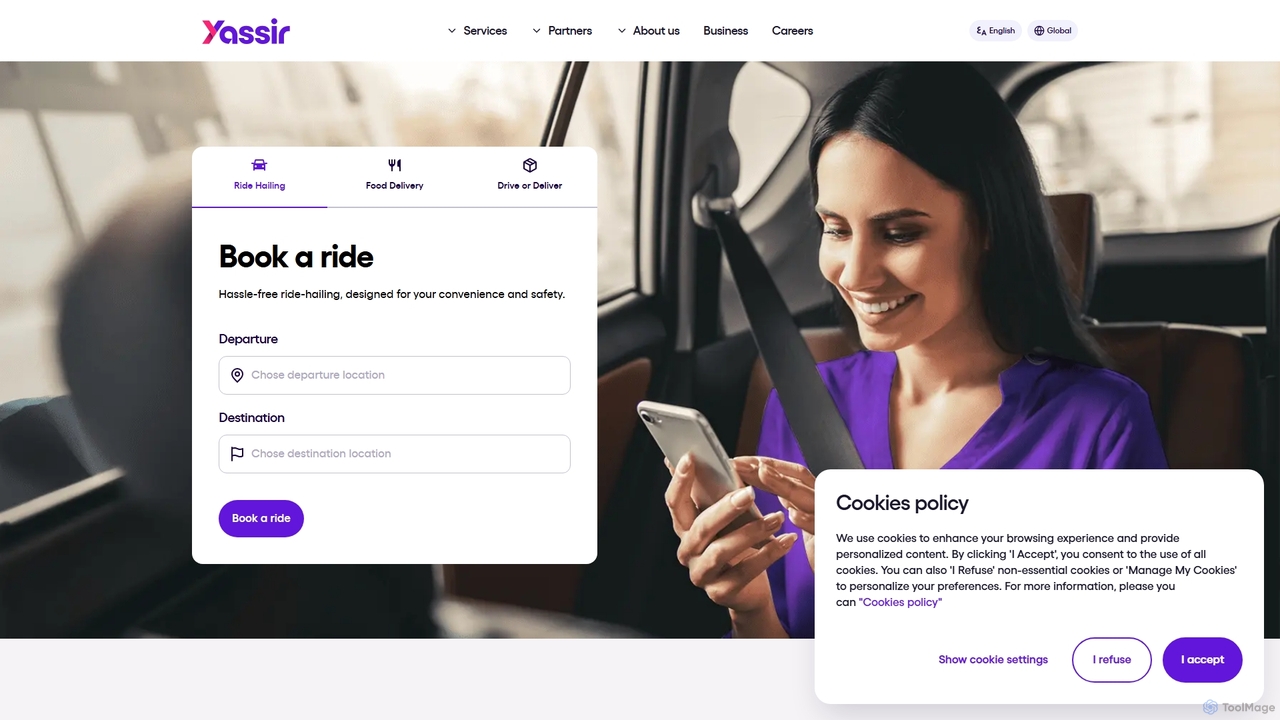
Yassir is an all-in-one super app providing on-demand services including ride-hailing, food and grocery delivery, and financial services. …
Yassir is an all-in-one super app providing on-demand services including ride-hailing, food and grocery delivery, and financial services. Leveraging AI for logistics optimization, dynamic pricing, and personalized recommendations, Yassir aims to simplify daily life for millions of users across Africa and beyond. It also offers income opportunities for drivers and delivery partners, and B2B solutions for corporate transportation management.
About Delivery
Delivery AI tools are specialized solutions that leverage artificial intelligence to optimize and automate the entire food delivery process, from order placement to final doorstep arrival. These platforms utilize advanced algorithms for dynamic route planning, real-time demand forecasting, and efficient order batching, significantly enhancing operational efficiency and customer satisfaction in food logistics. They address complex challenges in the last-mile delivery ecosystem, ensuring timely, cost-effective, and sustainable food distribution for restaurants, dark kitchens, and grocery services.
Core Features
- Dynamic Route Optimization: AI algorithms calculate the most efficient delivery paths, considering traffic, weather, and multiple drop-offs for food orders.
- Real-time Order Tracking: Provides live updates on order status and driver location for both businesses and customers, ensuring transparency.
- Demand Forecasting: Predicts future food order volumes based on historical data, events, and external factors to optimize staffing and inventory.
- Automated Dispatch: Assigns food orders to available drivers based on proximity, capacity, and delivery time windows for maximum efficiency.
- Customer Communication Automation: AI-powered chatbots or automated messages handle order updates, queries, and feedback for food delivery.
Applicable Scenarios
These tools are crucial for restaurant chains managing their in-house delivery fleets, third-party food delivery platforms handling thousands of daily orders, and online grocery stores offering rapid home delivery services. They streamline operations, reduce costs, and improve customer experience across the entire food delivery value chain.
How to Choose
When selecting Delivery AI tools, consider their integration capabilities with existing POS and inventory systems, scalability to handle fluctuating order volumes, and specific feature sets like multi-stop routes or temperature control monitoring for perishable goods. Evaluate the cost-effectiveness of the pricing model against the potential ROI in efficiency gains and improved customer satisfaction.

DeliveryUse Cases
Optimizing Last-Mile Food Delivery for Restaurants
A local restaurant chain uses Delivery AI tools to manage its fleet of drivers. The AI system dynamically optimizes routes for multiple simultaneous food orders, considering factors like traffic and delivery time windows, reducing fuel costs and delivery times. This ensures hot food arrives quickly, improving customer reviews and enabling the restaurant to handle higher order volumes during peak hours without increasing staff, leading to greater profitability.
Enhancing Efficiency for Third-Party Food Delivery Platforms
Large food delivery platforms leverage AI to assign orders to the nearest available drivers, batch multiple orders going in similar directions, and predict potential delays. This minimizes driver idle time, maximizes deliveries per hour, and provides accurate estimated arrival times to customers, leading to higher operational efficiency, reduced costs, and improved customer loyalty across their vast network of restaurants and users.
Automating Grocery Home Delivery Logistics
Online grocery services utilize Delivery AI to streamline their complex logistics. The AI plans optimal routes for refrigerated vans, considers specific delivery windows for perishable goods, and manages driver schedules efficiently. This reduces spoilage, ensures timely fresh produce delivery, and lowers overall transportation costs, making grocery delivery more sustainable and profitable while enhancing the customer experience with reliable service.
Predicting Demand for Dark Kitchens
Dark kitchens (delivery-only restaurants) use AI-powered demand forecasting to anticipate peak food order times and popular menu items. This allows them to optimize ingredient procurement, kitchen staffing, and food preparation in advance, minimizing waste and ensuring they can meet sudden surges in demand efficiently. The result is higher order fulfillment rates and reduced operational costs, crucial for their business model.
Managing Fleet and Driver Performance for Food Delivery
Delivery companies employ AI tools to monitor driver performance, identify inefficient routes, and provide real-time feedback specifically for food delivery. The AI analyzes driving patterns, delivery success rates, and customer feedback to suggest training areas or reward top performers. This leads to a more skilled and motivated delivery workforce, improved service quality, and ultimately, higher customer satisfaction for food orders.
Facilitating Automated Food Delivery with Drones/Robots
Innovative food delivery services integrate AI with autonomous vehicles or drones for short-distance food deliveries. The AI navigates complex urban environments, avoids obstacles, and ensures safe drop-offs of meals. This enables ultra-fast delivery in specific zones, reduces human labor costs, and offers a futuristic, eco-friendly delivery option for consumers, pushing the boundaries of traditional food logistics.