ToolMage
Sign in

Best 1 Recipe Generator for Food

Popular Recipe Generator in Food include WeChef, helping you work more efficiently.

WeChef
Freemium

WeChef

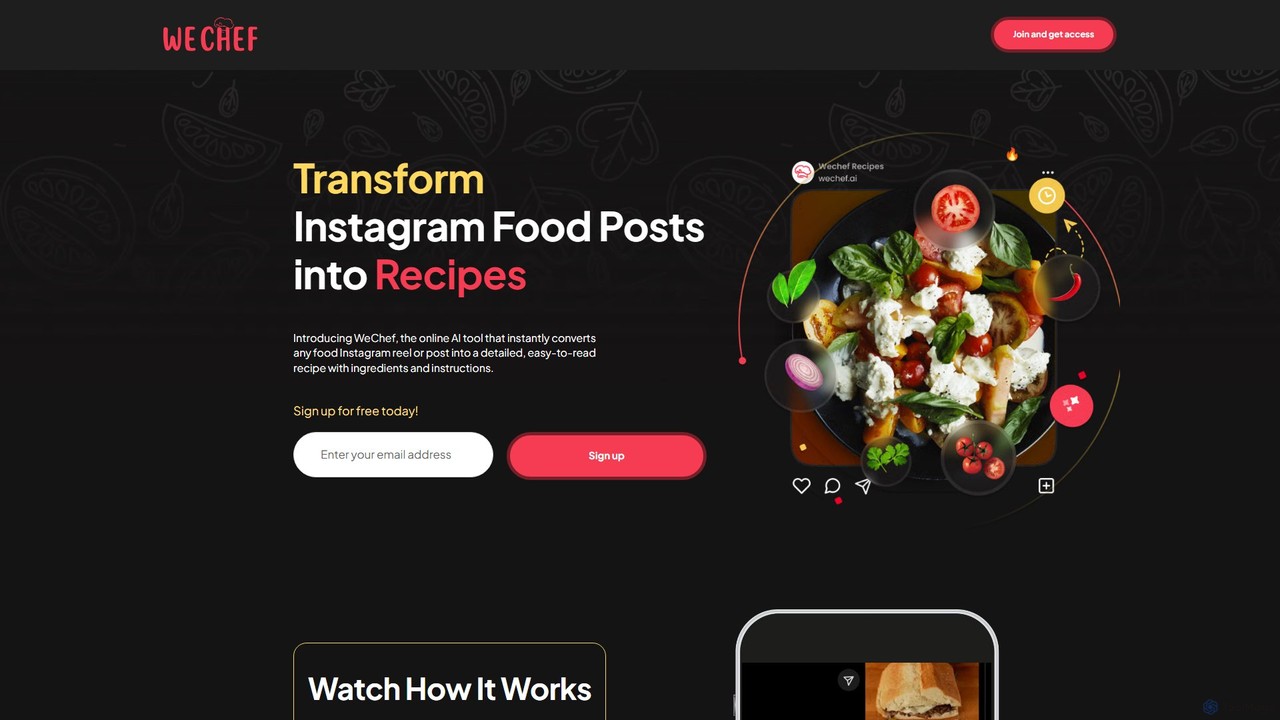
WeChef is an AI-powered culinary assistant that transforms any Instagram food post or reel into a detailed, easy-to-follow recipe. Simply share the Instagram link with the WeChef AI, and instantly receive a complete recipe with ingredients and step-by-step instructions, turning your social media feed into a personal cookbook.

Recipe Generator
Visits 7KFavorites 161Likes 137

About Recipe Generator

AI Recipe Generators are tools that create new or customized cooking instructions based on user inputs like available ingredients, dietary needs, or cuisine preferences. These tools leverage large language models trained on vast culinary datasets to understand flavor pairings, cooking techniques, and nutritional information. They are primarily used to reduce food waste, cater to specific diets, and inspire culinary creativity by suggesting unique dish ideas. This dynamic generation capability sets them apart from static recipe databases, offering a personalized cooking assistant experience.

Core Features

  • Ingredient-Based Generation: Creates recipes using a list of ingredients you currently have on hand.
  • Dietary & Allergy Filtering: Customizes recipes to be vegan, gluten-free, low-carb, nut-free, and more.
  • Cuisine Style Adaptation: Transforms a dish idea into a specific culinary style, such as Italian, Mexican, or Japanese.
  • Nutritional Analysis: Provides estimated calorie counts, macronutrients, and other nutritional data for generated recipes.
  • Meal Plan Creation: Generates a structured meal plan for a day, week, or specific event based on set criteria.

Applicable Scenarios

These tools are ideal for home cooks seeking inspiration or needing to use up leftover ingredients. They are also valuable for individuals managing specific dietary restrictions or health goals, such as athletes, diabetics, or those with food allergies. Food bloggers and content creators can use them to brainstorm novel recipe concepts, while busy professionals can quickly generate ideas for simple weeknight meals.

Selection Criteria

When choosing an AI Recipe Generator, consider the accuracy of its ingredient recognition and the breadth of its dietary filters. Evaluate the user interface for ease of use and the quality of the generated instructions. Also, check for additional features like shopping list integration, meal planning capabilities, and the ability to save or modify favorite recipes. Some tools may offer a free tier with basic generation, while others require a subscription for advanced customization.

Recipe Generator use cases

1

Reduce Food Waste by Using Leftovers

A home cook opens their refrigerator to find a random assortment of ingredients: half a bell pepper, a chicken breast, some yogurt, and an onion. Instead of letting them go to waste, they input these items into an AI Recipe Generator. The tool analyzes the combination and suggests a recipe for 'Creamy Yogurt Chicken with Sautéed Peppers and Onions,' complete with step-by-step instructions. This not only prevents food waste but also introduces a new, creative dish they might not have considered otherwise, turning potential waste into a delicious meal.

2

Create Meal Plans for Specific Dietary Needs

An individual following a strict ketogenic and gluten-free diet needs a diverse meal plan for the upcoming week. Using an AI Recipe Generator, they set their dietary constraints, specify a daily calorie target, and request seven dinner recipes. The AI generates a complete plan, including recipes like 'Zucchini Lasagna with Almond Flour Pasta' and 'Salmon with Asparagus and Lemon-Butter Sauce.' Each recipe includes a nutritional breakdown, ensuring they stay within their macros. This automates the complex task of planning compliant meals, saving time and ensuring dietary adherence.

3

Spark Creativity for Food Bloggers

A food blogger is facing creative block and needs a unique concept for their next series of posts. They use an AI Recipe Generator with a creative prompt like 'a dessert that combines Japanese and Italian flavors.' The AI suggests several ideas, including 'Matcha Tiramisu' and 'Yuzu Panna Cotta.' The blogger selects 'Matcha Tiramisu' and asks the AI to generate a detailed recipe. This provides a solid foundation, which they can then test, refine, and photograph for their blog, overcoming the creative hurdle and producing engaging, novel content for their audience.

4

Adapt a Classic Recipe for Modern Diets

Someone wants to prepare their family's traditional beef stew recipe for a dinner party, but one of their guests is vegan. Instead of searching for an entirely new recipe, they input the key ingredients and steps of the classic stew into an AI Recipe Generator and ask for a plant-based version. The AI suggests replacing the beef with mushrooms and lentils, using vegetable broth instead of beef stock, and adding smoked paprika to mimic a rich, savory flavor. This allows them to preserve the spirit of the family recipe while making it inclusive for all guests.

5

Generate Quick and Easy Weeknight Meals

A busy professional gets home late and has little energy to cook an elaborate meal. They need something fast, healthy, and using ingredients they likely have. They use an AI Recipe Generator with the constraints 'under 20 minutes,' 'healthy,' and 'one-pan meal.' The AI provides a recipe for 'One-Pan Lemon Herb Chicken and Veggies,' listing common ingredients like chicken, broccoli, and lemon. The simple, step-by-step instructions are easy to follow, allowing them to prepare a nutritious and satisfying dinner with minimal effort and cleanup, solving the daily 'what's for dinner' dilemma.

6

Explore New Cuisines and Flavors

A culinary enthusiast wants to experiment with Thai cuisine but feels intimidated by unfamiliar ingredients and techniques. They use an AI Recipe Generator and ask for a 'beginner-friendly Pad Thai recipe.' The AI generates a simplified version of the classic dish, suggests common supermarket substitutions for specialty ingredients like tamarind paste, and provides clear, detailed instructions with definitions for cooking terms. This lowers the barrier to entry, empowering the user to confidently explore a new world of flavors and build their cooking skills one recipe at a time.

Recipe Generator FAQ

What is an AI Recipe Generator?

An AI Recipe Generator is a software tool that uses artificial intelligence to create new or customized recipes. Unlike a static recipe website where you search a database, these generators dynamically produce cooking instructions based on your specific inputs. You can provide a list of ingredients, specify dietary restrictions (like vegan or gluten-free), choose a cuisine type, or even set a desired cooking time, and the AI will generate a tailored recipe for you.

How do I choose the right AI Recipe Generator?

To choose the right tool, consider these factors:

  • Customization Options: Check how well it handles specific dietary needs, allergies, and cuisine preferences. The more granular the filters, the better.
  • Ingredient Recognition: A good generator should accurately create recipes from a varied list of ingredients, including obscure ones.
  • Quality of Instructions: Look for clear, concise, and easy-to-follow steps. Some tools may also offer cooking tips or technique explanations.
  • Additional Features: Consider if you need extra functionalities like meal planning, nutritional information, or shopping list integration.
How is an AI Recipe Generator different from a recipe search engine?

The key difference is creation versus retrieval. A recipe search engine (like on Google or a recipe website) retrieves existing, pre-written recipes from a database that match your keywords. An AI Recipe Generator *creates* a new recipe instruction set in real-time based on your unique combination of inputs. It can generate novel ideas and adapt to very specific, combined constraints (e.g., 'low-carb, vegan, using bell peppers and tofu, ready in 30 minutes') in a way a static database cannot.

Are the recipes generated by AI reliable and safe to eat?

Generally, yes. AI models are trained on vast databases of human-tested recipes, so they generate instructions based on established cooking principles and safe food combinations. However, the output is a suggestion, not a professionally tested recipe. It's always wise to use common sense, especially regarding cooking times and temperatures for meats. For severe food allergies, users should always double-check the AI's suggestions and ingredient labels, as the tool is not a substitute for medical or nutritional advice.

Can AI Recipe Generators handle complex or multiple dietary restrictions?

Most modern AI Recipe Generators are designed to handle multiple dietary restrictions simultaneously. You can typically select or input several constraints at once, such as 'vegan,' 'gluten-free,' and 'low-sodium.' The AI will then attempt to generate a recipe that satisfies all conditions. The effectiveness can vary between tools, with more advanced generators being better at balancing complex, sometimes conflicting, dietary profiles. It's a significant advantage over traditional recipe searching, where finding recipes that meet multiple specific criteria can be challenging.