Voicestars
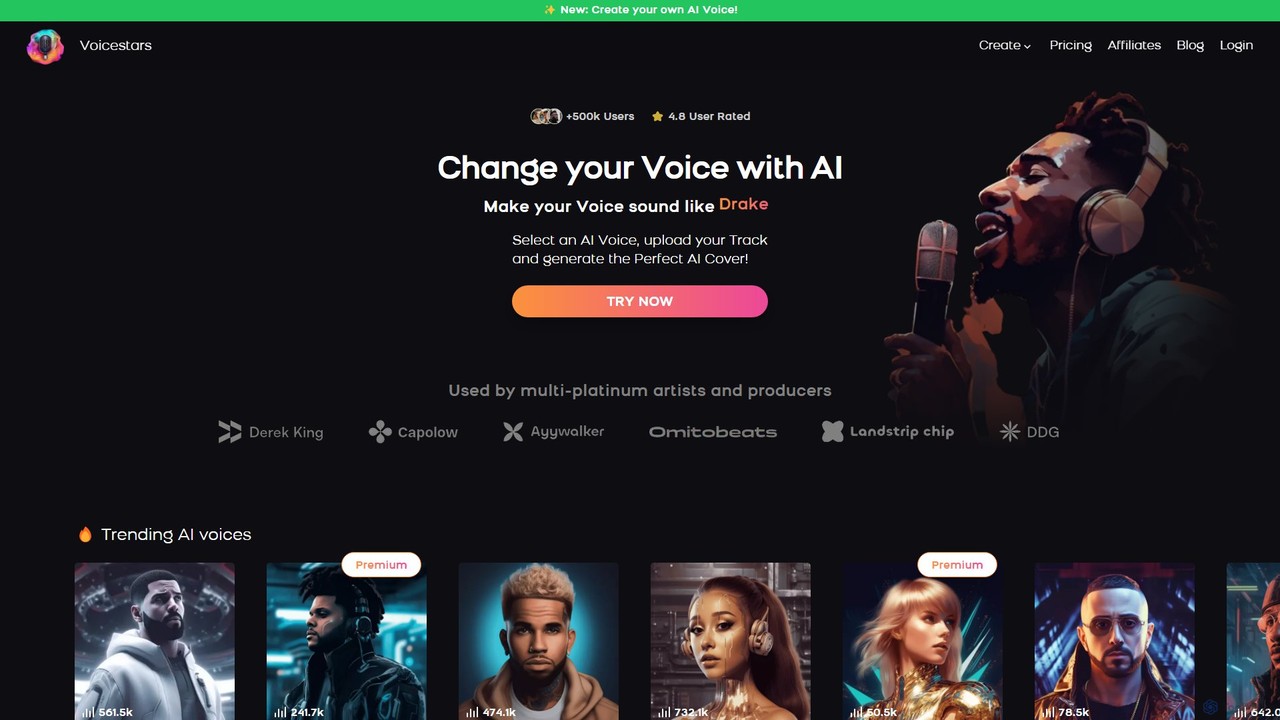
Voicestars is a powerful AI voice changer that allows users to create high-quality AI song covers using a …
Voicestars is a powerful AI voice changer that allows users to create high-quality AI song covers using a vast library of over 600 voices, including famous artists and characters. It also offers voice cloning technology, enabling musicians, content creators, and hobbyists to transform their audio tracks into viral hits or professional-grade voiceovers.
About Celebrity
AI Celebrity tools are a class of applications designed to simulate interactions with or generate content featuring public figures using artificial intelligence. These tools leverage technologies like large language models (LLMs) for conversational AI, voice synthesis for audio replication, and generative models for creating realistic images and videos. Their primary value lies in entertainment, enabling users to create parody content, personalized messages, or simply engage in novel, fun experiences. They offer a unique way to interact with the concept of fame and celebrity culture through technology.
Core Features
- Persona Chat Simulation: Engage in text-based conversations with an AI trained to mimic the personality, speech patterns, and knowledge of a specific celebrity.
- AI Voice Cloning: Generate audio clips in a celebrity's voice by providing text input, suitable for voiceovers or personalized messages.
- Video & Face Swapping: Create short videos or images that superimpose a celebrity's face onto another person or animate a celebrity's photo to speak provided text.
- Look-Alike Finder: Utilizes facial recognition technology to analyze a user's photo and identify which celebrities they most closely resemble.
Use Cases
These tools are predominantly used by social media content creators, marketing teams for novelty campaigns, and individuals for personal entertainment. Common applications include creating viral parody videos for platforms like TikTok and YouTube, generating unique birthday greetings, or simply satisfying curiosity by chatting with an AI version of a historical figure or modern-day star.
How to Choose
When selecting an AI Celebrity tool, consider the realism of the simulation—how accurately the voice, personality, or likeness is replicated. Evaluate the variety of celebrities available. Crucially, review the platform's ethical guidelines and usage restrictions to prevent misuse. Finally, assess the user interface for ease of use and the quality of the final output, whether it's audio, video, or text.

CelebrityUse Cases
Creating Viral Social Media Parodies
A content creator on TikTok wants to produce a funny, shareable video. They use an AI celebrity voice tool to clone the voice of a famous documentary narrator. They then write a script that has this iconic voice narrate the mundane daily activities of their cat. The juxtaposition of the serious, well-known voice with the silly content creates a humorous parody that has a high potential to go viral, increasing the creator's engagement and follower count.
Generating Personalized Birthday Greetings
For a friend's birthday, a user wants to create a unique and memorable gift. They use an AI celebrity video tool that features historical figures. They select an AI persona of Albert Einstein, input a custom message wishing their friend a 'relatively' happy birthday and offering some humorous 'scientific' advice for the year ahead. The tool generates a short video of Einstein delivering this message. This creates a highly personalized and amusing gift that stands out from standard birthday cards.
Interactive 'Chat with a Star' Experience
A fan of a popular musician uses an AI celebrity chatbot to have a simulated conversation. They ask questions about the musician's creative process, favorite songs, and tour life. The AI, trained on interviews and public statements, provides responses that are in character and consistent with the musician's known personality. This provides an engaging and immersive fan experience, allowing them to feel a closer connection to their idol in a novel, interactive way, purely for their own entertainment and curiosity.
Finding Your Celebrity Look-Alike
A user is curious about which celebrity they resemble. They upload a clear, front-facing photo of themselves to an AI celebrity look-alike tool. The application's algorithm analyzes their facial features—such as eye shape, nose structure, and jawline—and compares them against a vast database of celebrity photos. Within seconds, the tool presents a list of celebrity matches with percentage scores of resemblance. The user can then share this fun and surprising result with friends on social media platforms like Instagram or Facebook.
Creating Voiceovers for Animated Memes
An animator and meme creator wants to add a professional-sounding yet humorous voiceover to their new short animation. Instead of hiring a voice actor, they use an AI celebrity voice generator. They choose the voice of a famous actor known for dramatic roles and input a script filled with internet slang and meme references. The tool generates the audio, which the creator then syncs with their animation. This results in a high-quality, funny piece of content produced quickly and at a low cost, perfect for sharing on YouTube or Reddit.
Educational Parody with Historical Figures
A history teacher wants to make a lesson about the American Revolution more engaging for students. They use an AI celebrity video tool to create a short clip where an animated George Washington explains key battle strategies using modern slang and gestures. The teacher writes a script that is factually accurate but presented in a humorous, anachronistic style. This novel approach helps capture students' attention, makes historical figures more relatable, and serves as a memorable supplement to traditional teaching methods.