ToolMage
Sign in

Best 1 Interactive Storytelling AI tools for Fun Tools

Popular Interactive Storytelling AI tools in Fun Tools include Q Bot, helping you work more efficiently.

Q Bot
Free

Q Bot

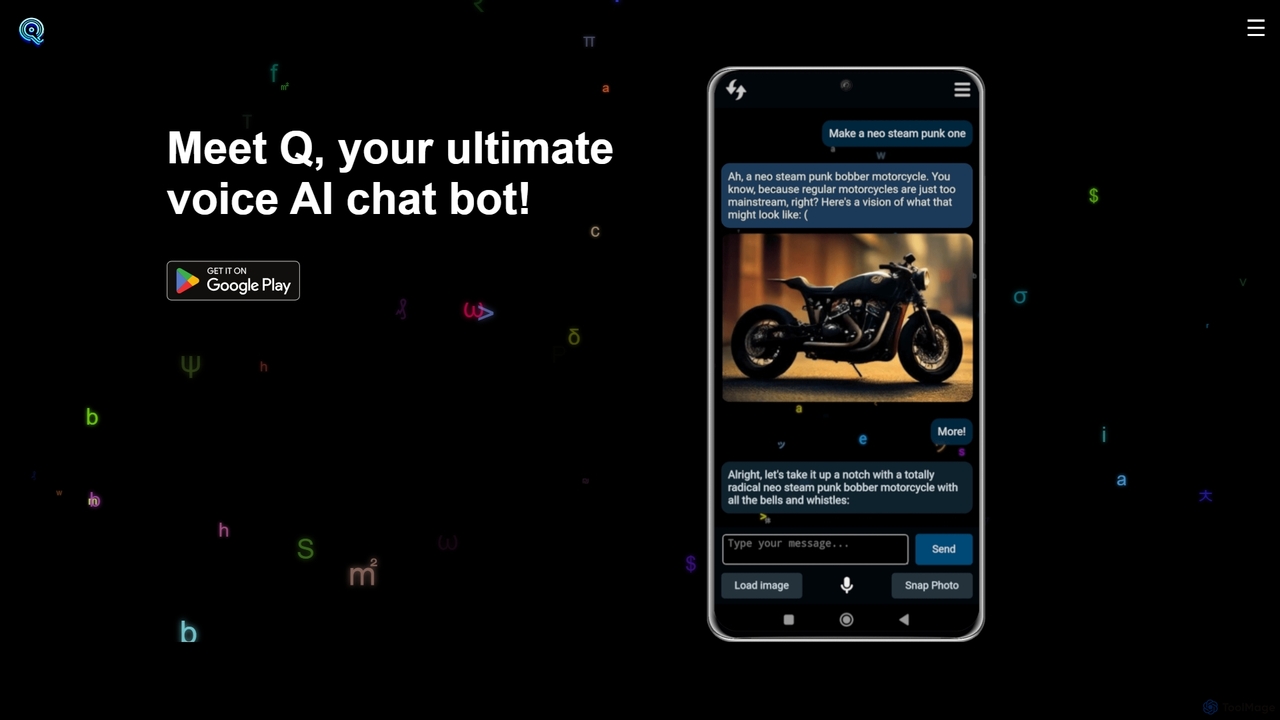
Meet Q, a multi-modal AI companion powered by GPT-4o. Engage in natural voice conversations, generate stunning images from text, analyze photos with advanced computer vision, and create interactive stories. Q offers a highly personalized experience with customizable personas, all completely free with no subscriptions or sign-ups.

Ai Companion
Visits 5.3KFavorites 169Likes 169

About Interactive Storytelling

Interactive Storytelling tools are a class of AI applications that enable users to co-create or experience narratives that change based on their choices. These tools leverage large language models (LLMs) to dynamically generate plot developments, character dialogue, and environmental descriptions in real-time. They offer a unique form of entertainment and creative expression, transforming passive reading into an active, participatory adventure. As a specialized category within Fun Tools, they focus specifically on crafting personalized, branching stories where the user is a key author of the outcome.

Core Features

  • Dynamic Narrative Generation: The AI creates unique story paths and outcomes in response to user input, ensuring no two playthroughs are identical.
  • Persistent Character Memory: AI-driven characters remember past interactions and events, providing a consistent and immersive experience.
  • User-Driven World Building: Users can define initial settings, characters, and rules, allowing the AI to build a coherent world around their concepts.
  • Genre and Style Control: Users can specify the desired genre, such as fantasy, sci-fi, or mystery, and the narrative tone.

Use Cases

These tools are popular among role-playing game enthusiasts, creative writers, educators, and anyone seeking personalized entertainment. Writers use them to brainstorm plot ideas and overcome writer's block, while educators create immersive historical or ethical simulations for students. They also serve as a powerful medium for creating personalized adventures and interactive fan fiction.

How to Choose

When selecting a tool, consider the AI's narrative coherence and its ability to maintain plot consistency. Evaluate the level of customization available for genres, characters, and world rules. Also, check the user interface's intuitiveness and whether the tool supports your preferred input methods. Finally, review the content filtering policies to ensure they align with your creative needs.

Interactive Storytelling use cases

1

Crafting a Personalized RPG Adventure

A role-playing game (RPG) enthusiast wants a unique adventure without needing a human Dungeon Master. They use an interactive storytelling tool to define a fantasy world, create a custom character, and set an initial quest. The AI then acts as the game master, describing scenes, controlling non-player characters (NPCs), and reacting to the player's actions with dynamic plot twists. This allows for a solo RPG experience that is endlessly replayable, as the story adapts in real-time to every decision, from dialogue choices to combat strategies.

2

Developing Interactive Educational Scenarios

An educator aims to teach history in a more engaging way. They use an AI storytelling tool to create a simulation where students play as a historical figure during a critical event, like the signing of the Declaration of Independence. Students make choices that the actual figure might have faced, and the AI generates outcomes based on those decisions, explaining the historical context and consequences. This transforms a passive lesson into an active, decision-making experience, improving retention and understanding of complex historical dynamics.

3

Brainstorming Plots for Novels and Scripts

A creative writer is experiencing writer's block while working on a mystery novel. They input their main character, the setting, and the initial crime into an interactive storytelling tool. By playing through different scenarios and making various choices for their protagonist, they can explore unexpected plot twists and character reactions generated by the AI. This process serves as a powerful brainstorming partner, helping the writer discover new narrative paths, test character motivations, and generate fresh ideas to move their story forward in a compelling way.

4

Creating Branching Fan Fiction Stories

A fan of a popular book series wants to create an interactive 'choose-your-own-adventure' story set in that universe. Using an AI storytelling tool, they establish the world's rules and existing characters. Then, they write a starting scenario for a new character. The AI takes over, allowing readers to make choices that lead to unique, branching storylines. This empowers fans to not only write fan fiction but to create immersive experiences where other fans can explore the world and see the consequences of their actions, generating countless new tales within a beloved setting.

5

Practicing Social Skills with AI Simulations

A professional wants to improve their negotiation skills for an upcoming business deal. They use an interactive storytelling tool to simulate a negotiation scenario. They set up an AI character with a specific personality (e.g., aggressive, cautious) and goals. The user then engages in a text-based conversation, trying different tactics. The AI responds dynamically, challenging their arguments and reacting to their tone. This provides a safe, repeatable environment to practice difficult conversations, build confidence, and refine communication strategies without real-world consequences.

6

Generating Unique Bedtime Stories for Children

A parent wants to tell their child a new bedtime story every night but often runs out of ideas. They use an interactive storytelling tool, inputting simple prompts like 'a brave squirrel,' 'a magical forest,' and 'finding a lost star.' The AI generates a unique story based on these elements. The parent can even ask the child to make choices at key points in the story, such as 'Should the squirrel cross the river or climb the mountain?', making the child a co-creator of their own tale. This creates a personalized and engaging nightly ritual that fosters creativity.

Interactive Storytelling FAQ

What are AI Interactive Storytelling tools?

AI Interactive Storytelling tools are applications that use artificial intelligence, primarily large language models (LLMs), to generate dynamic narratives. Unlike traditional stories with fixed plots, these tools create a story that evolves in real-time based on the user's choices and inputs. They act as a collaborative partner, allowing users to guide the plot, interact with AI-driven characters, and explore countless unique storylines within a given framework. They are essentially a fusion of creative writing, gaming, and AI technology.

How is AI Interactive Storytelling different from a video game?

The key difference lies in content generation. Most video games, even those with branching paths, rely on pre-written scripts and pre-designed outcomes. Your choices lead you down one of several finite, handcrafted paths. In contrast, AI Interactive Storytelling tools generate the narrative dynamically. The AI writes the story's text, dialogue, and events on the fly in response to your specific actions. This allows for a nearly infinite number of potential outcomes and a level of personalization and unpredictability that pre-scripted games typically cannot offer.

How do I choose the right Interactive Storytelling platform?

Choosing the right platform depends on your goals. Consider the following factors:

  • Narrative Coherence: How well does the AI maintain a consistent plot and remember key details? Look for reviews or test the tool to assess its long-term memory.
  • Customization Level: Do you want to create a world from scratch or play in pre-built scenarios? Check how much control you have over characters, setting, and genre.
  • User Interface: Is the platform intuitive and easy to use? A clean interface allows you to focus on the story, not on navigating menus.
  • Community and Sharing: If you want to share your stories or play scenarios created by others, look for a platform with strong community features.
Who are these Interactive Storytelling tools for?

These tools cater to a wide audience. Creative Writers use them for brainstorming and overcoming writer's block. Gamers and RPG Fans enjoy them for creating solo role-playing experiences. Educators can build immersive learning simulations for subjects like history or ethics. Developers might use them as a foundation for creating narrative-driven games. Finally, anyone looking for a unique and personalized form of entertainment can enjoy crafting their own adventures or exploring stories where their choices truly matter.

How does the AI maintain a consistent story?

AI storytelling tools use a concept called a 'context window'. This is essentially the AI's short-term memory, where it stores the recent parts of the story, including character details, plot points, and user actions. When generating the next part of the story, the AI refers to this context to ensure its output is relevant and consistent. More advanced platforms also employ techniques to summarize older parts of the story or maintain a separate 'story bible' of key facts, helping the AI remember crucial information even after it has left the immediate context window, which improves long-term narrative coherence.