Ginkgo Bioworks
Ginkgo Bioworks is a leading biotechnology platform that leverages AI, automation, and data analytics to program cells for …
Ginkgo Bioworks is a leading biotechnology platform that leverages AI, automation, and data analytics to program cells for a wide range of applications. It provides "biology-as-a-service," enabling partners in pharma, agriculture, and industrial sectors to accelerate their R&D and develop novel bio-based products.
1910genetics
1910genetics is a biotechnology company revolutionizing drug discovery with its multimodal AI platform, ITO™. Powered by lab automation, …
1910genetics is a biotechnology company revolutionizing drug discovery with its multimodal AI platform, ITO™. Powered by lab automation, it accelerates the design of both small and large molecule therapeutics, aiming to make previously undruggable targets treatable for diseases like cancer, and neurological or autoimmune disorders.
Ligo Biosciences
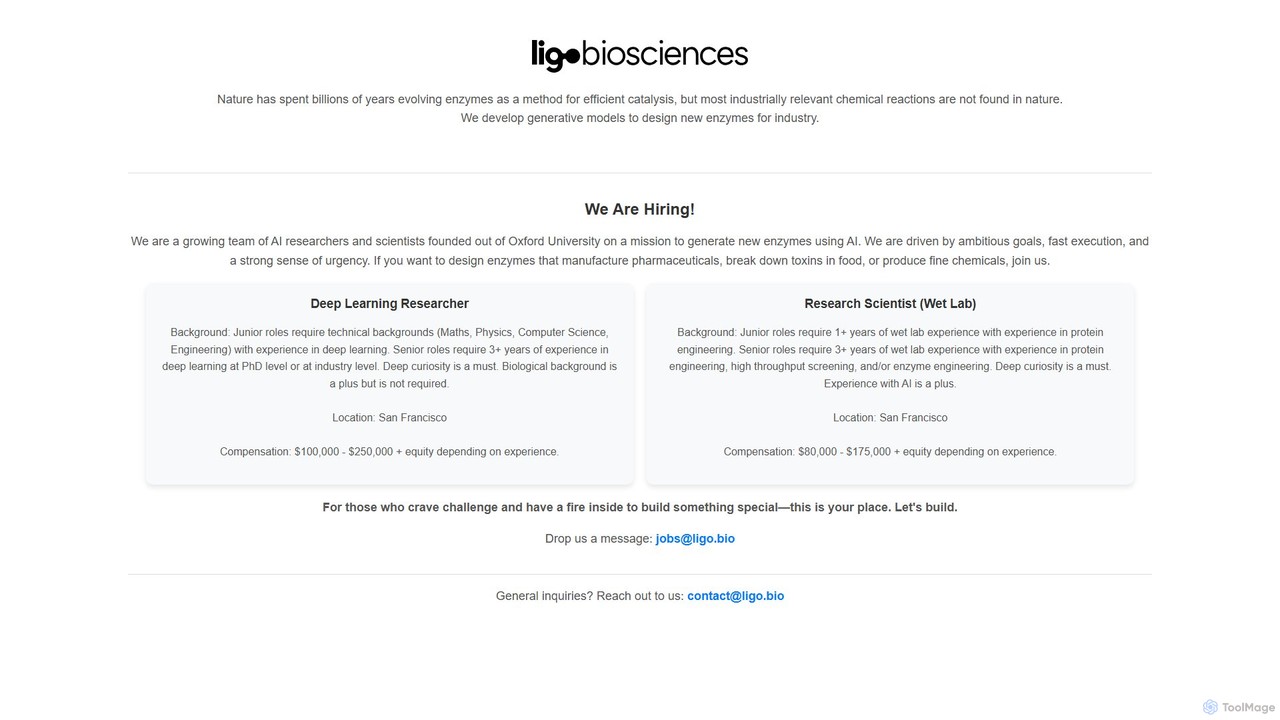
Ligo Biosciences is a research-driven company that leverages generative AI models to design novel enzymes for industrial applications. …
Ligo Biosciences is a research-driven company that leverages generative AI models to design novel enzymes for industrial applications. Originating from Oxford University, they create custom biocatalysts for pharmaceuticals, fine chemical production, and food safety, accelerating innovation beyond the limits of naturally occurring enzymes.
Tamarind Bio
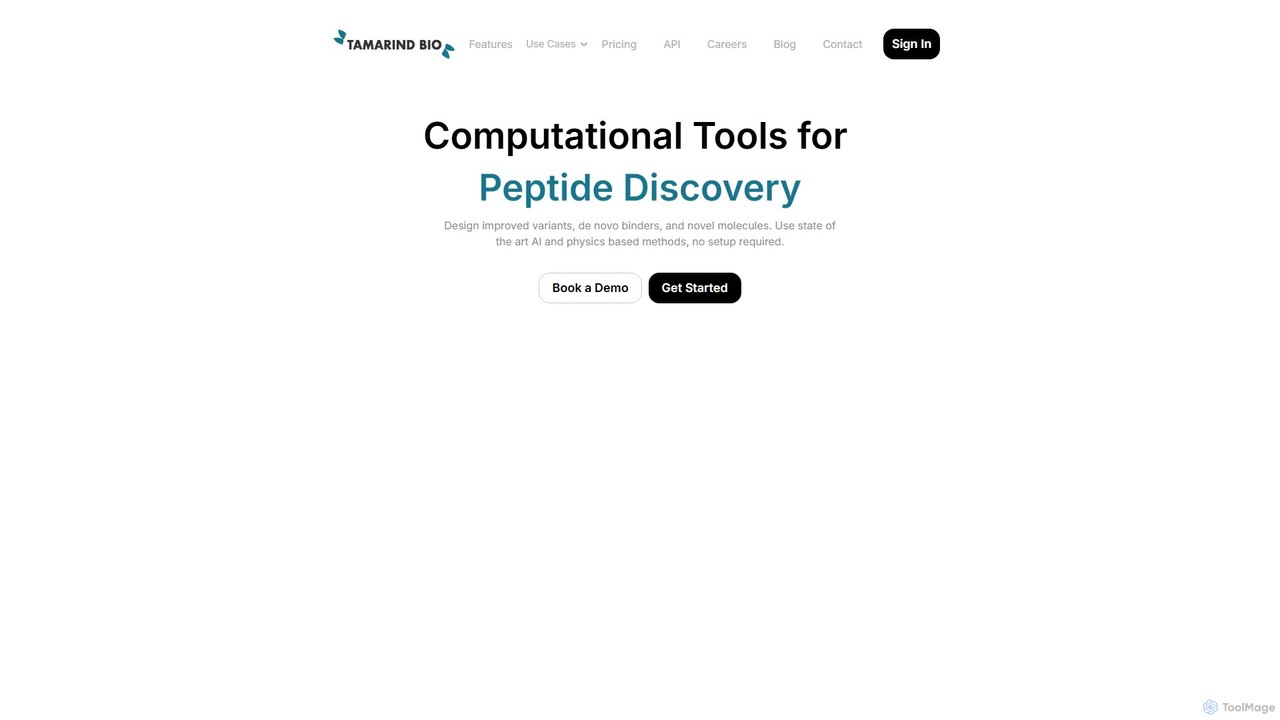
Tamarind Bio is an advanced computational platform that democratizes protein engineering. It provides scientists with a user-friendly interface …
Tamarind Bio is an advanced computational platform that democratizes protein engineering. It provides scientists with a user-friendly interface and a powerful API to access state-of-the-art AI and physics-based tools like AlphaFold and RFdiffusion. The platform streamlines protein design, antibody engineering, and enzyme optimization, handling all high-performance computing and orchestration. This allows researchers to design novel molecules and improve biological variants at a massive scale, accelerating discovery in life sciences without requiring specialized computational expertise.
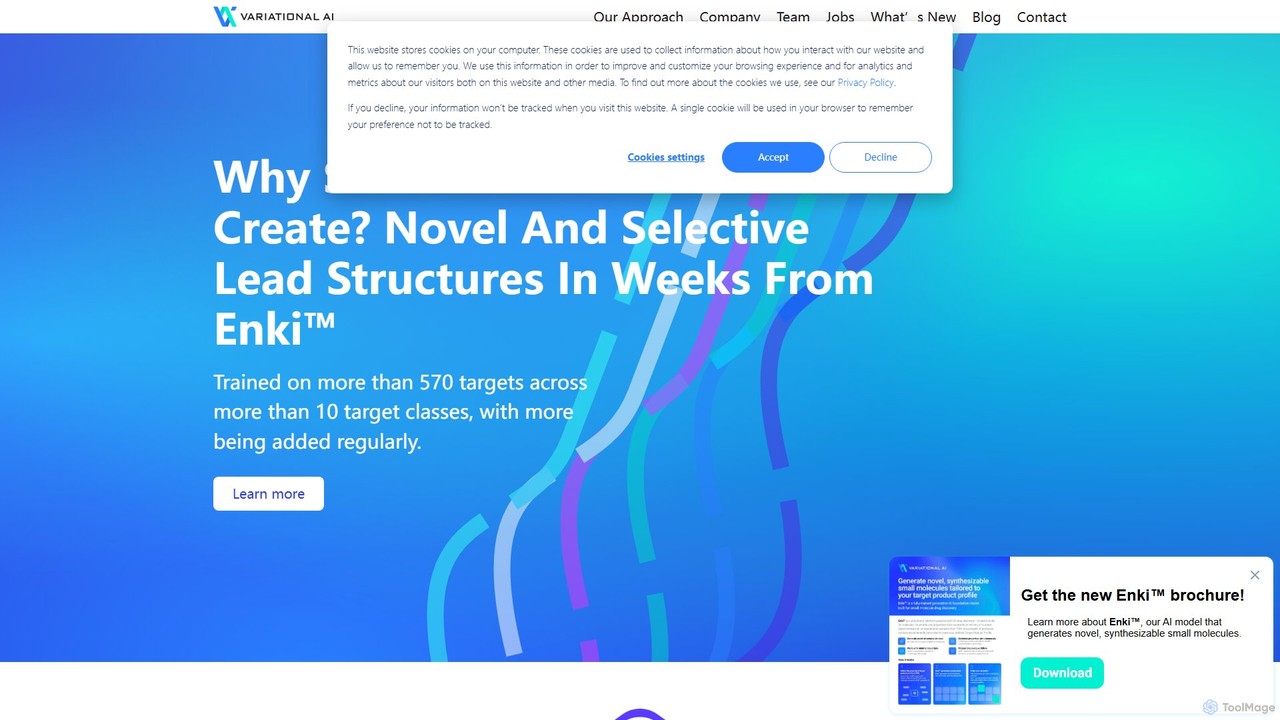
Variational AI
Variational AI leverages a generative AI foundation model, Enki™, to discover novel, drug-like small molecules. It accelerates drug …
Variational AI leverages a generative AI foundation model, Enki™, to discover novel, drug-like small molecules. It accelerates drug discovery by generating selective lead structures in weeks, enabling biopharmaceutical partners to bypass traditional high-throughput screening and redefine the economics of therapeutic development.
Verge Genomics
Verge Genomics is a biotechnology company leveraging an all-in-human, AI-powered platform, CONVERGE®, to discover and develop drugs for …
Verge Genomics is a biotechnology company leveraging an all-in-human, AI-powered platform, CONVERGE®, to discover and develop drugs for complex diseases. By analyzing vast human genomic datasets, it aims to accelerate the creation of effective treatments for conditions like ALS, Parkinson's, and Frontotemporal Dementia, moving from discovery to clinic significantly faster than traditional methods.
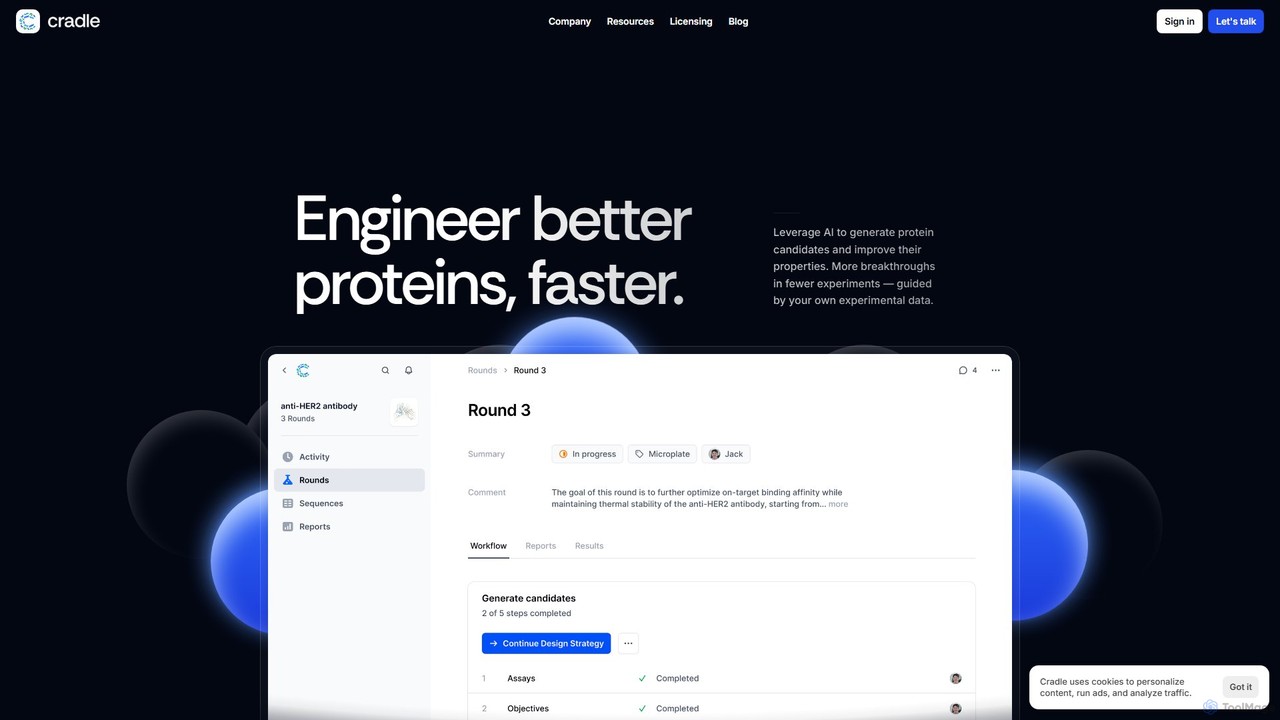
Cradle
Cradle is an AI-powered platform designed for scientists and biotech companies to engineer better proteins faster. By leveraging …
Cradle is an AI-powered platform designed for scientists and biotech companies to engineer better proteins faster. By leveraging generative AI and machine learning, it helps generate novel protein candidates and optimize their properties, such as stability, activity, and binding affinity. The platform learns from your experimental data, enabling more breakthroughs in fewer lab experiments and significantly accelerating development timelines from years to quarters.
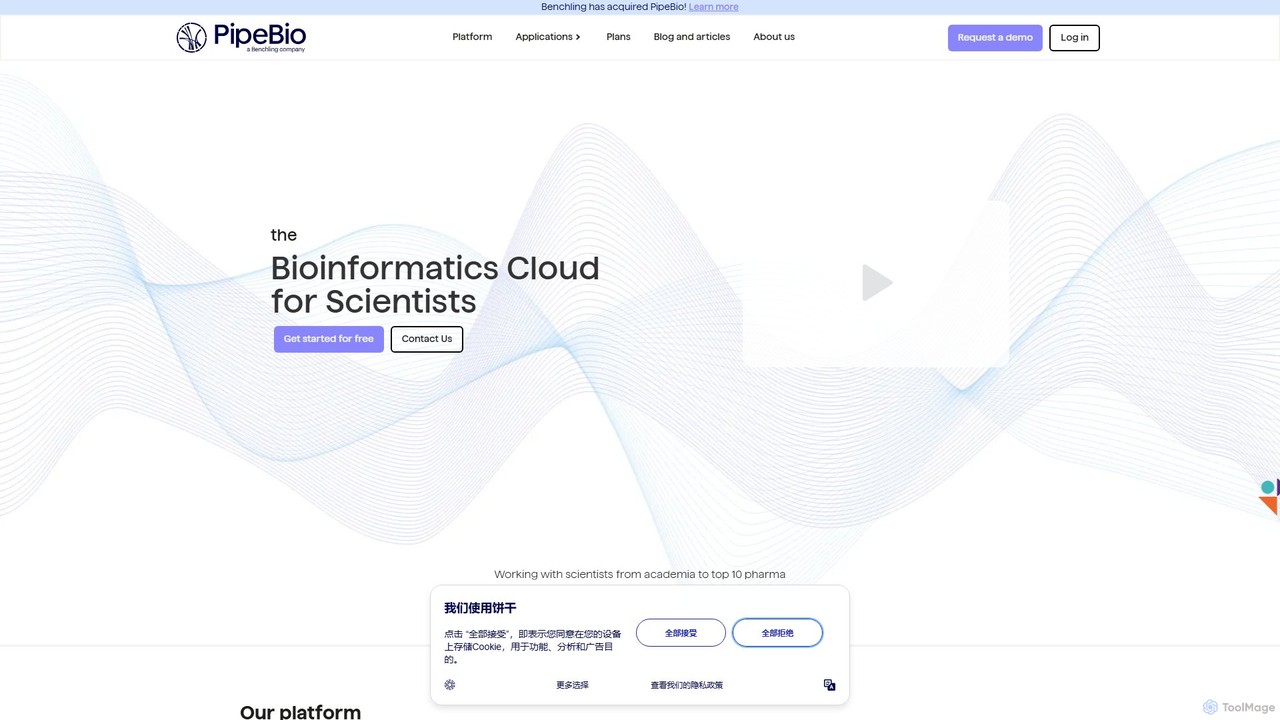
PipeBio
PipeBio is a specialized, cloud-based bioinformatics platform designed for antibody, TCR, and peptide discovery. It enables researchers to …
PipeBio is a specialized, cloud-based bioinformatics platform designed for antibody, TCR, and peptide discovery. It enables researchers to analyze, visualize, and manage large-scale sequence data, integrating seamlessly with functional assay results to accelerate biologics development. Acquired by Benchling, it offers an end-to-end solution for modern drug discovery.
Ginkgo Bioworks
Ginkgo Bioworks is a leading synthetic biology company that utilizes AI, automation, and a vast biological codebase to …
Ginkgo Bioworks is a leading synthetic biology company that utilizes AI, automation, and a vast biological codebase to program cells. They engineer custom microorganisms for partners in pharmaceuticals, agriculture, and industrial manufacturing, accelerating biological R&D and enabling the sustainable production of novel products.
About Drug Discovery
Drug Discovery AI tools are specialized platforms that leverage artificial intelligence and machine learning to accelerate and optimize various stages of the drug development process. These sophisticated tools utilize advanced algorithms to analyze vast biological, chemical, and clinical datasets, enabling more efficient identification of therapeutic targets, design of novel compounds, and precise prediction of drug efficacy and safety. By automating complex computational tasks, uncovering hidden patterns, and simulating molecular interactions, AI drug discovery significantly reduces the time, cost, and failure rates associated with bringing new medicines to market within the broader healthcare sector, ultimately enhancing patient outcomes.
Core Features
- Target Identification & Validation: Systematically pinpointing disease-relevant biological targets and rigorously assessing their suitability for therapeutic intervention.
- De Novo Molecule Generation: Intelligently designing novel chemical structures with optimized pharmacological properties and synthetic feasibility from scratch.
- Virtual Screening & Docking: Rapidly evaluating millions of compounds against a specific protein target to identify potential drug candidates with high binding affinity.
- ADMET Prediction: Accurately forecasting a compound's absorption, distribution, metabolism, excretion, and toxicity profiles early in the preclinical development phase.
- Drug Repurposing: Efficiently identifying new therapeutic uses for existing, approved drugs, thereby accelerating their path to patients and reducing development risks.
Applicable Scenarios
AI drug discovery tools are indispensable for pharmaceutical companies, biotechnology startups, and academic research institutions engaged in preclinical drug development. They are extensively used in early-stage research to identify promising drug candidates, optimize lead compounds for improved potency and selectivity, and predict potential side effects, thereby streamlining the entire preclinical development pipeline. Researchers leverage these powerful tools to explore vast chemical spaces, prioritize experiments, and accelerate the discovery of innovative therapies for a wide range of diseases, from oncology to infectious diseases and rare genetic disorders.
How to Choose
When selecting an AI drug discovery tool, it is crucial to consider its data integration capabilities with existing omics and chemical databases, the proven accuracy and validation of its predictive models, and its scalability for handling extremely large datasets and complex molecular simulations. Evaluate the user interface for intuitive navigation and ease of use, the breadth of its functional modules (e.g., target identification, de novo molecule design, ADMET prediction), and the quality of technical support and scientific expertise provided. Compatibility with your specific research focus, existing computational infrastructure, and regulatory compliance standards is also a critical factor for successful implementation.
Drug DiscoveryUse Cases
Accelerating Novel Target Identification
Pharmaceutical researchers utilize AI to analyze vast genomic, proteomic, and clinical data to identify novel disease-modifying targets. AI algorithms can uncover subtle patterns and correlations that human analysis might miss, prioritizing targets with the highest therapeutic potential and reducing the experimental burden in early drug discovery phases.
Designing De Novo Small Molecule Drugs
Medicinal chemists employ AI-powered generative models to design entirely new molecular structures with specific desired properties, such as high binding affinity to a target, improved bioavailability, or reduced toxicity. This allows for the exploration of chemical spaces beyond traditional libraries, leading to truly innovative drug candidates.
High-Throughput Virtual Screening of Compound Libraries
Drug discovery teams use AI-driven virtual screening platforms to rapidly evaluate millions of chemical compounds from large databases against a specific disease target. This process, often involving molecular docking and machine learning predictions, identifies the most promising candidates for experimental testing, significantly narrowing down the search space and saving laboratory resources.
Optimizing Lead Compounds for Preclinical Development
After initial hits are found, AI tools assist in optimizing lead compounds. Researchers input lead structures and desired property modifications (e.g., increased potency, better solubility, reduced off-target effects). AI then suggests structural modifications and predicts their impact, guiding chemists to refine candidates more efficiently for preclinical studies.
Predicting ADMET Properties Early in Development
Toxicologists and pharmacologists leverage AI models to predict a drug candidate's Absorption, Distribution, Metabolism, Excretion, and Toxicity (ADMET) profiles. By assessing these critical properties early, before costly synthesis and in vitro/in vivo testing, AI helps filter out compounds likely to fail due to poor pharmacokinetics or safety concerns, improving success rates.
Identifying New Applications for Existing Drugs (Repurposing)
Researchers use AI to analyze existing drug databases, scientific literature, and disease pathways to identify potential new therapeutic indications for approved drugs. This drug repurposing approach can significantly shorten development timelines and reduce costs, as the safety and pharmacokinetic profiles of these drugs are already well-established, offering faster routes to patient benefit.