Iot Best in category 2 results Platform AI Tool

Popular AI tools in the Platform field of Iot include Synnax、xyzt.ai, etc., helping you quickly improve efficiency.

xyzt.ai

xyzt.ai

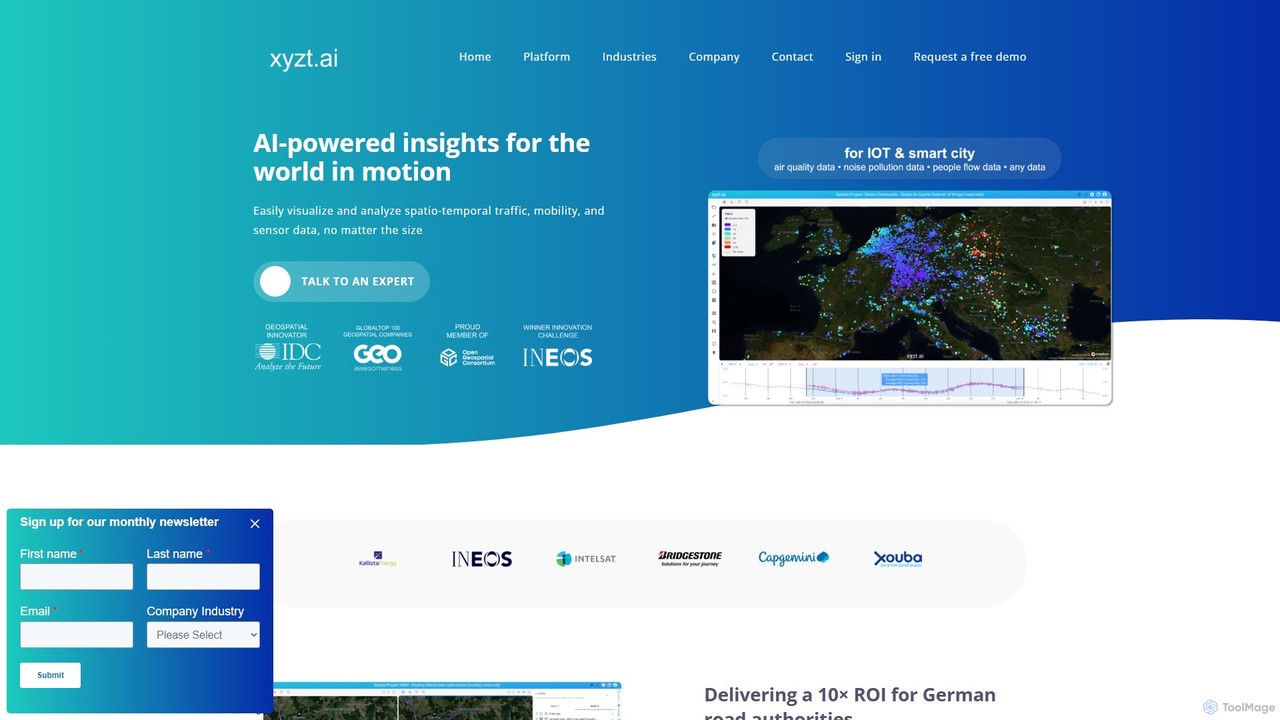
xyzt.ai is a powerful AI-driven platform for visualizing and analyzing large-scale spatio-temporal data. It specializes in mobility, traffic, …

5.3K
Synnax

Synnax

Synnax is a high-performance data and operations platform for hardware engineering teams. It provides a specialized time-series database …

6.0K

About Platform

IoT Platforms are integrated software environments that serve as the central backbone for managing connected devices, data, and applications within an Internet of Things (IoT) ecosystem. These platforms provide a comprehensive set of tools to handle device connectivity, data ingestion, processing, and storage at scale. Their primary value lies in abstracting the complexity of IoT infrastructure, enabling developers and businesses to build and deploy IoT solutions more rapidly and efficiently. By offering pre-built components for common tasks, they significantly reduce development time and costs.

Core Features

  • Device Management: Remotely provision, monitor, configure, and update the firmware of IoT devices throughout their lifecycle.
  • Data Ingestion & Processing: Securely collect and process high-velocity data streams from numerous devices using protocols like MQTT or CoAP.
  • Analytics & Visualization: Analyze IoT data to uncover insights, detect anomalies, and present findings through customizable dashboards and reports.
  • Application Enablement: Provide APIs, SDKs, and development tools to facilitate the creation of custom web and mobile applications on top of the IoT data.
  • Security Management: Implement end-to-end security, including device authentication, data encryption, and access control policies.

Use Cases

IoT Platforms are crucial in industries like manufacturing for predictive maintenance, smart cities for managing public utilities like lighting and waste collection, and agriculture for precision farming. They are also fundamental in logistics for real-time asset tracking and in healthcare for remote patient monitoring, enabling data-driven decision-making across various sectors.

How to Choose

When selecting an IoT Platform, consider its scalability to support your expected number of devices and data volume. Evaluate its support for specific connectivity protocols and its integration capabilities with existing enterprise systems (e.g., ERP, CRM). Assess the platform's security features, data analytics tools, and the overall pricing model, including data and device connection fees.

PlatformUse Cases

1

Predictive Maintenance in Manufacturing

A plant manager in a manufacturing facility uses an IoT platform to prevent costly equipment downtime. Sensors measuring vibration, temperature, and power consumption are installed on critical machinery. This data is streamed in real-time to the IoT platform, which uses machine learning models to analyze patterns and predict potential failures. When the platform detects an anomaly indicating a future breakdown, it automatically generates a maintenance ticket and alerts the engineering team, allowing them to schedule repairs proactively. This approach shifts maintenance from a reactive to a predictive model, increasing operational efficiency and extending equipment lifespan.

2

Smart Agriculture for Crop Optimization

A large-scale farm operator implements a smart agriculture solution using an IoT platform. Soil sensors are deployed across fields to monitor moisture levels, pH, and nutrient content. This data, along with weather data from local stations, is aggregated on the platform. The platform's analytics engine processes this information to provide precise recommendations for irrigation and fertilization. It can trigger automated irrigation systems to water specific zones only when needed, conserving water. Farmers can access a dashboard on their tablets to view crop health, soil conditions, and yield predictions, enabling data-driven decisions that increase crop yield and reduce resource waste.

3

Real-Time Fleet Management and Logistics

A logistics company equips its entire fleet of trucks with GPS trackers and OBD-II sensors that connect to an IoT platform. The platform provides a centralized dashboard for dispatchers to monitor the real-time location, speed, fuel consumption, and engine health of every vehicle. It can generate optimized routes to avoid traffic and reduce fuel costs. Geofencing alerts can be set up to notify managers when a truck enters or leaves a designated area, such as a warehouse or a customer site. This comprehensive visibility improves delivery efficiency, enhances driver safety, and provides customers with accurate delivery time estimates.

4

Smart City Waste Management Optimization

A municipal government uses an IoT platform to make its waste collection services more efficient. Ultrasonic sensors are installed in public trash bins across the city to measure their fill levels. Each sensor transmits its data to the IoT platform. The platform visualizes this data on a map and uses an algorithm to generate the most efficient collection routes for garbage trucks, prioritizing bins that are full or nearly full. This dynamic routing avoids unnecessary trips to empty bins, resulting in significant savings in fuel, labor costs, and vehicle wear and tear, while also reducing urban traffic congestion.

5

Remote Patient Monitoring in Healthcare

A healthcare provider offers a remote monitoring service for patients with chronic conditions like diabetes or hypertension. Patients are given wearable devices (e.g., smartwatches, glucose monitors) that continuously collect vital signs. This data is securely transmitted to a central IoT platform. The platform allows clinicians to view patient data in real-time on a dashboard, track trends, and set up custom alerts. If a patient's readings cross a critical threshold, the platform automatically notifies the care team, enabling swift intervention. This system improves patient outcomes by providing continuous care and reduces hospital readmissions.

6

Smart Building Energy Management

A facility manager for a large commercial building uses an IoT platform to reduce energy consumption and operational costs. The platform integrates with the building's management system, connecting to HVAC units, lighting systems, and occupancy sensors. It analyzes real-time data on room occupancy, temperature, and ambient light to automatically adjust heating, cooling, and lighting on a room-by-room basis. For example, it can dim lights and reduce air conditioning in unoccupied meeting rooms. The platform's dashboard provides detailed energy usage reports, helping the manager identify further opportunities for savings and comply with energy efficiency regulations.

PlatformFrequently Asked Questions