ToolMage
Sign in

Best 1 English Proficiency AI tools for Language Learning

Popular English Proficiency AI tools in Language Learning include English Job Ready, helping you work more efficiently.

English Job Ready
Freemium

English Job Ready

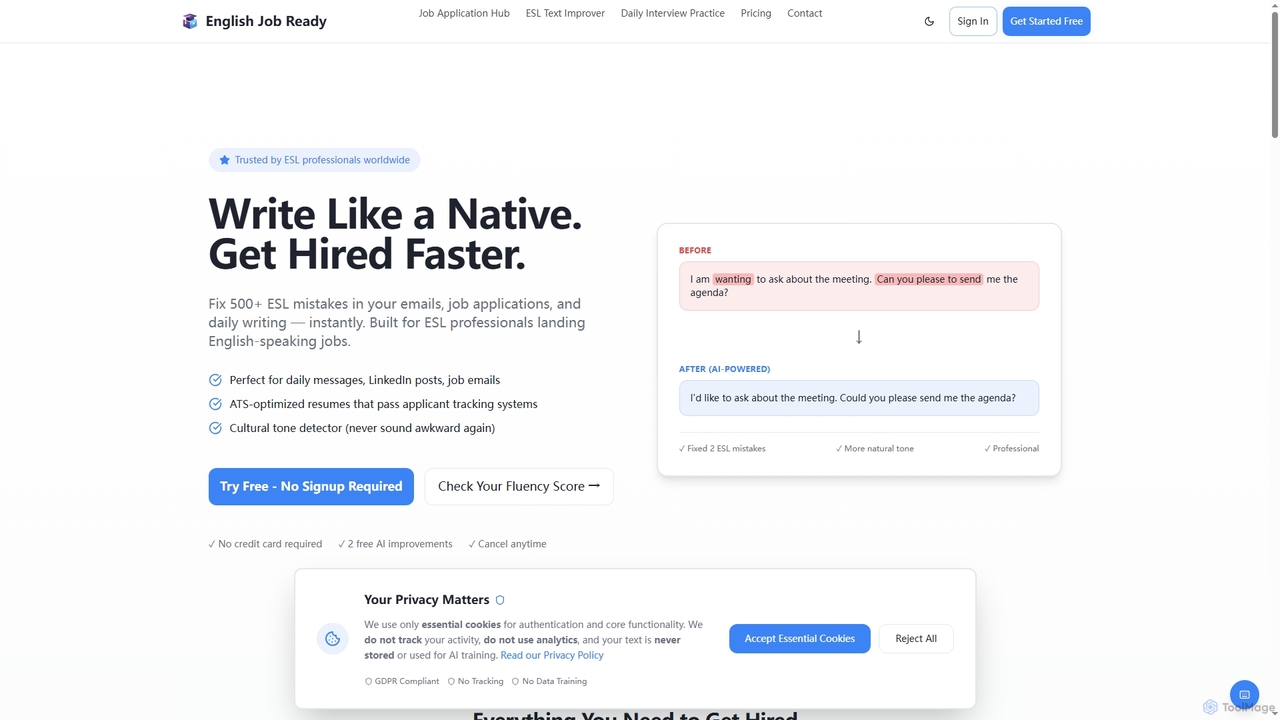
English Job Ready is an AI-powered tool designed specifically for non-native English speakers to perfect their job applications. It helps fix over 500 ESL mistakes, optimizes resumes for ATS, generates cover letters, and provides daily interview practice with AI feedback, aiming to help users get hired faster in English-speaking roles.

Interview Preparation
Visits 5.5KFavorites 110Likes 119

About English Proficiency

English Proficiency tools are AI-powered platforms designed to help users enhance their English language skills across various dimensions. Leveraging advanced natural language processing (NLP), speech recognition, and machine learning, these tools provide personalized feedback and targeted exercises. They aim to improve grammar, vocabulary, pronunciation, writing clarity, and overall conversational fluency, acting as an intelligent virtual tutor for learners at all levels.

Core Features

  • Grammar & Spelling Correction: AI-driven identification and suggestion for grammatical errors, punctuation, and spelling.
  • Pronunciation Analysis: Real-time feedback on accent, intonation, and individual sounds using speech recognition technology.
  • Vocabulary Building: Contextual learning, personalized word lists, and usage examples to expand lexicon.
  • Writing Feedback: Suggestions for improving style, clarity, coherence, and academic tone in written content.
  • Fluency Practice: Conversational AI for dialogue practice, role-playing, and simulating real-life speaking scenarios.

Use Cases

These tools are invaluable for students preparing for standardized tests like IELTS or TOEFL, offering detailed feedback on writing and speaking sections. Professionals can refine their business English for emails, presentations, and meetings, ensuring clear and confident communication. Individuals seeking general fluency improvement benefit from interactive practice and personalized learning paths.

How to Choose

When selecting an AI English proficiency tool, consider its specific skill focus (e.g., writing, speaking, grammar), the depth and personalization of its feedback, and its integration capabilities with other learning resources. Evaluate the accuracy of its AI models, the range of practice exercises offered, and the pricing structure to ensure it aligns with your learning goals and budget.

English Proficiency use cases

1

IELTS/TOEFL Writing & Speaking Practice

Test-takers preparing for exams like IELTS or TOEFL can use AI English proficiency tools to practice essay writing and spoken responses. The AI provides instant, detailed feedback on grammar, vocabulary, coherence, and pronunciation, simulating exam conditions. This targeted practice helps identify weak areas and refine skills, leading to improved scores and greater confidence on test day.

2

Business English Communication Enhancement

Professionals needing to improve their business English can leverage these tools to draft emails, prepare presentations, and practice meeting discussions. AI suggests formal vocabulary, corrects grammatical errors in business contexts, and offers pronunciation coaching for clarity in calls and presentations. This leads to more confident and effective professional communication, enhancing career prospects.

3

Daily Conversational Fluency Improvement

Individuals aiming for general conversational fluency can engage with AI chatbots that simulate natural dialogue and role-play everyday situations. The AI subtly corrects errors, introduces new vocabulary relevant to the conversation, and provides feedback on speaking pace and intonation. This interactive practice builds confidence and helps learners speak more naturally and spontaneously.

4

Academic Writing Refinement

University students and researchers can utilize AI English proficiency tools to proofread academic papers, essays, and reports. The AI identifies complex grammatical errors, suggests academic vocabulary, improves sentence structure, and checks for coherence and logical flow. This ensures higher quality, error-free academic submissions, helping users meet stringent academic standards.

5

Pronunciation and Accent Reduction

Non-native speakers can significantly improve their pronunciation and reduce their accent using AI tools. These tools employ advanced speech recognition to analyze spoken English, comparing it to native speaker models. They provide visual waveform analysis, phonetic breakdowns, and targeted exercises to correct specific sounds, intonation patterns, and rhythm, leading to clearer and more natural speech.

6

Vocabulary Expansion and Contextual Learning

All English learners can benefit from AI tools for vocabulary expansion and contextual learning. These tools generate example sentences, quizzes, and personalized flashcards based on the user's reading or writing, ensuring practical application of new words and phrases. This method promotes deeper understanding and better retention, enriching the user's lexicon effectively.

English Proficiency FAQ

What are AI English Proficiency tools?

AI English Proficiency tools leverage artificial intelligence, including natural language processing and speech recognition, to help users improve various aspects of their English language skills. They provide personalized feedback on grammar, vocabulary, pronunciation, writing, and speaking, acting as a virtual tutor. These tools offer targeted exercises and adaptive learning paths to enhance overall language mastery.

How do AI tools help improve English pronunciation?

AI pronunciation tools use advanced speech recognition to analyze a user's spoken English. They compare the user's speech patterns, intonation, and individual sounds to native speaker models, then provide immediate, detailed feedback. This often includes visual waveform analysis, phonetic breakdowns, and targeted exercises to correct specific errors, helping users achieve clearer and more natural speech.

What's the difference between general language learning apps and AI English Proficiency tools?

General language learning apps often focus on foundational vocabulary, basic grammar, and conversational phrases across multiple languages. AI English Proficiency tools, however, specialize in English, offering deeper, more nuanced analysis and personalized feedback on specific aspects like advanced grammar, writing style, pronunciation accuracy, and fluency, often simulating real-world communication scenarios for targeted improvement.

Can AI English Proficiency tools help with exam preparation (e.g., IELTS/TOEFL)?

Yes, many AI English Proficiency tools are specifically designed to assist with exam preparation for tests like IELTS or TOEFL. They offer practice tests, essay grading with detailed feedback on criteria like coherence and lexical resource, and speaking simulations with AI interviewers that evaluate pronunciation, fluency, and grammatical range, helping users identify and improve weak areas for higher scores.

How accurate is the feedback provided by AI English Proficiency tools?

The accuracy of feedback from AI English Proficiency tools has significantly improved with advancements in AI, especially in natural language processing and speech recognition. While not a perfect substitute for human interaction, these tools can accurately identify common grammatical errors, suggest vocabulary improvements, and provide detailed pronunciation analysis, offering consistent and immediate feedback that complements traditional learning methods effectively.