
ToolMage
Sign in

Best 1 Pronunciation AI tools for Language Learning

Popular Pronunciation AI tools in Language Learning include Accent Guru, helping you work more efficiently.

Accent Guru
Free

Accent Guru

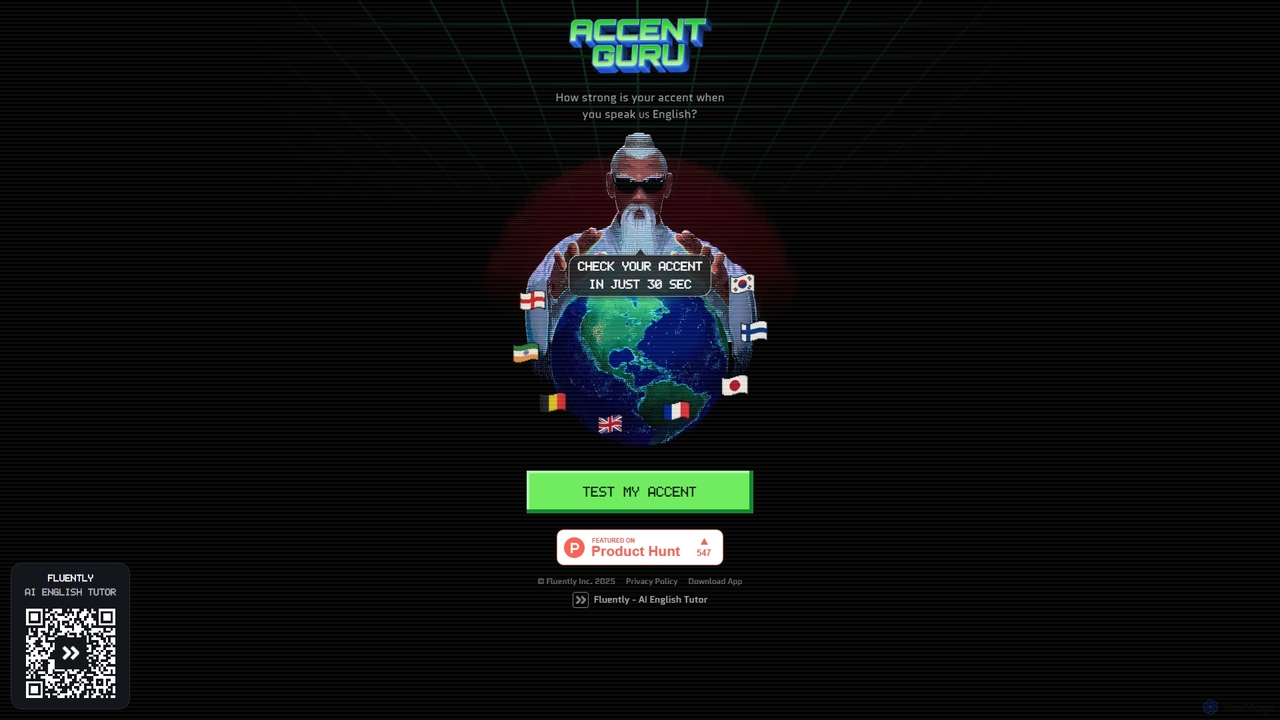
Accent Guru is a free online tool designed to quickly assess the strength of your American English accent. By reading a short provided text, users can receive an instant score, helping them understand and improve their pronunciation in just 30 seconds.

Speech Analysis
Visits 159.6KFavorites 118Likes 141

About Pronunciation

Pronunciation tools are AI-powered applications specifically designed to help users improve their spoken language clarity and accuracy. These tools leverage advanced speech recognition and synthesis technologies to analyze a user's speech, identify errors, and provide targeted feedback. They are invaluable for language learners, public speakers, and anyone aiming to refine their accent or articulate more effectively.

Core Features

  • Real-time Feedback: Provides instant analysis of spoken words, highlighting mispronounced sounds or incorrect intonation.
  • Phonetic Analysis: Breaks down words into individual phonemes, showing precise tongue and mouth positions for correct articulation.
  • Accent Training: Offers exercises and comparisons to native speaker models to help users reduce foreign accents or acquire new ones.
  • Speech Synthesis: Generates accurate model pronunciations for words and sentences, allowing users to mimic and compare.
  • Progress Tracking: Monitors improvement over time, identifying persistent issues and celebrating milestones in pronunciation mastery.

Applicable Scenarios

Language learners use these tools to master challenging sounds and intonation patterns in a new language. Professionals preparing for presentations or international meetings utilize them to ensure clear, confident communication. Actors and voice artists employ them for acquiring specific regional or foreign accents for roles.

How to Choose

When selecting a pronunciation tool, consider its accuracy in speech recognition, the depth and clarity of its feedback mechanisms, and the range of languages and accents it supports. Look for interactive exercises, personalized learning paths, and robust progress tracking features. Compatibility with other language learning resources and a user-friendly interface are also important factors.

Pronunciation use cases

1

Language Learners Mastering New Sounds

An individual learning a new language, such as Japanese, struggles with specific phonemes like the 'r' sound. They use an AI pronunciation tool to repeatedly practice these sounds, receiving instant visual and auditory feedback on their tongue placement and intonation. This targeted practice helps them accurately produce challenging sounds, accelerating their mastery of the language's phonetic system.

2

Professionals Enhancing Presentation Skills

A business professional needs to deliver a crucial presentation in English to an international audience. They utilize an AI pronunciation tool to practice their script, focusing on clarity, pace, and intonation. The tool identifies words or phrases that might be unclear to non-native speakers, suggesting improvements that boost the speaker's confidence and ensure their message is effectively conveyed.

3

Actors/Voice Artists for Accent Acquisition

An actor is preparing for a role that requires a specific regional accent, such as a Scottish or Southern American accent. They use an AI pronunciation tool that offers accent training modules. By comparing their speech to native recordings and receiving detailed phonetic feedback, they can accurately mimic the target accent, ensuring an authentic and convincing performance.

4

Students Preparing for Oral Exams

A student preparing for an IELTS or TOEFL speaking exam needs to ensure their pronunciation is clear and understandable to achieve a high score. They use an AI pronunciation tool to practice mock exam questions, receiving scores and detailed feedback on their fluency, coherence, and especially pronunciation accuracy. This helps them identify and correct common errors before the actual test.

5

Non-Native Speakers Improving Daily Communication

An expatriate living in a foreign country wants to improve their everyday conversational English to integrate better into the local community. They use an AI pronunciation tool to practice common phrases and sentences, focusing on natural intonation and rhythm. The tool helps them sound more natural and confident in daily interactions, reducing communication barriers and enhancing social integration.

6

Content Creators for Clear Narration

A podcaster or e-learning course creator needs to ensure their narration is impeccably clear and engaging for their audience. They use an AI pronunciation tool to review their scripts, practicing difficult words or complex sentences. The tool provides feedback on articulation and pacing, helping them deliver professional-quality audio that enhances listener comprehension and engagement.

Pronunciation FAQ

What are AI Pronunciation Tools?

AI Pronunciation Tools are software applications that use artificial intelligence, specifically speech recognition and synthesis, to analyze and provide feedback on a user's spoken language. Their primary purpose is to help individuals improve the accuracy, clarity, and naturalness of their pronunciation, often within the broader context of language learning or public speaking. They offer personalized guidance to correct errors in sounds, stress, and intonation.

How do AI Pronunciation Tools help improve speaking skills?

AI Pronunciation Tools significantly enhance speaking skills by providing precise, objective feedback that human teachers might miss. They analyze aspects like phoneme accuracy, word stress, sentence intonation, and rhythm. Users can practice specific words or phrases, receive instant visual (e.g., waveform, phonetic charts) and auditory (e.g., native speaker comparison) cues, and track their progress. This iterative process of speaking, receiving feedback, and correcting helps solidify correct muscle memory for articulation.

What's the difference between AI Pronunciation Tools and general language learning apps?

General language learning apps typically offer a broad curriculum covering vocabulary, grammar, reading, listening, and basic speaking practice. While they may include some pronunciation exercises, their feedback is often limited or less detailed. AI Pronunciation Tools, however, specialize in deep phonetic analysis, providing granular feedback on individual sounds, intonation patterns, and accent nuances. They offer more advanced features like real-time waveform visualization and precise articulation guidance, making them ideal for targeted pronunciation improvement rather than holistic language acquisition.

Can AI Pronunciation Tools help with accent reduction?

Yes, AI Pronunciation Tools are highly effective for accent reduction. They work by comparing a user's speech patterns to those of native speakers in a target accent. The tools can pinpoint specific phonetic deviations, incorrect stress, or intonation patterns that contribute to a foreign accent. By providing visual cues (e.g., showing where the tongue should be) and auditory models, along with repeated practice and feedback, users can systematically modify their speech habits to align more closely with the desired accent, leading to clearer and more natural communication.

What features should I look for when choosing an AI Pronunciation Tool?

When selecting an AI Pronunciation Tool, prioritize accuracy in speech recognition and the clarity of its feedback, which should include visual phonetic charts and auditory comparisons. Look for a wide range of supported languages and accents, along with interactive exercises that target specific sounds or intonation patterns. Essential features also include personalized learning paths, robust progress tracking, and the ability to record and review your own speech. Finally, consider user-friendliness and compatibility with your existing devices or language learning ecosystem.