
Maum.ai
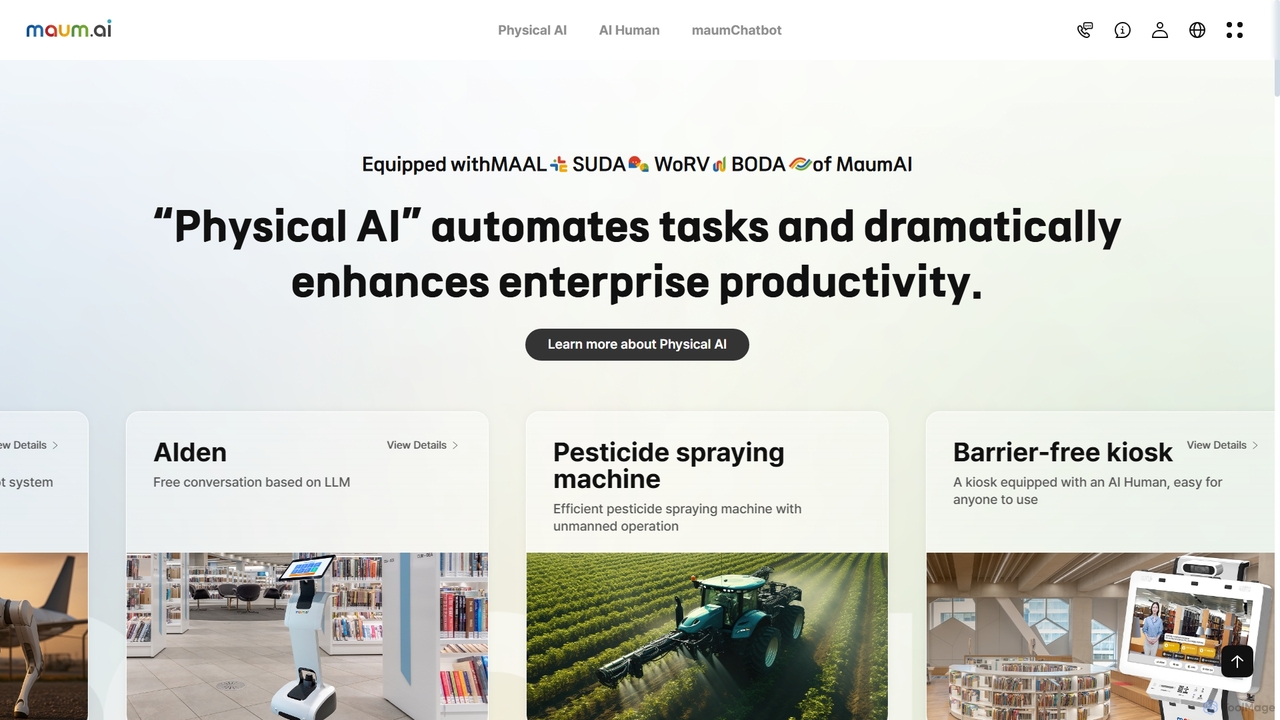
Maum.ai is a comprehensive enterprise AI platform specializing in "Physical AI," which integrates conversational AI, vision, robotics, and …
Maum.ai is a comprehensive enterprise AI platform specializing in "Physical AI," which integrates conversational AI, vision, robotics, and on-premise LLMs. It offers end-to-end solutions from AI-powered chatbots and virtual humans to autonomous robots for various industries, enhancing productivity and automation.
About Speech Processing
Speech Processing tools are a class of AI applications designed to understand, interpret, and generate human speech. These tools leverage advanced models like Automatic Speech Recognition (ASR) and Text-to-Speech (TTS) to convert spoken words into text and vice versa. They are essential for creating voice-enabled applications, automating transcription tasks, and producing high-quality synthetic audio. The technology enables seamless interaction between humans and machines through voice, opening up new possibilities in accessibility and automation.
Core Features
- Speech-to-Text (STT): Accurately transcribes audio and video files into written text, often with speaker identification.
- Text-to-Speech (TTS): Generates natural, human-like speech from text input in various languages and voices.
- Voice Cloning: Creates a digital replica of a specific voice from a short audio sample for consistent audio branding.
- Speaker Diarization: Identifies and distinguishes between different speakers in a single audio recording.
- Speech Analysis: Evaluates vocal characteristics such as emotion, sentiment, accent, and tone from audio data.
Use Cases
Speech Processing tools are widely used in media for automatic subtitling and dubbing, in customer service for powering interactive voice response (IVR) systems, and by content creators for generating podcast and video voiceovers. Developers also use these tools to build voice-controlled interfaces for apps and smart devices.
How to Choose
When selecting a Speech Processing tool, evaluate the accuracy of its transcription (Word Error Rate) and the naturalness of its synthetic voices (Mean Opinion Score). Also consider the range of supported languages and dialects, real-time processing capabilities, API availability for integration, and specific features like voice cloning or emotion detection.
Speech ProcessingUse Cases
Automated Meeting & Interview Transcription
Business professionals and researchers use Speech Processing tools to automatically transcribe audio from meetings, interviews, or focus groups. By uploading an audio file, the tool generates a time-stamped text document, often identifying different speakers (diarization). This eliminates hours of manual transcription, allows for quick searching of key topics, and facilitates the creation of accurate records and reports.
High-Quality Voiceover & Podcast Generation
Content creators and marketers leverage Text-to-Speech (TTS) technology to produce professional-grade voiceovers for videos, advertisements, and podcasts. Instead of hiring voice actors, they can input a script to generate clean, consistent audio in various voices and languages. Advanced tools offer control over tone, pacing, and emotion, enabling the creation of engaging audio content at a fraction of the cost.
Building Interactive Voice Applications
Developers integrate Speech Processing APIs to create voice-enabled products. This includes building interactive voice response (IVR) systems for call centers, adding voice command functionality to mobile apps, or creating conversational AI for smart devices. The combination of Speech-to-Text and Text-to-Speech allows for a natural, hands-free user experience, making technology more accessible and intuitive.
Creating Digital Voice Clones for Branding
Brands and public figures use voice cloning technology to create a unique and scalable audio identity. By providing a few minutes of voice recording, the AI can generate a synthetic voice that can be used to produce any audio content, from marketing messages to internal training materials. This ensures brand consistency across all audio channels and allows for rapid content creation without requiring the original speaker to be present.
Enhancing Accessibility with Screen Readers
Web developers and software engineers use Text-to-Speech (TTS) to build powerful accessibility features. These tools can read on-screen text, navigation menus, and notifications aloud, providing a critical service for users with visual impairments. High-quality, natural-sounding TTS voices significantly improve the user experience, making digital content and applications accessible to a wider audience.
Automated Dubbing for Global Video Content
Media companies and film studios employ advanced Speech Processing tools to automate the dubbing process for international audiences. The technology can transcribe the original dialogue, translate the script, and then generate a new voice track in the target language using Text-to-Speech. Some platforms even sync the new audio to the original speaker's lip movements, drastically reducing the time and cost of localization.