ToolMage
Sign in

Best 5 Personalized Learning AI tools for Learning

Popular Personalized Learning AI tools in Learning include Duration, Elphame, Learnee, GoQuizIt, and WordLingo, helping you work more efficiently.

Freemium

Learnee

Learnee is an AI-powered study assistant featuring Proff, a personalized AI mentor for students. It helps you learn smarter by understanding your syllabus, tracking weak topics, and providing exam-ready explanations, smart notes, and adaptive quizzes.

Student Support
Visits 3.6KFavorites 19Likes 16
Freemium

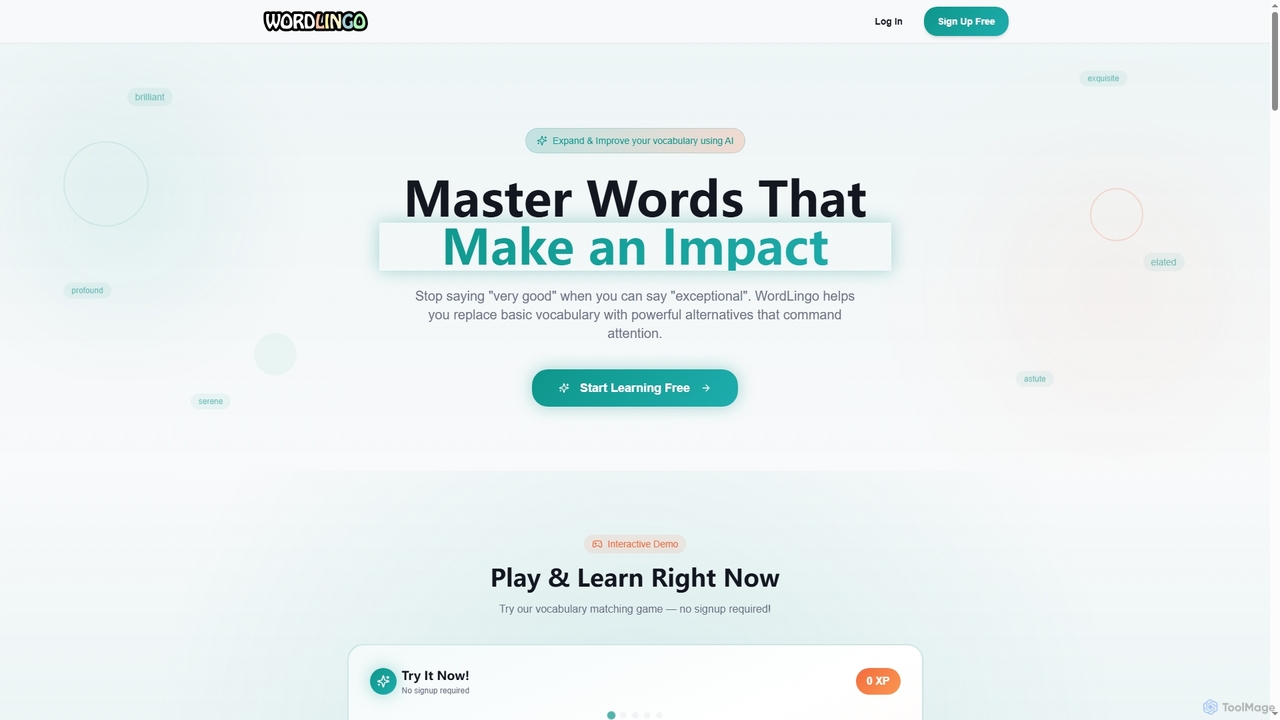
WordLingo

WordLingo is an AI-powered vocabulary builder designed to help users replace common words with powerful alternatives, enhancing communication impact and precision. It offers personalized learning paths, custom classrooms, interactive quizzes, and progress tracking, suitable for students, professionals, and lifelong learners.

Language Learning
Visits 3.5KFavorites 18Likes 14
Freemium

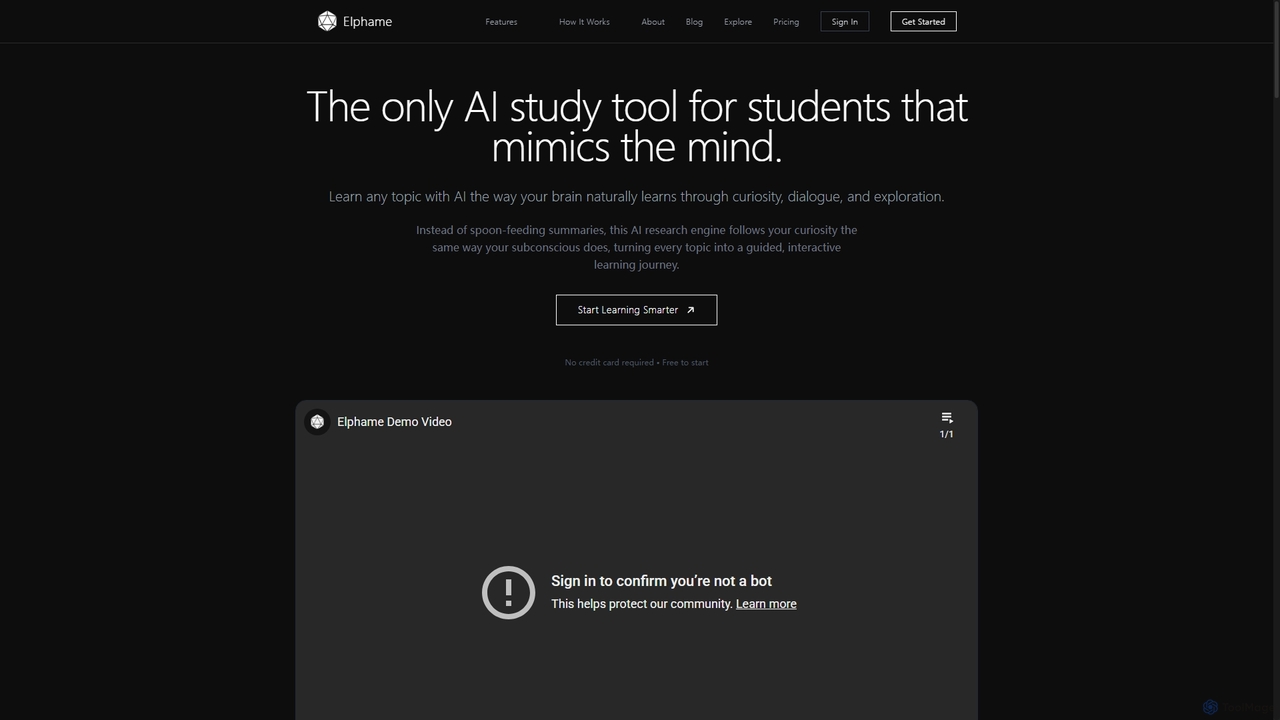
Elphame

Elphame is an AI study tool designed to transform learning by mimicking the mind's natural curiosity and exploration. It provides structured, dialogue-driven learning paths, moving beyond traditional summaries and fragmented information to build deeper understanding and retention for students and professionals.

Knowledge Management
Visits 3.7KFavorites 101Likes 83
Freemium

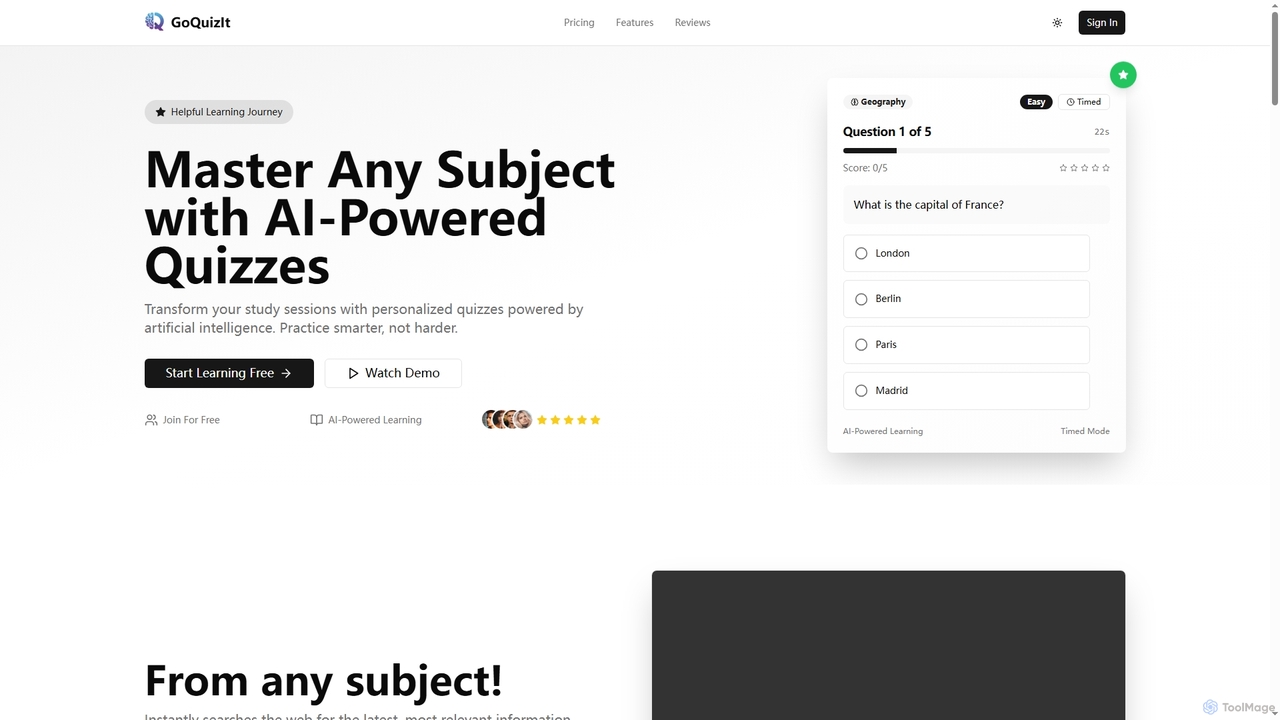
GoQuizIt

GoQuizIt is an AI-powered platform that transforms study materials into personalized quizzes, helping students and learners master any subject. It generates practice tests from uploaded files, web content, or real test references, offering instant feedback and progress tracking for smarter, more efficient learning.

Quiz Generator
Visits 3.5KFavorites 109Likes 110
Freemium

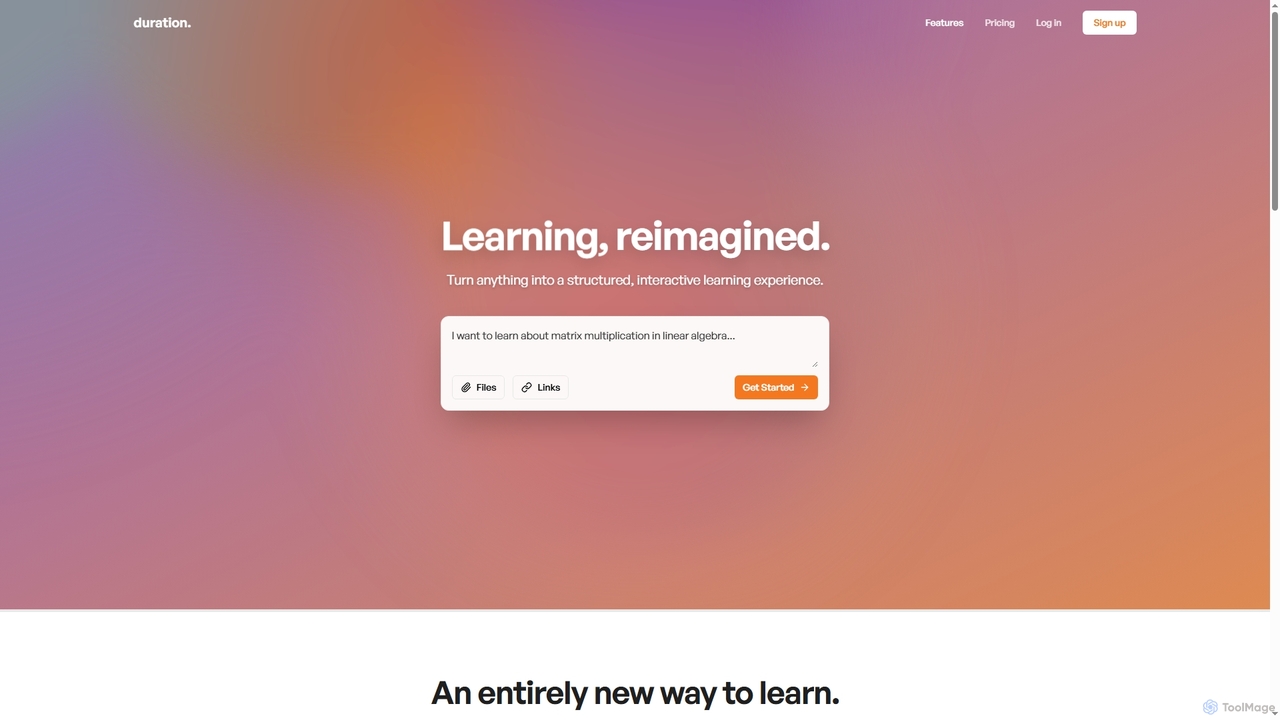
Duration

Duration is an AI-powered learning platform that creates personalized, structured study plans tailored to your goals, experience, and progress. It offers diverse content formats like videos, podcasts, and articles, reinforced with interactive exercises and quizzes for effective, engaging learning.

Adaptive Learning
Visits 4KFavorites 140Likes 143

About Personalized Learning

Personalized Learning tools are AI-powered platforms designed to adapt educational content and pace to individual student needs. Leveraging machine learning and data analytics, these tools analyze learning styles, progress, and knowledge gaps. They provide tailored learning paths, adaptive assessments, and targeted feedback, making education more effective and engaging. This approach optimizes learning outcomes by focusing on each learner's unique strengths and weaknesses within the broader field of learning.

Core Features

  • Adaptive Content Delivery: Dynamically adjusts learning materials and difficulty based on real-time student performance.
  • Intelligent Assessment: Provides continuous, formative assessments that identify knowledge gaps and recommend remedial resources.
  • Personalized Learning Paths: Creates unique educational sequences and goals for each learner, optimizing their progression.
  • Performance Analytics: Offers detailed insights into student progress, engagement, and areas requiring improvement for educators and learners.
  • AI Tutoring & Feedback: Delivers instant, customized explanations and guidance, simulating a one-on-one tutoring experience.

Use Cases

Students utilize personalized learning platforms to master complex subjects at their own pace, receiving immediate feedback and resources tailored to their specific challenges. Educators employ these tools to differentiate instruction, monitor individual student progress, and provide targeted support, moving beyond a one-size-fits-all classroom approach.

How to Choose

When selecting personalized learning tools, consider the breadth of adaptive features, the quality and relevance of the content library, and the robustness of performance analytics. Evaluate its integration capabilities with existing learning management systems (LMS) and the level of customization offered for different educational contexts and age groups. User interface intuitiveness and data privacy policies are also crucial for effective adoption.

Featured tool rankings

Personalized Learning use cases

1

Tailoring K-12 Curriculum for Diverse Learners

Educators in K-12 settings use personalized learning tools to create differentiated instruction for students with varying academic levels and learning styles. By analyzing student data, the AI identifies areas where a student excels or struggles, then suggests customized assignments, supplementary materials, or advanced challenges. This ensures every student receives content at their optimal pace and difficulty, leading to improved engagement and academic performance across the classroom.

2

Tailoring K-12 Curricula for Diverse Learners

Teachers in K-12 settings can utilize personalized learning tools to create unique educational paths for each student. By analyzing individual performance data, the AI identifies specific learning gaps or advanced proficiencies. This allows teachers to assign customized exercises, provide targeted remedial content, or offer enriched materials, ensuring every student progresses at their optimal pace and receives the support or challenge they need, leading to improved academic outcomes across the classroom.

3

Accelerating Corporate Training and Skill Development

Corporate trainers leverage personalized learning platforms to deliver targeted skill development programs to employees. Instead of generic courses, the AI assesses each employee's current skill set and career goals, then recommends specific modules or learning paths. This approach ensures that training is highly relevant and efficient, allowing employees to acquire necessary skills faster and companies to see a quicker return on their training investment, directly impacting productivity.

4

Accelerating Corporate Skill Development

Corporate training managers can deploy personalized learning platforms to address specific skill gaps within their workforce. Instead of generic training modules, AI analyzes an employee's current skills, job role, and career aspirations to recommend tailored courses and learning paths. This targeted approach ensures that employees acquire relevant competencies more efficiently, reducing training time and costs while boosting overall productivity and employee satisfaction through meaningful professional growth opportunities.

5

Enhancing Language Acquisition with Adaptive Exercises

Language learners can significantly improve their proficiency by using personalized learning tools that adapt to their current level and learning style. The AI assesses vocabulary knowledge, grammar comprehension, and pronunciation, then generates custom exercises, interactive dialogues, and targeted feedback. This dynamic adjustment ensures that learners are consistently challenged at the right level, focusing on areas where they need the most improvement, which can accelerate language acquisition by up to 30% compared to traditional methods.

6

Supporting Lifelong Learning and Professional Development

Individuals pursuing lifelong learning or professional certifications use personalized learning tools to stay competitive. These platforms can assess existing knowledge, identify gaps in required competencies for a specific certification (e.g., IT, finance), and then curate a learning plan with relevant courses, practice tests, and resources. This enables professionals to efficiently acquire new skills or update existing ones, ensuring continuous growth and career advancement.

7

Optimizing Exam Preparation with AI-Driven Study Plans

Students preparing for standardized tests or academic exams can leverage personalized learning tools to create highly effective study plans. The AI analyzes past performance, identifies weak areas, and predicts potential challenges, then generates a customized schedule of practice questions, review materials, and mock tests. This data-driven approach ensures that study time is utilized efficiently, focusing on high-impact topics and question types, which can lead to a 15-20% improvement in test scores.

8

Enhancing Language Acquisition with Adaptive Practice

Language learners utilize personalized learning tools to improve their proficiency in a new language. The AI tracks vocabulary retention, grammar understanding, and pronunciation accuracy, then generates adaptive exercises, conversational prompts, and listening comprehension tasks tailored to the learner's specific weaknesses. This targeted practice accelerates the learning process, helping users overcome common hurdles and achieve fluency faster than traditional methods.

9

Personalized Remediation for Academic Gaps

Students struggling with specific academic subjects can use personalized learning tools for targeted remediation. The AI diagnoses precise knowledge gaps through diagnostic tests and continuous monitoring, then provides micro-lessons, practice problems, and interactive explanations focused solely on those weak areas. This prevents students from wasting time on already mastered concepts and efficiently closes learning gaps, improving confidence and overall academic standing.

10

Guiding Lifelong Learners with Personalized Resource Discovery

Individuals committed to lifelong learning can use personalized learning tools to navigate the vast landscape of educational resources. By inputting their interests, current knowledge, and career goals, the AI recommends relevant online courses, articles, books, and even podcasts. This eliminates the overwhelm of choice and ensures that learners discover content that genuinely aligns with their development path, fostering continuous growth and making self-directed learning more accessible and effective.

11

Optimizing Test Preparation for Standardized Exams

Students preparing for standardized tests (e.g., SAT, GRE, professional certifications) use personalized learning tools to maximize their study efficiency. The AI analyzes performance on practice tests, identifies recurring error patterns, and then generates a study plan that prioritizes weak areas and provides targeted practice questions and explanations. This data-driven approach ensures focused preparation, helping students improve scores significantly by concentrating efforts where they are most needed.

12

Adaptive Tutoring for STEM Subjects

Students struggling with complex STEM (Science, Technology, Engineering, Mathematics) concepts can benefit immensely from personalized learning tools offering adaptive tutoring. These AI tutors analyze a student's problem-solving steps, identify specific points of confusion, and then provide tailored explanations, hints, or alternative problem sets. This real-time, individualized support helps students grasp difficult material more effectively, reducing frustration and improving comprehension in subjects where traditional classroom settings often fall short.

Personalized Learning FAQ

What are Personalized Learning tools?

Personalized Learning tools are AI-driven platforms that tailor educational content and experiences to each individual's unique needs. They leverage machine learning to analyze a student's progress, learning style, and knowledge gaps, then adapt the curriculum, pace, and feedback accordingly. This ensures a highly efficient and engaging learning journey, distinct from traditional one-size-fits-all education.

What are Personalized Learning tools?

Personalized Learning tools are AI-driven platforms that tailor educational content and experiences to individual learners. They use algorithms to analyze a student's performance, learning style, and preferences, then adapt the curriculum, pace, and teaching methods accordingly. These tools aim to optimize engagement and outcomes by providing a unique, customized learning journey for each user, moving beyond a one-size-fits-all approach to education.

How do AI tools personalize learning content?

AI tools personalize learning content by continuously collecting and analyzing data on a learner's interactions, performance, and progress. They use machine learning algorithms to identify patterns, strengths, and weaknesses. Based on this analysis, the AI dynamically adjusts the difficulty of exercises, recommends specific topics for review, suggests alternative explanations, or even generates new content tailored to fill knowledge gaps. This adaptive process ensures the content remains relevant and challenging for the individual.

How do Personalized Learning tools differ from traditional e-learning?

Traditional e-learning often provides static content for all users, whereas Personalized Learning tools dynamically adapt. They use AI to assess individual performance, identify specific learning gaps, and then modify the curriculum, provide targeted exercises, or offer AI-driven tutoring. This adaptive nature ensures that content is always relevant and challenging at the right level, unlike generic online courses that follow a fixed path.

What are the main benefits of using Personalized Learning tools?

The main benefits of Personalized Learning tools include increased learner engagement, improved knowledge retention, and optimized learning outcomes. By tailoring content to individual needs, these tools make learning more relevant and less frustrating, leading to higher motivation. They also help identify and address specific weaknesses efficiently, ensuring a deeper understanding of the material. For educators and organizations, they can streamline instruction, save time, and provide valuable insights into overall learning trends.

What are the key benefits of using Personalized Learning tools?

The primary benefits include increased student engagement due to tailored content, improved learning outcomes through targeted intervention, and enhanced efficiency by focusing on individual needs. These tools also provide valuable data insights for educators, reduce the time spent on irrelevant material, and foster a more self-directed and motivating learning environment, ultimately leading to better retention and mastery of subjects.

How do Personalized Learning tools differ from traditional e-learning platforms?

Personalized Learning tools differ from traditional e-learning platforms primarily in their adaptive nature. Traditional platforms often offer a fixed curriculum and pace for all users, similar to a digital textbook. In contrast, personalized tools use AI to dynamically adjust content, assessments, and feedback based on individual learner data. This means a personalized tool can identify specific areas where a student struggles and provide targeted support, whereas a traditional platform would simply move all students through the same material regardless of their individual progress or understanding.

Who can benefit most from Personalized Learning tools?

A wide range of users can benefit, including K-12 students needing differentiated instruction, university students seeking supplementary support, and professionals pursuing continuous skill development or certifications. Additionally, individuals with specific learning disabilities or those requiring flexible, self-paced learning environments find these tools invaluable. Essentially, anyone looking for a more efficient, tailored, and effective learning experience can benefit.

What are the key considerations when implementing Personalized Learning in an institution?

When implementing personalized learning, institutions should consider the integration with existing Learning Management Systems (LMS), data privacy and security protocols, and the need for comprehensive teacher training. Scalability to accommodate varying student numbers, the quality and alignment of AI-curated content with educational standards, and the overall cost-effectiveness are also crucial. A clear strategy for measuring impact on student outcomes is essential for successful adoption.

Who can benefit most from Personalized Learning tools?

A wide range of individuals and organizations can benefit significantly from Personalized Learning tools. Students of all ages, from K-12 to higher education, can achieve better academic results by receiving tailored instruction. Professionals seeking to upskill or reskill can accelerate their career development. Educators and corporate trainers can more effectively manage diverse learning needs within their groups. Essentially, anyone looking for a more efficient, engaging, and effective way to acquire knowledge and skills will find these tools highly beneficial.