Learning Best in category 1 results Study Tools AI Tool

Popular AI tools in the Study Tools field of Learning include MathWibe, etc., helping you quickly improve efficiency.

MathWibe

MathWibe

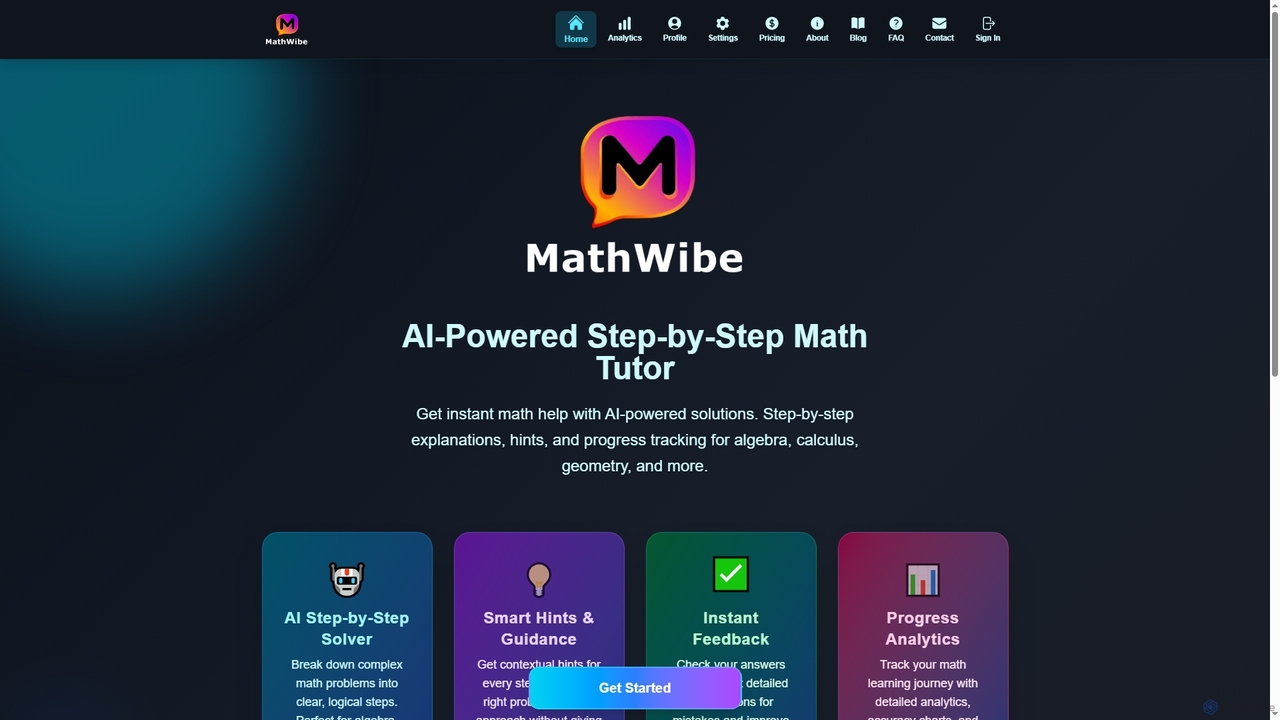
MathWibe is an AI-powered step-by-step math tutor designed to provide instant, interactive help for students. It breaks down …

2.4K

About Study Tools

Study Tools are AI-powered applications specifically designed to enhance learning efficiency and effectiveness across various academic and professional domains. Leveraging advanced technologies like natural language processing, machine learning, and adaptive algorithms, these tools offer personalized study aids, content summarization, interactive practice, and intelligent feedback. They empower students, educators, and lifelong learners to optimize their study habits, deepen comprehension, and achieve academic or professional goals within the broader 'Learning' category.

Core Features

  • Content Summarization: Automatically condenses long texts, articles, or lecture notes into key points and summaries, saving reading time.
  • Flashcard & Quiz Generation: Creates customized flashcards and practice quizzes from study materials, facilitating active recall and self-assessment.
  • Personalized Learning Paths: Adapts content and exercises based on individual performance, identifying strengths and weaknesses to guide study focus.
  • Note Organization & Management: Helps structure, categorize, and retrieve digital notes efficiently, often with AI-driven tagging and search.
  • Plagiarism Detection: Scans written work for originality, comparing it against vast databases to identify potential instances of plagiarism.

Applicable Scenarios

AI Study Tools are invaluable for students preparing for exams, researchers synthesizing large volumes of information, and professionals seeking to acquire new skills. They assist in streamlining revision processes, understanding complex topics more quickly, and ensuring academic integrity in written assignments. Educators also utilize them to create adaptive learning materials and provide tailored support to diverse student needs.

How to Choose

When selecting an AI Study Tool, consider its core functionalities (e.g., summarization, quizzing, note-taking) and how well they align with your primary learning needs. Evaluate its integration capabilities with existing platforms (e.g., LMS, cloud storage) and the accuracy of its AI algorithms. Assess the user interface for ease of use and intuitiveness, and compare pricing models to ensure it fits your budget while offering robust features and reliable performance.

Study ToolsUse Cases

1

Personalized Exam Preparation

A university student preparing for a complex history exam can use an AI study tool to generate a personalized study plan. The tool analyzes their past performance, identifies weak areas, and creates custom quizzes and flashcards focusing on those topics, ensuring efficient and targeted revision.

2

Personalized Exam Preparation & Practice

A university student preparing for a challenging final exam uses an AI study tool to analyze their past performance and identify weak areas. The tool then generates a personalized study schedule, provides adaptive practice questions focusing on those specific topics, and offers detailed, step-by-step explanations for every answer, ensuring comprehensive understanding and targeted revision.

3

Automating Lecture Note Summarization

A university student attending multiple lectures daily can use an AI study tool to automatically summarize their extensive lecture notes. By inputting transcribed audio or text notes, the tool quickly extracts key concepts and creates concise summaries, allowing the student to review essential information efficiently before exams and save hours of manual summarization.

4

Efficient Research Paper Summarization

A researcher needing to review dozens of academic papers for a literature review can leverage an AI study tool to automatically summarize key findings, methodologies, and conclusions from each document. This drastically reduces reading time, allowing for quicker synthesis of information and identification of relevant sources.

5

Efficient Academic Research & Summarization

A graduate student conducting a literature review needs to process dozens of academic papers quickly. They upload the papers to an AI study tool, which automatically summarizes each document, extracts key arguments, methodologies, and findings, and organizes them into a searchable database. This significantly reduces reading time and helps in synthesizing information for their thesis.

6

Generating Adaptive Practice Quizzes

An educator preparing students for a standardized test can leverage an AI study tool to generate adaptive practice quizzes. The tool analyzes student performance on initial questions, then tailors subsequent questions to target areas of weakness, providing a personalized learning experience that maximizes study time and improves retention for each individual student.

7

Interactive Language Learning Practice

An individual learning Spanish can utilize an AI study tool for interactive practice. The tool can simulate conversations, correct grammar and pronunciation in real-time, and generate vocabulary exercises tailored to their proficiency level, accelerating language acquisition beyond traditional methods.

8

Interactive Language Learning & Conversation Practice

An individual learning Spanish uses an AI language tutor to improve their conversational fluency. The AI engages them in realistic dialogues, corrects grammar and pronunciation in real-time, and provides vocabulary suggestions. This immersive practice environment helps overcome speaking anxiety and accelerates language acquisition beyond traditional textbook methods.

9

Enhancing Research with AI-Powered Note-Taking

A researcher working on a complex project needs to synthesize information from dozens of academic papers. An AI study tool with advanced note-taking and organization features allows them to upload documents, automatically extract key arguments, cross-reference concepts, and generate a structured knowledge base. This significantly reduces the time spent on manual data extraction and helps identify connections across diverse sources.

10

Automated Lecture Note Organization

A student attending multiple lectures can feed their raw notes or lecture transcripts into an AI study tool. The tool then automatically organizes the content, identifies key concepts, creates hierarchical outlines, and even generates potential exam questions, transforming disorganized notes into structured study material.

11

Automated Lecture Note-Taking & Organization

During a complex lecture, a student uses an AI note-taking tool to record the audio. The tool transcribes the lecture, identifies key concepts, generates a concise summary, and even organizes the information into a mind map or bullet points. This allows the student to focus on understanding the content rather than frantically writing, and provides perfectly organized notes for later review.

12

Creating Personalized Language Learning Flashcards

An individual learning a new language can use an AI study tool to create personalized flashcards from any text they encounter, such as articles, books, or even social media posts. The tool identifies unfamiliar vocabulary, generates definitions, example sentences, and even pronunciation guides, turning everyday content into a dynamic and highly relevant language learning resource, accelerating vocabulary acquisition.

13

Concept Clarification and Tutoring

When encountering a difficult concept in mathematics or science, a high school student can use an AI study tool as an instant tutor. They can ask specific questions, receive step-by-step explanations, and work through practice problems with immediate, detailed feedback, bridging knowledge gaps effectively.

14

Skill Development & Certification for Professionals

A marketing professional wants to acquire new data analytics skills for career advancement. They enroll in an AI-powered learning platform that offers adaptive modules, real-world case studies, and immediate feedback on their progress. The AI identifies areas where they struggle and provides additional resources or exercises, ensuring mastery of complex concepts required for certification.

15

Ensuring Academic Integrity with Plagiarism Detection

A student submitting a research paper needs to ensure its originality. An AI study tool with plagiarism detection capabilities allows them to upload their draft and receive a detailed report highlighting any similarities with existing online or academic sources. This helps the student identify and properly cite sources, preventing unintentional plagiarism and upholding academic standards before submission.

16

Creating Engaging Educational Content

An educator developing new course material can use AI study tools to generate diverse examples, create interactive exercises, or even draft initial versions of lesson plans. This helps in diversifying teaching methods and producing more engaging and adaptive content for students, saving significant preparation time.

17

Essay Writing Assistance & Plagiarism Checking

A high school student is drafting an essay and needs help refining their arguments and ensuring originality. An AI study tool assists by providing grammar and style suggestions, checking for logical flow, and offering constructive feedback on sentence structure. Crucially, it also performs a comprehensive plagiarism check, helping the student maintain academic integrity and improve their writing quality.

18

Streamlining Professional Development and Skill Acquisition

A professional seeking to upskill in a new technical domain can use AI study tools to accelerate their learning. By feeding the tool course materials, technical documentation, or industry articles, they can generate custom summaries, create targeted quizzes on complex concepts, and organize vast amounts of information into digestible learning modules. This facilitates rapid comprehension and retention of new skills, crucial for career advancement.

Study ToolsFrequently Asked Questions