Appraiseit
Appraiseit is an AI-powered tool for vintage appraisals, helping users discover the true value and history of their …
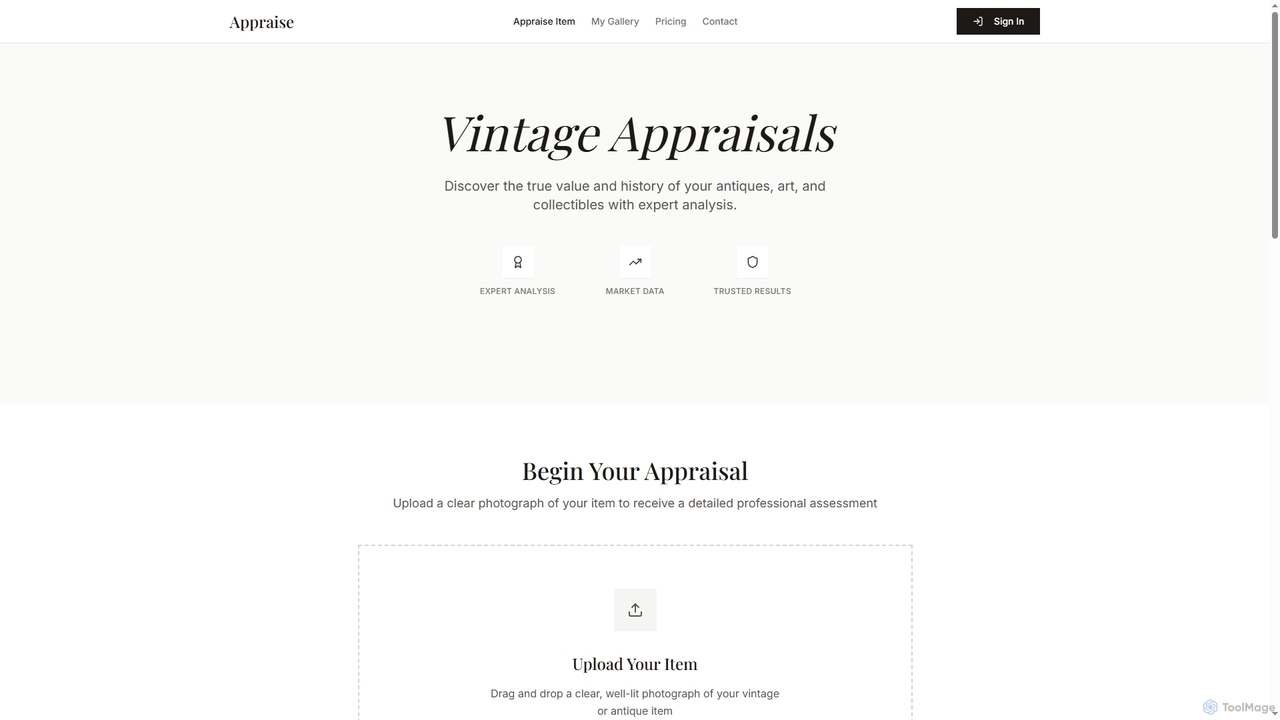
Appraiseit is an AI-powered tool for vintage appraisals, helping users discover the true value and history of their antiques, art, and collectibles. By simply uploading a photo, users receive expert analysis, market data, and instant value estimates across various categories like furniture, fine art, ceramics, and more.
About Collecting
Collecting AI tools are intelligent applications designed to assist individuals in discovering, acquiring, organizing, and managing various forms of personal collections, data, or information. Leveraging advanced AI capabilities like image recognition, natural language processing, and data extraction, these tools streamline the often time-consuming process of curating items related to hobbies, interests, or daily life. They provide a structured and often automated approach to personal archiving, inventory management, and content curation, enhancing the user's ability to maintain and enjoy their diverse collections within the broader lifestyle context.
Core Features
- Automated Item Recognition: Utilizes AI to identify and log physical items from photos or digital content from various sources, such as books, coins, art, or articles.
- Smart Categorization & Tagging: Automatically sorts collected items into logical categories and applies relevant tags, making discovery and organization effortless.
- Personalized Discovery & Recommendations: Analyzes existing collections to suggest new items, related content, or potential additions based on user preferences.
- Data Extraction & Enrichment: Extracts key information (e.g., author, date, value, specifications) from collected items or web sources to enrich collection records.
- Inventory & Value Tracking: Helps users maintain detailed inventories, monitor item locations, track acquisition history, and estimate collection value over time.
Use Cases
Hobbyists can use these tools to meticulously catalog rare stamps or comic books, automatically adding details and tracking market values. Digital content creators benefit by curating vast libraries of inspirational images, articles, and videos, with AI assisting in tagging and cross-referencing. Individuals can also manage personal archives of family photos or important documents, ensuring easy retrieval and secure storage.
How to Choose
When selecting an AI collecting tool, consider the primary type of items you wish to collect—physical, digital, or both—and ensure the tool's AI capabilities align with your needs for recognition and categorization. Evaluate its integration options with other platforms you use, such as cloud storage or social media. Assess the user interface for ease of use and the level of customization offered for your specific collection types. Finally, review its data privacy policies, especially if collecting sensitive personal information.

CollectingUse Cases
Managing a Vintage Coin Collection
A numismatist can use an AI collecting tool to streamline the cataloging of their vintage coin collection. By simply taking photos of each coin, the AI automatically identifies its origin, year, mint mark, and estimated value, then adds it to a digital inventory. This saves hours of manual research and data entry, allowing the collector to easily track their collection's growth and market worth.
Curating Digital Art Inspiration for Designers
A graphic designer frequently browses online platforms for art and design inspiration. An AI collecting tool allows them to quickly save images, articles, and videos from various sources. The AI then automatically categorizes these assets by style, color palette, or theme, and suggests related content, building a rich, organized library of inspiration for future projects without manual sorting.
Organizing Personal Recipe Archives
A home cook often finds new recipes online, in magazines, or from family notes. An AI collecting tool can extract recipes from web pages, scan handwritten notes, or even transcribe spoken instructions. It then categorizes them by cuisine, ingredients, or meal type, making it easy to search for specific dishes, plan meals, and avoid duplicate entries in their personal culinary library.
Tracking a Personal Book Library
An avid reader with a large personal library can utilize an AI collecting tool to manage their books. By scanning the ISBN or cover of each book, the AI automatically retrieves details like author, genre, publication date, and summaries, adding them to a digital catalog. This helps track borrowed books, discover new titles based on reading history, and visualize their entire collection.
Building a Research Database for Academic Projects
A university student or researcher needs to gather and organize vast amounts of information for their projects. An AI collecting tool can automatically extract key information, citations, and summaries from academic papers, web articles, and PDFs. It then tags and cross-references these resources, creating a searchable and organized research database that significantly reduces time spent on literature review and citation management.
Monitoring Fashion Trends for Personal Style
A fashion enthusiast wants to keep track of emerging trends and build a curated personal style guide. An AI collecting tool allows them to save images of outfits, accessories, and runway looks from social media and fashion blogs. The AI analyzes these images to identify recurring patterns, colors, and styles, helping the user understand trends and make informed decisions for their wardrobe.