Cupiee
Cupiee is an emotional AI companion designed to provide 24/7 support and improve mental wellness. Leveraging emotion-aware AI …
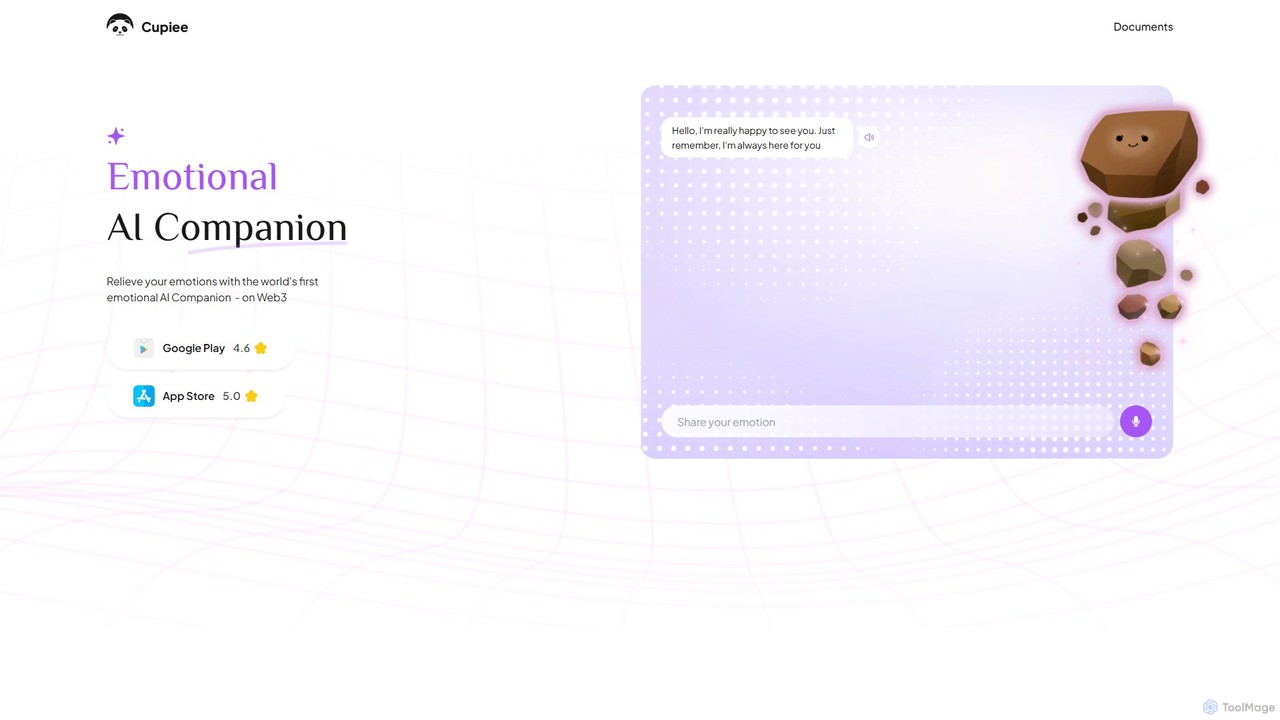
Cupiee is an emotional AI companion designed to provide 24/7 support and improve mental wellness. Leveraging emotion-aware AI and blockchain security, it offers empathetic conversations, stress and anxiety reduction, and a safe space to share feelings. Cupiee learns and grows with you, providing a personalized, non-judgmental friend to help you navigate life's emotional challenges.
About Companion
Companion AI tools are intelligent software designed to provide emotional support, interactive engagement, and personalized companionship. Leveraging advanced natural language processing and emotional AI, these tools simulate human-like conversation and understanding. They offer a unique form of digital interaction, helping users combat loneliness, practice social skills, or simply engage in meaningful dialogue, thereby enhancing overall mental well-being within the broader lifestyle context.
Core Features
- Conversational AI: Engages in natural, human-like dialogue and understanding.
- Emotional Intelligence: Detects and responds appropriately to user emotions and moods.
- Personalized Interaction: Adapts conversations and responses based on user preferences and history.
- Memory & Context: Remembers past interactions to maintain continuity and depth in conversations.
- Task Assistance: Provides gentle reminders, goal tracking, or simple organizational support.
Use Cases
Individuals seeking a non-judgmental listener for emotional processing, seniors desiring regular social interaction to alleviate loneliness, or users looking for a safe space to practice social skills can all benefit. These tools also serve as a consistent presence for mental well-being check-ins, offering support and encouragement tailored to personal needs.
How to Choose
When selecting an AI Companion, consider its emotional responsiveness and depth of conversation, ensuring it can genuinely understand and adapt. Evaluate its personalization capabilities and memory function for a truly continuous and evolving interaction. Prioritize tools with robust privacy and data security measures, and check for language support and integration with other daily applications for seamless use.
CompanionUse Cases
Emotional Support & Active Listening
Individuals experiencing stress or loneliness can confide in an AI companion, receiving non-judgmental responses and empathetic feedback. The AI helps process thoughts and feelings, offering a safe space for expression without fear of social repercussions, contributing to improved mental clarity and emotional regulation.
Elderly Companionship & Engagement
For seniors living alone, AI companions provide regular social interaction, reducing feelings of isolation. They can engage in conversations, share stories, offer gentle reminders for medication or appointments, and even play cognitive games, fostering mental stimulation and a sense of connection.
Language Practice Partner
Language learners can use AI companions as a consistent, patient practice partner. The AI provides real-time conversational practice, corrects grammar, expands vocabulary, and simulates various dialogue scenarios, accelerating fluency and building confidence in a new language without pressure.
Creative Brainstorming & Idea Generation
Content creators, writers, or artists can leverage AI companions as a sounding board for new ideas. The AI can ask probing questions, offer different perspectives, help organize thoughts, and even generate creative prompts, stimulating innovation and overcoming creative blocks in a collaborative digital environment.
Daily Routine & Habit Reinforcement
Users aiming to build new habits or maintain routines can rely on AI companions for personalized encouragement and reminders. The AI tracks progress, offers motivational messages, and provides gentle nudges for tasks like exercise, meditation, or hydration, fostering consistency and accountability towards personal goals.
Social Skill Development & Role-Playing
Individuals looking to improve their social interactions or prepare for specific social events can practice with an AI companion. The AI can simulate various social scenarios, provide feedback on communication styles, and help rehearse difficult conversations, building confidence and refining interpersonal skills in a low-stakes environment.