randommoviegenerator
An AI-powered tool that provides random movie suggestions to help you instantly find your next film. Filter by …
An AI-powered tool that provides random movie suggestions to help you instantly find your next film. Filter by genre, year, and rating to get personalized recommendations and discover hidden gems, eliminating decision fatigue and endless scrolling.
Liffery
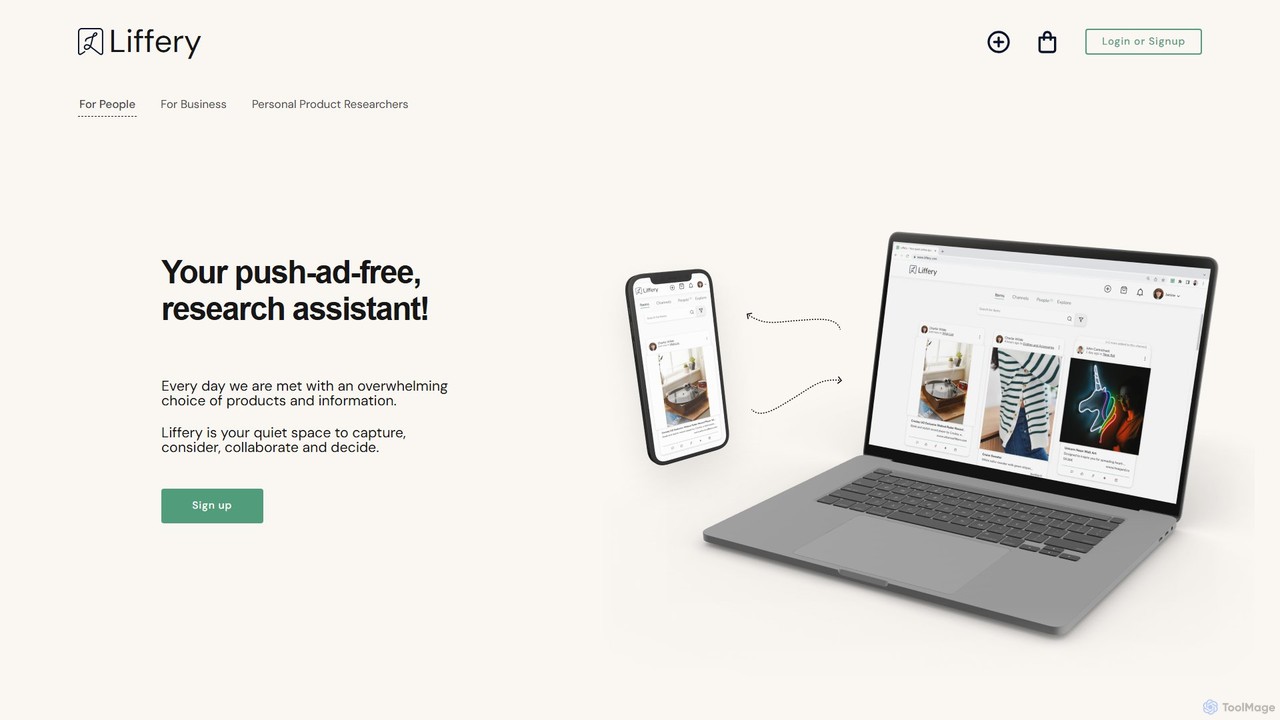
Liffery is your quiet, ad-free online space and AI-powered research assistant designed to streamline your shopping and decision-making …
Liffery is your quiet, ad-free online space and AI-powered research assistant designed to streamline your shopping and decision-making process. Capture products from anywhere, compare them with powerful tools, and collaborate with others to make the best choices, all without the noise of unsolicited ads.
About Decision Making
AI Decision Making tools are applications designed to help users analyze complex personal choices and arrive at optimal conclusions. These tools leverage algorithms, data analysis, and preference modeling to structure information and clarify options within a lifestyle context. They transform subjective dilemmas into objective frameworks, making it easier to evaluate trade-offs for everyday or significant life events. This approach provides clarity and confidence when facing choices related to careers, purchases, or personal planning.
Core Features
- Criteria Weighting: Assign importance levels to different factors (e.g., price, quality, convenience) to reflect personal priorities.
- Pros & Cons Analysis: Provides a structured format for listing and evaluating the arguments for and against each option.
- Recommendation Engines: Suggest options based on user-provided preferences, historical data, and context.
- Outcome Simulation: Helps visualize the potential consequences or results of different choices based on input variables.
- Data-Driven Insights: Analyzes user data or external information to present objective insights that support a decision.
Use Cases
These tools are ideal for individuals facing significant personal choices, such as students selecting a university, professionals evaluating job offers, or families planning a major purchase like a car or house. They are also useful for everyday decisions, like choosing a travel destination, picking a new gadget, or even deciding on a fitness plan by comparing different programs based on personal goals and constraints.
How to Choose
When selecting an AI Decision Making tool, consider the complexity of decisions you typically face. Look for a tool with a user-friendly interface that allows for easy input of criteria and options. Evaluate its analytical capabilities—does it support weighted scoring, side-by-side comparisons, or data visualization? Also, consider its integration with other apps or data sources and review its privacy policy to ensure your personal data is handled securely.

Decision MakingUse Cases
Evaluating Competing Job Offers
A software developer receives two job offers. Using an AI decision-making tool, they input key criteria: salary, benefits, commute time, career growth potential, and work-life balance. They assign a weight to each criterion based on personal priority, for instance, giving 'career growth' a higher weight than 'commute time'. The tool then calculates a weighted score for each offer, presenting a side-by-side comparison chart. This objective analysis helps the developer see beyond the base salary and make a more informed career choice that aligns with their long-term goals.
Choosing a University or College
A high school student is deciding between three universities. They use a decision-making tool to compare them based on factors like tuition fees, program ranking, location, campus life, and scholarship opportunities. The student and their parents can collaboratively input data and adjust the importance of each factor. The tool visualizes the comparison, perhaps showing that while one university is more expensive, it offers significantly better program ranking and career prospects. This structured process removes emotional bias and helps the family make a rational, data-supported decision for a major life investment.
Making a Major Purchase Decision
A couple is deciding which car to buy. They are torn between an electric vehicle (EV) and a hybrid. They use an AI tool to list their priorities: purchase price, long-term fuel/energy cost, maintenance, environmental impact, and cargo space. The tool can pull in real-time data for fuel prices and electricity rates in their area. After inputting specs for two specific models, the tool generates a 5-year total cost of ownership projection and a comparative score. This data-driven approach helps them move past marketing claims and make a financially and environmentally sound decision.
Planning a Group Vacation
A group of friends wants to plan a trip, but they have conflicting preferences for destination, budget, and activities. They use a collaborative decision-making tool where each person can input their preferences and constraints. One person prefers a relaxing beach vacation, while another wants an adventurous mountain trip. The tool analyzes all inputs and suggests compromise destinations that offer a mix of both, like a coastal region with nearby hiking trails. It can also help create a budget breakdown, showing how different choices impact the overall cost per person, facilitating a fair and transparent planning process.
Optimizing Personal Health and Fitness Choices
An individual wants to start a new fitness regimen but is overwhelmed by the options: CrossFit, yoga, running, or a traditional gym. Using a decision-making app, they rate factors like cost, time commitment per week, risk of injury, and alignment with their goal (e.g., weight loss vs. muscle gain). The app provides a ranked list of options tailored to their profile. It might suggest that given their limited time and goal of flexibility, yoga is a better fit than the high-intensity commitment of CrossFit. This helps the user choose a sustainable plan they are more likely to stick with.
Selecting the Right Technology or Gadget
A freelance designer needs a new laptop and must choose between a MacBook Pro and a high-end Windows laptop. They use a decision tool to compare them on specific, weighted criteria: price, performance (CPU/GPU), screen quality, operating system preference, and software compatibility. The tool can pull in benchmark scores and user reviews for performance data. The final analysis might reveal that while the MacBook has a better screen, the Windows laptop offers superior performance for the same price, making it the logical choice for their processor-intensive design work. This prevents a decision based solely on brand loyalty.