moveme.tv
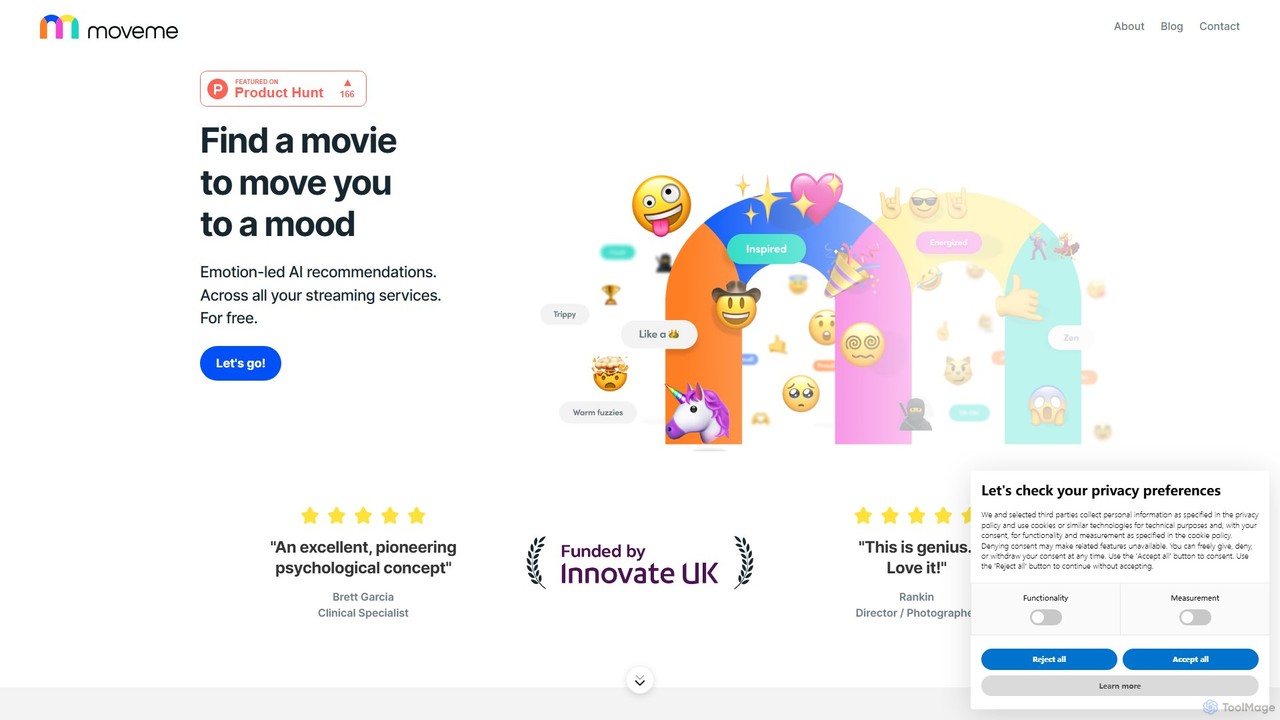
moveme.tv is an AI-powered movie recommendation engine that helps you discover films based on your mood. Instead of …
moveme.tv is an AI-powered movie recommendation engine that helps you discover films based on your mood. Instead of traditional genres, you use emotions or emojis to find the perfect movie to watch from over 500 streaming services across 118 countries, completely for free.
About Discovery
AI Discovery tools are applications designed to help users find new activities, content, and interests tailored to their personal preferences. These tools utilize machine learning algorithms to analyze user behavior, stated tastes, and contextual data to generate personalized recommendations. Their primary value lies in breaking routine, overcoming decision fatigue, and introducing users to novel experiences that genuinely align with their lifestyle. As a part of the Lifestyle category, they focus specifically on expanding personal horizons rather than just managing existing habits.
Core Features
- Personalized Recommendation Engine: Analyzes user data to suggest highly relevant products, places, media, or hobbies.
- Interest & Taste Profiling: Creates a dynamic profile of a user's preferences to refine future suggestions.
- Serendipity Algorithms: Intentionally introduces novel yet potentially interesting options to broaden a user's scope of interest.
- Context-Aware Suggestions: Recommends activities or content based on real-time factors like location, time, or weather.
Use Cases
These tools are ideal for individuals seeking to find a new hobby, plan a unique trip, or discover niche music and films. They are also valuable for people moving to a new city who want to find local spots and communities, or anyone feeling stuck in a content "echo chamber" and wishing to explore diverse perspectives.
How to Choose
When selecting an AI Discovery tool, consider the scope of its database—does it cover multiple areas like travel, food, and media, or specialize in one? Evaluate the quality and novelty of its recommendations. Review its data privacy policy to understand how your information is used. Finally, assess the user interface for an intuitive and enjoyable discovery process.

DiscoveryUse Cases
Finding a New Weekend Hobby
A professional feeling stuck in a routine wants to find a new hobby. They input their current interests, such as 'reading fantasy novels' and 'hiking', into an AI Discovery tool. The AI analyzes these inputs and suggests related but novel activities like 'geocaching' (combining hiking and treasure hunting) or 'learning a fictional language' from their favorite books. The tool provides starter guides, links to local communities, and suggests initial equipment, reducing the barrier to entry and helping the user start a fulfilling new pastime.
Planning a Unique Spontaneous Trip
A traveler wants to plan a last-minute getaway but is tired of the usual tourist destinations. Using an AI Discovery tool, they specify a budget, travel style (e.g., 'adventure', 'relaxation'), and available dates. Instead of suggesting popular cities, the AI analyzes their profile and proposes a unique itinerary to a lesser-known destination that matches their preferences, such as a hiking trip in the Picos de Europa mountains instead of the Alps, or exploring ancient ruins in Sicily instead of Rome. The tool generates a complete plan including flights, accommodations, and activities.
Discovering Niche Music and Artists
A music enthusiast is tired of mainstream playlists that recycle the same popular songs. They use an AI discovery app that connects to their streaming service history. The AI analyzes not just genres, but also specific musical attributes like tempo, instrumentation, and vocal style. It then generates a highly personalized playlist featuring obscure artists, emerging genres, and international music that matches their unique taste profile, helping them discover their next favorite band long before they become popular.
Personalized Restaurant & Cafe Exploration
A foodie moving to a new city wants to find local dining spots that truly match their taste. Instead of relying on generic rating websites, they use an AI discovery tool. They input detailed preferences like 'loves spicy Szechuan food', 'prefers quiet ambiance for reading', and 'looks for artisanal coffee'. The AI cross-references this with local listings, reviews, and even blog posts to recommend hidden gems, such as a small, family-run Szechuan restaurant and a quiet bookstore cafe, that perfectly fit the user's specific, multi-faceted criteria.
Curating a Personal Learning Path
A lifelong learner wants to expand their knowledge but feels overwhelmed by the vast amount of online content. They use an AI discovery platform, inputting their career goals (e.g., 'transition to data science') and personal interests ('history of philosophy'). The AI scans articles, podcasts, academic papers, and online courses, then curates a personalized, structured learning path. It suggests a sequence of content, starting with foundational concepts and progressing to advanced topics, helping the user learn efficiently without getting lost in irrelevant information.
Breaking Out of a Content Echo Chamber
A user is concerned that their social media and news feeds only show them content that confirms their existing beliefs. They use an AI discovery tool designed to promote intellectual diversity. The tool analyzes their typical content consumption and intentionally surfaces well-researched articles, thoughtful opinion pieces, and credible sources from different perspectives. It doesn't show opposing views for the sake of conflict, but rather to provide a more nuanced and comprehensive understanding of complex topics, helping the user broaden their worldview in a constructive way.