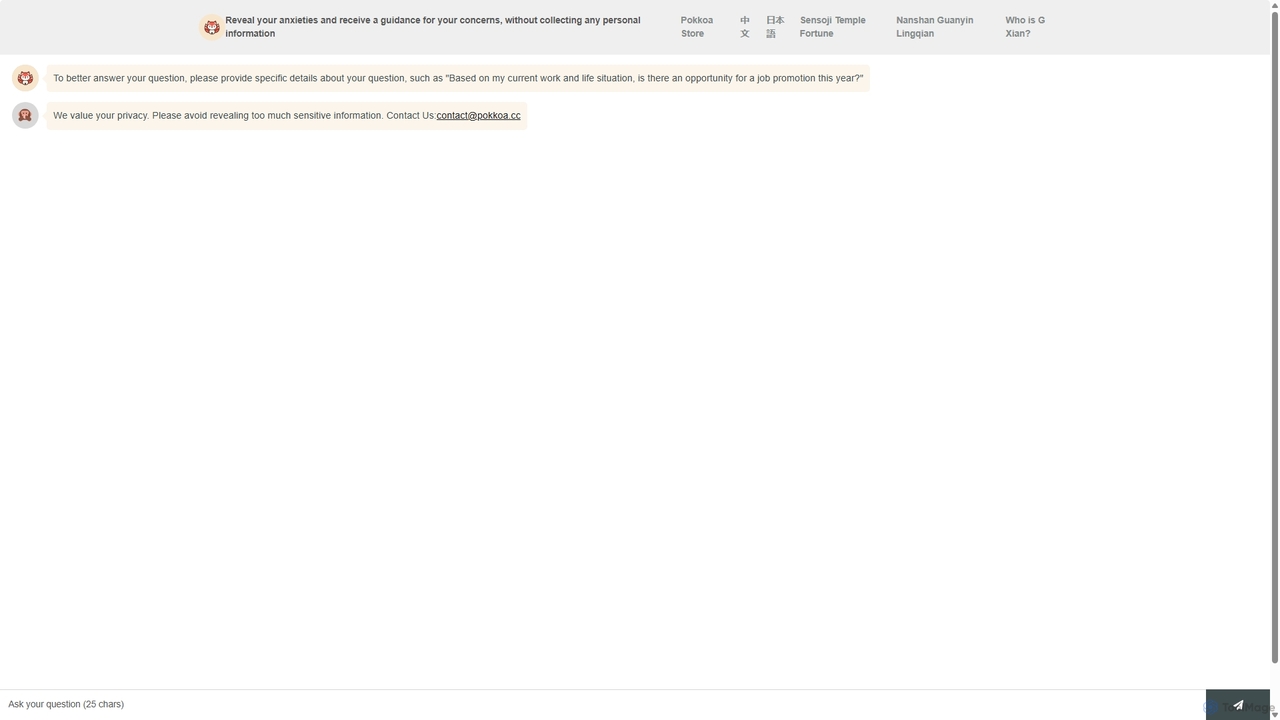
Divination AI tools are a category of AI-powered applications designed to offer insights, predictions, and guidance based on various traditional and modern interpretive methods. These tools leverage advanced algorithms, natural language processing, and data analysis to simulate or augment practices like astrology, tarot, numerology, and other forms of fortune-telling. They provide personalized readings, future trend analysis, and decision-making support, often integrating user input to generate tailored interpretations within the broader lifestyle context.
Core Features
- Personalized Readings: Generate unique insights and predictions based on user-specific data like birth dates, questions, or choices.
- Pattern Recognition: Analyze complex data sets, such as astrological charts or numerological sequences, to identify meaningful patterns.
- Predictive Modeling: Utilize machine learning to offer probabilistic forecasts or potential outcomes for future events.
- Interactive Interfaces: Provide engaging user experiences, simulating traditional divination methods like virtual tarot card draws or oracle interpretations.
- Knowledge Integration: Incorporate vast databases of esoteric knowledge, mythological archetypes, and historical interpretations.
Applicable Scenarios
Individuals seeking daily guidance or self-reflection often use these tools for personal growth and understanding. Content creators and writers might leverage AI divination for creative inspiration, generating plot ideas, character backstories, or thematic elements for their projects. Additionally, users facing significant life decisions can consult these tools for alternative perspectives and potential outcomes, helping them explore various paths within their lifestyle choices.
How to Choose
When selecting an AI divination tool, consider the specific divination method it supports (e.g., astrology, tarot, numerology) and its depth of interpretation. Evaluate the tool's data privacy policies, especially if personal information is required for readings. Look for customization options that allow you to tailor the experience or input specific questions. Finally, assess the clarity and coherence of the generated readings, ensuring they provide actionable or thought-provoking insights rather than generic statements.