ToolMage
Sign in

Best 2 Dream Interpretation AI tools for Lifestyle

Popular Dream Interpretation AI tools in Lifestyle include Dream Oracles and Tabirim, helping you work more efficiently.

Dream Oracles
Freemium

Dream Oracles

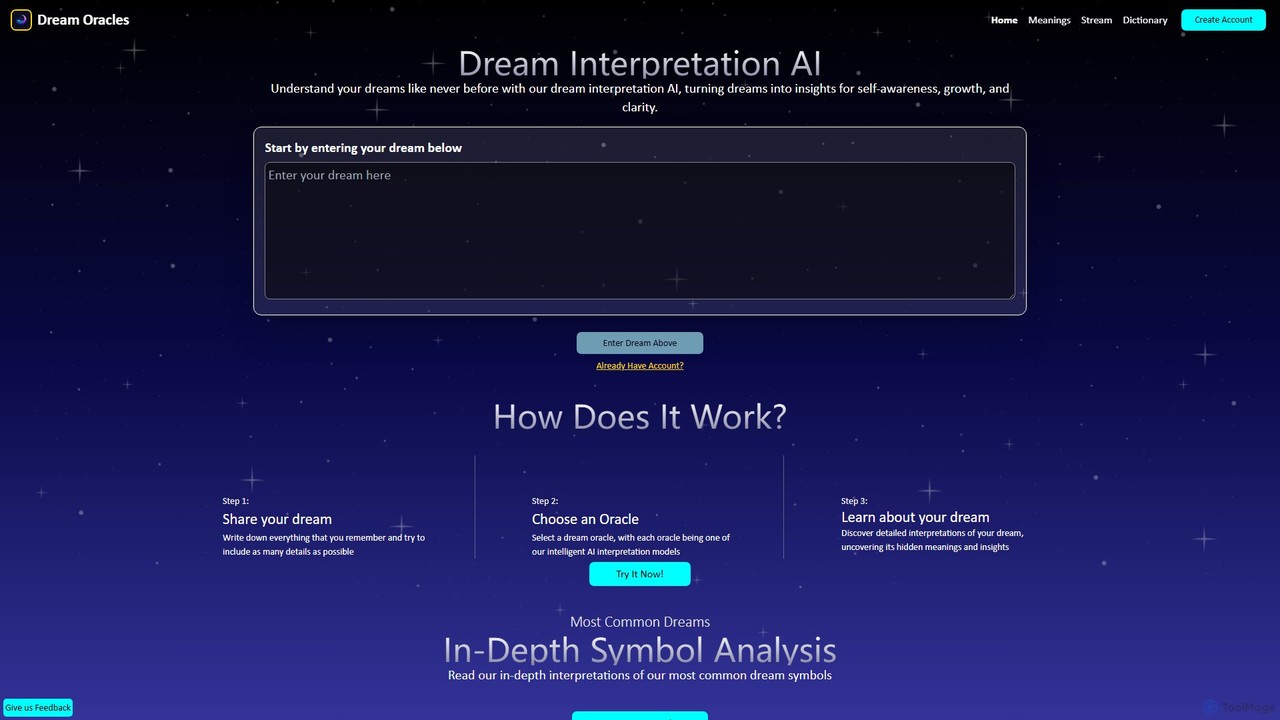
Dream Oracles is an AI-powered platform for dream interpretation. It helps users understand the hidden meanings of their dreams for self-awareness and personal growth. The tool features a detailed dream analysis engine, a comprehensive symbol dictionary, and a community for sharing experiences.

Mental Health
Visits 7.1KFavorites 109Likes 115
Tabirim
Free

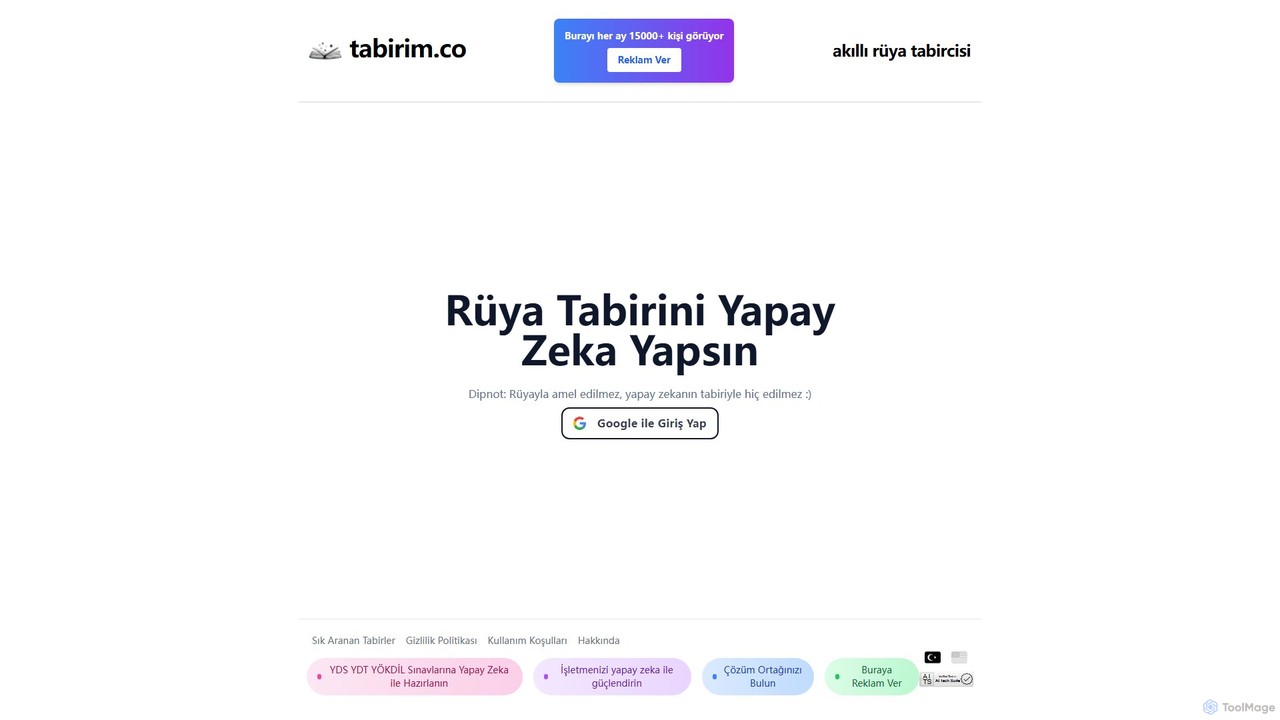
Tabirim

Tabirim is an AI-powered dream interpretation tool that analyzes your dreams to provide detailed meanings and insights. Simply describe your dream, and the AI will interpret the symbols, actions, and emotions to reveal potential subconscious messages. It's designed for personal curiosity and self-reflection.

Astrology & Mysticism
Visits 6.1KFavorites 154Likes 155

About Dream Interpretation

AI Dream Interpretation tools are applications that analyze dream narratives to uncover potential meanings and psychological insights. Using Natural Language Processing (NLP) and symbolic databases, these tools deconstruct the stories, symbols, and emotions within a dream. They offer a private, accessible way for users to explore their subconscious, track recurring themes, and gain self-awareness. Unlike static dream dictionaries, AI interpreters can understand context, providing more nuanced analyses based on established psychological theories and vast datasets.

Core Features

  • Natural Language Analysis: Processes detailed dream descriptions written in everyday language to identify key elements.
  • Symbol & Theme Recognition: Automatically detects recurring symbols, characters, actions, and overarching themes.
  • Emotional Sentiment Analysis: Gauges the underlying emotional tone of the dream, such as fear, joy, or confusion.
  • Psychological Frameworks: Offers interpretations based on various models, including Jungian, Freudian, or modern cognitive approaches.
  • Secure Dream Journaling: Provides a private space to log, search, and track dream patterns over time.

Applicable Scenarios

These tools are primarily used by individuals interested in personal growth, psychology, and self-exploration. Writers and artists also use them to find creative inspiration from their subconscious. Additionally, they are helpful for people experiencing recurring or vivid dreams who seek to understand potential underlying messages or emotional states.

Selection Criteria

When choosing an AI Dream Interpretation tool, consider its privacy policy to ensure your sensitive data is secure. Evaluate the primary psychological model it uses (e.g., Jungian, data-driven) to see if it aligns with your interests. Assess the quality of its journaling and pattern-tracking features. Finally, look for a simple, calming user interface that makes it easy to record dreams upon waking.

Dream Interpretation use cases

1

Understanding a Recurring Nightmare

An individual experiencing anxiety repeatedly dreams of being chased. They use an AI dream interpreter to input the full narrative, including the setting, the pursuer, and their feelings of panic. The AI analyzes these elements, identifying core themes of avoidance and unresolved conflict. The interpretation suggests a possible link to real-life stressors, providing a structured starting point for self-reflection and helping the user understand the emotional roots of their recurring dream without needing immediate professional consultation.

2

Exploring Personal Growth Through Dreams

A user focused on self-improvement uses an AI tool as a daily journal. Each morning, they record their dreams and use the app's tagging feature to note recurring symbols like 'flying' or 'water'. Over several months, the tool's analytics reveal a pattern: dreams of flying correlate with periods of high confidence at work. This data-driven insight helps them connect their inner world with their waking life, reinforcing positive behaviors and providing a tangible measure of their personal growth journey.

3

Finding Creative Inspiration for a Story

A novelist is experiencing writer's block and feels their plot is becoming predictable. They recall a bizarre dream about a clock melting in a desert. They input this vivid imagery into an AI interpreter. The tool analyzes the symbols—melting clock for distorted time, desert for creative emptiness—and provides interpretations related to surrealism and the pressure of deadlines. This analysis sparks a new, surreal direction for their story, helping them break through their creative block with fresh, unconventional ideas.

4

Deciphering a Specific Dream Symbol

A user dreams of a key but doesn't know what it represents. Instead of a generic dictionary definition, they describe the context to an AI tool: 'I found a rusty key in my childhood home's attic.' The AI considers all elements: the 'key' as a symbol of solutions or access, 'rusty' suggesting neglect or the past, and 'childhood home's attic' pointing to forgotten memories. The interpretation suggests they might be rediscovering a forgotten part of themselves or an old solution to a current problem, offering a far more personalized insight than a simple keyword lookup.

5

Tracking Emotional Well-being via Dreams

A person wants to monitor their mental health proactively. They use an AI dream journal to log their dreams and rate their mood upon waking. The application's sentiment analysis feature automatically categorizes dreams as positive, negative, or neutral. After a month, the dashboard shows a clear correlation: a higher frequency of negative-sentiment dreams occurs during stressful work weeks. This objective data empowers the user to recognize the impact of stress and implement wellness practices like meditation or exercise before burnout occurs.

6

Casual Curiosity and Entertainment

Someone has a particularly strange or funny dream, such as flying on a giant slice of pizza. They are not seeking deep psychological analysis but are simply curious. They quickly type the main points into an AI dream interpreter. The tool provides a lighthearted yet insightful interpretation, combining the symbolism of flight (freedom, ambition) with food (nurturing, satisfaction). The result is an entertaining and shareable piece of content that satisfies their curiosity and serves as a fun conversation starter with friends.

Dream Interpretation FAQ

What are AI Dream Interpretation tools?

AI Dream Interpretation tools are software applications that use artificial intelligence, particularly natural language processing (NLP), to analyze the text of a user's dream description. They identify key symbols, actions, characters, and emotions to provide potential interpretations. Unlike a static dream dictionary that gives one meaning for a word, these AI tools analyze the context and relationships between elements, offering a more personalized and nuanced understanding based on psychological theories and data patterns. They are primarily used for self-reflection and personal insight.

How to choose the right AI dream interpreter?

Choosing a suitable AI dream interpreter involves considering several factors:

  • Privacy Policy: Since dream content is highly personal, ensure the tool has a strong, transparent privacy policy and data encryption.
  • Interpretation Source: Check if the tool's interpretations are based on specific psychological schools (like Jungian or Freudian), spiritual beliefs, or a purely data-driven model. Choose one that aligns with your perspective.
  • Features: Look for valuable features beyond basic interpretation, such as a secure journal, the ability to tag dreams, and analytics to track patterns over time.
  • User Interface: The app should be easy to navigate, especially for recording dreams quickly upon waking when you might be groggy.
Are AI dream interpretations accurate?

The 'accuracy' of dream interpretation, whether by AI or humans, is subjective as it's not an exact science. AI tools do not provide definitive truths but rather potential meanings based on recognized psychological symbols, cultural archetypes, and data patterns. Their strength lies in identifying themes and connections that a person might overlook. The most valuable interpretations often come when the user combines the AI's analysis with their own personal context and intuition. Therefore, they are best used as a tool for prompting self-reflection rather than as a source of absolute answers.

What's the difference between an AI interpreter and a dream dictionary?

The primary difference is context. A traditional dream dictionary provides a fixed, one-to-one meaning for a symbol (e.g., 'snake = enemy'). It ignores the context of the dream. An AI dream interpreter, however, analyzes the entire narrative. It considers how the symbol appeared, the dreamer's emotions towards it, and its interaction with other dream elements. For example, a friendly snake in a dream would be interpreted differently from a threatening one, a distinction a simple dictionary cannot make. AI provides a dynamic, context-aware analysis, while a dictionary offers a static, generalized one.

Who can benefit from using AI Dream Interpretation tools?

A wide range of people can find value in these tools. This includes:

  • Individuals interested in self-discovery: Those curious about psychology, mindfulness, and understanding their inner workings.
  • Creative professionals: Writers, artists, and designers who can use dream analysis to spark new ideas and overcome creative blocks.
  • People tracking mental well-being: Using dream journals to notice patterns in stress, anxiety, or emotional shifts.
  • Anyone with curiosity: Individuals who simply have vivid or strange dreams and want a fun, accessible way to explore what they might mean.

Essentially, anyone looking for a modern, private, and structured way to engage with their subconscious can benefit.