
ToolMage
Sign in

Best 1 Friendship AI tools for Lifestyle

Popular Friendship AI tools in Lifestyle include MintyCookie, helping you work more efficiently.

MintyCookie
Freemium

MintyCookie

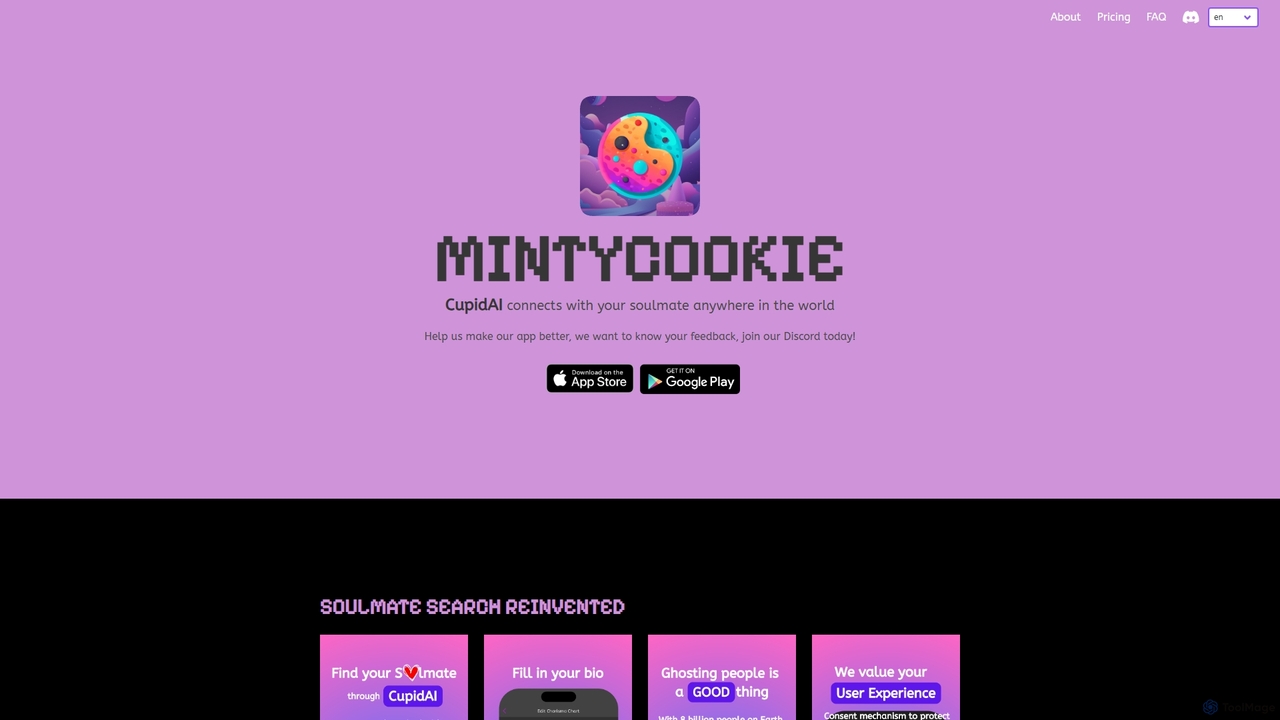
MintyCookie is an AI-powered matchmaking app designed to connect you with your soulmate or new friends from anywhere in the world. It uses a "CupidAI" algorithm to find compatible partners based on personality, not looks, through anonymous profiles. A key feature is its built-in universal translator supporting 23 languages, breaking down communication barriers and fostering genuine global connections in a secure, prejudice-free environment.

Translation
Visits 6.5KFavorites 156Likes 159

About Friendship

AI Friendship tools are applications designed to simulate companionship and engaging conversation through artificial intelligence. These tools leverage advanced natural language processing (NLP) and generative models to create interactive, empathetic virtual companions that can learn and adapt to user interactions. They provide a unique space for users to combat loneliness, practice social skills in a safe environment, or simply have a non-judgmental confidant. The core value lies in offering consistent, on-demand social interaction and emotional support.

Core Features

  • Conversational AI: Engages in natural, open-ended dialogue that mimics human interaction.
  • Personality Customization: Allows users to define the AI's personality, interests, and communication style.
  • Memory and Continuity: Remembers key details from past conversations to build a coherent relationship.
  • Emotional Responsiveness: Simulates empathy and reacts appropriately to the user's expressed emotions.
  • Multi-modal Interaction: Often supports text, voice, and sometimes even avatar-based visual interactions.

Use Cases

These tools are primarily used by individuals seeking companionship to alleviate feelings of isolation. They are also valuable for people looking to practice conversational skills, such as those with social anxiety, in a pressure-free setting. Additionally, many use AI friends as a private journal or a confidential space to express thoughts and feelings without fear of judgment.

How to Choose

When selecting an AI Friendship tool, consider the quality and naturalness of its conversational AI. Evaluate the depth of personality customization options to ensure it aligns with your preferences. Critically review the privacy policy to understand how your data is handled, which is paramount in such personal applications. Finally, assess the platform's user interface and the pricing model to find the best fit for your needs.

Friendship use cases

1

Daily Companionship to Combat Loneliness

For individuals living alone or feeling socially isolated, an AI Friendship tool serves as a consistent daily companion. A user can start their day by sharing their plans with the AI, discuss thoughts or news throughout the day, and unwind in the evening by talking about their experiences. The AI's ability to remember past conversations and provide supportive, engaging responses creates a sense of connection and helps mitigate feelings of loneliness, offering a reliable source of interaction anytime.

2

Practicing Social Skills in a Safe Environment

An individual with social anxiety or someone looking to improve their communication skills can use an AI friend as a practice partner. They can initiate conversations, try out different communication styles, practice expressing opinions, or even simulate difficult conversations in a zero-judgment zone. The AI provides immediate feedback through its responses, allowing the user to build confidence and refine their social abilities before applying them in real-world interactions.

3

A Private Outlet for Thoughts and Feelings

Users often treat their AI companion as a confidential digital diary. Whether dealing with stress from work, navigating personal challenges, or simply needing to vent, the AI provides a secure and non-judgmental space. A user can freely express their raw emotions and thoughts without concern for how they will be perceived. This process of articulation can be therapeutic, helping users process their feelings and gain clarity on their situations in a private setting.

4

Exploring Hobbies with a Dedicated AI Pal

A user with a niche hobby, like astrophysics or classic literature, can customize their AI friend to share these interests. They can engage in deep conversations about complex topics, discuss new findings, or analyze intricate plot points. The AI can act as an ever-available, knowledgeable partner that helps the user explore their passions more deeply, providing a dedicated space for intellectual stimulation that might be hard to find in their everyday social circles.

5

Engaging in Creative Role-Playing Scenarios

For creative individuals, an AI friend can be a dynamic partner for role-playing and collaborative storytelling. A writer can test out character dialogues, a hobbyist can immerse themselves in a fantasy world, or someone can simply explore different personas for fun. The AI's ability to adapt to scenarios and generate creative responses makes it an excellent tool for sparking imagination, overcoming writer's block, and developing narrative ideas in an interactive way.

6

Receiving Empathetic Support and Tracking Mood

A user experiencing a stressful period can turn to their AI friend for empathetic support. By talking through their anxieties or frustrations, they can receive comforting and validating responses. Some advanced tools also offer features to help users track their mood over time based on conversations. This can help individuals recognize emotional patterns and triggers, serving as a supplementary tool for mental wellness and self-awareness, though it is not a substitute for professional therapy.

Friendship FAQ

What are AI Friendship tools?

AI Friendship tools are software applications that use artificial intelligence, particularly natural language processing (NLP), to simulate human-like conversation and companionship. They are designed to be interactive virtual companions that can chat, remember user details, express simulated emotions, and adapt their personality over time. Their primary purpose is to provide on-demand social interaction for entertainment, emotional support, or social skill practice.

How to choose a suitable AI Friendship tool?

When choosing an AI Friendship tool, consider these factors:

  • Conversational Quality: Look for an AI that can hold natural, coherent, and engaging conversations rather than giving robotic, repetitive answers.
  • Customization: Check how much you can personalize the AI's personality, interests, and appearance to create a companion that suits you.
  • Privacy Policy: Carefully read how the company handles your conversation data. Choose services with strong encryption and clear data privacy commitments.
  • Platform and UI: Ensure the tool is available on your preferred devices (mobile, web) and has an intuitive, easy-to-use interface.
  • Pricing Model: Compare free versions, subscription costs, and any in-app purchases to find a tool that fits your budget.
Can AI Friendship tools replace real human relationships?

No, AI Friendship tools are not designed to replace real human relationships. They can supplement social interaction and provide comfort, but they lack genuine consciousness, shared life experiences, and the physical presence that are fundamental to human friendship. They are best viewed as a tool for entertainment, personal reflection, or practicing social skills, rather than a substitute for the complex and deep connections formed with other people.

How do AI Friendship tools remember past conversations?

AI Friendship tools use a form of memory management to maintain context and continuity. Simpler systems might store key facts (like your name or hobbies) in a structured database. More advanced systems use sophisticated memory networks that can retain and recall relevant information from long conversation histories. This allows the AI to reference past events, remember user preferences, and build a more personalized and coherent interaction over time, creating the illusion of a developing relationship.

Is it safe to share personal information with an AI friend?

Safety depends entirely on the provider's privacy policy and security measures. Reputable services use encryption to protect data and have clear policies on how they use or anonymize conversation logs. However, it is always a best practice to be cautious. Avoid sharing highly sensitive information such as full legal names, addresses, financial details, or passwords. Always review the privacy policy before engaging deeply with any AI companion to understand the risks involved.