TattooIdeas.tech
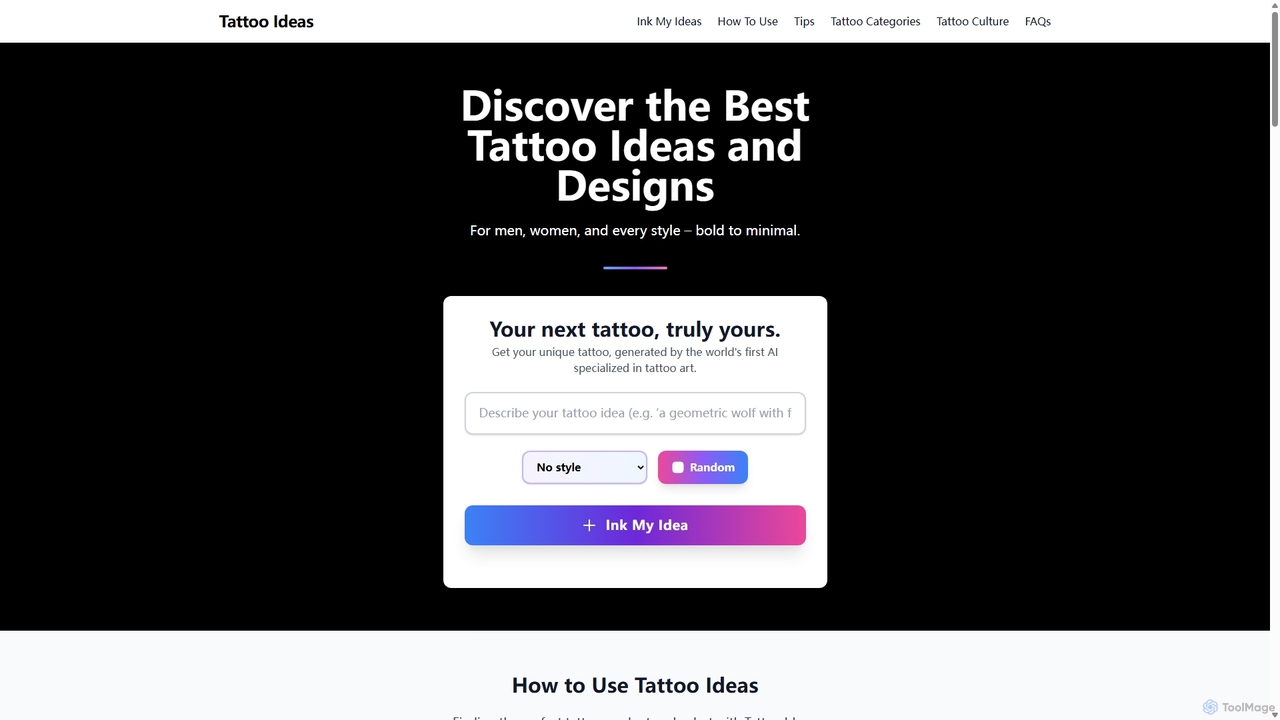
An AI-powered platform for tattoo inspiration, offering a vast gallery of high-resolution designs and a unique AI generator …
An AI-powered platform for tattoo inspiration, offering a vast gallery of high-resolution designs and a unique AI generator to create custom tattoo art from text prompts. Explore styles, meanings, and find the perfect ink for you.
tattoopro
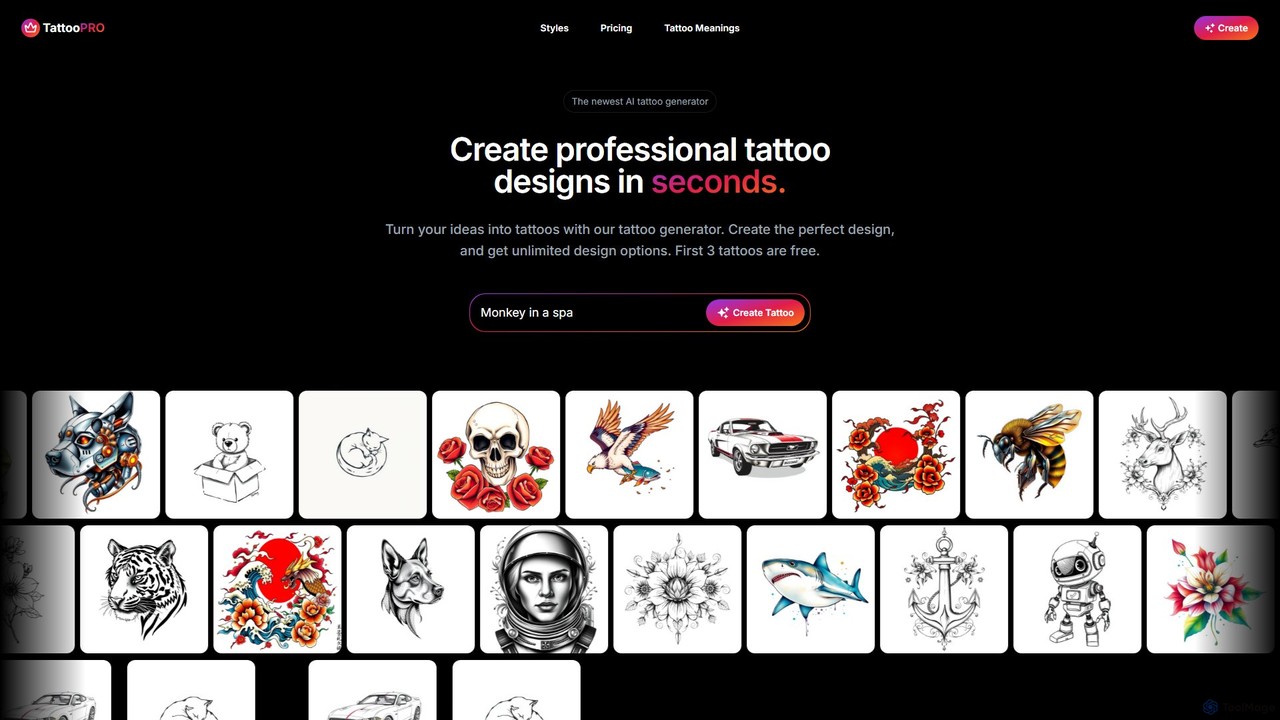
tattoopro is an AI-powered tattoo generator that transforms your ideas into unique, professional tattoo designs in seconds. Simply …
tattoopro is an AI-powered tattoo generator that transforms your ideas into unique, professional tattoo designs in seconds. Simply describe your concept, choose from a vast library of styles like Realistic, Japanese, or Minimalist, and get unlimited high-resolution design options. It's perfect for finding inspiration and visualizing your next tattoo before committing. Features a simple, non-subscription pricing model.
mynextink
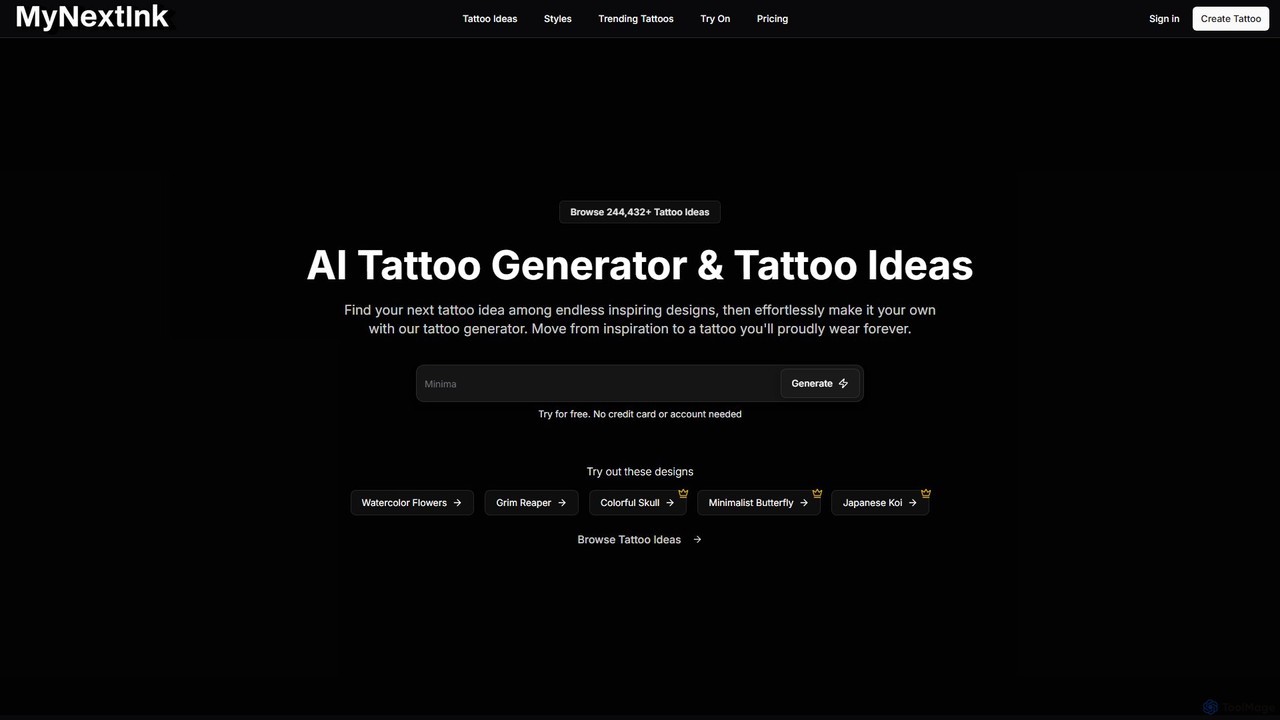
MyNextInk is an AI-powered tattoo generator that transforms your ideas into unique, custom tattoo designs. Describe your concept, …
MyNextInk is an AI-powered tattoo generator that transforms your ideas into unique, custom tattoo designs. Describe your concept, choose from over a dozen distinct art styles like Fine Line, Japanese, or Watercolor, and instantly generate high-quality visuals. It's the perfect tool for finding inspiration, visualizing your next tattoo, and collaborating effectively with your tattoo artist, moving seamlessly from concept to a design you'll love forever.
About Inspiration
AI Inspiration tools are a class of applications designed to spark creativity and generate novel ideas. They leverage generative AI models to produce unique concepts, visual prompts, and textual suggestions based on user input. These tools serve as a digital muse, helping users overcome creative blocks, explore new possibilities, and kickstart projects in various personal and professional domains. Their primary value lies in providing a fresh perspective that breaks conventional thinking patterns.
Core Features
- Idea Generation: Produces lists of names, topics, concepts, or solutions based on keywords.
- Visual Brainstorming: Creates mood boards, color palettes, and stylistic concepts from textual descriptions.
- Creative Prompting: Generates unique prompts for writing, art, design, or daily journaling.
- Content Structuring: Suggests outlines, headlines, and different angles for articles, videos, or campaigns.
- Personalized Suggestions: Recommends activities, recipes, or travel plans tailored to user preferences.
Use Cases
These tools are widely used by content creators, designers, writers, marketers, and hobbyists. For instance, a writer might use an AI tool to brainstorm plot twists, while a designer could generate a mood board for a new branding project. They are also valuable for personal use, such as planning events, finding new recipes, or discovering a new hobby.
How to Choose
When selecting an AI Inspiration tool, consider the type of output you need (text, images, or both). Evaluate the quality and diversity of the generated ideas. Check for customization options, such as the ability to set tone or style. Finally, consider the user interface's simplicity and the tool's pricing model to ensure it aligns with your usage frequency and budget.
InspirationUse Cases
Overcoming Writer's Block for Content Creation
A content creator struggling with a new blog topic uses an AI inspiration tool. By inputting keywords like 'sustainable living' and 'beginner tips,' the tool generates a list of 20 engaging article titles, such as '10 Easy Eco-Swaps for Your Kitchen.' It also provides a basic outline for the top three titles, including key talking points. This process transforms a creative standstill into a clear content plan in minutes.
Visualizing a Home Renovation Project
A homeowner planning to redecorate their living room feels overwhelmed by choices. They use an AI tool, describing their desired aesthetic as 'mid-century modern with a touch of bohemian.' The AI instantly generates several visual mood boards, complete with color palettes, furniture style examples, and lighting suggestions. This allows them to visualize the final look and share a concrete vision with their contractor.
Brainstorming a Unique Business Name and Slogan
An entrepreneur launching a new line of artisanal coffee beans needs a memorable brand identity. They provide the AI inspiration tool with core concepts like 'small-batch,' 'ethically sourced,' and 'bold flavor.' The tool produces hundreds of potential business names and pairs them with catchy slogans. The entrepreneur can then filter results based on domain availability, helping them secure a unique and marketable brand name efficiently.
Discovering Personalized Hobbies and Activities
Someone looking to pick up a new hobby feels unsure where to start. They interact with an AI inspiration tool, answering questions about their interests (e.g., 'I enjoy working with my hands,' 'I prefer quiet, indoor activities'). Based on this profile, the AI suggests tailored hobbies like 'origami,' 'calligraphy,' or 'indoor herb gardening,' and provides introductory resources for each to help them begin.
Generating Daily Creative Journaling Prompts
A person wants to build a consistent journaling habit but often stares at a blank page. They use an AI tool that delivers a unique, thought-provoking prompt each morning. Prompts range from introspective questions like 'What is a belief you've recently changed your mind about?' to creative scenarios. This removes the initial friction of starting and makes the daily practice of journaling more engaging and insightful.
Creating Concept Art for a Fictional Character
A fantasy author needs to visualize a new character. They input a detailed description into an AI tool: 'A wise, ancient elf druid with silver hair braided with glowing moss, wearing armor made of enchanted wood.' The AI generates multiple visual interpretations of the character in different artistic styles (e.g., realistic, anime). These images serve as a powerful reference point and source of inspiration for further character development.