ToolMage
Sign in

Best 3 Kids AI tools for Lifestyle

Popular Kids AI tools in Lifestyle include Coloring Pages AI, coloring_pages.app, and Whimsy, helping you work more efficiently.

Whimsy
Freemium

Whimsy

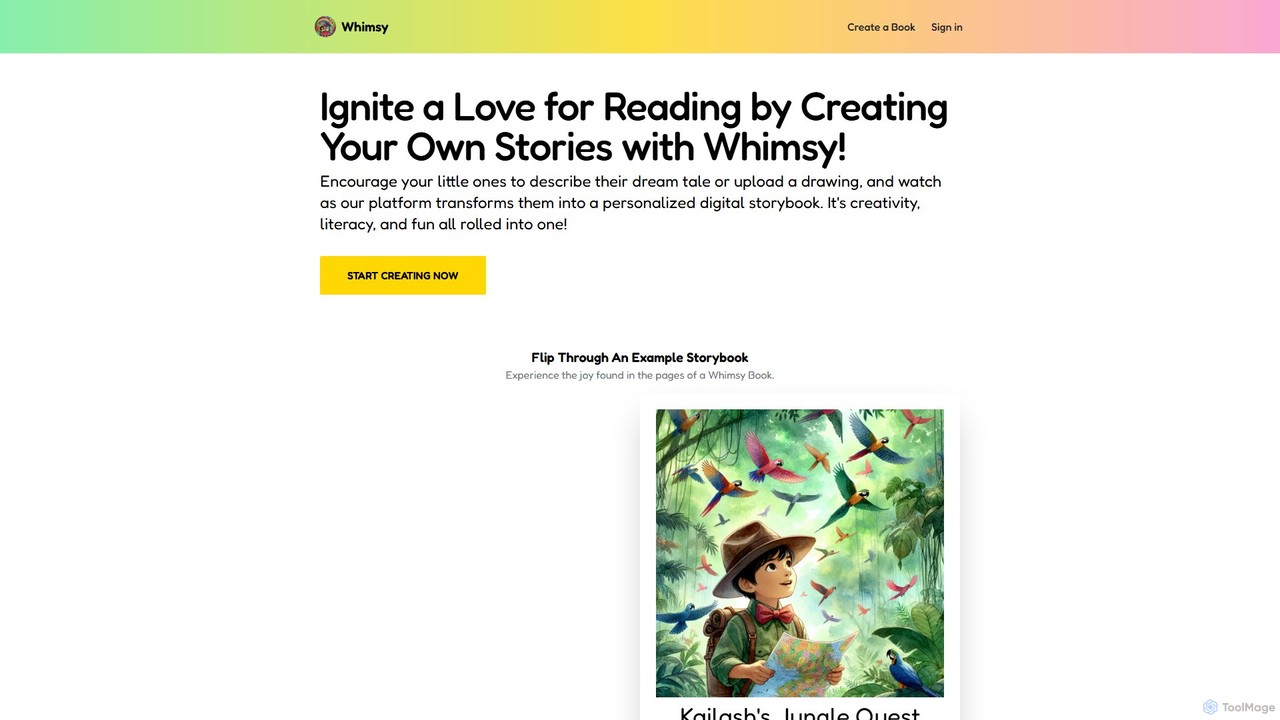
Whimsy is an AI-powered story app for kids that transforms their ideas and drawings into personalized digital storybooks, interactive games, and audio stories. It aims to foster a love for reading and creativity by making children the heroes of their own unique tales, complete with beautiful AI-generated illustrations.

Storytelling
Visits 5.9KFavorites 137Likes 120
Coloring Pages AI
Freemium

Coloring Pages AI

Coloring Pages AI is an innovative tool that uses artificial intelligence to generate unique, high-quality, and printable coloring pages from simple text prompts. Instantly create custom designs for kids, educational activities, or creative projects, eliminating the need to search for pre-made, watermarked images.

Image Generation
Visits 6.1KFavorites 156Likes 150
coloring_pages.app
Freemium

coloring_pages.app

An AI-powered tool that generates custom, printable coloring pages from text prompts or photos in seconds. Designed for kids, adults, parents, and educators, it offers adjustable difficulty levels and a vast library of pre-made themes. Core features are free and require no sign-up.

Image Generation
Visits 5.9KFavorites 143Likes 149

About Kids

Kids AI tools are a specialized category within Lifestyle AI, designed to foster learning, creativity, and safe digital interaction for children. Leveraging artificial intelligence, these tools offer personalized educational experiences, interactive entertainment, and creative outlets tailored to different age groups and developmental stages. They aim to make learning engaging and accessible, while providing parents and educators with features for content moderation and progress tracking.

Core Features

  • Personalized Learning Paths: AI algorithms adapt content and difficulty to each child's pace and learning style, optimizing educational outcomes.
  • Interactive Storytelling & Content Generation: Tools that allow children to co-create stories, characters, or art, enhancing imagination and digital literacy.
  • Educational Games & Activities: AI-powered games that make learning subjects like math, science, and language fun and engaging through adaptive challenges.
  • Safety & Parental Controls: Features designed to filter inappropriate content, manage screen time and monitor usage, ensuring a secure digital environment.
  • Language Acquisition Support: AI tutors and interactive exercises that assist children in learning new languages through pronunciation feedback and vocabulary building.

Use Cases

These tools are primarily used by parents seeking supplemental educational resources, educators looking for engaging classroom aids, and children themselves for entertainment and skill development. They can facilitate early literacy, introduce STEM concepts, or provide a safe space for creative expression, adapting to individual needs and fostering a love for learning from a young age.

How to Choose

When selecting Kids AI tools, prioritize age appropriateness, verified educational value, and robust safety features including parental controls and data privacy policies. Evaluate the level of engagement, content quality, and whether the tool offers adaptive learning capabilities. Consider user reviews and expert recommendations to ensure a positive and secure experience for children.

Kids use cases

1

Personalized Academic Tutoring

Parents can utilize AI-powered tutoring platforms to provide their children with supplementary education in subjects like math or reading. The AI adapts to the child's individual learning pace and identifies areas needing improvement, offering targeted exercises and explanations. This ensures a customized learning experience, helping children grasp complex concepts more effectively and build confidence outside of traditional classroom settings.

2

Fostering Creative Storytelling

Children can use AI tools to generate unique story prompts, characters, or even entire narratives, sparking their imagination and improving writing skills. By inputting simple ideas, kids can see AI bring their concepts to life, then edit and expand upon them. This encourages creative expression and helps develop narrative structure understanding in a fun, interactive way, making storytelling accessible to all skill levels.

3

Interactive Language Learning

AI language apps offer children an engaging way to learn new languages through interactive games, pronunciation practice, and conversational AI companions. These tools provide instant feedback on vocabulary and grammar, making the learning process dynamic and less intimidating. Children can practice speaking and listening in a low-pressure environment, accelerating their language acquisition and cultural understanding.

4

Developing STEM Skills through Play

Educators and parents can introduce children to science, technology, engineering, and mathematics (STEM) concepts using AI-driven educational games and simulations. These tools present complex ideas in an accessible, playful format, allowing children to experiment and solve problems. By engaging with AI-powered challenges, kids develop critical thinking, problem-solving abilities, and an early interest in STEM fields.

5

Safe Digital Art & Music Creation

AI art and music generation tools provide a safe and guided environment for children to explore their artistic talents without needing advanced skills. Kids can experiment with different styles, instruments, and compositions, with AI assisting in generating elements or refining their creations. This fosters artistic expression, introduces basic design principles, and builds confidence in their creative abilities.

6

Enhancing Cognitive Skills with Adaptive Games

AI-powered cognitive games are designed to improve memory, attention, and logical reasoning in children. These games dynamically adjust their difficulty based on the child's performance, ensuring they are always challenged but not overwhelmed. Regular engagement with such tools can significantly boost cognitive development, helping children build foundational skills essential for academic success and everyday problem-solving.

Kids FAQ

What are Kids AI tools?

Kids AI tools are applications and platforms that leverage artificial intelligence to provide educational, entertaining, and creative experiences specifically designed for children. They differ from general educational apps by incorporating AI for personalization, adaptive learning, and interactive content generation. These tools aim to support children's development in areas like academics, creativity, and critical thinking, often including robust parental controls for safety.

How to choose safe and effective AI tools for children?

When selecting AI tools for children, prioritize those with strong parental controls, clear data privacy policies, and age-appropriate content. Look for tools that offer verified educational value, adaptive learning features, and positive user reviews from other parents or educators. Ensure the interface is intuitive for children and that the tool encourages active engagement rather than passive consumption, promoting a balanced and secure digital experience.

What are the benefits of AI tools for kids' development?

AI tools offer numerous benefits for children's development, including personalized learning experiences that adapt to individual needs, fostering creativity through interactive content generation, and enhancing problem-solving skills through engaging games. They can also support language acquisition, introduce STEM concepts early, and provide a safe, moderated environment for digital exploration, ultimately boosting confidence and a love for learning.

What are the safety considerations when using AI tools with children?

Key safety considerations include ensuring robust parental controls are in place to manage screen time and content access, and reviewing the tool's data privacy policy to understand how children's information is collected and used. It's crucial to choose tools free from inappropriate advertising or harmful content. Parents should also actively supervise usage and discuss digital citizenship with their children to promote responsible and secure online habits.

How do AI tools for kids differ from traditional educational apps?

AI tools for kids go beyond traditional educational apps by offering dynamic, adaptive, and personalized experiences. While traditional apps often follow a fixed curriculum, AI tools can adjust content difficulty, provide real-time feedback, and generate unique learning materials based on a child's progress and preferences. This AI-driven personalization leads to more engaging and effective learning outcomes, making the experience highly tailored to each individual child.