Beautyai
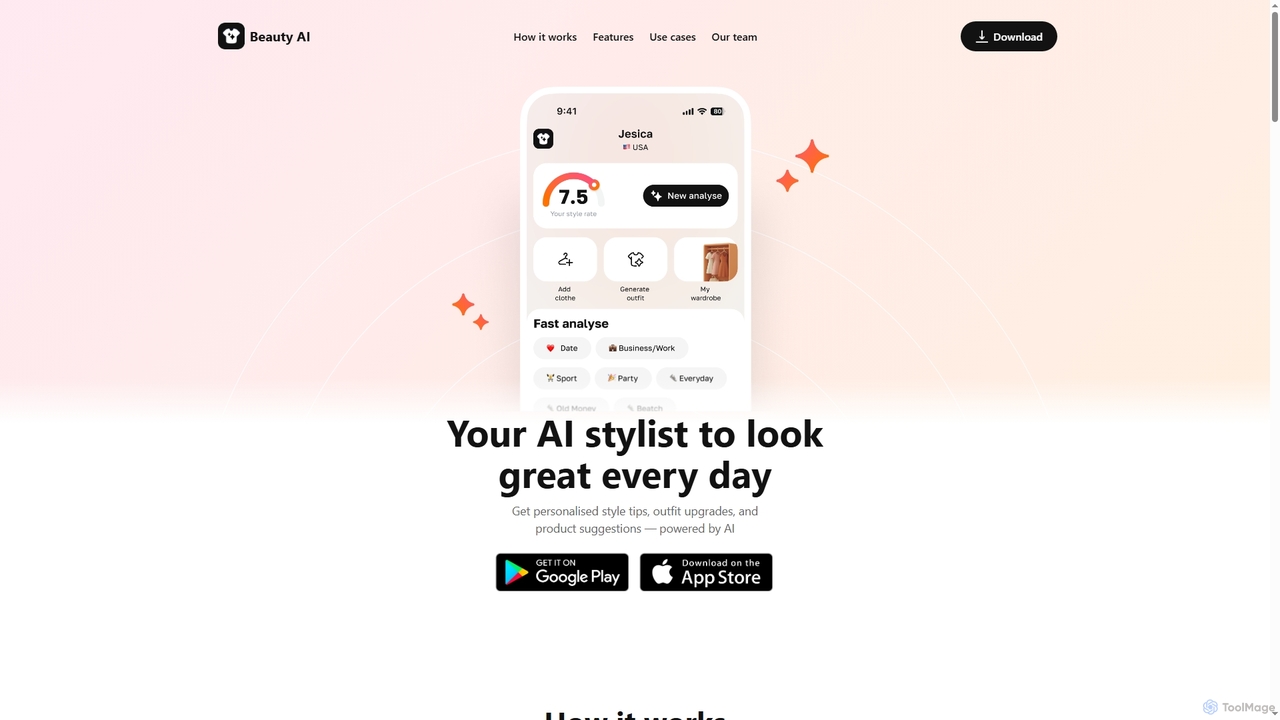
Beautyai is an AI-powered personal stylist and outfit generator designed to enhance your daily look. It provides instant …
Beautyai is an AI-powered personal stylist and outfit generator designed to enhance your daily look. It provides instant feedback on your outfits, personalized style tips, and product suggestions. With its Beauty Lens feature, you can find and shop for similar clothing items on Amazon simply by uploading a photo.
About Outfit Planner
Outfit Planners are AI-powered tools that help you digitally organize your wardrobe and create stylish outfits. Using computer vision to recognize clothing items from photos, these applications build a virtual closet and employ machine learning algorithms to suggest personalized combinations based on your style, the weather, and calendar events. They transform the daily 'what to wear' dilemma into a streamlined, creative process, helping you rediscover your wardrobe and make smarter fashion choices. As a part of the broader Lifestyle category, these tools focus specifically on personal style management and wardrobe optimization.
Core Features
- Digital Wardrobe Creation: Automatically digitize your clothes by uploading photos, with AI handling background removal and item categorization (e.g., shirt, pants, shoes).
- Intelligent Outfit Suggestions: Receive daily or event-specific outfit recommendations generated from your own clothes, often considering factors like color theory and style matching.
- Style Analysis: Get insights into your personal style profile and receive suggestions for new items that would complement your existing wardrobe.
- Travel Packing Planner: Generate efficient packing lists for trips based on your destination's weather and trip duration, ensuring you have coordinated outfits.
- Outfit Calendar & Logging: Plan your outfits in advance on a calendar and keep a log of what you've worn to avoid repetition and track your most-used items.
Use Cases
These tools are ideal for busy professionals looking to save time in the morning, fashion enthusiasts wanting to explore new style combinations, and conscious consumers aiming to build a sustainable capsule wardrobe. They are also invaluable for frequent travelers who need to pack efficiently and for anyone seeking to declutter and get more value from their existing clothes.
How to Choose
When selecting an Outfit Planner, consider the accuracy of its item recognition technology and the quality of its outfit suggestions. Evaluate the user interface for ease of use in uploading clothes and planning outfits. Also, check for key features like calendar integration, weather syncing, and packing list generation. Finally, review the pricing model—whether it's a one-time purchase or a subscription—to find one that fits your needs and budget.
Outfit PlannerUse Cases
Streamlining Daily Morning Routines
For busy professionals, deciding what to wear each morning is a time-consuming task. An AI Outfit Planner automates this. By cataloging their wardrobe, users receive daily outfit suggestions tailored to the day's weather forecast and their calendar appointments (e.g., a formal outfit for a client meeting). This eliminates decision fatigue, saves valuable time, and ensures they always look polished and appropriate without last-minute stress.
Streamline Daily Dressing for Professionals
A busy marketing manager uses an AI Outfit Planner to eliminate morning decision fatigue. They've digitized their work wardrobe, allowing the app to access their collection of blazers, trousers, and blouses. Each evening, the app checks their calendar for the next day's meetings and consults the weather forecast. It then proposes three appropriate, stylish outfits. The manager simply taps to select one, saving 15-20 minutes each morning and ensuring they always look polished and professional without repetitive choices.
Streamline Daily Work Outfit Planning
A busy marketing manager uses an AI Outfit Planner to eliminate morning decision fatigue. Each Sunday, they spend 15 minutes reviewing AI-generated outfit suggestions for the upcoming week, tailored to their office dress code and the local weather forecast. They can quickly approve or swap options, saving precious time each morning. The tool ensures they utilize their entire professional wardrobe and avoid repeating outfits too frequently, helping them project a polished and varied image at work with minimal daily effort.
Creating Smart Travel Packing Lists
Packing for a trip can be overwhelming. An AI Outfit Planner simplifies this by creating a smart packing list. Users input their destination, trip duration, and planned activities. The AI then analyzes their digital wardrobe and suggests a capsule collection of versatile items that can be mixed and matched to create multiple outfits, all while considering the destination's weather. This prevents overpacking and ensures every piece of clothing is utilized effectively.
Create Smart Packing Lists for Travel
A travel blogger is preparing for a 10-day trip to Italy with varying climates. Instead of overpacking, they use their Outfit Planner. They input the destination, dates, and planned activities (e.g., city exploring, dinner). The AI checks the weather forecasts for each location and generates a compact 15-piece capsule wardrobe. It then shows over 30 different outfit combinations possible from these items, complete with a visual packing list. This ensures they travel light while being perfectly dressed for every occasion.
Create a Travel Capsule Wardrobe
A frequent traveler uses the app to plan a capsule wardrobe for a 10-day trip to Europe. By inputting the destination and dates, the AI accesses weather data and suggests a minimal set of versatile items from their wardrobe that can be mixed and matched. It generates a visual packing list with daily outfit combinations, ensuring they have a unique look for each day without overpacking. This process saves space in their luggage and reduces the stress of deciding what to wear while abroad.
Maximizing a Capsule Wardrobe
Individuals using a capsule wardrobe need to make the most of a limited number of items. An AI Outfit Planner is a powerful tool for this. It can reveal hundreds of potential combinations from just a few key pieces that the user might not have considered. By tracking wear frequency, it also helps identify underused items and suggests new ways to style them, ensuring the entire capsule is functional and versatile.
Rediscover and Maximize a Capsule Wardrobe
An advocate for sustainable fashion maintains a 40-piece capsule wardrobe. To keep their style fresh and avoid unnecessary purchases, they use an Outfit Planner. The app's 'shuffle' feature suggests unexpected pairings, like layering a summer dress over a turtleneck for fall. By tracking their most and least worn items, the user identifies gaps in their wardrobe or pieces that no longer fit their style. This data-driven approach helps them make conscious decisions, ensuring every item is utilized to its fullest potential and promoting a circular fashion mindset.
Rediscover Your Wardrobe and Style
A fashion enthusiast who feels stuck in a style rut uses an AI Outfit Planner to find new combinations within their existing collection. By using the 'surprise me' or 'random outfit' feature, the AI generates unexpected pairings of clothes they own but had never thought to wear together. This helps them break out of their comfort zone, rediscover forgotten items, and maximize the value of their wardrobe without spending money on new clothes. It serves as a personal stylist, offering fresh perspectives on their own items.
Discovering and Refining Personal Style
For users looking to evolve their personal style, an AI Outfit Planner acts as a virtual stylist. After cataloging their clothes, the AI can analyze color palettes, silhouettes, and common patterns. It provides suggestions that push them to try new combinations, identifies gaps in their wardrobe (e.g., 'a classic white shirt would complete 10 new outfits'), and helps them build a more cohesive and authentic personal brand through their clothing choices.
Plan Outfits for Special Occasions
Someone attending a multi-day wedding event uses an Outfit Planner to coordinate their looks. They upload their main ceremony dress and the app suggests complementary shoes, jewelry, and a clutch from their existing accessories. For the other events like the rehearsal dinner and brunch, they can 'lock' certain items (e.g., a specific pair of heels) and ask the AI to build different outfits around them. This ensures a cohesive and stylish appearance throughout the celebration without the stress of last-minute planning or buying new items for each event.
Make Smarter Shopping Decisions
Before buying a new item, a user uploads a photo of it from an online store to their digital wardrobe. The AI Outfit Planner then shows them how this new piece could be styled with at least 10 different outfits using clothes they already own. This virtual 'try-on' helps them assess the item's versatility and determine if it's a worthwhile addition to their wardrobe. It prevents impulse buys and promotes a more sustainable approach to fashion by ensuring new purchases will be well-utilized.
Planning Outfits for Special Events
Whether it's a wedding, a job interview, or a formal gala, dressing appropriately is key. Users can input the event type, dress code, and even photos of items they are considering. The AI Outfit Planner will then generate complete looks from their wardrobe, suggesting appropriate clothing, shoes, and accessories. This removes the guesswork and anxiety associated with event dressing, allowing users to feel confident and prepared.
Document and Archive Daily Outfits
A fashion content creator uses an Outfit Planner not just for planning, but as a visual diary of their style. Each day, they log their 'Outfit of the Day' (OOTD) in the app. Over time, this creates a searchable archive of their looks. When they feel uninspired, they can browse their past successful outfits by season, color, or specific item. The app's analytics also show them which pieces they wear most often, helping them identify their signature style and informing future content creation and shopping decisions.
Plan Outfits for Special Events
Someone attending a multi-day wedding needs to plan several outfits, from the rehearsal dinner to the main ceremony. They use the planner to create and save specific looks for each event, ensuring they don't repeat key pieces and that each outfit is appropriate for the occasion. They can virtually experiment with different combinations of dresses, shoes, and accessories from their wardrobe, visualizing the final look without having to physically try everything on. This makes event preparation organized and stress-free.
Promoting Sustainable and Conscious Shopping
To foster sustainable fashion habits, an AI Outfit Planner helps users shop more consciously. Before making a new purchase, a user can virtually 'try on' the item by uploading a product image. The AI shows how many new outfits the potential purchase can create with their existing clothes. This data-driven approach helps users avoid impulse buys, invest in versatile pieces, and reduce clothing waste by ensuring every new item has a clear purpose in their wardrobe.
Make Informed and Sustainable Shopping Decisions
A user is considering buying a new pair of expensive boots. Before making the purchase, they find a similar product image online and virtually add it to their Outfit Planner. The AI then shows them how many new, complete outfits can be created by combining the boots with items they already own. If the boots can create 10+ new looks, they proceed with the purchase. If it only matches one or two items, they reconsider. This process prevents impulse buys and ensures that new additions to the wardrobe are versatile and will be worn frequently.
Analyze and Declutter Your Wardrobe
A user wanting to adopt a more minimalist lifestyle uses the app's analytics features. After digitizing their entire wardrobe, the tool provides data on the most and least worn items over the past year. It highlights items that haven't been worn at all, helping the user identify what to donate or sell. The app also identifies 'wardrobe gaps'—like a lack of versatile basics—guiding them to make more intentional future purchases. This data-driven approach transforms decluttering from a guessing game into a strategic process.