ToolMage
Sign in

Best 1 Peer Support AI tools for Lifestyle

Popular Peer Support AI tools in Lifestyle include epicurusapp, helping you work more efficiently.

epicurusapp
Free

epicurusapp

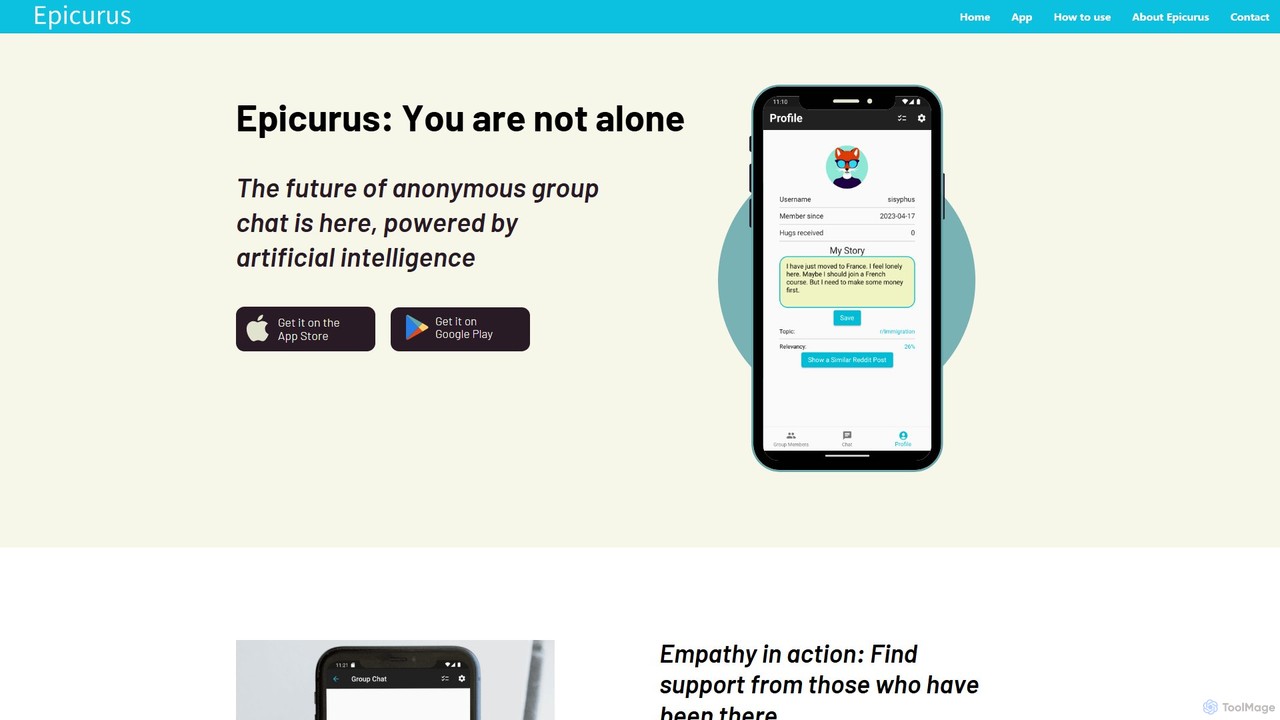
epicurusapp is an AI-powered anonymous group chat application designed to connect individuals facing similar life challenges. By analyzing your personal story, its advanced AI matches you with a supportive group of peers who have undergone comparable experiences. This creates a safe, empathetic space for sharing, encouragement, and mutual understanding, helping you remember you are not alone.

Mental Health
Visits 5.6KFavorites 161Likes 135

About Peer Support

Peer Support AI tools are platforms leveraging artificial intelligence to connect individuals seeking or offering mutual assistance and shared understanding. These tools utilize AI for intelligent matching, content moderation, and personalized resource recommendations, fostering supportive communities and enhancing well-being within the broader lifestyle category. They aim to make peer interaction more accessible, effective, and safe for diverse user groups.

Core Features

  • Intelligent Matching: AI algorithms connect users with similar experiences, challenges, or goals for more relevant support.
  • Automated Moderation: AI assists in monitoring discussions for safety, adherence to guidelines, and identifying harmful content.
  • Personalized Resource Curation: Tools suggest relevant articles, coping strategies, or professional help based on user interactions and needs.
  • Empathetic Conversational Support: Some tools offer AI chatbots for initial listening, guidance, or to bridge gaps between human interactions.
  • Community Building & Engagement: Features designed to encourage active participation, group formation, and sustained interaction among peers.

Applicable Scenarios

Peer Support AI tools are widely adopted in mental health, chronic illness management, and educational settings. They provide accessible support for individuals facing common challenges, facilitate learning groups, and help build resilient communities where users can share experiences and offer encouragement.

How to Choose

When selecting a Peer Support AI tool, consider the accuracy of its matching algorithms, the robustness of its moderation features for user safety, and its data privacy policies. Evaluate the quality and relevance of its curated resources, the ease of user interface, and the specific support areas it targets to ensure it aligns with user needs.

Peer Support use cases

1

Facilitating Mental Wellness Support Groups

Individuals seeking mental health support can use Peer Support AI tools to join or form groups with others experiencing similar challenges. The AI intelligently matches users based on shared conditions or interests, provides a moderated space for safe discussion, and suggests relevant coping strategies or professional resources, ensuring a supportive and confidential environment for sharing and healing.

2

Connecting Patients in Chronic Illness Communities

Patients managing chronic illnesses can leverage Peer Support AI tools to connect with others who have the same condition. The AI facilitates connections based on diagnosis, treatment experiences, or geographical location, enabling users to share practical advice, emotional support, and insights into living with their illness. This fosters a sense of community and reduces feelings of isolation.

3

Enhancing Learning and Skill-Sharing Networks

Students or professionals seeking to learn new skills or improve existing ones can use Peer Support AI tools to find study partners or mentors. The AI matches individuals based on learning goals, skill levels, and preferred learning styles, creating effective peer-to-peer learning environments. This accelerates skill acquisition and provides motivation through collaborative learning experiences.

4

Onboarding New Employees with Peer Mentors

Companies can implement Peer Support AI tools to streamline the onboarding process for new employees. The AI matches new hires with experienced colleagues based on roles, departments, or shared interests, facilitating informal mentorship and integration into the company culture. This helps new employees feel supported, reduces early attrition, and accelerates their productivity by providing a go-to peer resource.

5

Managing Addiction Recovery Networks

Individuals in addiction recovery can utilize Peer Support AI tools to connect with a sober community. The AI provides a secure, moderated platform for sharing recovery journeys, offering encouragement, and accessing resources like meeting schedules or crisis hotlines. This continuous peer interaction strengthens resolve, reduces relapse risks, and provides immediate support in challenging moments.

6

Building Parent Support Communities

New parents or those facing specific parenting challenges can find solace and advice through Peer Support AI tools. The AI intelligently connects parents based on their child's age, specific developmental stages, or common issues like sleep training or feeding difficulties. This creates a virtual village where parents can exchange tips, share experiences, and receive empathetic understanding, reducing parental stress and isolation.

Peer Support FAQ

What are Peer Support AI tools?

Peer Support AI tools are digital platforms that use artificial intelligence to facilitate mutual assistance and shared understanding among individuals. They leverage AI for intelligent matching of users, automated content moderation, and personalized resource recommendations. These tools aim to create accessible, safe, and effective online communities where people can connect, share experiences, and offer support to one another, often focusing on specific challenges or interests.

How to choose an effective Peer Support AI tool?

To choose an effective Peer Support AI tool, prioritize platforms with accurate matching algorithms that connect you with truly relevant peers. Evaluate the robustness of its moderation features to ensure a safe and respectful environment, and scrutinize its data privacy policies. Additionally, consider the quality and breadth of its curated resources, the intuitiveness of the user interface, and whether it specializes in the specific area of support you need, such as mental health or chronic illness management.

What are the key benefits of using AI in peer support?

Using AI in peer support offers several key benefits. It enables highly personalized matching, connecting individuals with others who share very specific experiences or needs, leading to more relevant and impactful interactions. AI-powered moderation enhances safety by identifying and flagging inappropriate content or behavior, creating a more secure environment. Furthermore, AI can curate and recommend relevant resources 24/7, providing immediate access to information and tools, and can help scale support networks to reach a wider audience more efficiently than traditional methods.

How do AI-powered peer support tools differ from traditional support groups?

AI-powered peer support tools differ from traditional support groups primarily in their scalability, accessibility, and personalization. Traditional groups often rely on physical meetings and human facilitators, limiting reach and scheduling flexibility. AI tools, however, offer 24/7 access from anywhere, can connect users with highly specific matching criteria, and use AI for automated moderation to maintain safety and focus. While traditional groups offer unique in-person connection, AI tools provide broader reach, data-driven insights, and enhanced privacy options for those who prefer digital interaction.

Who can benefit most from AI-driven peer support platforms?

AI-driven peer support platforms can benefit a wide range of individuals, particularly those seeking specialized or accessible support. This includes people with specific mental health conditions, chronic illnesses, or unique life challenges who may struggle to find local, relevant traditional groups. Individuals in remote areas, those with social anxiety, or anyone needing flexible, 24/7 access to community interaction also benefit greatly. Additionally, learners seeking study partners and professionals looking for informal mentorship can find value in these platforms.