Tarteel
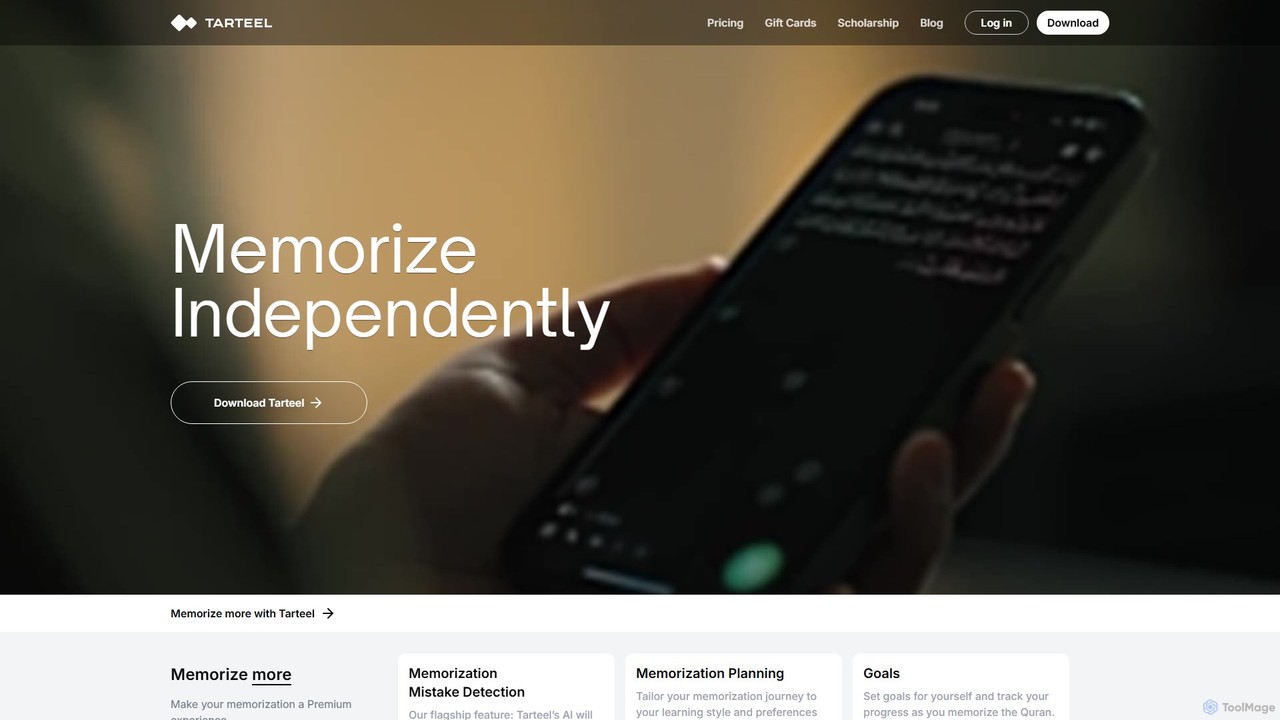
Tarteel is an AI-powered Quran memorization app that listens to your recitation, provides real-time feedback, and tracks your …
Tarteel is an AI-powered Quran memorization app that listens to your recitation, provides real-time feedback, and tracks your progress. Using advanced voice recognition, it helps Muslims worldwide to memorize, practice, and perfect their connection with the Quran, acting as a personal Hifz and Tajweed tutor.
About Religion
AI Religion tools are specialized applications designed to support spiritual practice, theological study, and community management. These tools leverage natural language processing (NLP) and machine learning to analyze sacred texts, generate content, and provide personalized guidance. They offer users new ways to explore their faith, prepare religious materials, and connect with their communities. Unlike general lifestyle apps, AI Religion tools are tailored with specific theological knowledge and terminologies, providing a focused digital environment for faith-based activities.
Core Features
- Scripture Analysis: Provides in-depth analysis of religious texts, including cross-references, thematic connections, and historical context.
- Sermon & Content Generation: Assists religious leaders in creating sermons, lesson plans, and articles based on specific themes or passages.
- Personalized Spiritual Guidance: Offers daily prayers, meditation prompts, and study plans tailored to an individual's faith and goals.
- Theological Q&A: Utilizes AI chatbots trained on specific doctrines to answer complex questions about faith and theology.
- Community Management: Helps religious organizations manage membership, schedule events, and facilitate communication.
Use Cases
These tools are used by clergy and religious leaders for sermon preparation and research, saving significant time. Theology students and scholars use them for deep textual analysis and academic work. Individuals also use them for personal devotion, daily study, and to find answers to spiritual questions in a structured manner.
How to Choose
When selecting an AI Religion tool, consider its theological alignment with your beliefs and the specific sacred texts it supports. Evaluate the depth of its analytical features and the quality of its content generation. Also, review the platform's data privacy policy, especially for community management features, and consider the user interface's ease of use.
ReligionUse Cases
Sermon and Lesson Preparation
A pastor or religious leader preparing for a weekly service uses an AI Religion tool to streamline their workflow. By inputting a specific scripture passage, the tool generates a detailed analysis, including historical context, key theological themes, and cross-references to other texts. It can then produce several sermon outlines with different angles, such as exegetical, topical, or narrative. This process reduces research time from hours to minutes, allowing the leader to focus more on tailoring the message for their specific congregation and personalizing the delivery.
Personalized Spiritual Study Plan
An individual seeking to deepen their understanding of their faith uses an AI tool to create a personalized study plan. They input their current knowledge level, specific topics of interest (e.g., 'prophecy in the Old Testament' or 'Buddhist philosophy of mindfulness'), and how much time they can dedicate daily. The AI then curates a structured learning path, providing daily readings, related commentary from respected scholars, thought-provoking questions for reflection, and even quizzes to test comprehension. This transforms personal study from a potentially overwhelming task into a manageable and guided journey.
Answering Complex Theological Questions
A new member of a faith community or a curious student has complex questions that are difficult to ask in a group setting, such as 'How does my faith view the problem of evil?' or 'What are the different interpretations of this specific doctrine?'. They use a theological Q&A chatbot trained on their religion's specific texts and scholarly works. The AI provides a comprehensive, nuanced answer, often presenting multiple viewpoints and citing its sources. This offers a safe, non-judgmental space for exploration and learning, encouraging deeper engagement with challenging theological concepts.
Managing a Religious Community's Events
An administrator for a church, mosque, or temple uses an AI-powered community management platform to organize their activities. The tool helps schedule regular services, special holiday events, and small group meetings. It can send automated reminders to members via email or text message, track RSVPs, and manage volunteer sign-ups. Some advanced tools can even analyze attendance data to suggest optimal times for future events or identify members who may be disengaging. This centralizes administrative tasks, improves communication, and frees up staff to focus on pastoral care and community building.
Interfaith Dialogue and Comparative Study
A researcher or student of comparative religion uses an AI tool to analyze texts from multiple faiths simultaneously. They can input a concept like 'compassion' or 'creation' and the AI will pull relevant passages from the Bible, Quran, Vedas, and other sacred texts. The tool can then highlight thematic similarities, linguistic differences, and historical connections between the texts. This facilitates a deeper and more efficient comparative analysis than manual research would allow, fostering greater understanding and insight for academic work or interfaith dialogue initiatives.
Guided Prayer and Meditation Sessions
A user looking for structured spiritual practice downloads an AI-powered prayer and meditation app. Based on their stated mood, available time, and specific religious tradition (e.g., Catholic, Sufi, Zen Buddhist), the app generates a guided session. This might include an opening prayer, a period of guided reflection on a sacred text or theme, and a concluding blessing. The AI can adapt the session's length and content dynamically, providing a consistently relevant and personal experience that helps the user maintain a regular and focused spiritual discipline in a busy lifestyle.