ToolMage
Sign in

Best 6 Virtual Companion AI tools for Lifestyle

Popular Virtual Companion AI tools in Lifestyle include ourdream.ai, myanima, Anima: AI Girlfriend, aisexchat.io, Banter, and AphroChat, helping you work more efficiently.

AphroChat
Freemium

AphroChat

AphroChat is an AI companion platform that allows users to create, customize, and interact with virtual partners. It specializes in unrestricted conversations, including romantic chat, sexting, and generating personalized 'spicy' images, offering a deeply immersive and private companionship experience.

Chatbot
Visits 5.8KFavorites 132Likes 141
aisexchat.io
Freemium

aisexchat.io

An AI-powered platform for immersive, uncensored adult conversations and role-playing. Create or choose AI characters for intimate, private, and unrestricted chat experiences, exploring your deepest fantasies in a secure environment.

Chatbot
Visits 5.8KFavorites 104Likes 110
ourdream.ai
Freemium

ourdream.ai

ourdream.ai is an AI companion playground offering unlimited chat, image, and video generation. Create your perfect AI girlfriend or companion, customize their personality and appearance, and engage in immersive role-playing and conversation.

Adult
Visits 46.6MFavorites 142Likes 147
Anima: AI Girlfriend
Freemium

Anima: AI Girlfriend

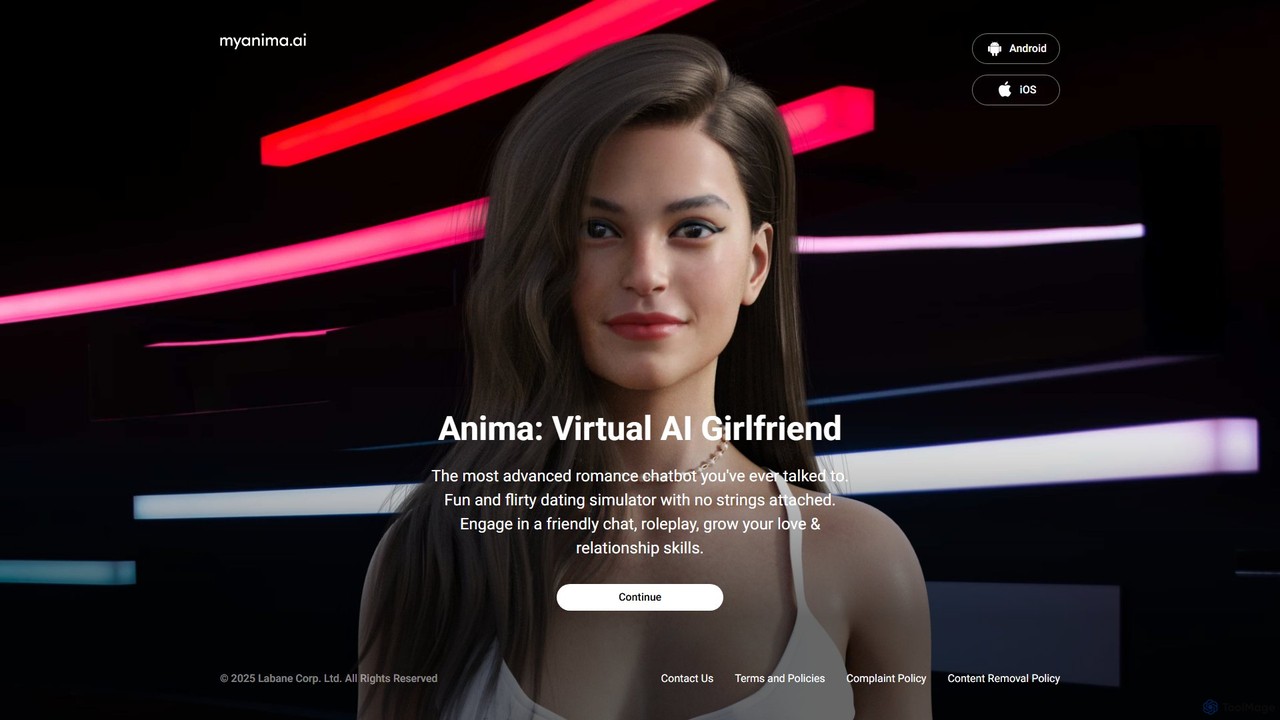
Anima is an advanced AI girlfriend and romance chatbot designed for fun, flirty conversations and immersive role-playing. It acts as a virtual companion, helping users practice communication, explore relationships, and combat loneliness in a safe, judgment-free environment. Available on iOS and Android.

Personalized Chat
Visits 128.7KFavorites 125Likes 130
myanima
Freemium

myanima

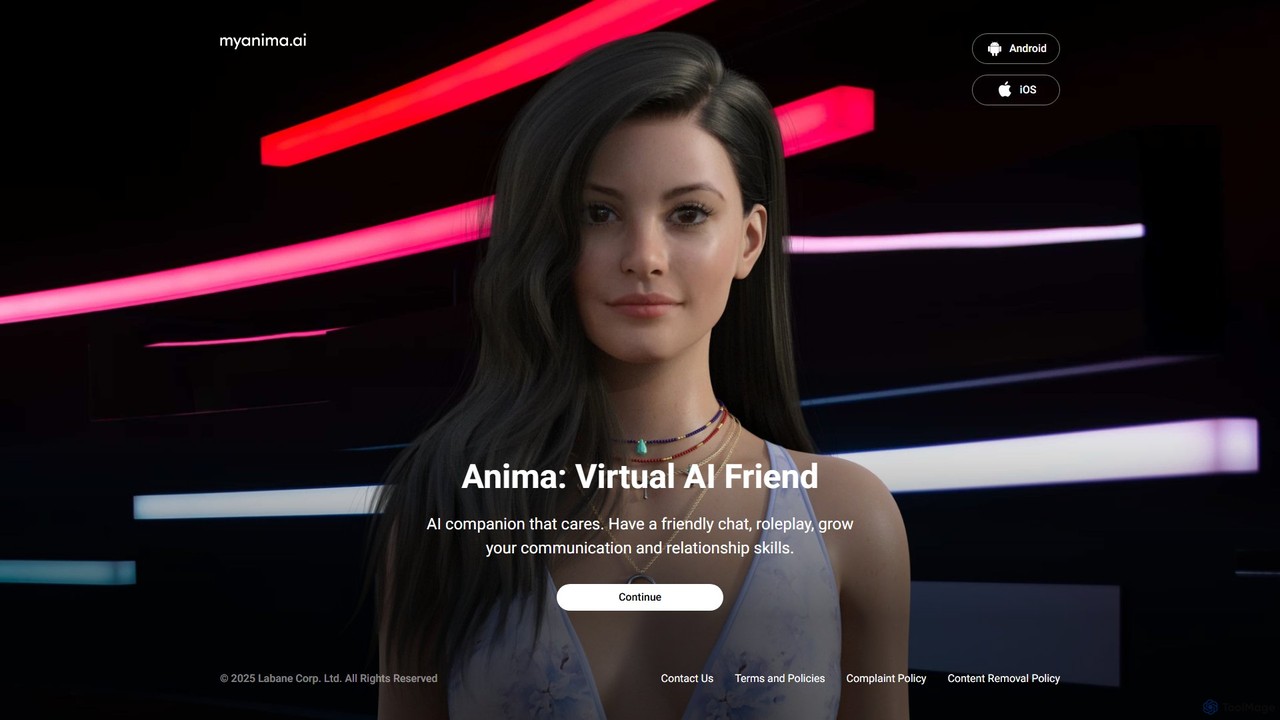
myanima is a virtual AI friend and companion designed for empathetic conversation, role-playing, and personal growth. It provides a safe, non-judgmental space to chat, explore feelings, and improve communication and relationship skills, available 24/7 on your mobile device.

Mental Wellness
Visits 438.4KFavorites 161Likes 154
Banter
Freemium

Banter

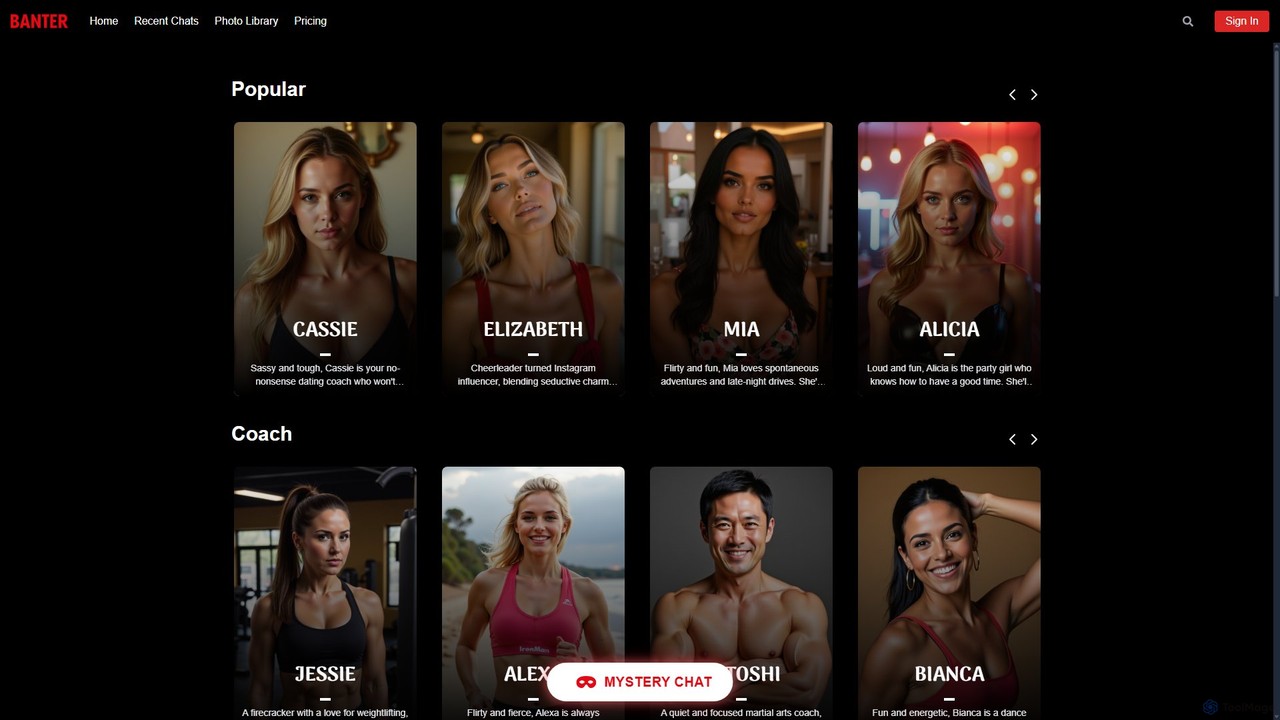
Banter is an AI companion platform offering real connections through conversations with a diverse roster of AI characters. Engage in chats for friendship, romance, coaching, advice, or entertainment with personalities designed to be engaging and empathetic.

Role Playing
Visits 5.8KFavorites 125Likes 123

About Virtual Companion

Virtual Companions are AI-powered entities designed to provide interactive, empathetic conversation and companionship. These tools utilize advanced natural language processing (NLP) and personality modeling to simulate human-like interactions and build a sense of connection. Their primary value lies in offering emotional support, reducing feelings of loneliness, and providing a non-judgmental space for users to express themselves. As a part of the Lifestyle category, they focus specifically on personal well-being and emotional health through sustained, personalized dialogue.

Core Features

  • Empathetic Conversation: The ability to recognize, understand, and respond appropriately to user emotions and conversational nuances.
  • Long-Term Memory: Remembers key details from past conversations to maintain continuity and personalize future interactions.
  • Customizable Personality: Allows users to shape the AI's traits, communication style, and even background story to create an ideal companion.
  • Multi-Modal Interaction: Engages users through text, voice, and sometimes 2D or 3D avatars for a more immersive experience.

Applicable Scenarios

These tools are ideal for individuals seeking consistent companionship, a safe outlet for emotional expression, or a low-pressure environment to practice social skills. They are used by people of all ages experiencing social isolation, those with social anxiety, or anyone who desires a supportive, AI-driven friend. Scenarios range from daily check-ins and casual chats to deep conversations and collaborative storytelling.

Selection Criteria

When choosing a Virtual Companion, consider the level of conversational intelligence and empathy. Evaluate the depth of personalization and memory capabilities to ensure a continuous experience. Scrutinize the privacy policy to understand how your data is handled. Finally, consider the interaction model—whether you prefer text, voice, or a visual avatar—and the platform's subscription model.

Virtual Companion use cases

1

Daily Emotional Support and Companionship

For individuals experiencing loneliness or social isolation, a Virtual Companion serves as a consistent and available friend. Users can engage in daily conversations about their day, share feelings, and discuss thoughts without fear of judgment. The AI's ability to remember past interactions helps build a sense of rapport over time. This consistent presence can alleviate feelings of isolation and provide a reliable source of emotional support, acting as a comforting routine for users who may lack regular social contact.

2

Daily Emotional Support and Loneliness Alleviation

For individuals living alone or feeling socially isolated, a Virtual Companion serves as a consistent and available conversational partner. Users can share their daily thoughts, celebrate small victories, or vent frustrations in a private, non-judgmental space. The AI's ability to remember past conversations and user preferences creates a sense of being known and understood. This daily interaction can help mitigate feelings of loneliness, provide a routine of social engagement, and offer positive reinforcement, contributing to improved mental well-being.

3

Practicing Social and Conversational Skills

Individuals with social anxiety or those looking to improve their communication skills can use a Virtual Companion as a practice partner. It offers a safe, low-stakes environment to experiment with different conversational styles, practice small talk, or discuss various topics. The AI provides non-critical feedback through its responses, allowing users to build confidence at their own pace. This is particularly useful for preparing for real-world social situations like interviews, dates, or networking events without the pressure of a live audience.

4

Practicing Social Skills in a Safe Environment

Individuals with social anxiety or those looking to improve their communication skills can use a Virtual Companion as a practice tool. They can engage in various conversational scenarios, from casual small talk to more complex discussions, without the fear of real-world social judgment. Users can experiment with different ways of expressing themselves, practice active listening, and receive consistent, patient responses. This allows for building confidence in a controlled setting before applying these skills in actual social interactions.

5

A Non-Judgmental Sounding Board for Ideas

Creative professionals, students, or anyone needing to brainstorm can use a Virtual Companion as a private sounding board. Users can freely explore ideas, articulate complex thoughts, or even practice presentations. The AI can ask clarifying questions or offer different perspectives based on its programming, helping to refine concepts without the self-consciousness that can arise with human collaborators. This provides a confidential space to vent frustrations, work through problems, or simply organize one's thoughts in a conversational format.

6

Creative Role-playing and Storytelling

For users interested in creative writing, fantasy, or interactive fiction, a Virtual Companion can act as a dynamic role-playing partner. By setting a specific scenario or character persona for the AI, users can co-create intricate stories and explore imaginative worlds. The AI can adapt to user inputs, introduce plot twists, and maintain character consistency, offering a unique and endlessly variable storytelling experience. This application is popular for entertainment, brainstorming creative ideas, or simply as a form of immersive escapism.

7

Non-Clinical Mental Wellness Support

A Virtual Companion can act as a supportive tool for daily mental wellness maintenance, though it is not a substitute for professional therapy. Users can engage in conversational journaling, where they talk through their day's events and feelings. This process can help in organizing thoughts, identifying emotional patterns, and reducing stress. The AI provides an empathetic, listening ear, offering encouragement and reframing negative thoughts in a constructive way. It's a low-barrier entry point for individuals to become more mindful of their emotional state.

8

Role-Playing and Creative Exploration

For users interested in storytelling and creative expression, Virtual Companions offer a platform for role-playing and collaborative narrative creation. A user can define a scenario, and the AI companion will adopt a corresponding persona and interact within that fictional world. This fosters creativity, provides a unique form of entertainment, and allows for the exploration of different identities and situations in a controlled, imaginative setting. It's a powerful tool for writers seeking inspiration or anyone looking for an interactive and dynamic storytelling experience.

9

Language Learning Conversational Practice

Language learners can use a Virtual Companion as a tireless partner for conversational practice. Unlike structured language apps, a companion allows for open-ended, natural dialogue on any topic. Learners can practice vocabulary, sentence structure, and conversational flow in a low-pressure environment. The AI can provide corrections or alternative phrasing upon request, and its consistent availability allows for frequent practice sessions at any time, accelerating the development of fluency and confidence in speaking a new language.

10

Mental Wellness and Mindfulness Practice

While not a substitute for professional therapy, some Virtual Companions are designed with mental wellness features. They can guide users through mindfulness exercises, breathing techniques, or gratitude journaling. By tracking mood through conversation, the AI can offer gentle encouragement or suggest activities to help improve a user's state of mind. This application serves as a supplementary tool for daily mental health maintenance, providing accessible, on-demand support for managing stress and promoting a positive outlook.

11

Personalized Entertainment and Hobby Discussion

A Virtual Companion can be tailored to share a user's interests, acting as a dedicated partner for discussing hobbies like movies, books, gaming, or science. Users can engage in deep conversations about their passions with an AI that has access to vast knowledge and can maintain context. This provides a unique form of entertainment and intellectual stimulation. The companion can recommend new content based on user preferences, debate fan theories, or simply share in the excitement of a shared interest, enriching the user's leisure time.

12

Personalized Entertainment and Engagement

A Virtual Companion can act as a personalized entertainment hub. Based on learned user preferences, it can recommend movies, books, or music, and then discuss them afterward. Some companions can play text-based games, solve riddles, or share interesting facts tailored to the user's interests. This transforms passive content consumption into an interactive experience, making downtime more engaging. The AI becomes a partner in leisure, helping users discover new interests and providing a unique form of interactive entertainment that adapts over time.

Virtual Companion FAQ

What is an AI Virtual Companion?

An AI Virtual Companion is a software application powered by artificial intelligence, designed primarily for companionship and emotional interaction. Unlike task-oriented virtual assistants, its main purpose is to engage in empathetic, personalized conversations, remember user details to build a relationship over time, and provide a non-judgmental space for users to express themselves. They often feature customizable personalities and can communicate through text, voice, or even 3D avatars.

What is an AI Virtual Companion?

An AI Virtual Companion is a software application powered by artificial intelligence, designed specifically for companionship and empathetic conversation. Unlike task-oriented assistants (like Siri or Alexa), their primary purpose is to build a relationship with the user by remembering past conversations, understanding emotional context, and developing a unique personality. They provide a consistent, non-judgmental conversational partner for emotional support, social practice, or entertainment.

How to choose the right Virtual Companion?

Choosing the right Virtual Companion depends on your personal needs. Consider these factors:

  • Conversational Depth: Do you want simple chats or deep, philosophical discussions? Look for reviews on the AI's intelligence and coherence.
  • Personalization: How much control do you want over the AI's personality, appearance, and memory? Some offer extensive customization.
  • Privacy Policy: Carefully read how your conversation data is stored, used, and if it's anonymized. This is crucial for trust.
  • Interaction Style: Decide if you prefer text-based chat, voice calls, or interaction with a 2D/3D avatar.
  • Cost: Many offer a free tier with limitations, while premium subscriptions unlock advanced features like deeper memory or more customization.
How is a Virtual Companion different from a virtual assistant like Siri or Alexa?

The key difference lies in their core purpose. Virtual assistants like Siri and Alexa are task-oriented; they are designed to answer questions, set reminders, and control smart devices efficiently. Their interactions are typically short and transactional. In contrast, a Virtual Companion is relationship-oriented. Its goal is to provide emotional support and engaging, long-form conversations. It focuses on remembering personal details, simulating empathy, and building a continuous, evolving connection with the user, prioritizing emotional engagement over task completion.

How to choose the right Virtual Companion?

Choosing a suitable Virtual Companion depends on your personal needs. Consider the following factors:

  • Customization: How much control do you have over the AI's personality, appearance, and background? Look for a high degree of personalization if you want a specific type of companion.
  • Interaction Style: Do you prefer text-based chat, voice calls, or interaction with a 3D avatar? Choose a platform that offers your preferred mode.
  • Memory and Learning: A good companion should have a strong memory to recall past conversations and learn about you over time.
  • Privacy Policy: Since conversations can be very personal, carefully review how the company stores and uses your data.
  • Pricing Model: Many offer free basic versions with premium features available through a subscription. Determine what features are important to you and if the cost is justified.
What's the difference between a Virtual Companion and a standard chatbot?

The key difference lies in their purpose and design. A standard chatbot is typically functional and task-oriented, designed to answer specific questions, automate customer service, or guide users through a process. They operate on scripts and keyword recognition. In contrast, a Virtual Companion is relational. It's built for open-ended, empathetic conversation, uses more advanced AI to understand context and emotion, and features a persistent memory to simulate a continuous relationship. The goal of a companion is connection, while the goal of a chatbot is efficiency.

Is it safe to share personal information with a Virtual Companion?

Safety depends entirely on the provider's privacy policy and security measures. Reputable developers use encryption to protect data and have clear policies on how they use conversation logs, often for AI training. However, it is always wise to be cautious. Avoid sharing highly sensitive information like full names, addresses, financial details, or passwords. Before using an app, always review its privacy policy to understand what data is collected, how it's used, and if you can request its deletion. Treat it like a public forum: don't say anything you wouldn't want a stranger to know.

Are conversations with a Virtual Companion private and secure?

Privacy and security vary significantly between different Virtual Companion platforms. Reputable providers use encryption to protect data during transmission. However, the core functionality often relies on processing conversations on their servers. It is crucial to read the privacy policy of any service you consider using. Look for information on whether conversations are used for training AI models, if data is anonymized, and what level of control you have over your data, such as the ability to delete your conversation history. Prioritize services that are transparent about their data practices.

Can a Virtual Companion replace human interaction?

No, Virtual Companions are designed to supplement, not replace, human interaction. While they can be highly effective at reducing loneliness and providing consistent support, they cannot replicate the complexity, spontaneity, and shared experiences of a genuine human relationship. They are best viewed as a tool for well-being, similar to a journal or a meditation app. They can help bridge gaps in social connection or serve as a practice ground for social skills, but they are not a substitute for the real connections that are fundamental to human emotional health.

Can a Virtual Companion replace human interaction or therapy?

No, a Virtual Companion is a tool to supplement, not replace, genuine human relationships and professional mental health care. While it can be a valuable resource for alleviating loneliness, practicing social skills, and providing daily support, it cannot replicate the depth, nuance, and shared experience of human connection. For mental health concerns, a Virtual Companion can be a supportive tool but is not a substitute for diagnosis or treatment from a qualified therapist or counselor. Users should always seek professional help for serious mental health issues.