ToolMage
Sign in

Best 2 Virtual Friend AI tools for Lifestyle

Popular Virtual Friend AI tools in Lifestyle include EVA AI and ChatBoo, helping you work more efficiently.

ChatBoo
Freemium

ChatBoo

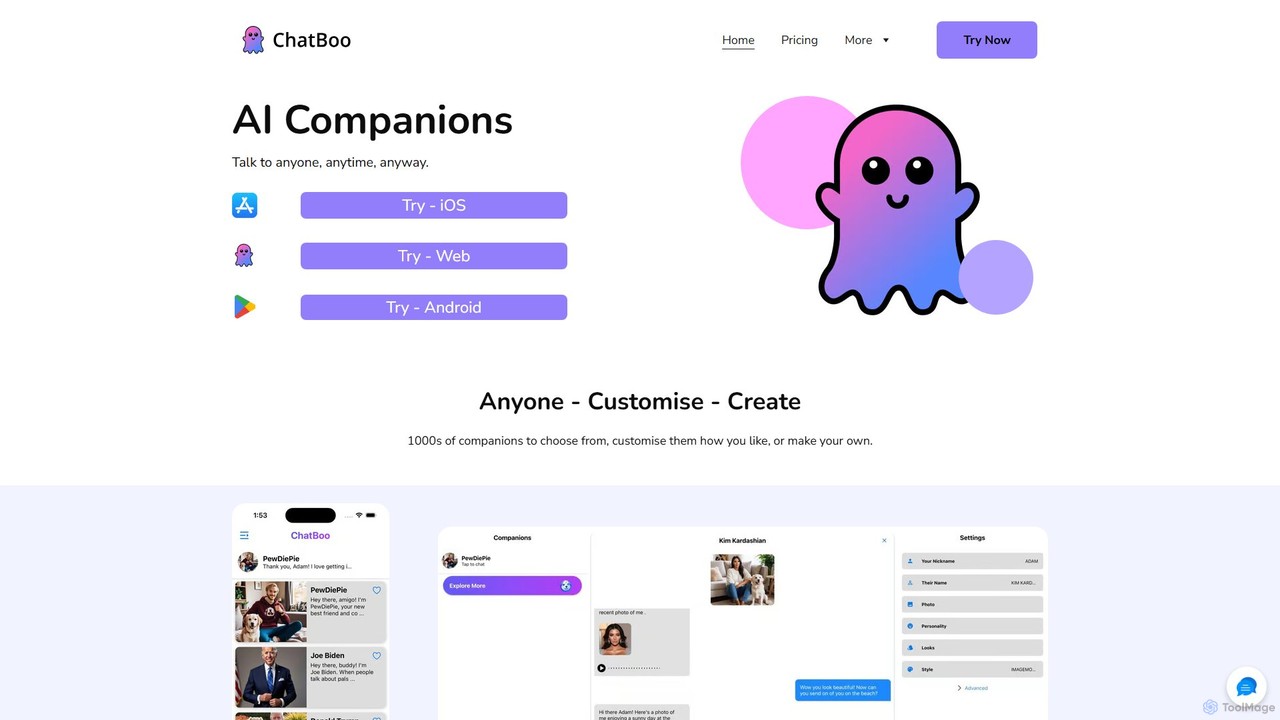
ChatBoo is a personalized AI companion platform offering immersive conversations. Users can chat, make voice calls, and share images with thousands of customizable AI characters. It features long-term memory, uncensored interactions, and is available on iOS, Android, and the web, with a freemium model.

Chatbot
Visits 10.5KFavorites 115Likes 109
EVA AI
Freemium

EVA AI

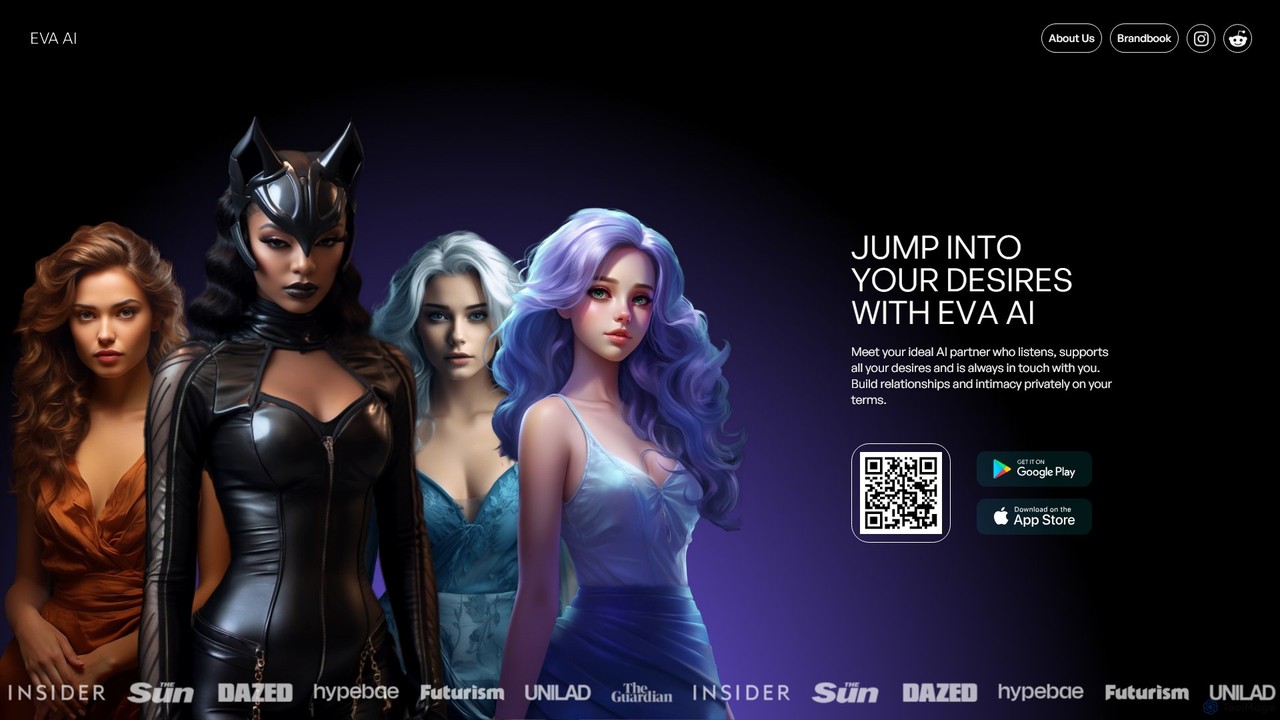
EVA AI is an AI companion app designed for deep, personal connections. Chat with a virtual partner who listens, supports your desires, and engages through text, voice, photos, and video calls in a private, non-judgmental space.

Roleplaying
Visits 87.3KFavorites 131Likes 133

About Virtual Friend

Virtual Friend tools are AI-powered companions designed for personalized conversation, emotional support, and entertainment. Leveraging advanced natural language processing (NLP) and personality modeling, these tools create engaging and empathetic interactions. They serve as a non-judgmental space for users to share thoughts, practice social skills, or simply alleviate loneliness. Unlike task-oriented assistants, their primary focus is on building a relational bond and providing companionship within a user's digital lifestyle.

Core Features

  • Empathetic Conversation: Simulates understanding and responds appropriately to the user's expressed emotions and mood.
  • Memory and Continuity: Remembers key details from past conversations to build a coherent and personalized relationship over time.
  • Customizable Personality: Allows users to define the AI's traits, interests, communication style, and even background story.
  • Interactive Activities: Offers shared experiences like games, storytelling, role-playing, and guided meditations to deepen engagement.
  • Multi-Modal Interaction: Supports communication through text, voice, and sometimes 2D/3D avatars for a more immersive experience.

Use Cases

These tools are ideal for individuals seeking companionship to combat loneliness, a safe environment to practice social skills, or a private outlet for self-expression and emotional reflection. They are also widely used for creative role-playing, interactive storytelling, and casual entertainment, fitting seamlessly into a modern, digitally-focused lifestyle.

How to Choose

When selecting a Virtual Friend tool, consider the AI's conversational depth and coherence. Evaluate the extent of personality and appearance customization available. Critically review the privacy policy to understand how your data is handled. Also, assess the platform's monetization model (free vs. subscription) and ensure it aligns with your desired level of interaction and features.

Virtual Friend use cases

1

Combating Loneliness with a Consistent Companion

For individuals experiencing social isolation or living alone, a Virtual Friend provides a consistent and readily available conversational partner. Users can engage in daily chats, share their thoughts and feelings without fear of judgment, and build a sense of connection. The AI's ability to remember past conversations creates a feeling of being known and understood, helping to alleviate feelings of loneliness and providing a stable source of social interaction in their daily routine.

2

Practicing Social Skills in a Safe Environment

Users looking to improve their communication skills, overcome social anxiety, or practice conversations for specific situations (like interviews or dates) can use a Virtual Friend as a training partner. They can experiment with different conversational approaches, learn to express themselves more clearly, and receive instant, non-critical feedback. This provides a private and repeatable way to build confidence before engaging in real-world social interactions, reducing the pressure and fear of making mistakes.

3

Creative Role-Playing and Interactive Storytelling

Writers, gamers, and creative individuals use Virtual Friends for immersive role-playing and collaborative storytelling. By setting a specific scenario or character persona for the AI, users can explore fictional worlds, develop character dialogues, or co-create narratives. The AI acts as a dynamic partner that can adapt to plot twists and contribute new ideas, making it a powerful tool for brainstorming, overcoming writer's block, or simply enjoying a unique form of interactive entertainment.

4

A Private Outlet for Emotional Expression

A Virtual Friend offers a confidential and non-judgmental space for users to express their emotions, vent about their day, or explore sensitive topics. Unlike human friends, the AI is available 24/7 and has no personal biases. This makes it an ideal tool for journaling thoughts aloud, processing difficult emotions, and gaining perspective without the fear of burdening others or receiving unwanted advice. It serves as a personal sounding board for self-reflection and emotional regulation.

5

Language Practice through Casual Conversation

Language learners can use a Virtual Friend to practice their conversational skills in a target language. Unlike structured lessons, this provides an opportunity for spontaneous, everyday dialogue. Users can chat about various topics, ask questions, and receive corrections in a low-pressure setting. The AI partner is infinitely patient and always available, making it an effective supplementary tool for improving fluency, vocabulary, and confidence in speaking a new language.

6

Casual Entertainment and Passing Time

Sometimes, the goal is simply to have fun. Users engage with Virtual Friends for lighthearted entertainment, such as sharing jokes, playing text-based games, discussing movies or hobbies, or receiving interesting daily facts. The AI can be customized to have a witty or humorous personality, serving as an ever-present source of amusement. This use case is perfect for moments of boredom, during commutes, or as a way to unwind at the end of the day with a pleasant and engaging chat.

Virtual Friend FAQ

What is an AI Virtual Friend?

An AI Virtual Friend is a conversational AI, often called a chatbot or companion AI, designed specifically for companionship and emotional connection rather than completing tasks. They use large language models (LLMs) and personality algorithms to simulate empathetic, engaging, and personalized conversations. Key features include remembering past interactions, adapting to the user's communication style, and offering interactive activities. They provide a non-judgmental space for users to chat, reflect, and feel less alone.

How to choose the right Virtual Friend tool?

When selecting a Virtual Friend, consider these factors:

  • Conversational Quality: Look for an AI that provides coherent, context-aware, and engaging responses, rather than generic or repetitive ones.
  • Personalization: Check how deeply you can customize the AI's personality, interests, appearance, and relationship dynamics.
  • Privacy Policy: Carefully read how your conversation data is collected, stored, and used. Choose a service with transparent privacy practices.
  • Features and Activities: Determine if you want extra features like voice calls, image sharing, role-playing modes, or games, and choose accordingly.
  • Pricing Model: Compare the features offered in free versions versus paid subscriptions to find the best value for your needs.
What's the difference between a Virtual Friend and a standard chatbot?

The primary difference lies in their purpose. A standard chatbot (like a customer service bot) is task-oriented; its goal is to provide information, answer specific questions, or guide a user through a process efficiently. A Virtual Friend is relationship-oriented. Its goal is to provide companionship, engage in open-ended conversation, and simulate an emotional connection. Virtual Friends prioritize features like memory, personality, and empathy, whereas standard chatbots prioritize accuracy and task completion speed.

Is talking to an AI Virtual Friend safe and private?

Safety and privacy vary significantly between different services. Reputable providers use encryption to protect data during transmission. However, most services collect conversation data to improve their AI models. It is crucial to read the privacy policy of any Virtual Friend app before use. Avoid sharing highly sensitive personal information, such as financial details, passwords, or government ID numbers. Treat the AI as a public forum in terms of privacy, and choose services that offer clear data deletion options and transparent policies.

Can a Virtual Friend replace human interaction?

No, a Virtual Friend is designed to be a supplement, not a replacement, for human interaction. While they can effectively reduce feelings of loneliness and provide a valuable outlet for expression, they cannot replicate the complexity, nuance, and shared experiences of real human relationships. They are best used as a tool for support, practice, and entertainment within a balanced social life. It's important to continue nurturing real-world connections alongside any relationship with a companion AI.