WearView
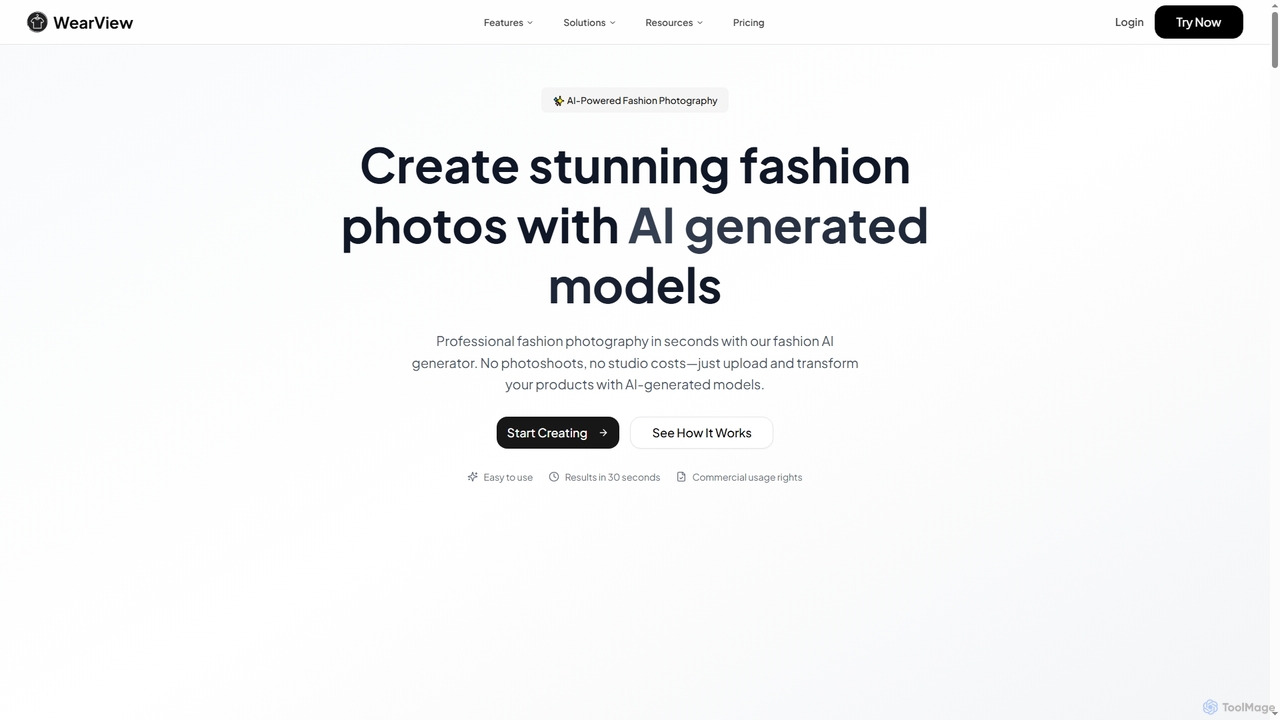
WearView is an AI-powered fashion technology platform that enables users to generate professional fashion photography with AI models …
WearView is an AI-powered fashion technology platform that enables users to generate professional fashion photography with AI models in seconds. It eliminates the need for expensive photoshoots, offering virtual try-on, model creation, and product transformation features for e-commerce brands and content creators.
About Advertising Creatives
AI Advertising Creatives tools are specialized platforms that use generative AI to automate the creation of marketing assets. They leverage advanced models to produce high-quality images, videos, and ad copy tailored for various advertising channels. This enables marketing teams to generate a high volume of diverse ad variations at scale, significantly reducing production time and costs. These tools often incorporate performance data to optimize creative elements for higher engagement and conversion rates.
Core Features
- Multi-Format Generation: Creates a wide range of ad assets, including static images, short-form videos, animated banners, and compelling ad copy.
- Platform-Specific Adaptation: Automatically resizes and reformats creatives to meet the specific requirements of platforms like Meta, Google, TikTok, and LinkedIn.
- Brand Consistency Control: Allows users to upload brand kits (logos, colors, fonts) to ensure all generated creatives align with brand identity.
- A/B Testing Support: Generates multiple variations of a single creative concept to facilitate rapid and effective A/B or multivariate testing.
- Performance Prediction: Some tools use AI to analyze creative elements and predict their potential performance before launching a campaign.
Use Cases
These tools are primarily used by digital marketing agencies, e-commerce companies, and in-house marketing departments. Performance marketers use them to rapidly test creative hypotheses, while social media managers leverage them to maintain a constant flow of fresh ad content for different channels. They are particularly valuable for campaigns requiring a large number of localized or personalized ad variations.
How to Choose
When selecting an AI Advertising Creatives tool, consider the specific ad platforms you use and the creative formats you need (e.g., video, static images). Evaluate its brand management features to ensure consistency. Assess its integration capabilities with your existing ad management and analytics platforms. Finally, compare pricing models—whether they are based on the number of creatives generated, user seats, or a flat subscription fee.
Advertising CreativesUse Cases
Launch Multi-Platform Ad Campaigns
A digital marketer for an e-commerce brand needs to launch a new product campaign across Meta (Facebook, Instagram) and Google Ads. Instead of manually creating dozens of asset variations, they use an AI Advertising Creatives tool. They input the product details, target audience, and key message. The AI generates a complete set of assets, including correctly sized images for feeds and stories, short video ads, and multiple headline/description combinations for text ads. This process reduces the creative production timeline from days to hours, allowing for a faster campaign launch and more time to focus on strategy and optimization.
Scale A/B Testing for Ad Creatives
A performance marketer wants to optimize a campaign by testing different creative angles. Using an AI tool, they can generate 20 variations of an ad in minutes. This includes different backgrounds, call-to-action button colors, headline phrasing, and visual styles, all while keeping the core product image consistent. The tool can also generate variations based on proven high-performing ad templates. This allows the marketer to run a comprehensive multivariate test without relying on a design team, quickly identifying the creative elements that drive the highest click-through and conversion rates.
Generate Personalized Retargeting Ads
An online fashion retailer wants to run a dynamic retargeting campaign for users who abandoned their shopping carts. They connect their product feed to an AI ad creative tool. The tool automatically generates personalized ads for each user, featuring the exact product they viewed. It can also add dynamic overlays like 'Limited Stock' or 'Free Shipping' and generate compelling copy like 'Still thinking about it?'. This level of personalization at scale is difficult to achieve manually but is streamlined by the AI, leading to higher ad relevance and increased recovery of abandoned carts.
Create Themed Creatives for Seasonal Promotions
A marketing team at a retail company is preparing for the Black Friday sale. They need a large volume of on-brand, themed creatives for email, social media, and display ads. Using an AI tool with brand kit support, they upload their campaign's color palette, logos, and fonts. Then, they provide prompts like 'Black Friday sale on electronics' or 'Holiday gift guide for home goods'. The AI generates hundreds of banners, social posts, and email headers that are all visually consistent and aligned with the seasonal theme, saving the design team weeks of repetitive work.
Localize Ad Creatives for Global Markets
A global software company is launching a product in Japan and Brazil. Instead of hiring local agencies for each market, their central marketing team uses an AI tool. They provide the base English ad creative and specify the target locales. The AI suggests culturally relevant imagery (e.g., replacing a generic city skyline with one from Tokyo or São Paulo) and translates the ad copy using a nuanced understanding of local dialects and marketing language. This ensures the ads resonate with local audiences while maintaining global brand consistency, all managed from a single platform.
Overcome Creative Block for Ad Copy
A social media manager is tasked with writing fresh ad copy for a long-running campaign but is facing writer's block. They turn to an AI ad creative tool's copy generation feature. By inputting the product's key features, target audience pain points, and desired tone (e.g., witty, professional, urgent), the AI generates dozens of unique headlines and body text options. They can then mix, match, and refine these suggestions to create high-quality copy, breaking through the creative block and ensuring the campaign's messaging stays fresh and engaging without spending hours brainstorming.